Combat in Dungeons & Dragons sometimes feels like two different games. Martial characters are playing a simulationist tactical miniatures game where they attack monsters with weapons, while spellcasters are capable of transforming the battlefield and defeating multiple enemies with a single action.
Twenty years ago, Wizards of the Coast tried to change that by releasing the D&D 3.5 Edition book Tome of Battle: The Book of Nine Swords, which introduced a fighting system based on stances and maneuvers with effects similar to casting spells. While the book’s rules and lore were largely abandoned, they made wielding a sword in D&D cooler than it’s ever been.
The Book of Nine Swords designers Richard Baker, Matthew Sernett, and Frank Brunner came up with the concept of the Sublime Way, secret fighting lore based on anime, fighting video games, and martial arts movies. The book is named for nine legendary magical blades, each representing the power and philosophy of a different martial school. The rapier Supernal Clarity embodies the precision of those who practice Diamond Mind, while the kukri Tiger Fang is perfect for the vicious strikes delivered by Tiger Claw students.
The weapons each have their own rich lore, detailing their origins, the masters who once wielded them, and how players can unlock their full potential. Their stories draw on D&D’s complex cosmology, with blades made with steel from the Elemental Plane of Earth or by githyanki smiths in a dragonfire-fueled forge. But they also include the melodrama of martial arts stories with tales of exiled masters, betrayal, and bitter rivalries.

Even more important than the weapons are the schools they represent. The book introduces three new classes — Crusader, Warblade, and Swordsage — which are focused on using martial maneuvers, but any character could become an initiate of the Nine Disciplines just by taking a feat. It was a smart way to appeal to veteran gaming groups that wanted to spice up their existing characters instead of starting a whole new campaign to incorporate the rules.
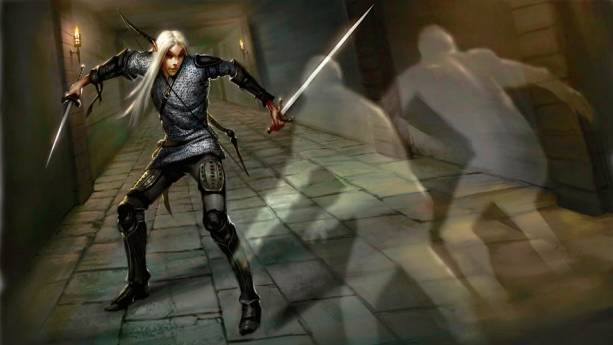
The system is transformative. Just the concept of Martial Lore – a skill reminiscent of Spellcraft that can be used to identify maneuvers and the disciplines a character practices – makes a game feel like a fighting anime where characters are constantly sizing each other up to assess their strength and likely tactics. At every level, initiators got to choose new maneuvers to learn, and every day they got to decide which ones they’d ready through exercise, meditation, or prayer, in the same way that a Cleric or Wizard would prepare spells.
The rich variety of maneuvers means there is something for every martial class and playstyle. Desert Wind lets characters embrace the power of fire by igniting their blades, scorching the ground as they race across the battlefield, or summoning fire elementals to distract their foes and leave them vulnerable to attacks. Devoted Spirit is the domain of Paladins and Crusaders, and its practitioners can heal themselves or allies when they attack, slow their enemies, and block incoming blows. Shadow Hand is perfect for rogues, giving initiators the ability to become invisible and deal devastating amounts of damage to foes they catch flat-footed.

Just as spellcasters gain powerful buff spells, initiators learn stances that provide persistent effects and have highly evocative names. Giant Killing Style grants bonuses on attack and damage rolls against larger opponents, while Balance on the Sky lets users walk on air like a warrior in a wushu movie. Hearing the Air makes it possible to detect invisible foes and Flame’s Blessing provides fire resistance. Initiators can easily switch stances in a fight, though they often want to conserve actions to use more maneuvers. The tradeoffs helped make fighting far more dynamic than just choosing which monster to hit.
These changes level the playing field between martial characters and spellcasters, which tends to become especially problematic in higher levels of play. They were also D&D’s earliest experiments with playstyles that had previously been extremely underdeveloped. Devoted Spirit initiators can serve as tanks by applying debuffs that encourage enemies to attack them, and White Raven practitioners focus on bolstering their allies by letting them move around the battlefield or changing their initiative order.
Wizards of the Coast never released more support for The Book of Nine Swords, but some of the ideas found their way into 4th Edition, which launched in 2008. That ruleset further blurred the line between spellcasters and martial characters by giving every class a set of powers they could use. Some maneuvers were effectively reprinted in 4e’s Fighter and Warlord classes.

But 4e was a commercial failure, and when 5th Edition launched, the only reference to maneuvers came in the Battle Master Fighter. Even those abilities were simple, simulationist tricks like disarming and tripping enemies rather than the showy, sometimes supernatural abilities of The Book of Nine Swords. D&D lead designer Jeremy Crawford told Polygon in 2024 he considered adding more maneuvers to the 2024 ruleset, but playtesters were daunted by the complexity. Instead, they added a system to make a character’s choice of weapon more consequential and provided more ways for martial classes to learn spells or psionic abilities.
Other game designers have embraced the idea of making fighting with a sword just as powerful as studying magic. The third-party D&D 5e supplement Ariadne’s Book of Legends introduces mythical techniques to keep martial characters on even footing with casters at high levels. The 4e-inspired Draw Steel gives every class a long list of powers to use in combat. Players who want to embrace the video game powers that inspired parts of The Book of Nine Swords can play Break!! or Fabula Ultima.
The Book of Nine Swords was a wildly ambitious experiment that Wizards of the Coast is unlikely to repeat, but I’ll always love it for transforming the nature of the fantasy game by acknowledging that players didn’t care if the game made swordfighting realistic. They just wanted it to be really cool.