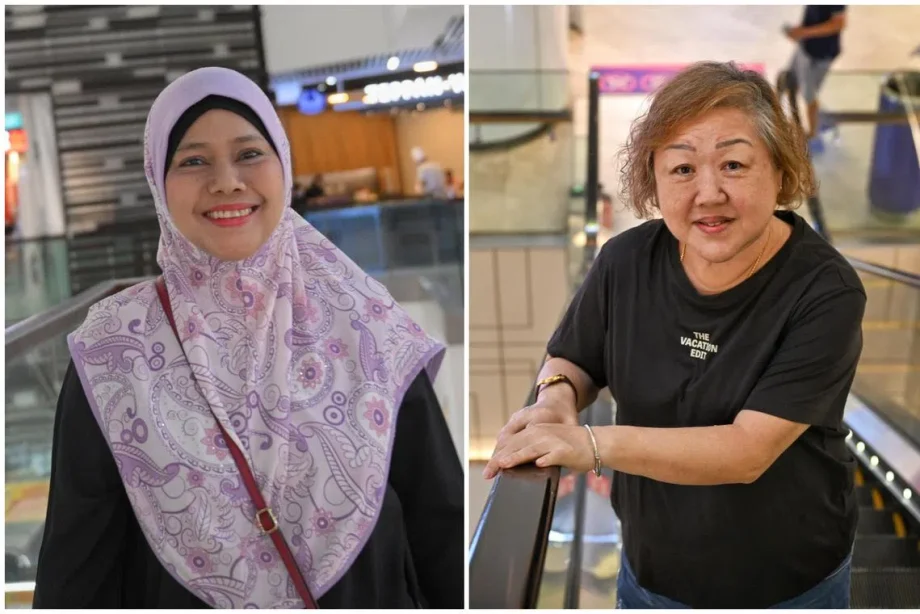
SINGAPORE – Part-time security officer Lizah Salim takes a 15-minute bus ride from her home in Woodlands Circle to Causeway Point at least once a week. She can spend up to five hours shopping and dining at the mall in Woodlands, often accompanied by her sister, husband or grandchildren.
Occasionally, the 57-year-old travels a little farther to Northpoint City in Yishun for services such as hair treatments.
“The neighbourhood malls are better than those in town as things are not so costly,” she said. “Transport is also quite expensive now, so I prefer to go to malls nearby.”
Suburban malls, such as Causeway Point and Northpoint City, help older adults maintain routines and social connections, according to a joint study released in April on the retail behaviours and preferences of older adults in suburban malls.
More than six in 10 older adults visit suburban malls at least once a week, with many making multiple trips, according to the study by Frasers Property Singapore and the Singapore Management University Centre for Research on Successful Ageing (ROSA).
More than discretionary spending, the visits are driven by daily routines, familiarity and social connection. Over 77 per cent cite dining out as a primary reason for visiting malls, while more than half engage in leisure activities such as window shopping.
Close to 67 per cent visit malls with companions. About 57 per cent spend up to $100 a week, and close to 92 per cent spend no more than $200, reflecting visits built around habit and community rather than consumption.
Easy public transport access is a priority for 69 per cent of respondents, while proximity to home matters to 41 per cent. A tenant mix that meets daily needs is a reason for visits, 40 per cent said.

Madam Lizah hopes to see more rest areas in malls and more intergenerational activities that allow her to bond with her grandchildren.
ST PHOTO: MARK CHEONG
Elderly-friendly features, such as resting areas, as well as community spaces and services, including libraries and clinics, were the most commonly used amenities, respondents said.
With Singapore projected to become a super-aged society in 2026 – with at least 21 per cent of the population aged 65 or older – intentional design and programming are needed to ensure that familiar neighbourhood spaces, including suburban malls, have a meaningful and growing role to play in such an environment, said Professor Paulin Straughan, director of ROSA.
The study, involving more than 2,000 respondents aged 48 and above, recommended improvements in environments that support independence and comfort, as well as programming that deepens social connection for older adults.
In the area of infrastructure, malls can increase the availability of resting areas, enhance visibility and usability of wayfinding tools, and expand facilities such as multi-purpose rooms and health or wellness spaces, the report said.
Under updated accessibility regulations by the Building and Construction Authority, new buildings must include more wheelchair- and elder-friendly features such as ramps, larger lifts and additional seating areas. This applies to building plans submitted from November 2025, including existing buildings undergoing addition and alteration works, though the changes will not be applied retrospectively.