EV charging times with a 480kW charger

EV charging times with a 480kW charger


Charging is arguably one of the biggest adjustments a car owner has to make when it comes to owning an EV (electric vehicle). Instead of visiting a petrol station, you have to find a charging station to plug your EV into. And even though the charging times of EVs have reduced significantly, it still takes a while. Which is why the time it takes to charge is one of the most important considerations for car buyers when it comes to choosing an EV.

Today, I’m going to find out just how long it takes to charge one of the fastest-charging cars you can buy with one of Singapore’s most powerful chargers. I’m going to take a Zeekr 7X to Great World’s charging hub.

  1. 1. How does EV charging work?
  2. 2. AC vs DC charging
  3. 3. Introducing the Zeekr X and Great World EV charging hub
  4. 4. How long did it take to charge, and how much did it cost?
  5. 5. Final thoughts

How does EV charging work?

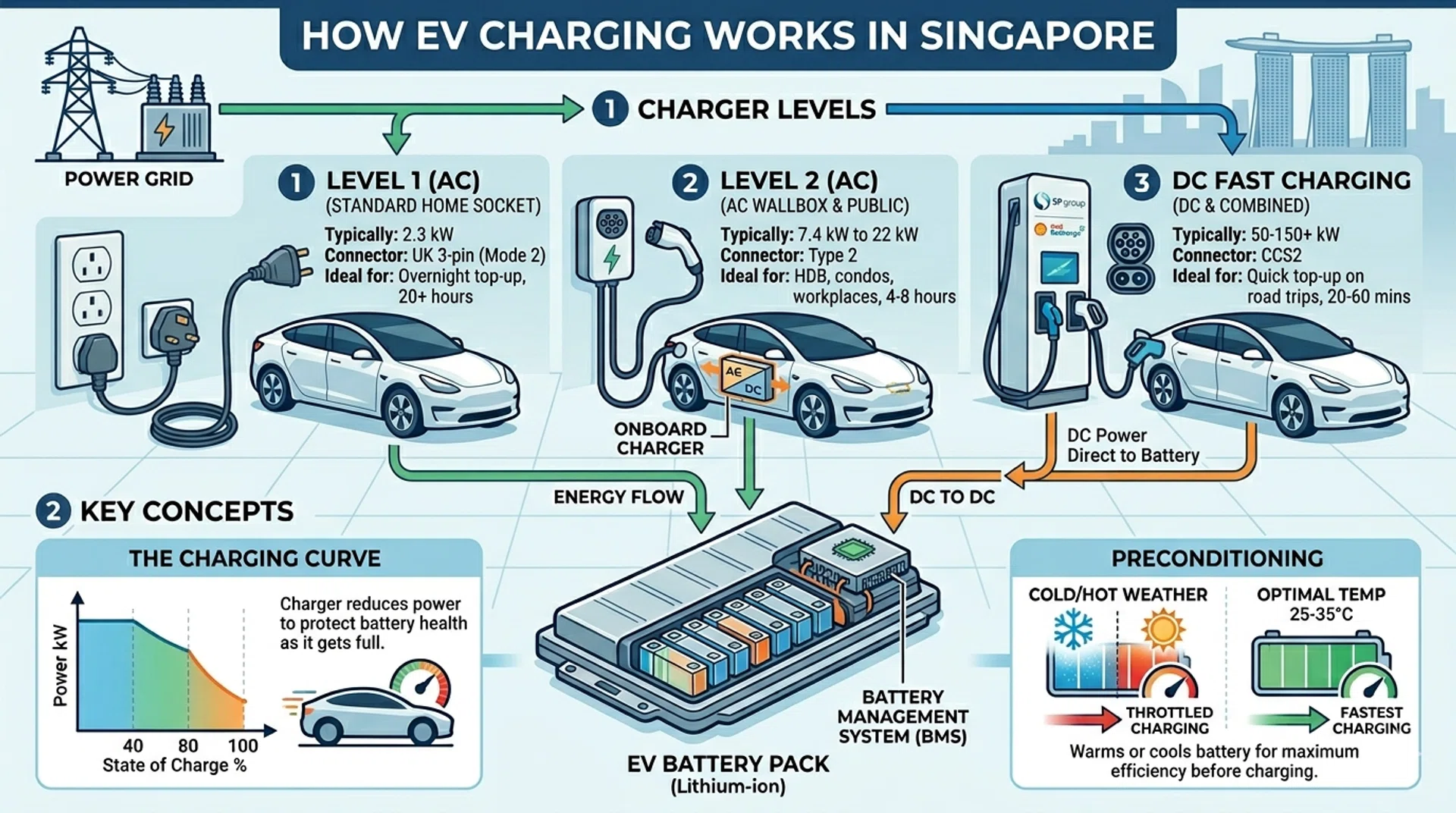
EV charging basics

The basics of EV charging.

Photo: AI-generated image

The basics of charging an EV are identical to charging a phone. Every EV has a maximum charging rate, and to achieve that rate requires a powerful enough charger. We’ll cover the differences between AC and DC charging below, but fundamentally, that’s all there is to it.

Let’s illustrate this with some examples. The main reason why we chose a Zeekr X is because it supports a maximum DC charging rate of 420kW – one of the highest in any EV in Singapore. This means it can better maximise the powerful 480kW chargers that Great World have. 

If we swapped the Zeekr X with another car, let’s say the very popular BYD Atto 3, we would only be able to attain a maximum DC charging rate of 100kW. In other words, that 480kW charger is overkill. This is akin to using a 100W USB-C charger to charge a phone that only supports up to 40W charging. Yes, you’ll be charging at its maximum rate, but you could have done the same with a less powerful charger.

AC vs DC charging
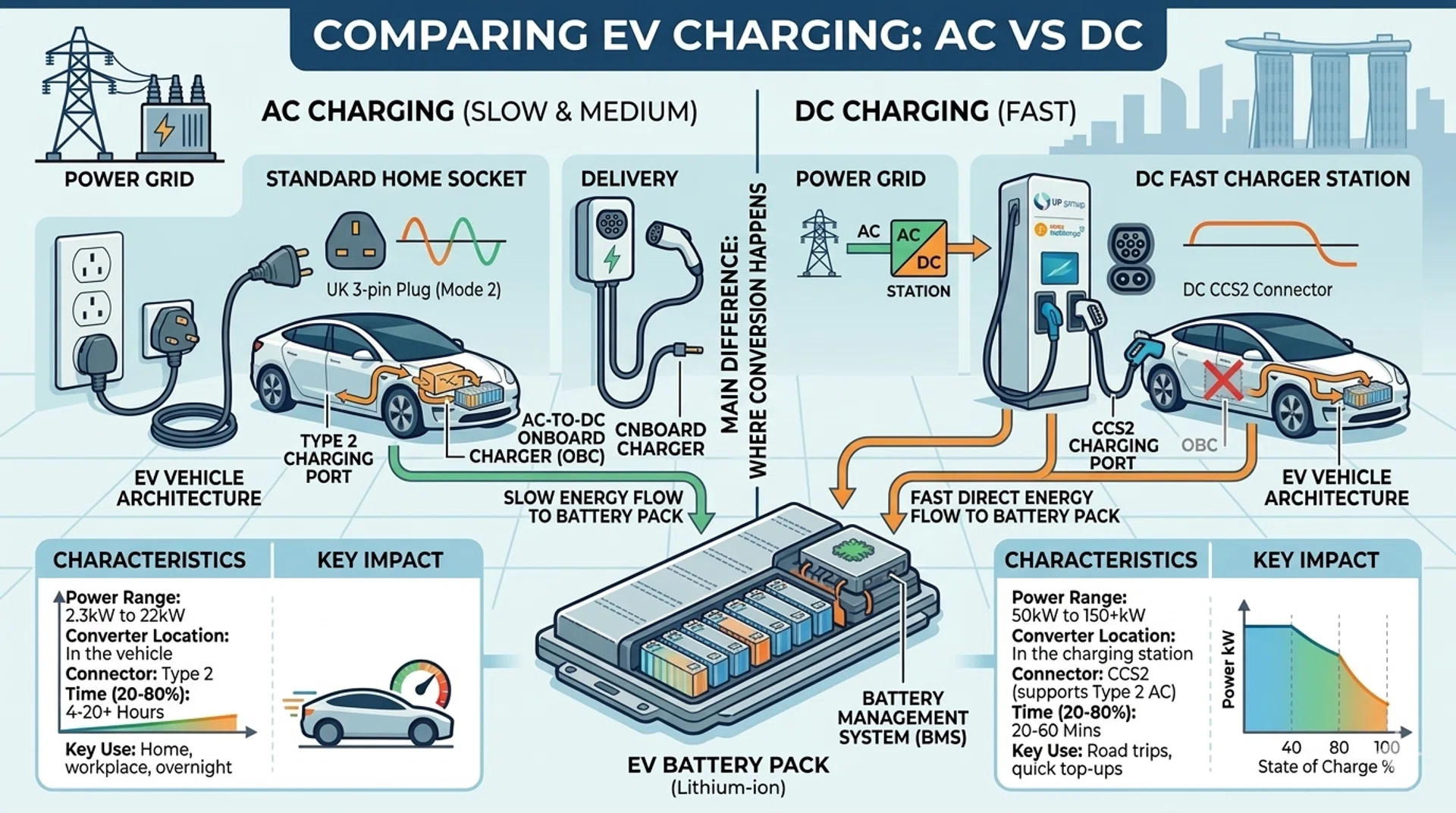
AC vs DC charging

AC and DC charging are vastly different.

Photo: AI-generated image
Without delving into the specifics, an EV’s batteries require DC charging, which is why you’ll find that DC chargers are typically faster. So when using an AC charger, the power has to be converted to DC by the EV’s onboard charger, which is usually a small unit that’s only capable of handling a small amount of power – typically between 7kW and 11kW. 

The same charging principles apply to AC chargers. If your onboard charger is only capable of handling up to 11kW, plugging it into a 22kW AC charger will not charge it any faster. The maximum charging rate will still be 11kW.

DC chargers, on the other hand, convert the power grid’s AC power into DC and feed it directly into the car. They are often very bulky because they handle the conversion themselves and are designed for high power outputs.

Introducing the Zeekr X and Great World EV charging hub

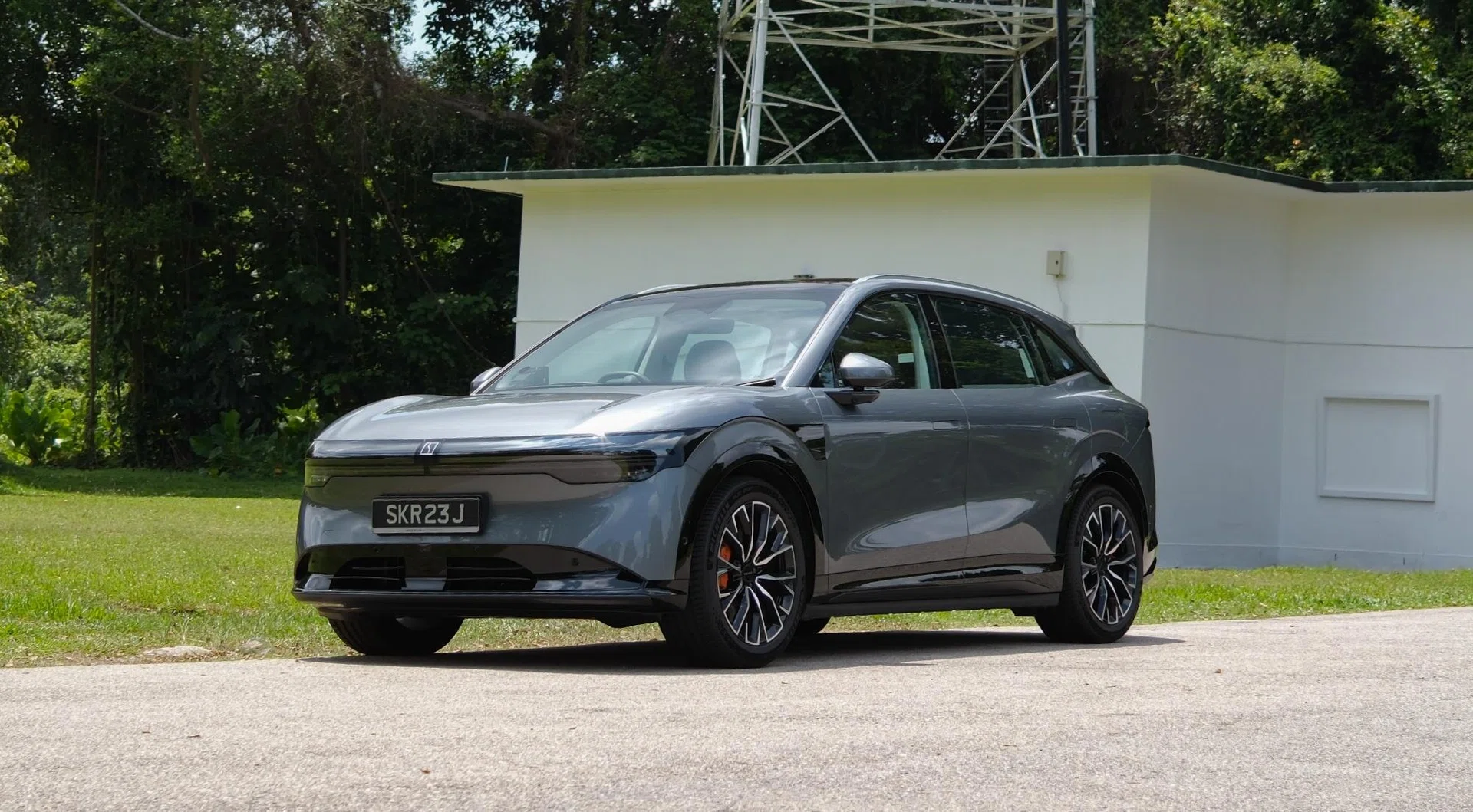
Zeekr 7X

The Zeekr 7X is a mid-size SUV.

Photo: HWZ

The car I’m using for today’s experiment is the Zeekr 7X. As I mentioned, it was chosen because it supports DC charging up to 420kW, which makes it one of the fastest charging EVs you can buy right now.

Zeekr, for the uninitiated, is the luxury arm of Geely’s automobile business, and the 7X is their mid-size crossover SUV designed to go up against cars like the BYD Sealion 7, Tesla Model Y, and Xpeng G6. In Singapore, the 7X is available in three variants – Standard, Long Range, and Performance. You can see their specs below. The one we had was the range-topping Performance model, which has 637hp, 710nm of torque, and can do the century sprint in just 3.9 seconds. It’s blisteringly quick.

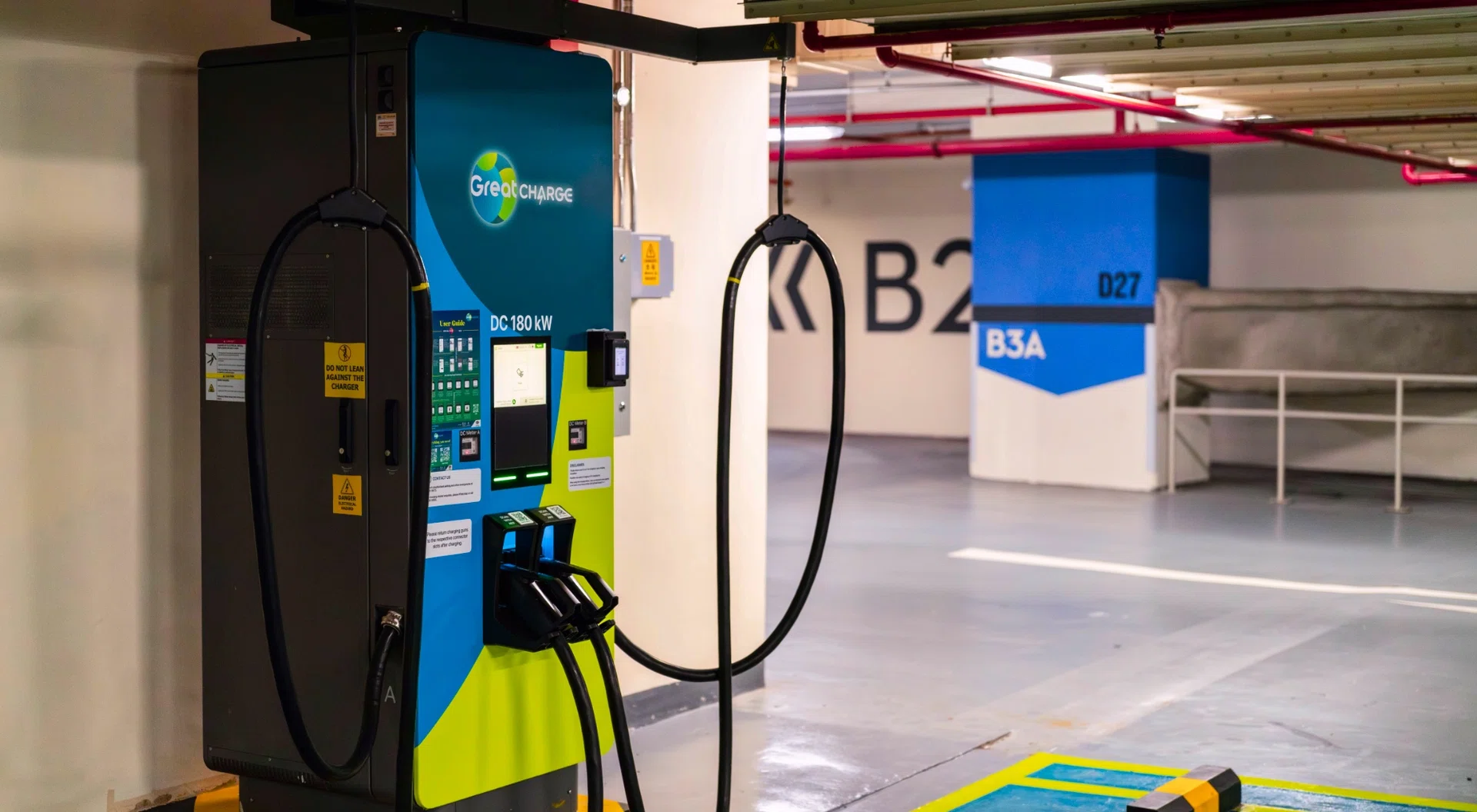
And as for Great World, it is said to be home to Singapore’s largest EV charging hub. It has 55 chargers, which is a mix of 22kW AC chargers, as well as 180kW and 480kW DC chargers. The 480kW DC chargers are from Huawei and are currently the fastest chargers you can find in Singapore. Charging rates are also decent at S$0.545/kWh for AC chargers and S$0.60/kWh for DC chargers (correct at the time of publishing).

How long did it take to charge, and how much did it cost?

Great World Charger

Great World is home to 55 EV chargers.

Photo: HWZ

For the purpose of this experiment, I drained the Zeekr 7X’s battery down to 20% and timed how long it took to get it up to 80%

Why not charge it from 0%? To put it simply, that’s not representative of how most people will use their EVs. You won’t drive any ICE car until it has next to no petrol in the tank, so why would you drive your EV until it’s flat? Furthermore, most manufacturers recommend keeping the battery levels between 20% to 80% to improve its longevity.

And why only charge it to 80% and not 100%? Like smartphones, EV charging slows down dramatically once you get past 80% to preserve battery longevity. Charging to 100% would therefore not be a good gauge of how one might use their EVs in a day-to-day scenario.

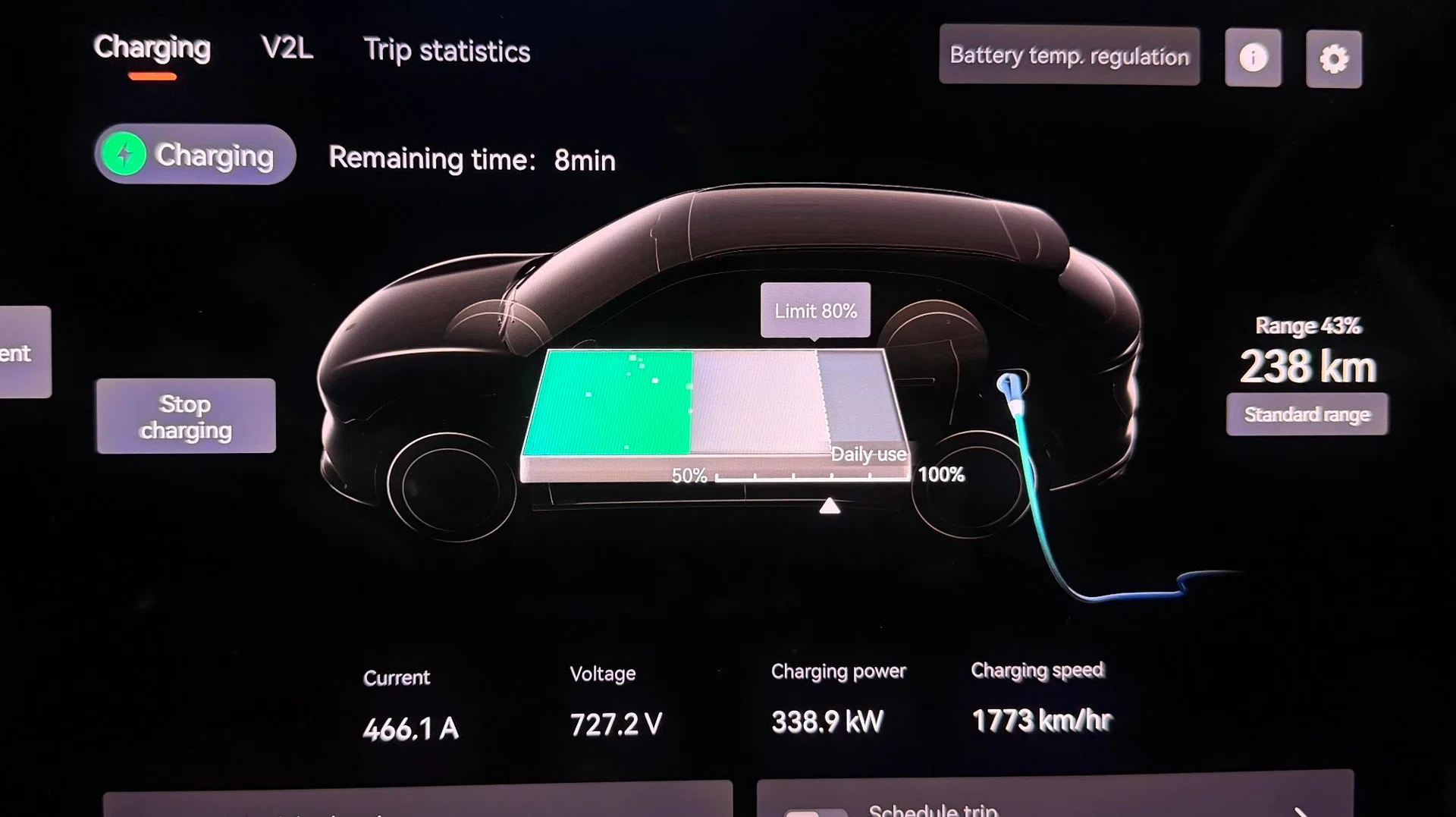
Zeekr 7X charging screen

Charging was brisk, but I only managed to see charging rates of around 300-340kW.

Photo: HWZ

In the test, I found that the Zeekr 7X took about 16 minutes to charge from 20% to 80%. This is decent considering it has a fairly large 100kWh battery – meaning I had to “fill up” around 60kWh. Furthermore, I didn’t precondition the battery prior to charging, and therefore only saw charging rates of around 300kW to 340kW. If you want to achieve the fastest charging rates, you’ll have to precondition the battery, but this could take as long as 30 minutes, depending on the condition of the battery.

As for costs, since Great World charges S$0.60/kWh, which meant our total cost came up to S$37.63 for 62.72 kWh of energy. Given that S$0.60/kWh is below average in terms of costs, and that Great World has so many charging points, I’d sat that Great World is a nice place to come charge your EV. Parking costs at Great World are also reasonable, and there’s parking at S$3.50 per entry after 5.01pm.

Final thoughts

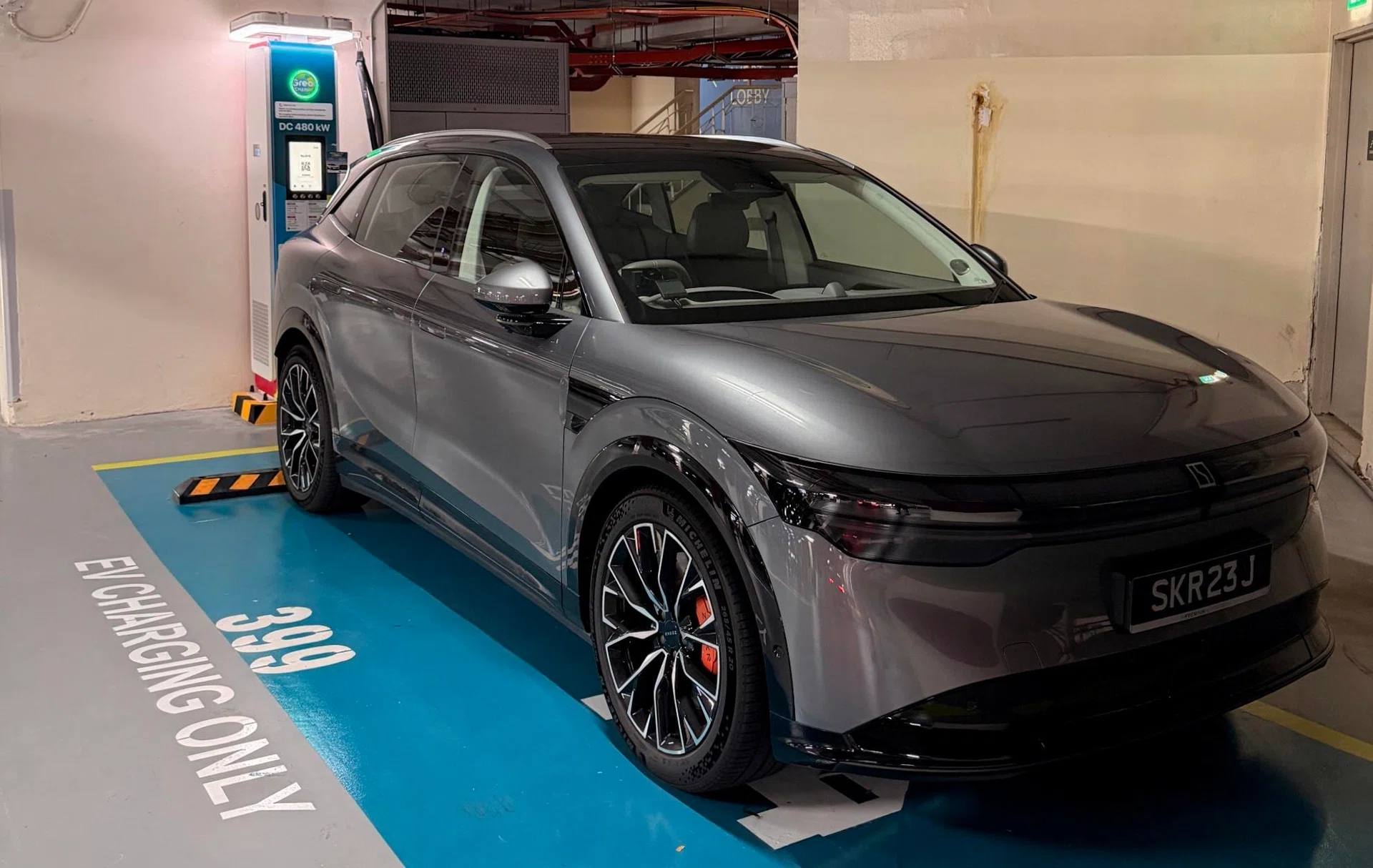
Zeekr 7X charging

As it turns out, even the fastest charging experience is still going to take you a while.

Photo: HWZ

Depending on your level of patience, 16 minutes is either a reasonable amount of time to charge an EV,  or it takes way too long. Bearing in mind that these 16 minutes do not take into account the time it takes to position yourself in the lot, plug in the cable, and launch the app to activate the charger, I’d say that the total time it takes to charge is closer to 20 minutes. 

And remember, this is with one of the fastest charging cars and Singapore’s most powerful DC charger. In other words, this is a best-case scenario. With a more common 50kW charger, and depending on the capacity of the car’s battery, you’ll likely see charging times that are closer to or over an hour. Most ICE cars can be in and out of a gas station within 10 minutes if they are really efficient – 15 minutes if they take their time shopping or if there’s a long line at the cashier.

Still, there’s no question that charging times will come down as battery and charging technologies progress. But as of right now, charging is going to take you a while and that’s the inescapable fact of EV ownership. If it’s any consolation, EVs have their advantages. Generally speaking, they are cheaper to buy and run. And for the same money as an ICE car, an EV is usually faster and quieter. In light of these plus points, a long charging time is probably a reasonable thing to have to put up with – at least for the foreseeable future.


Read Full Article At Source