Nvidia has announced DLSS 5, the next generation of its graphics upscaling technology. And this time, the graphics giant is taking a decidedly different approach from past DLSS versions; rather than improving FPS or fix ray-tracing issues, DLSS 5 is helping games achieve a cinematic look by generating its own visual elements through AI, the culmination of Nvidia’s efforts in refining its neural rendering model.
Unveiled at Nvidia’s GTC 2026 keynote, DLSS 5 analyses a scene, using the colour and motion vectors in a frame as input, and generates photorealistic lighting. The result, the company says, is lighting that reflects “complex scene semantics” – in other words, details such as hair, skin, and fabric, along with the position of a scene’s light source and its intensity.
But what does it actually look like? Well, you can take a look at Nvidia’s trailer below, featuring DLSS 5 on games like Resident Evil Requiem, Starfield and EA FC 26.
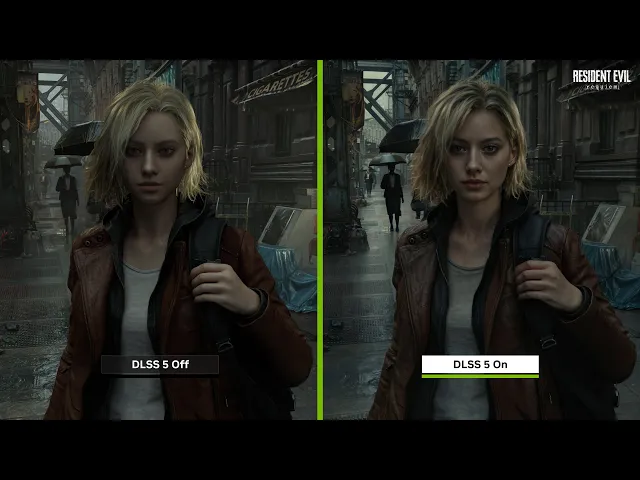
Photorealistic is certainly one way to describe it, though the effect works better on some games than others – EA FC looked pretty good to me, but I’m not sure how to feel about seeing Leon Kennedy’s individual beard hairs.
Nvidia stated that some of the details that DLSS 5 can improve on include micro-realism in the objects like eyes and hair, and cinematic lighting effects such as rim lighting and subsurface scattering (or how light travels through translucent objects) for skin. DLSS 5 also aims to keep these generated lighting effects consistent across frames, and Nvidia says that it supports a resolution of up to 4K.
However, there’s something to be said about exactly how much artistic intent it takes away from game designers, given that some of that creative vision is now dependent on an AI model. It’s enough of a concern that it warranted a short statement from Bethesda, who said, “This will all be under our artists’ control, and totally optional for players.”