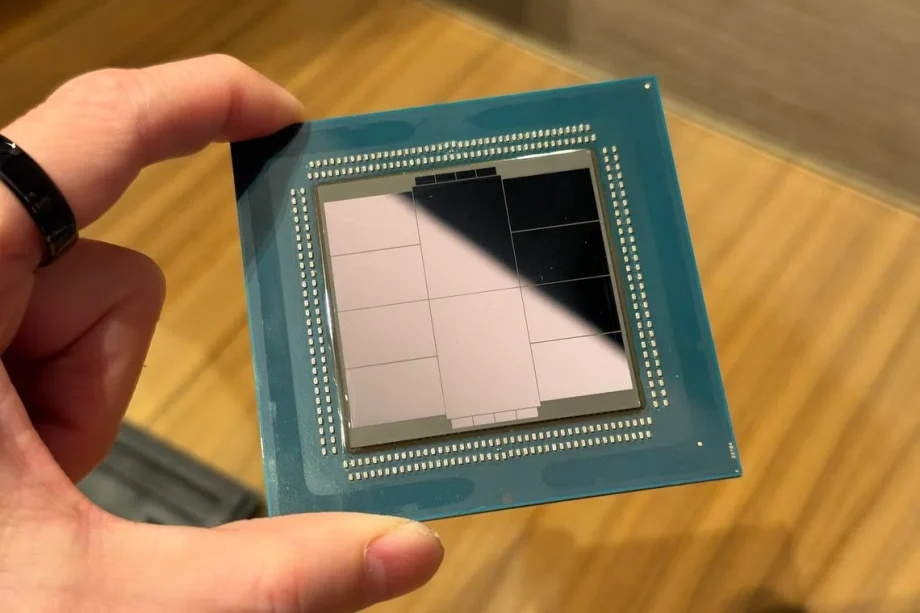
AMD has finally lifted the curtain on its Zen 6 CPU architecture, giving us a detailed look at the technology that will power its next generation of processors. And while the announcement is centred around the company’s 6th Gen EPYC server processors, codenamed Venice, there’s plenty here for PC enthusiasts to get excited about. After all, Zen 6 will eventually find its way into next year’s new Ryzen desktop processors (if AMD’s product cadence is unchanged), and some of the changes AMD has made could have a significant impact on gaming and everyday computing performance.
I’ve always found AMD’s Zen architecture interesting because of how much it has changed the company’s fortunes since the first Ryzen processors arrived in 2017. What began as AMD’s attempt to make itself competitive again against Intel has evolved into an architecture that now powers everything from gaming PCs and laptops to some of the world’s most powerful servers. Each generation has brought improvements in performance and efficiency, but the underlying approach of combining smaller CPU chiplets into larger processors has remained central to AMD’s strategy.
With Zen 6, AMD is sticking to that approach and is even taking it further by increasing the number of cores that can fit inside each chiplet, expanding the amount of cache available and making substantial changes to how individual cores handle instructions. The new architecture also moves to TSMC’s advanced 2nm N2P manufacturing process, which should help AMD improve performance and power efficiency as it packs more transistors into its processors.
More cores per chiplet, and why that matters
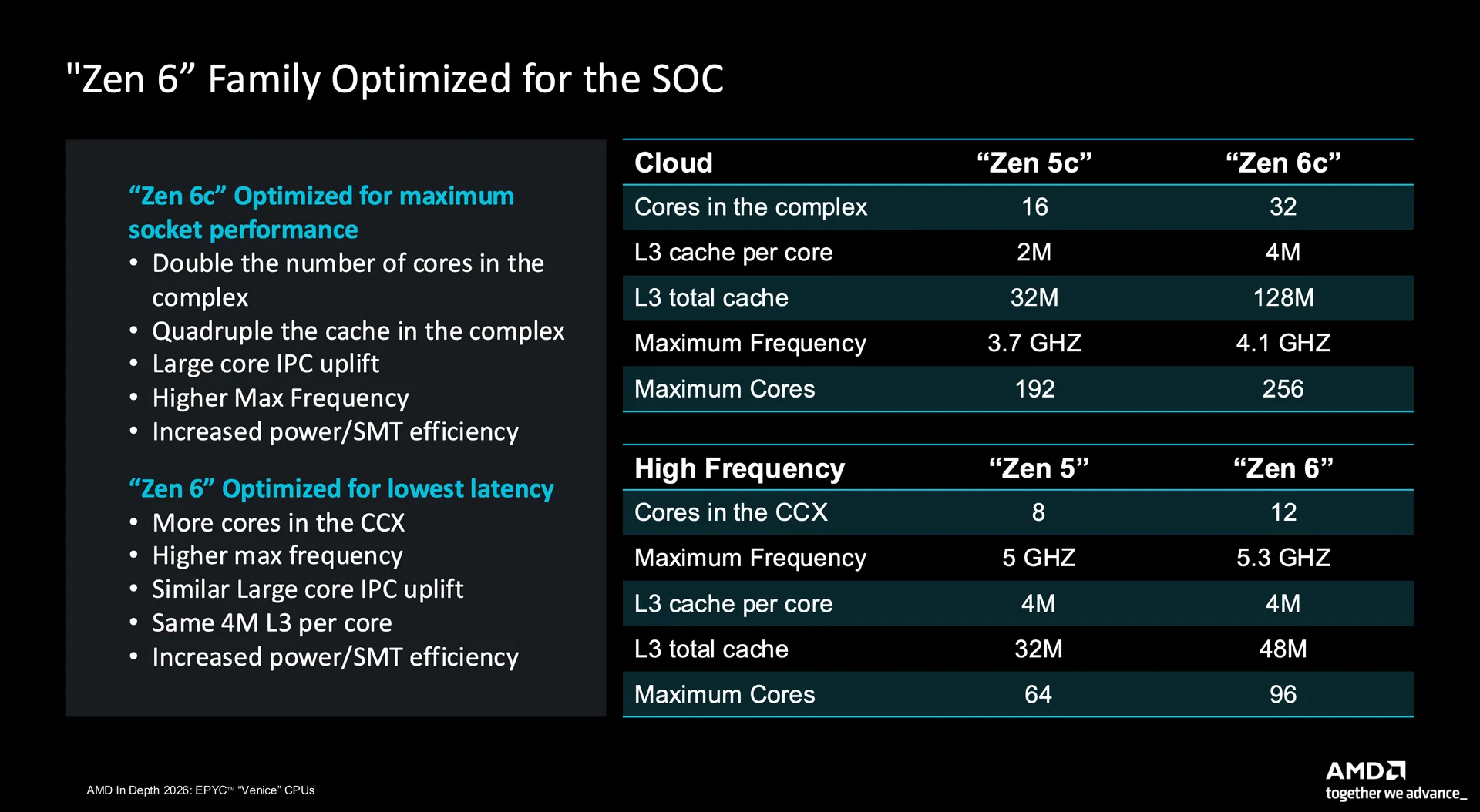
Image: AMD
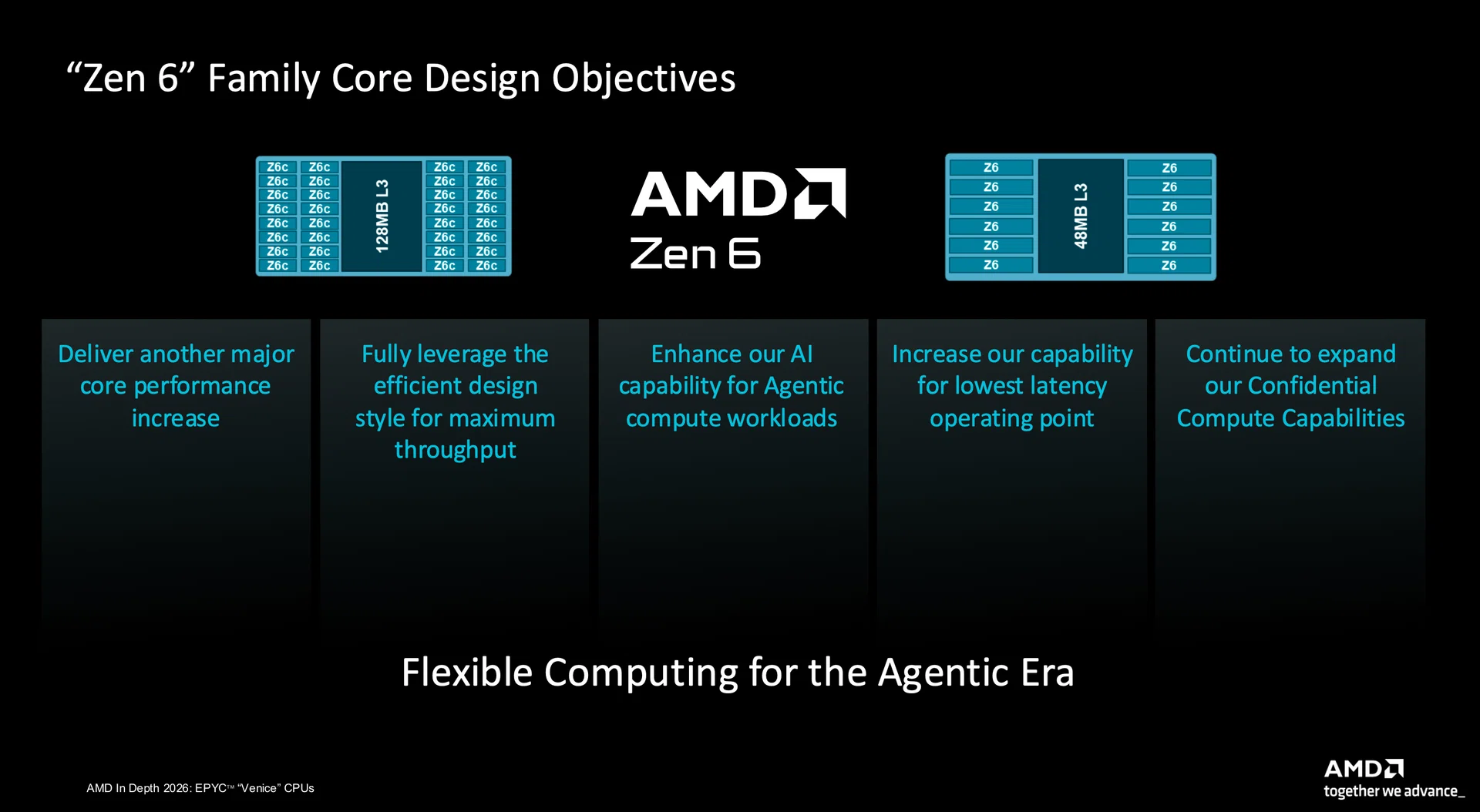
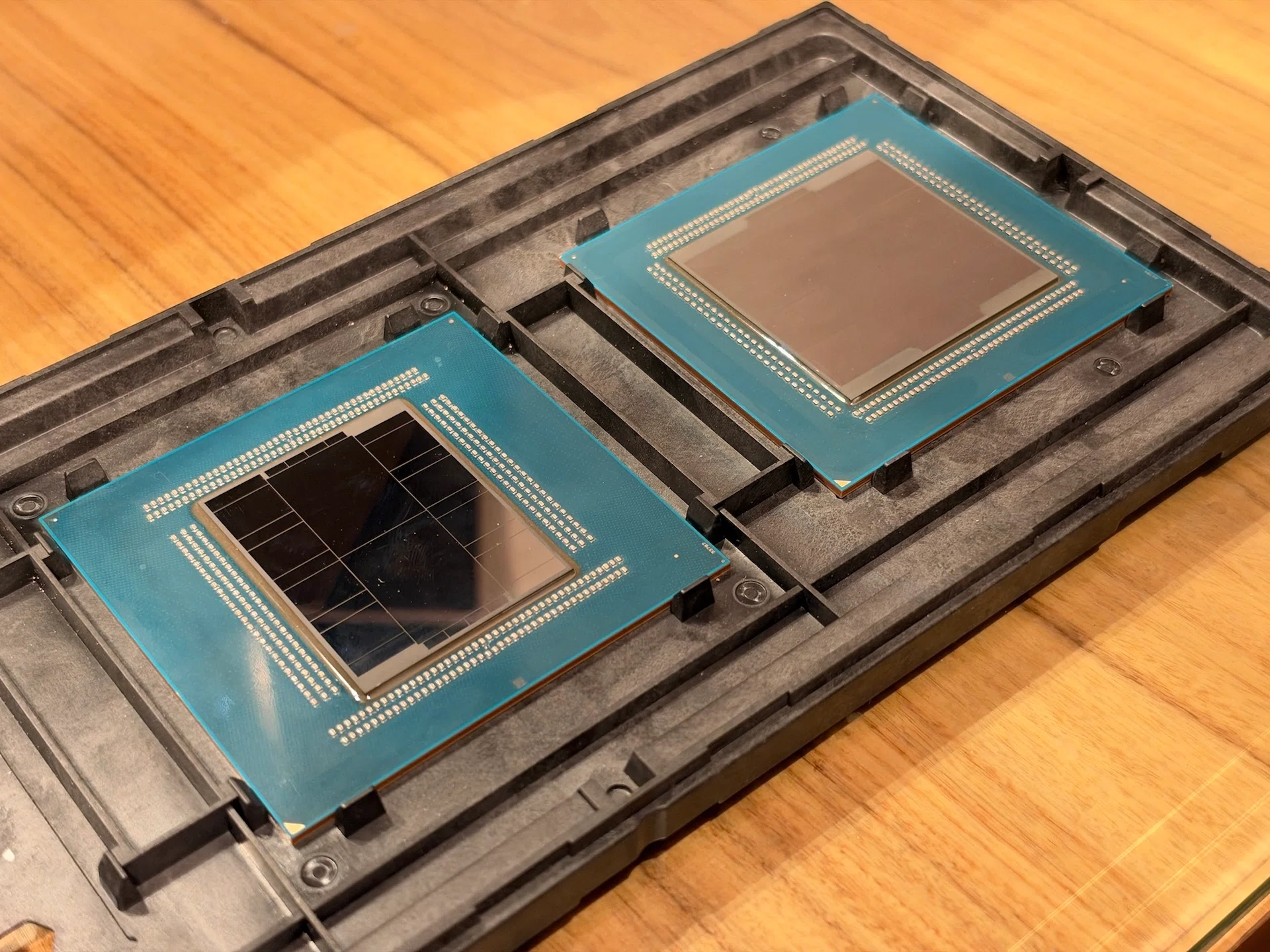
Perhaps the most immediately noticeable change with Zen 6 is the number of CPU cores AMD can fit into a single chiplet, or what it calls a Core Complex Die (CCD). With Zen 5, a conventional CCD contains up to eight cores sharing 32MB of L3 cache. Zen 6 expands that to 12 cores and 48MB of L3 cache.
That might not sound particularly exciting when you consider how many cores modern processors already have, but I think it’s one of the more meaningful changes AMD has made in recent years. That’s because the number of cores isn’t the only thing that matters. How efficiently those cores communicate with one another, and how quickly they can access the data they need is just as important.
And if AMD continues using two CCDs in its mainstream desktop processors, Zen 6 could theoretically allow a 24-core Ryzen CPU, compared with the 16-core ceiling of the conventional dual-CCD Zen 5 Ryzen 9000 family. Of course, AMD hasn’t announced such a consumer processor yet, but it’s a safe bet there will be one. All that’s left it’s how the company will name it – a Ryzen 9 11950 sounds quite the mouthful and odd, no?
But AMD isn’t stopping at 12 cores. It has also greatly increased the density of its compact Zen 6c architecture, which is built for situations where fitting in as many cores as possible matters more than achieving high clock speeds. A single Zen 6c CCD can now accommodate up to 32 cores and 128MB of L3 cache, compared with 16 cores and 32MB on Zen 5c. Interestingly, AMD has also doubled the L3 cache allocation per compact core, from 2MB to 4MB, bringing it in line with the conventional Zen 6 design.
This is particularly important for EPYC processors, where AMD can combine multiple CCDs to reach 256 cores on a single CPU. It also illustrates how the company is using the same underlying architecture to address different workloads, whether the priority is outright clock speed, multi-threaded performance or processor density.
A wider and smarter Zen core
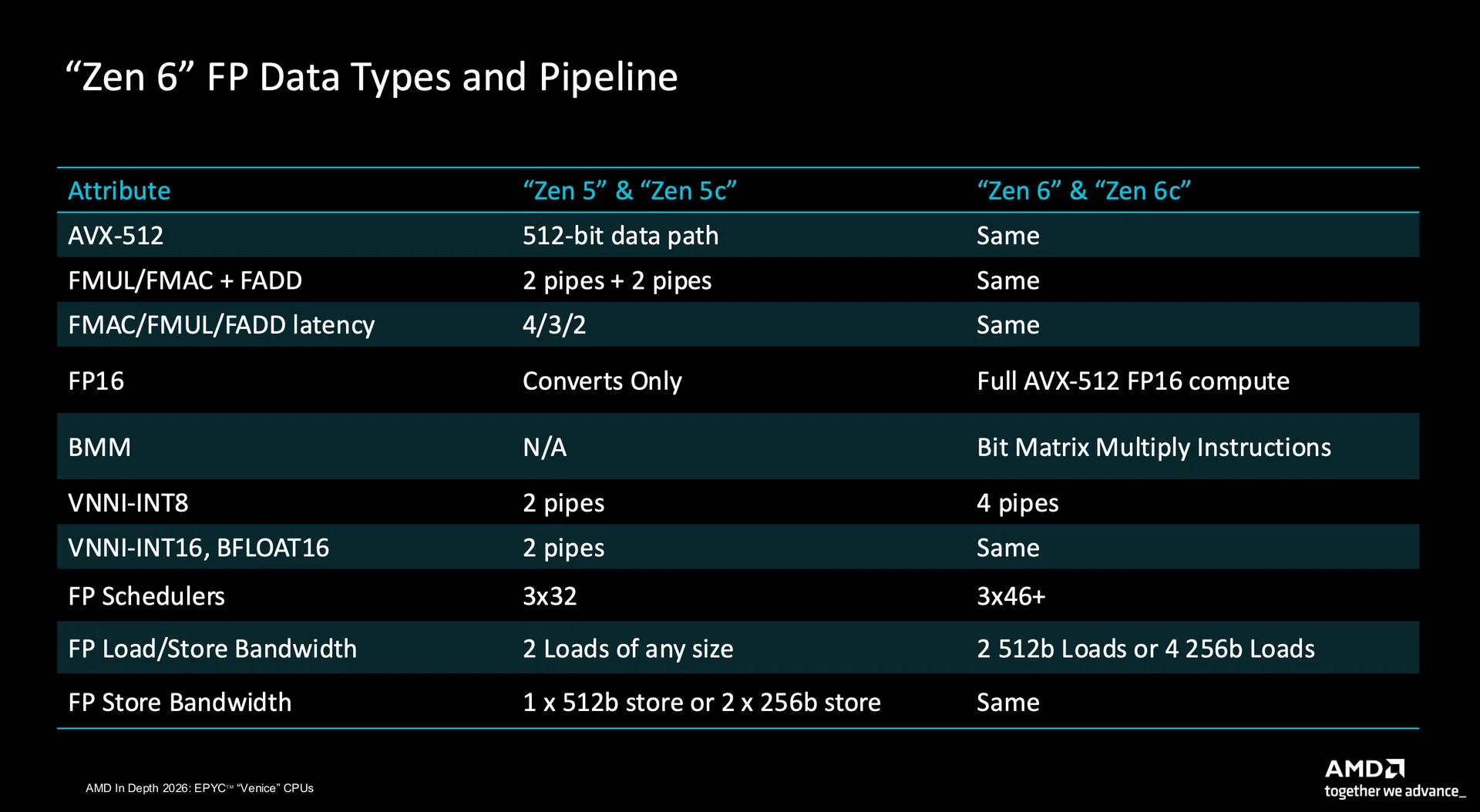
While the additional cores and cache are easy to understand, the changes AMD has made inside each Zen 6 core are arguably just as important. After all, adding more cores only gets you so far if the individual cores aren’t doing more work themselves.
To understand why, it’s worth looking at how a modern CPU works. A processor doesn’t simply take one instruction, execute it and then move on to the next. Instead, it tries to keep multiple instructions moving through different stages simultaneously, predicting which instructions will be needed, arranging them in an efficient order and executing them whenever the necessary resources become available.
The more effectively a CPU can do this, the more work it can complete during each clock cycle. This is what we generally refer to as instructions per clock (IPC), and improving IPC has been one of AMD’s recurring priorities throughout the Zen architecture’s development.
Read Full Article At Source