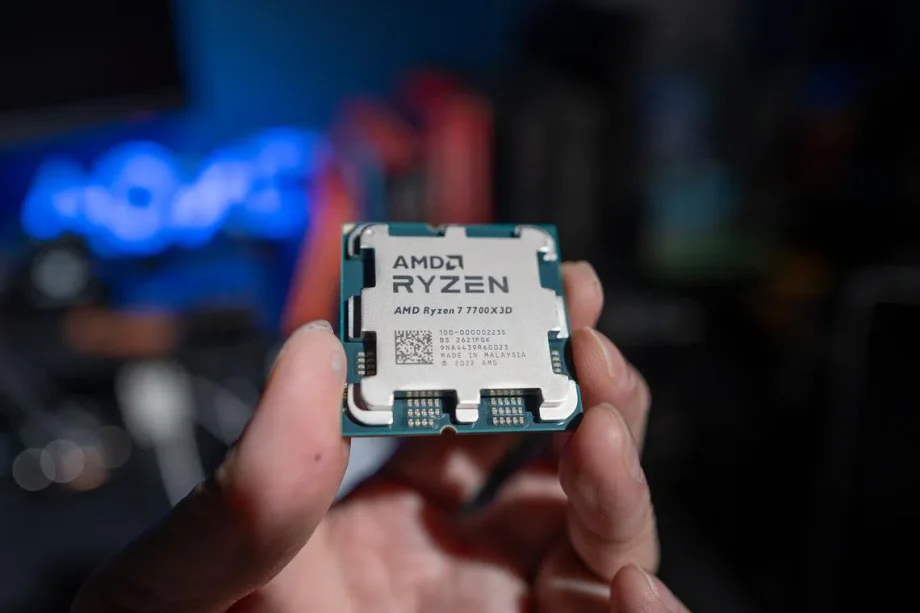
A new Zen 4 desktop processor arriving in 2026 is a little surprising. After all, AMD has already moved its mainstream desktop line-up onto the newer Zen 5 architecture, while its more recent Ryzen 9000 series gaming processors have adopted the company’s second-generation 3D V-Cache design. By that measure, the Ryzen 7 7700X3D already feels old before it even reached our test lab.
That does not necessarily mean it has arrived too late. AMD’s X3D processors have built a strong reputation among PC gamers, but they have not always been the easiest chips to find at sensible prices these days. The Ryzen 7 7800X3D, in particular, spent much of its life as one of the more sought-after gaming processors around, with prices sometimes reflecting that demand. The Ryzen 7 7700X3D appears to be AMD’s attempt to bring much of the same formula back but at a lower price, even if it means returning to an architecture that first appeared nearly four years ago.
The thinking behind it is not entirely new, as the Ryzen 7 7700X3D has much the same relationship with the 7800X3D as the Ryzen 7 5700X3D did with the 5800X3D on the older AM4 platform. In both cases, AMD has taken an established eight-core X3D processor, lowered its clock speeds and offered it as a cheaper alternative. It is an approach that has worked well for the 5700X3D, which gave AM4 owners on the lower-budget tier another practical upgrade option without forcing them to replace their motherboard and memory.
Ryzen 7 7700X3D vs 7800X3D
| AMD Ryzen 7 7700X | AMD Ryzen 7 7700X3D | AMD Ryzen 7 7800X3D | AMD Ryzen 9800X3D | Intel Core Ultra 5 250K Plus | |
|---|---|---|---|---|---|
| Cores / Threads | 8 / 16 | 8 / 16 | 8 / 16 | 8 / 16 | 18 / 18 (6P + 12E) |
| Base Clock | 4.5GHz | 4.0GHz | 4.2GHz | 4.7GHz | 4.2GHz (P) / 3.3GHz (E) |
| Boosted Clock | Up to 5.4GHz | Up to 4.5GHz | Up to 5.0GHz | Up to 5.2GHz | Up to 5.3GHz (P) / 4.6GHz (E) |
| L3 Cache | 32MB | 96MB | 96MB | 96MB | 30MB |
| Socket | AM5 | AM5 | AM5 | AM5 | LGA1851 |
| Default TDP | 105W | 120W | 120W | 120W | 125W |
| Launch SRP (USD) | $399 | $329 | $449 | $479 | $229 |
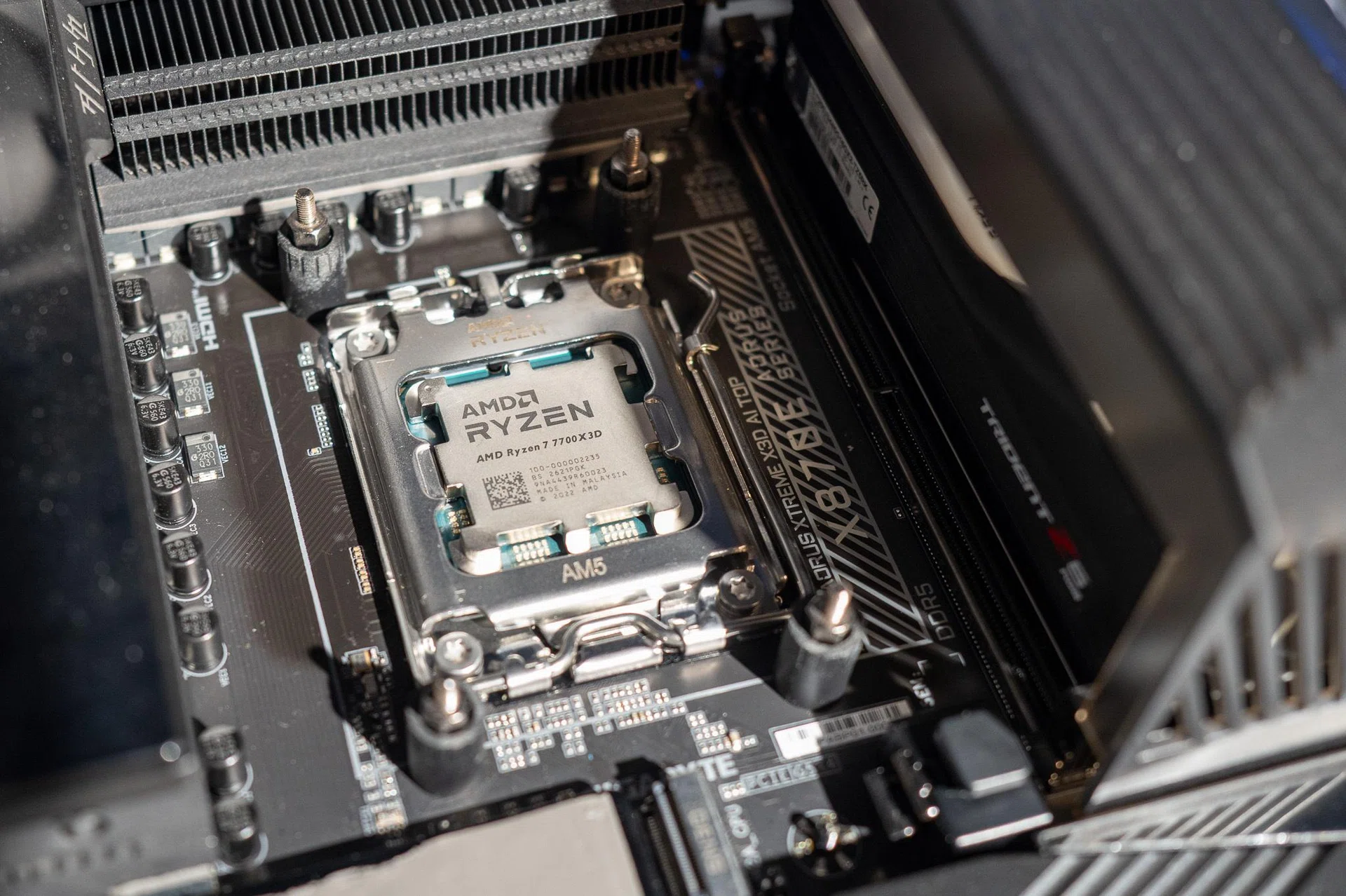
This time, the Ryzen 7 7700X3D is built around eight Zen 4 cores and 16 threads, with 96MB of L3 cache provided by AMD’s first-generation 3D V-Cache technology. Add its 8MB of L2 cache and the processor has 104MB of combined L2 and L3 cache, matching the Ryzen 7 7800X3D. It also retains the same 120W TDP, uses the AM5 socket and supports DDR5 memory and PCIe 5.0.
Where AMD has made the cut is in clock speed. The Ryzen 7 7700X3D has a 4.0GHz base clock and a maximum boost clock of 4.5GHz, compared with 4.2GHz and 5.0GHz respectively on the Ryzen 7 7800X3D. A 500MHz reduction in peak boost frequency is large enough to matter, particularly in productivity applications and other workloads that do not benefit as much from the additional cache.
Gaming is where the calculation becomes less straightforward. The main reason AMD’s X3D processors have performed so well is not simply their raw frequency, but the large pool of cache sitting close to the CPU cores. It can reduce how often the processor needs to retrieve data from system memory, which is particularly useful in games that repeatedly work with large amounts of data. The 7700X3D still has the same cache capacity as the 7800X3D, so the question is how much those lower clock speeds actually cost it once a game starts running.
Of course, none of this would matter if AMD had priced the 7700X3D too close to the processor above it. At US$329 at launch, it is US$120 cheaper than the Ryzen 7 7800X3D was when that processor launched at US$449 in 2023. That sounds like a reasonable price difference, but launch prices only tell part of the story. The 7800X3D has been on sale for several years, while newer Ryzen 9000 processors and competing Intel chips have since entered the market. What you’ll actually pay at retail will be far more important than a comparison between two prices set three years apart – we’ll get to this later.
Who is the Ryzen 7 7700X3D made for?
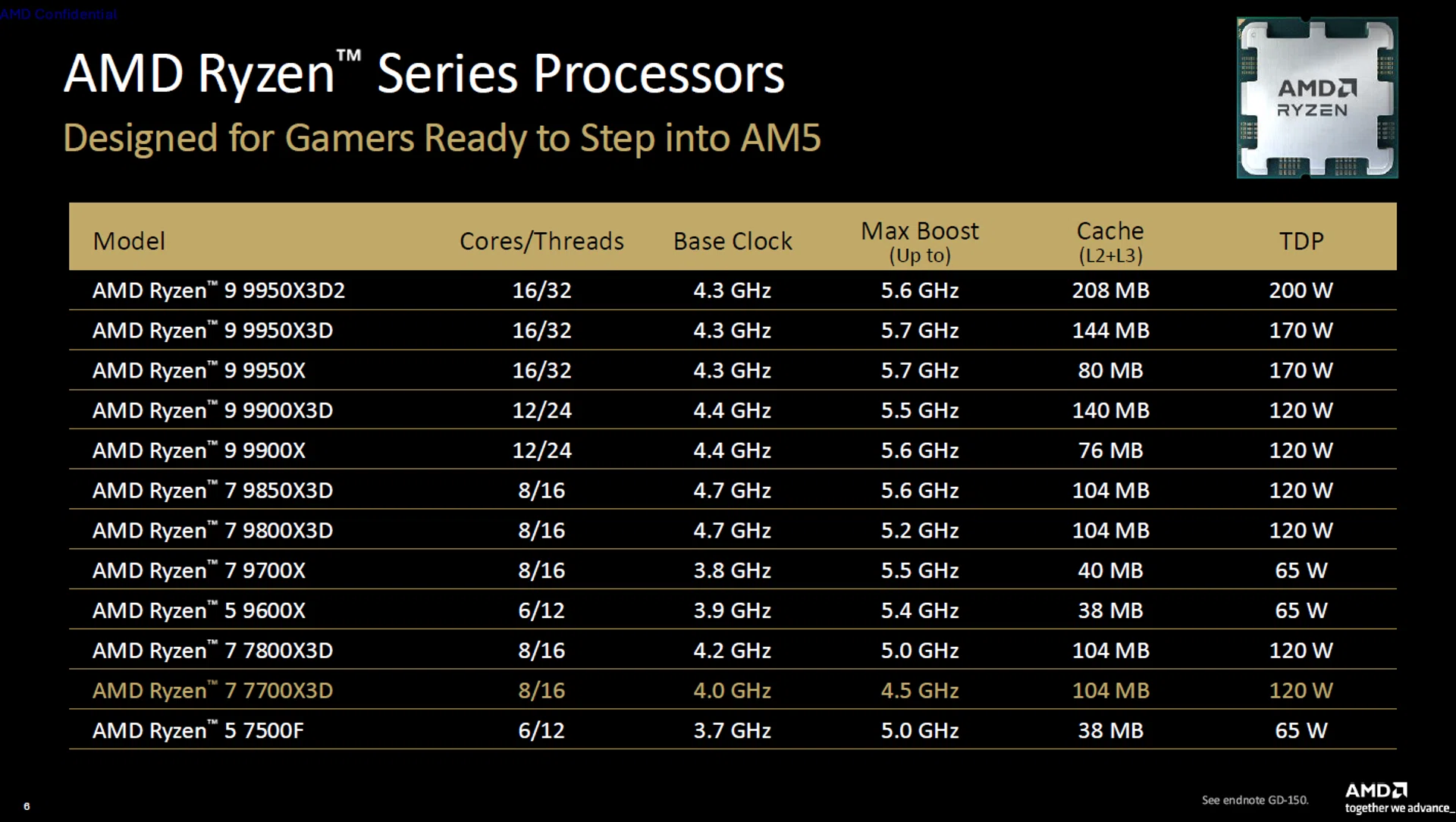
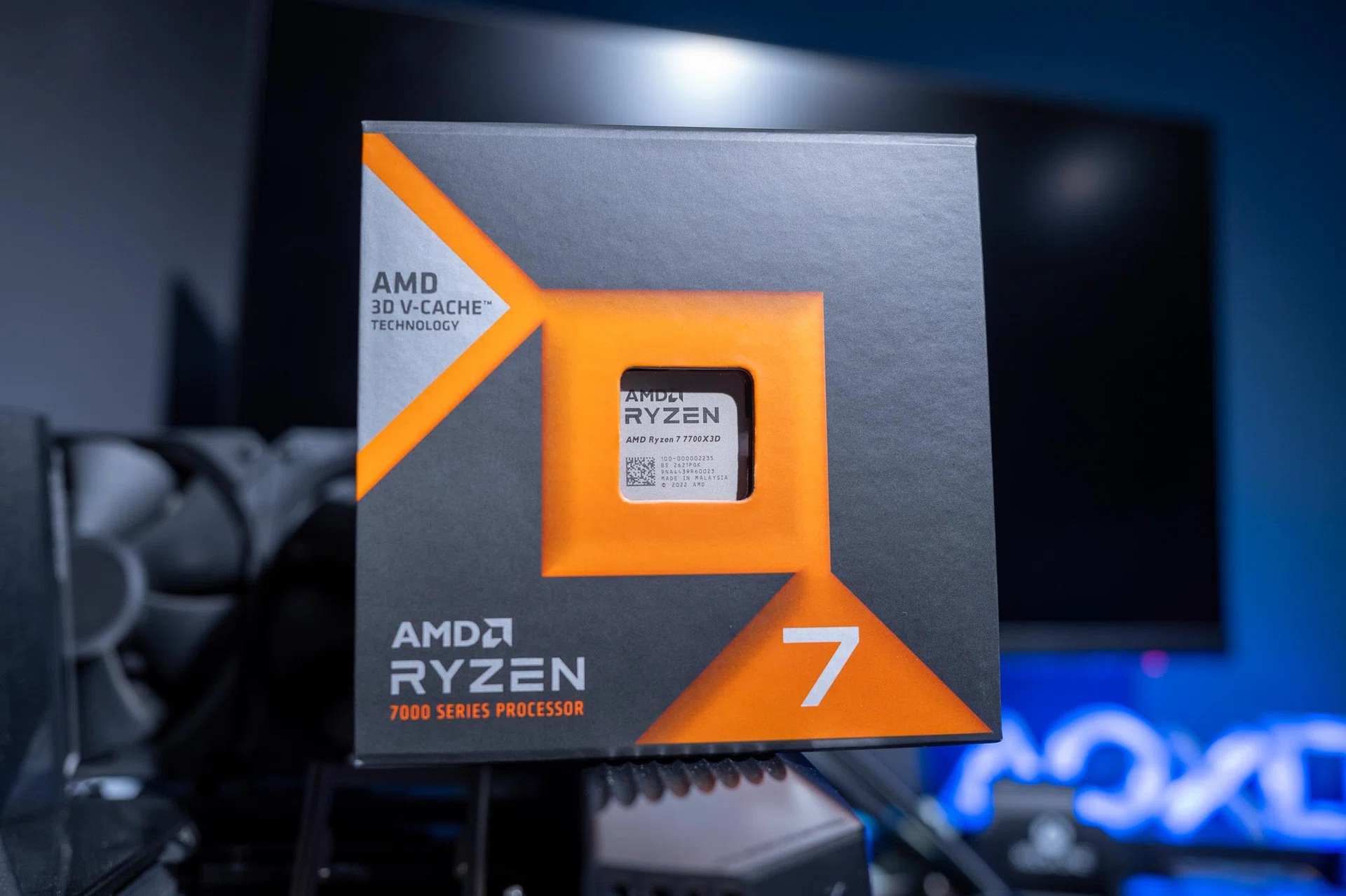
Image: AMD
Of course, the 7700X3D is clearly not aimed at anyone who already owns a 7800X3D. It is made for someone putting together a relatively affordable AM5 gaming system, or an existing AM5 owner who started with a regular Ryzen 5 or Ryzen 7 processor and now wants access to 3D V-Cache without paying for a newer flagship chip.
There is also a practical reason for AMD to keep Zen 4 around. Building a gaming PC has not become cheaper simply because newer processors have arrived. The CPU is only one part of the overall cost, and buyers still have to account for the motherboard, and, most painfully, the graphics card. Memory and storage prices have skyrocketed as well, making components that were once relatively easy places to save money a much larger part of the overall budget. A less expensive X3D processor could therefore leave more room for a better graphics card or a higher capacity SSD.
But the Ryzen 7 7700X3D does not enter an empty part of the market. It must compete against discounted Ryzen 7000 processors, newer Ryzen 9000 models and whatever Intel is offering at a similar price. Depending on availability here, it may also find itself sitting uncomfortably close to the 7800X3D or facing cheaper six-core X3D alternatives. A US$329 SRP is only attractive if retailers maintain a meaningful gap between it and the faster options.
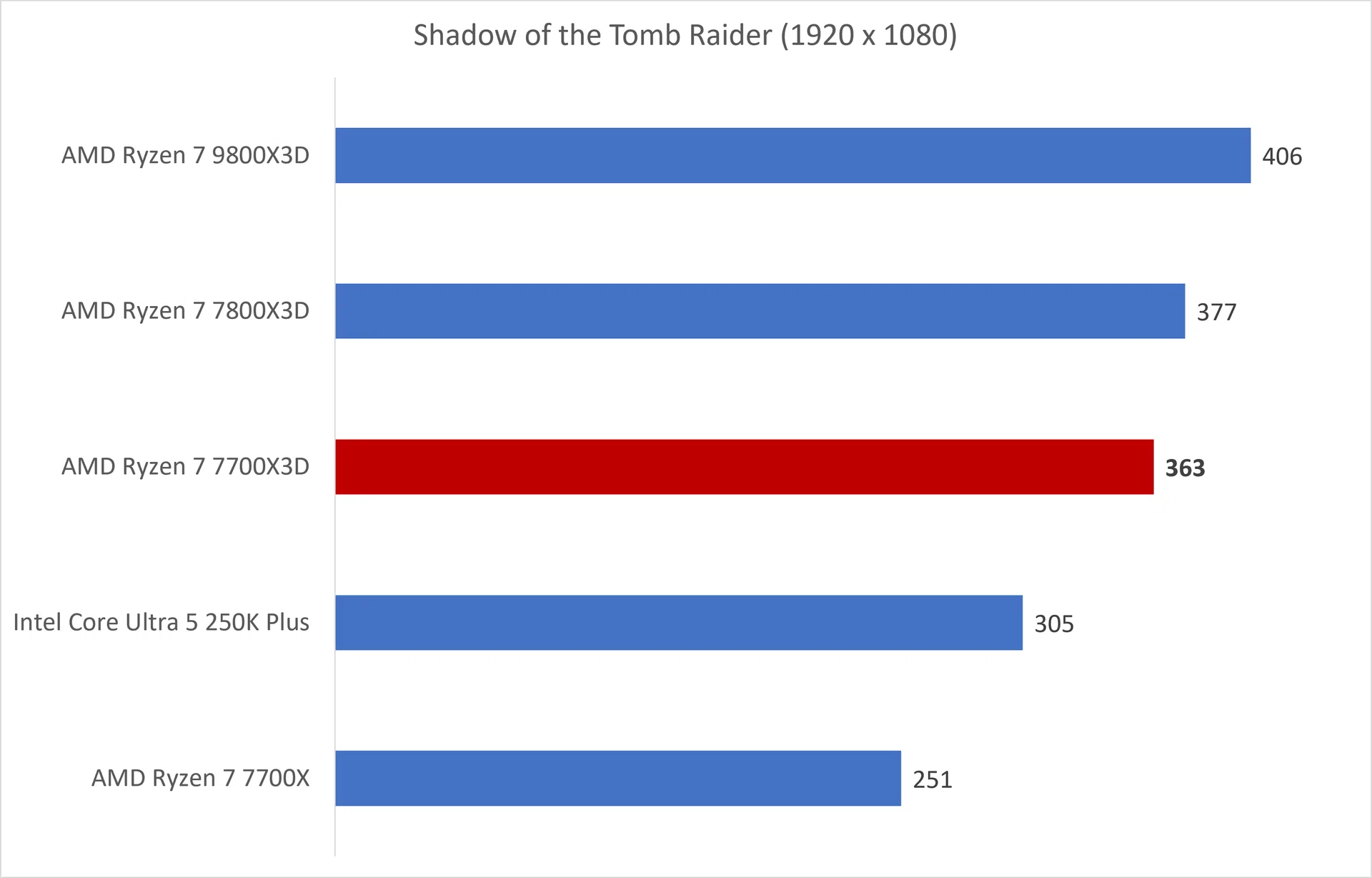
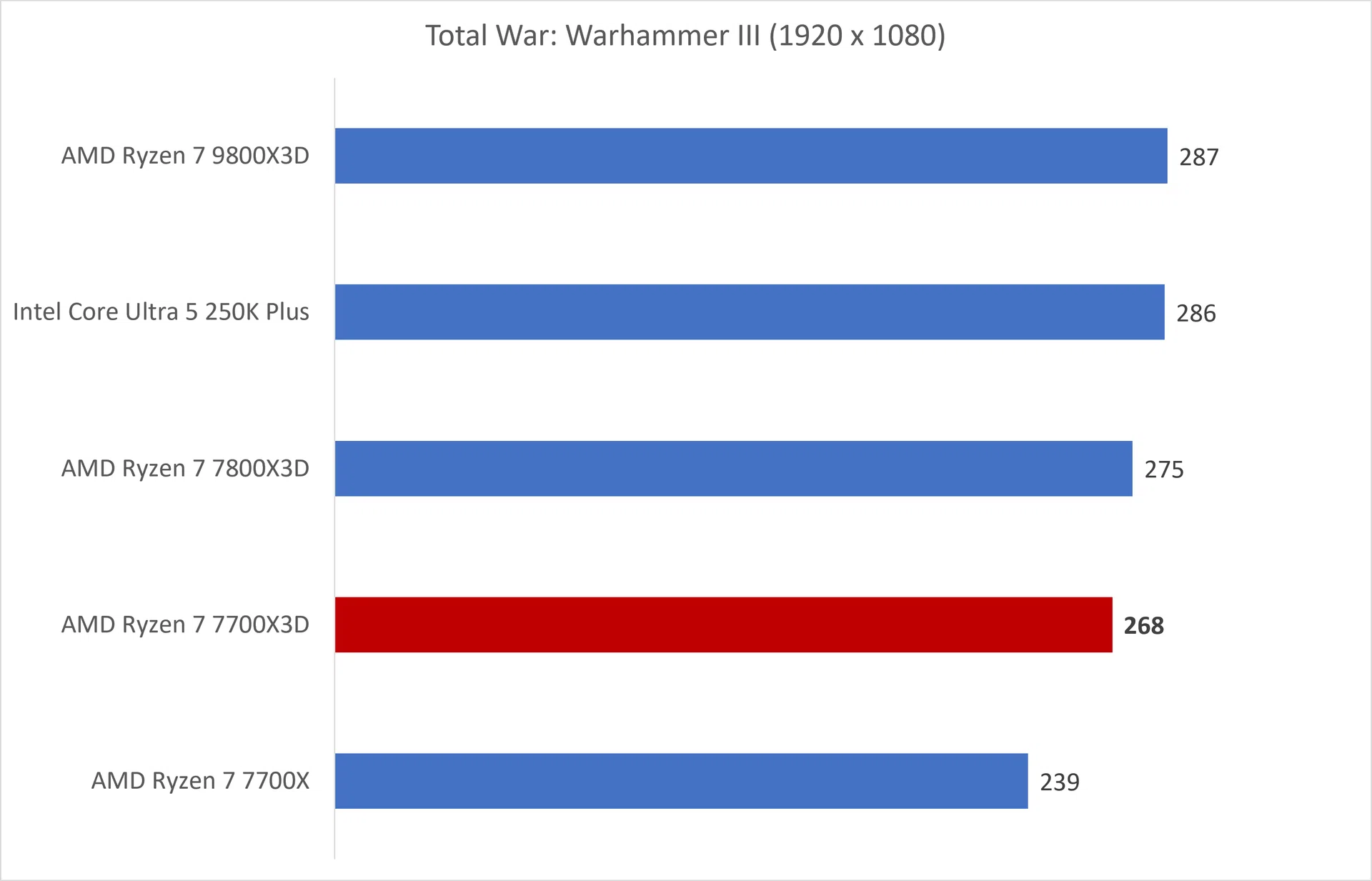
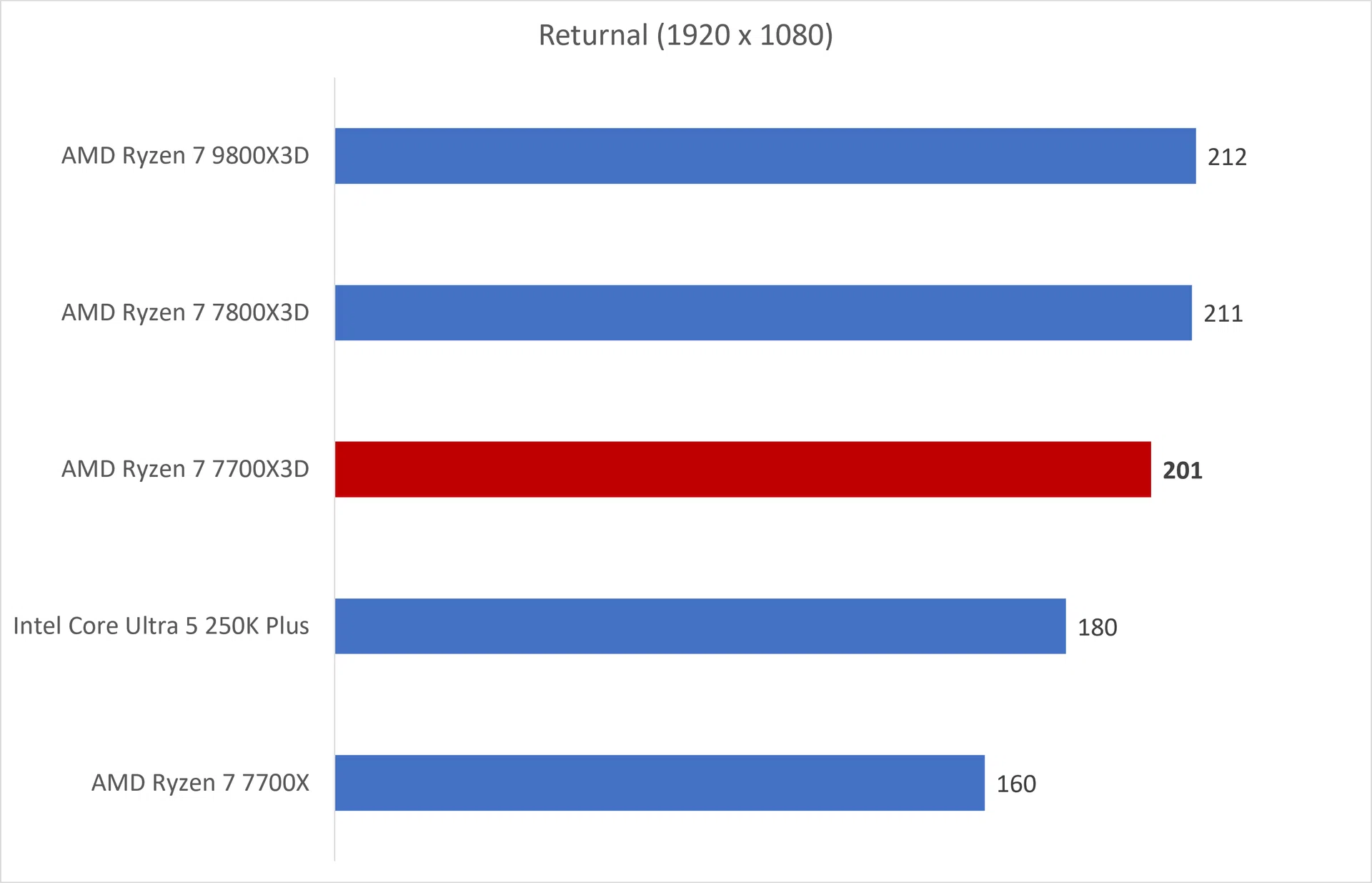
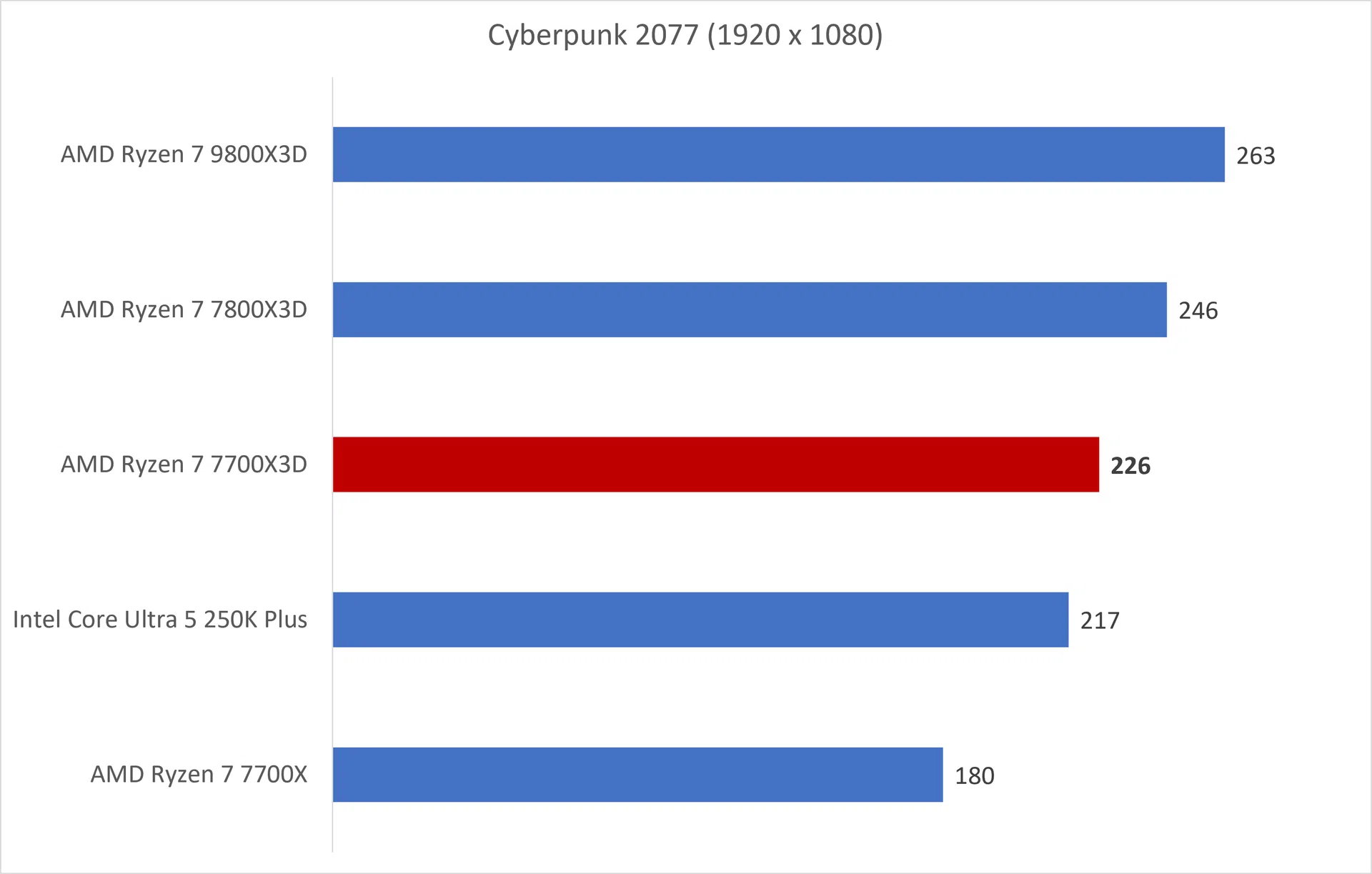
That leaves the 7700X3D in a slightly awkward but potentially useful position. It has the eight-core configuration and cache capacity that helped make the 7800X3D such a capable gaming processor, but it gives up a fair amount of frequency and arrives several years later. The benchmarks below should show whether AMD has created a sensible new entry point for AM5 gamers, or simply found another way to extend the life of its remaining Zen 4 silicon.
Read Full Article At Source