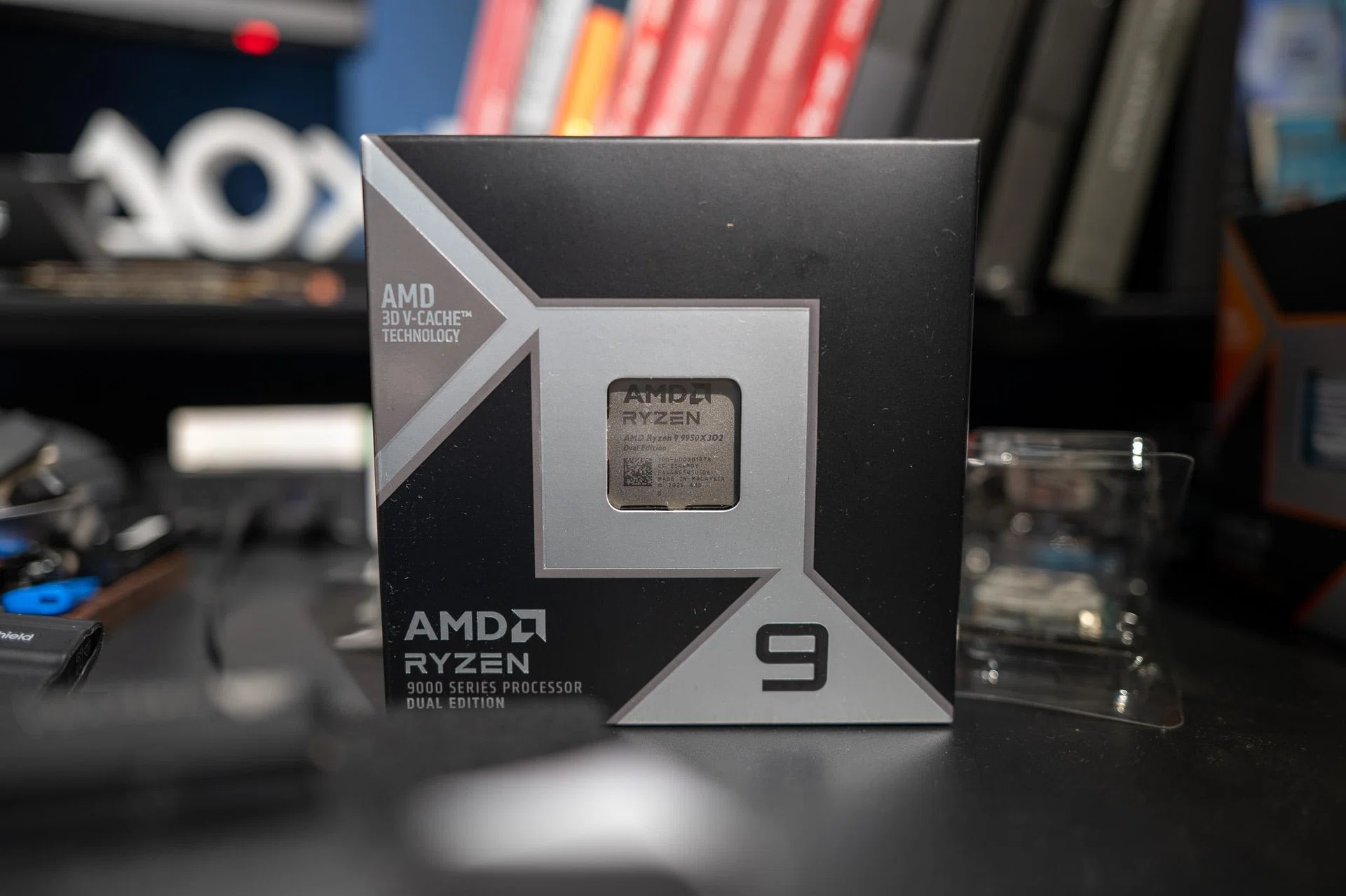
AMD’s hardened grip on the consumer desktop space right now isn’t hard to explain. The Ryzen 9000 series has done what it set out to do against Intel’s Arrow Lake in this generation’s CPU battle – push ahead on power efficiency, hold its ground in productivity and content creation tasks, and, more importantly, tighten its lead in gaming with the X3D lineup. The Ryzen 9 9950X3D, in particular, already felt like AMD closing the loop on what an almost “perfect” high-end desktop CPU should look like today: efficient with thermal and power, quick with daily workloads and fast at gaming. It’s not a stretch to call it the best CPU to buy right now.
So it’s a bit surprising that AMD isn’t done.
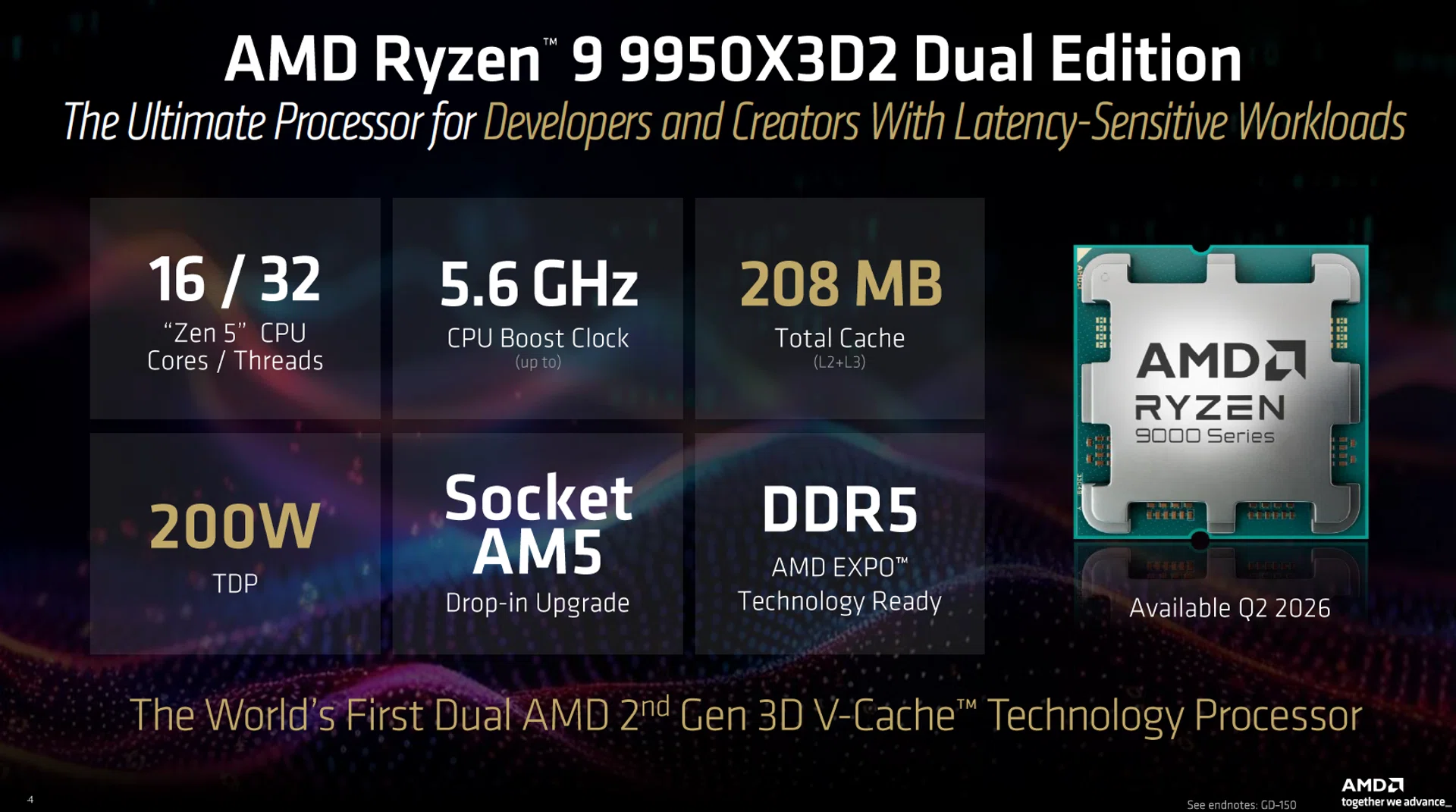
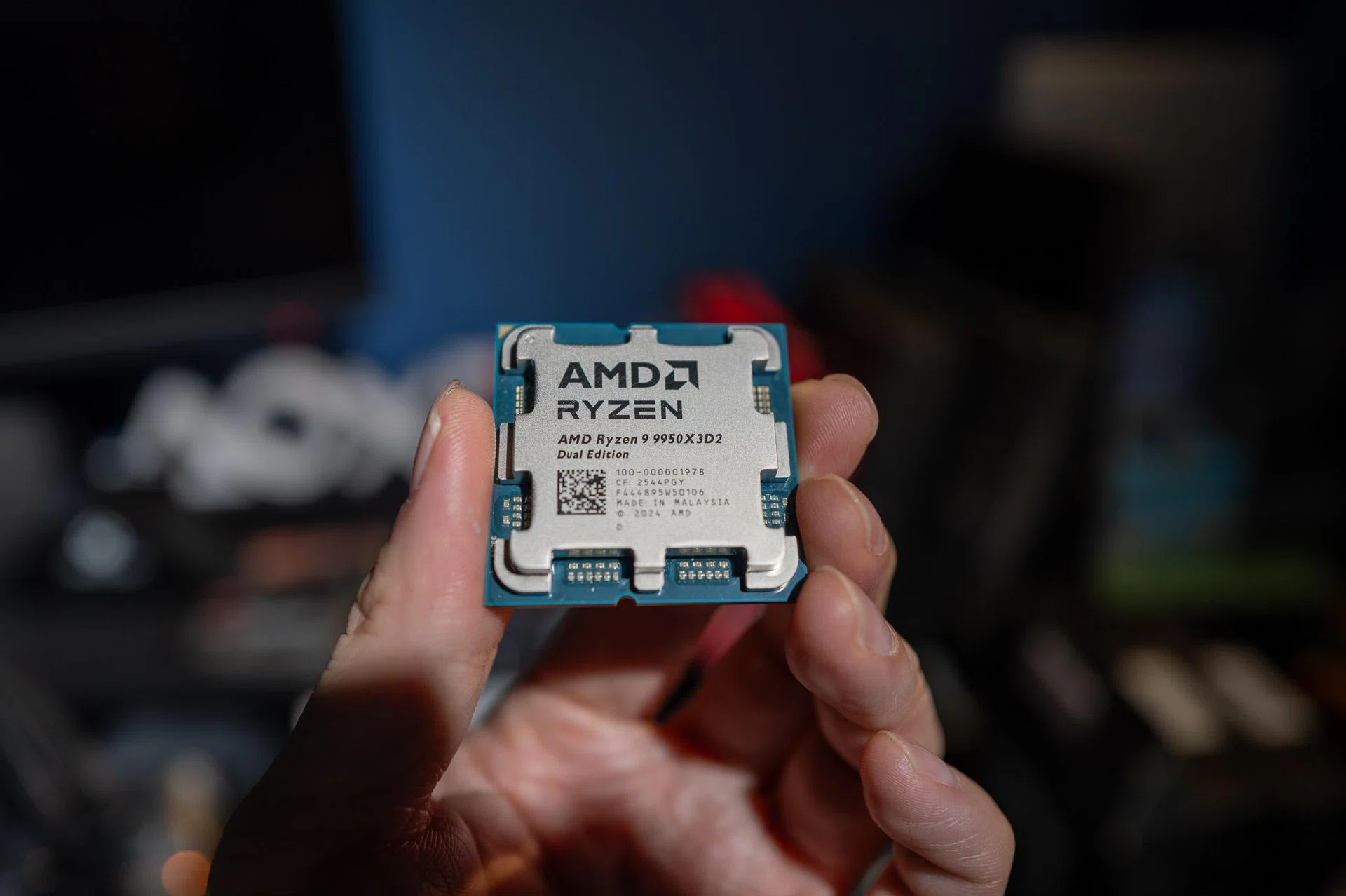
The Ryzen 9 9950X3D2 is very likely the finishing line for AMD’s Ryzen 9000 series.
Image: AMD
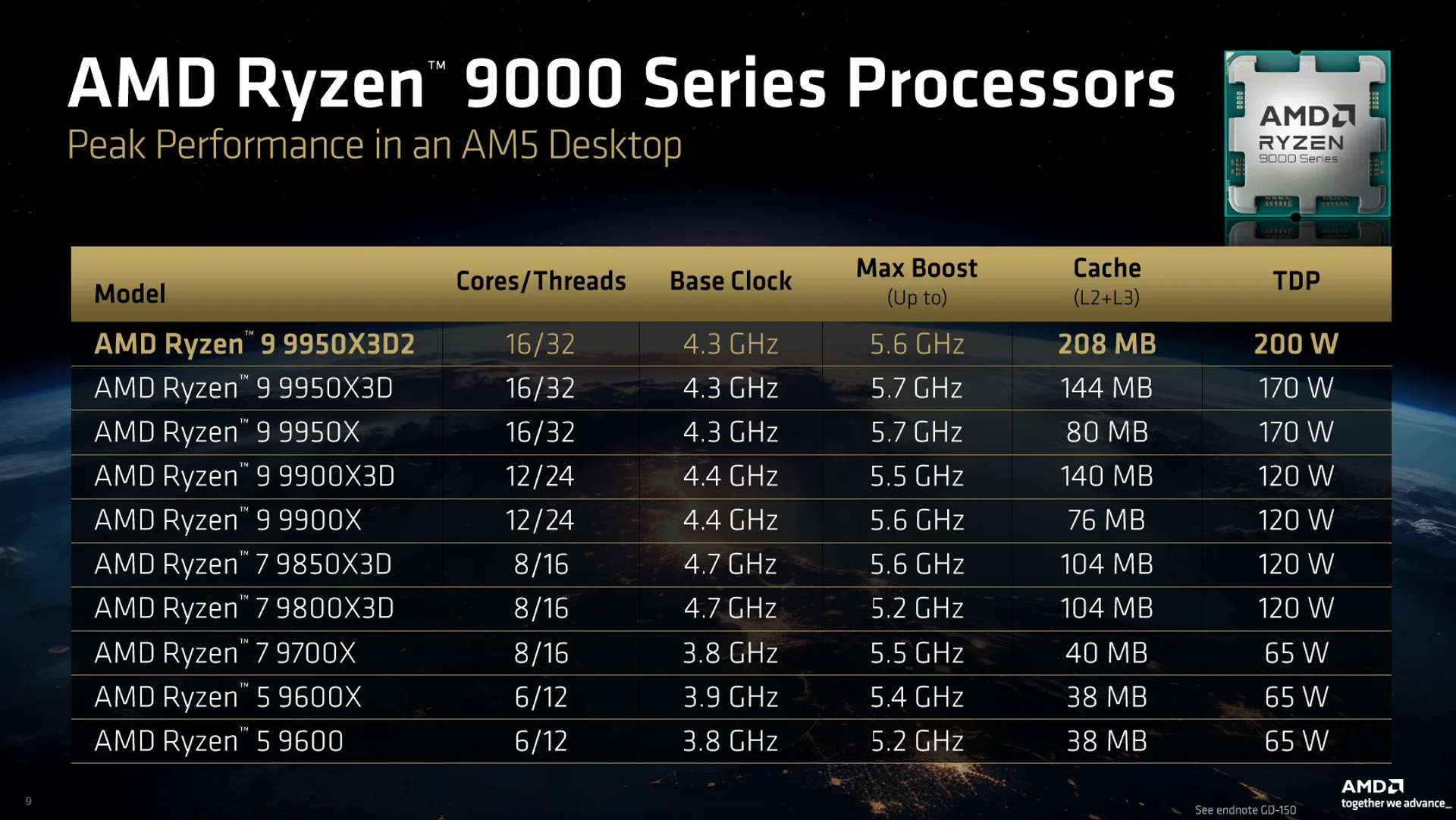
Here’s a complete stack of the Ryzen 9000 series.
Image: AMD
Because instead of letting the 9950X3D sit comfortably at the top, AMD has decided to go one step further with the new Ryzen 9 9950X3D2 – a chip that, at least as far as specs go, feels like it’s trying to remove one of the last quirks of the X3D design. No more splitting duties between cache-heavy and non-cache CCDs, no more second-guessing whether the scheduler is putting workloads in the “right” place. This time, both chiplets get the full 3D V-Cache treatment.
That sounds like a very logical solution. But does doubling down on cache actually translate into real-world performance, or is this AMD pushing an already good formula just a little too far?
Which is where things get interesting, because this isn’t just a simple spec bump. In fact, it’s a change that could reshape how the chip behaves under different workloads – thermals, boost behaviour, and even how consistent performance benefit games and productivity tasks.
But before getting into numbers, it’s worth taking a step back and looking at what AMD has actually changed here. Because on the surface, the 9950X3D2 might look like a simple follow-up to the 9950X3D, but under the hood, it’s doing something quite different.
Tell me more about X3D2
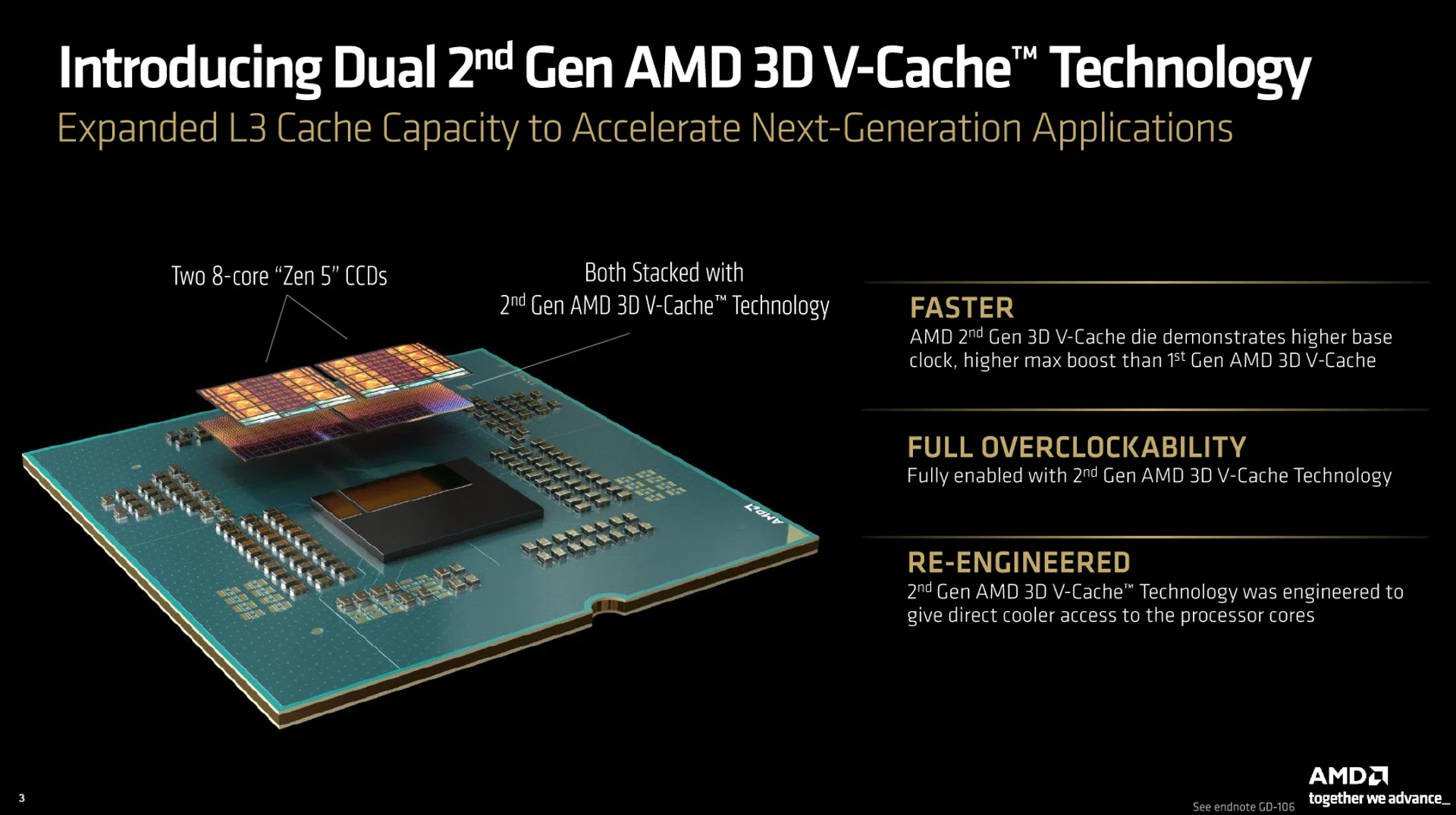
The Ryzen 9 9950X3D2 is the first Ryzen 9000 series chip to come with two 8-cores CCDs that are stacked with 3D V-cache each.
Image: AMD
If you’ve used or read my review of the Ryzen 9 9950X3D, you’ll already have a rough idea of how AMD approached its X3D chips up to this point. The design was clever, but also a little awkward under the hood. One of the two 8-core Zen 5 CCDs came stacked with 3D V-Cache, effectively acting as the “gaming” half of the processor, while the other CCD was left untouched to handle higher-frequency workloads. It worked more often than not, but it also meant the chip was constantly juggling between two different personalities, relying on Windows and AMD’s own scheduling logic to decide which cores should handle what at any given time.
The Ryzen 9 9950X3D2 moves away from that balancing act entirely, and in a way that feels both obvious and, in my opinion, slightly overkill. Instead of splitting responsibilities across two different types of CCDs, AMD has now stacked both 8-core Zen 5 chiplets with its second-generation 3D V-Cache. That means all 16 cores now have access to that enlarged L3 cache pool instead of just half of them. This effectively removes the whole “which cores are better for this task?” question from the equation.
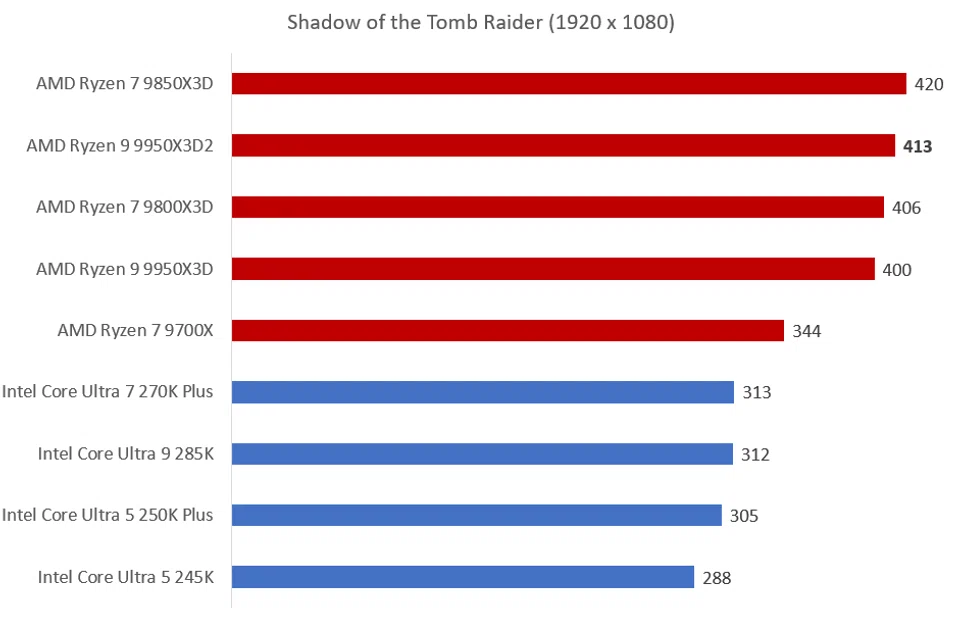
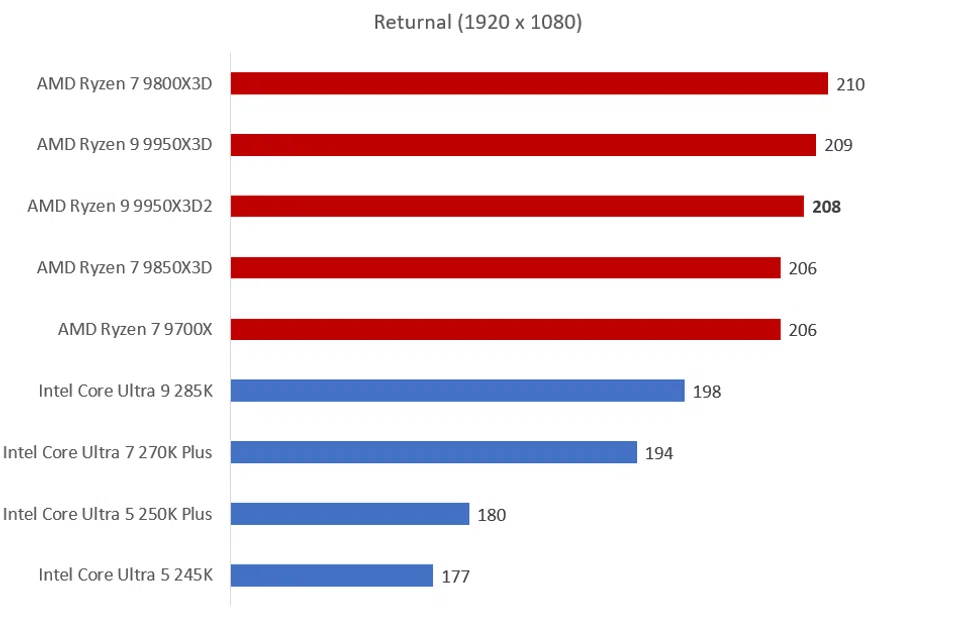
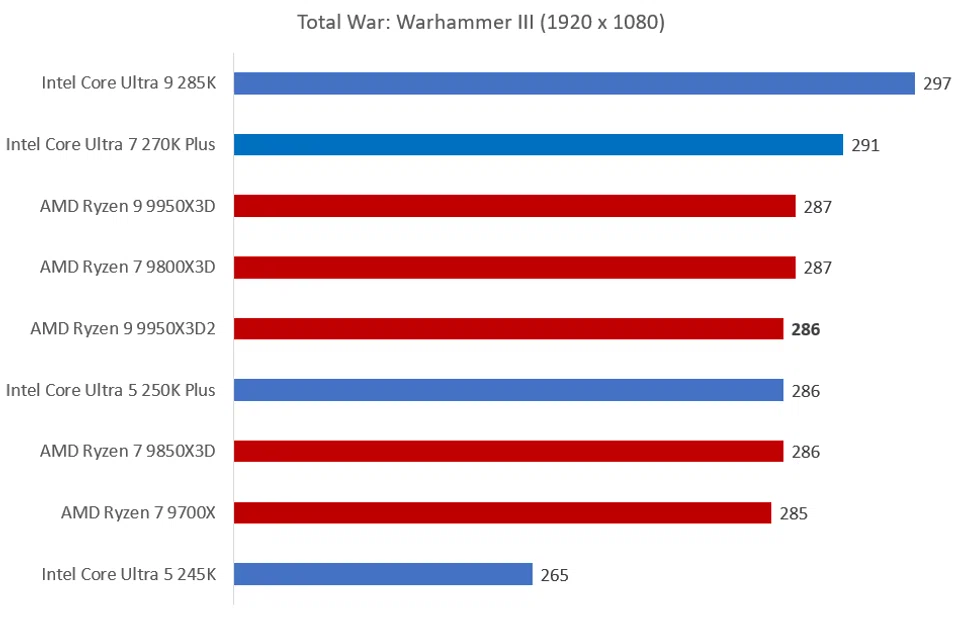
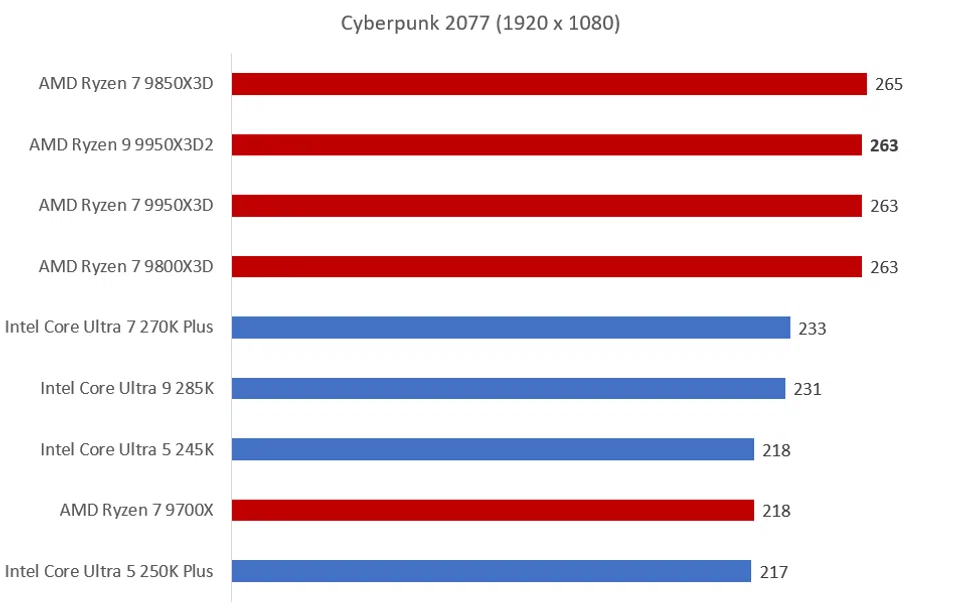
Logic dictates that this should make the chip behave more predictably than its predecessor. There’s less reliance on scheduling quirks, fewer edge cases where performance might swing depending on how workloads are assigned, and a stronger baseline for applications that care about memory latency or cache access. But at the same time, this isn’t the kind of change that automatically translates into obvious gains everywhere, especially not in gaming (we’ll see in our gaming benchmarks below).
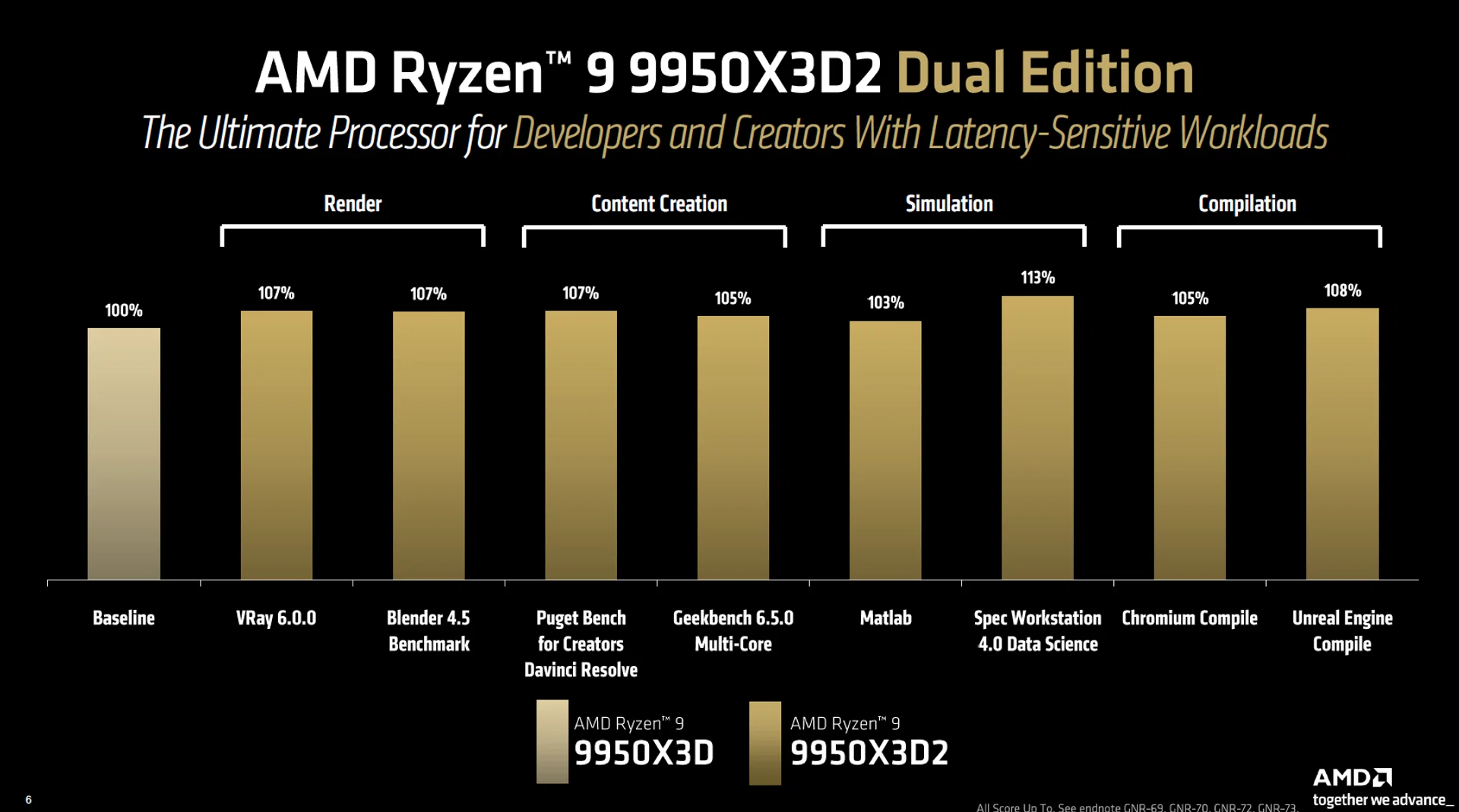
AMD says developers and creators with latency-sensitive workloads will see benefits from the Ryzen 9 9950X3D2 over the 9950X3D.
Image: AMD
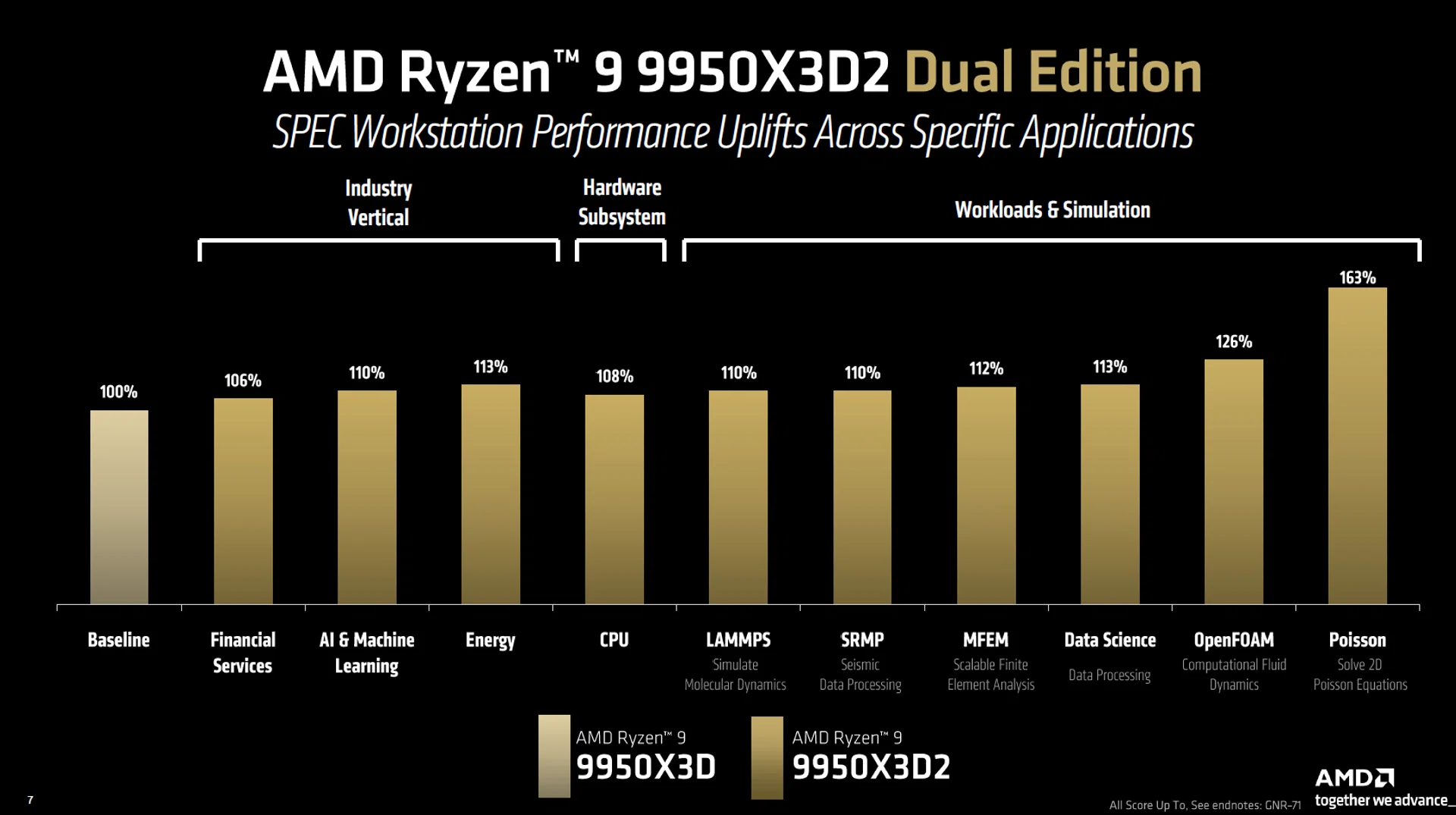
Here’s a look at SPEC workstation performance uplifts across applications, as tested by AMD.
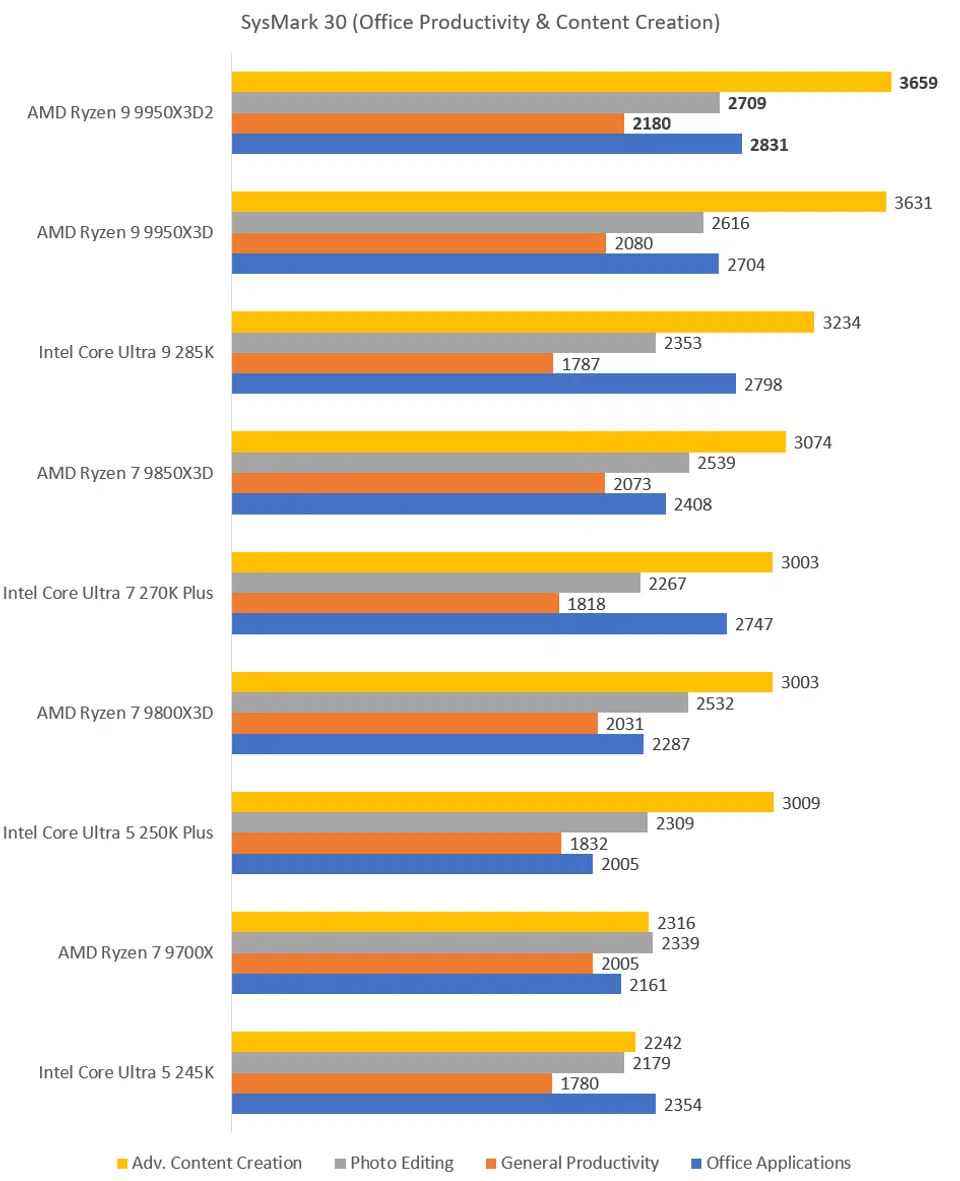
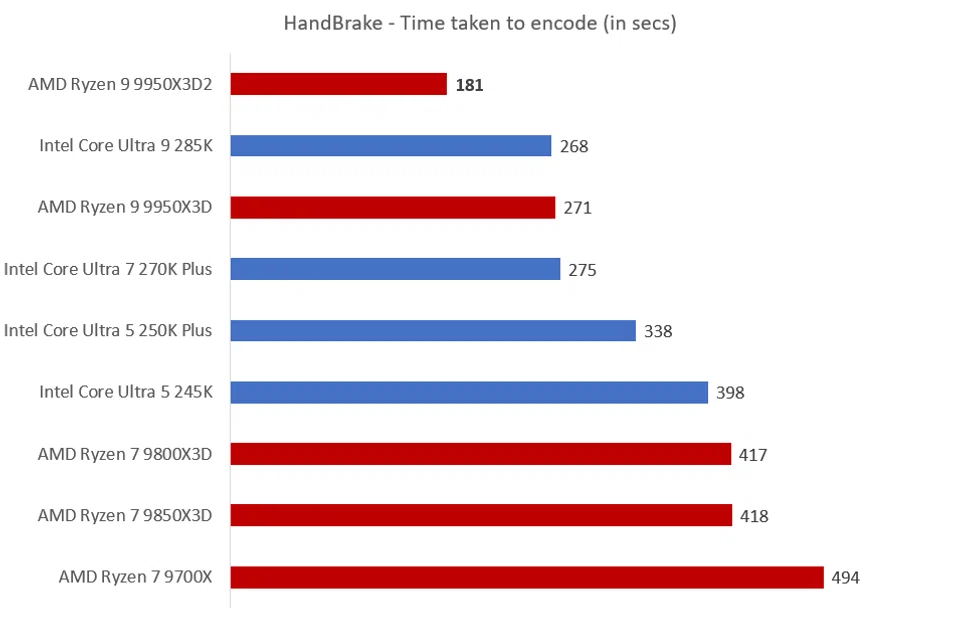
In fact, based on AMD’s own figures, gaming performance between the 9950X3D and the 9950X3D2 is largely unchanged on average. That might sound underwhelming at first, but it also makes sense. Games were already benefiting from having one cache-stacked CCD, so doubling that up doesn’t suddenly unlock another tier of performance. Where the newer chip starts to pull ahead is in workloads that can actually make use of all 16 cores more evenly, particularly rendering, AI simulations, and certain productivity applications, where AMD is quoting gains in the region of 3% to 7% depending on the scenario.
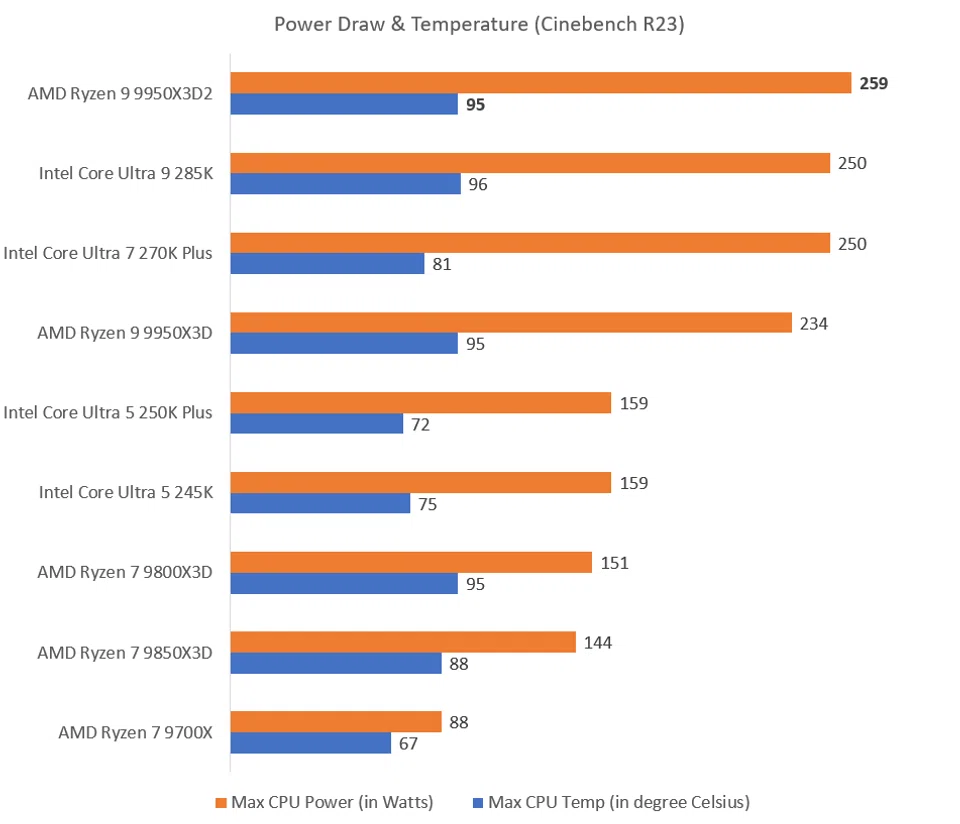
That shift in focus also shows up in the specs. Total cache has increased to 208MB, which is a noticeable jump over the 9950X3D’s 128MB, but it comes with a corresponding increase in power draw, with TDP now sitting at 200W compared to 170W on the 9950X3D. It’s a reminder that while stacking cache across both CCDs simplifies things from a performance perspective, it doesn’t come for free. Thermals and power management are more important than ever.
Taken together, the 9950X3D2 doesn’t really feel like a direct replacement for the 9950X3D, at least not in the traditional sense. It’s more like AMD taking an existing blueprint and pushing it to its logical extreme, removing one of the last compromises in the original design and seeing what happens when every core is given equal access to that extra cache. The result isn’t a dramatic leap in gaming performance, but something a bit more nuanced – a chip that’s less about chasing higher peak numbers in a single scenario, and more about delivering a more consistent experience across a wider range of workloads, especially once you step outside of games and into heavier, more parallel tasks.