SINGAPORE – Smaller pre-school operators may find it easier to tap a new grant that will be rolled out to help them join a network of centres offering lower fees to families.
The criteria for the grant will be relaxed from the thresholds required for the government-supported partner operator (POP) scheme, potentially including more smaller operators, said Senior Minister of State for Social and Family Development Goh Pei Ming.
More details will be announced by the end of 2026.
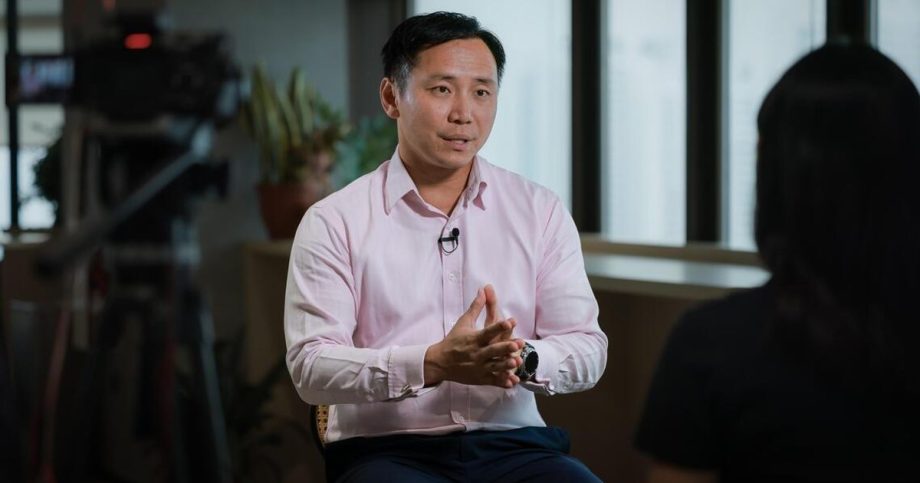
In an interview with The Straits Times, Goh acknowledged that there are smaller, individual centres that are “very passionate about what they do” and are popular with their immediate communities.
Currently, pre-schools must belong to an operator of a certain size to qualify for the POP scheme, which requires operators to adhere to fee caps and meet quality standards.
Goh said the pre-schools’ scale is one criterion that will be relaxed so that smaller operators can be considered for the grant.
The move comes as Singapore prepares to expand its network of government-supported pre-schools so that lower fees can be made more widely available to families. By 2030, full-day childcare fees at these centres are set to fall to $150 a month, and infant care fees to $300 a month.
This is good news for families, but some private pre-schools worry that they will struggle to compete with these lower fees. Following the announcement at the National Day Rally (NDR), Goh engaged pre-school operators, who shared concerns about how the changes may affect them.
Some operators who have been unsuccessful in previous rounds are hoping the transformation grant, first announced by Goh on Aug 28, will offer another way into the POP network.
The network currently comprises 380 pre-school centres run by 33 operators, appointed for a five-year term from Jan 1, 2026, to Dec 31, 2030.
Eligible operators keen to join the network will receive support, Goh said, adding that greater competition in the sector will ultimately benefit children.
Increased competition would encourage pre-schools to “innovate and create a stronger value proposition”, said Goh, who was speaking to ST at the Ministry of Social and Family Development (MSF) building in Caldecott about his first 1½ years in politics.
“The sector will not become more uniform,” he said. “When we inject more competition, I expect it to be even more diverse, more colourful and more exciting for our children.”
Early childhood education is among the issues foremost on his mind, shaped partly by his own experience as a father of three. The 43-year-old had raised the topic during his tea sessions – or interviews – while he was being considered for politics.
In 2017, his family had difficulties finding a pre-school spot for his three-year-old son when he was recalled from Jakarta, where he was serving as army attache, to oversee the 2018 National Day Parade. They had not joined any pre-school waitlists at the time.
“I had a hard time trying to find a pre-school, and it wasn’t cheap, so my experiences of the pre-school landscape were coloured somewhat by that,” said Goh, a former brigadier-general who spent more than two decades in the military.
Read Full Article At Source