Follow our live coverage here.
SINGAPORE – Having too many air quality indicators may complicate the Government’s messages for the public during haze episodes, said Minister for Sustainability and the Environment Grace Fu on Nov 3.
The use of forecast 24-hour Pollutant Standards Index (PSI) for planning, and hourly PM2.5 for taking decisions has worked well, Fu told Parliament.
“We don’t think there is a need to include 12-hour, 24-hour or 48-hour PM2.5 forecasts as having too many indicators may complicate our public messages,” she added.
She was responding to a question from WP’s Fadli Fawzi (Aljunied GRC), who had asked if the National Environment Agency (NEA) under her ministry could provide PM2.5 forecasts to help Singaporeans plan their daily activities during haze.
“I’m very minded that… our forecast and advisory are clean, succinct, (allowing) people to (easily) manage activities,” she said.
Fu was among five political office holders who fielded questions on the Government’s response to the haze situation – the worst experienced in Singapore in over a decade since the 2015 crisis – over an hour-long debate.
Fu had also highlighted how Singapore will, during its ASEAN chairmanship in 2027, work with member states to establish a haze centre and tackle the root causes of the pollution.
Senior Minister of State for Social and Family Development Goh Pei Ming responded to questions on haze safeguards at pre-schools, especially facilities without air-conditioning.
The impact of the haze on vulnerable workers – including those who work outdoors – and the protections available to them were also addressed by Minister of State for Manpower Dinesh Vasu Dash.
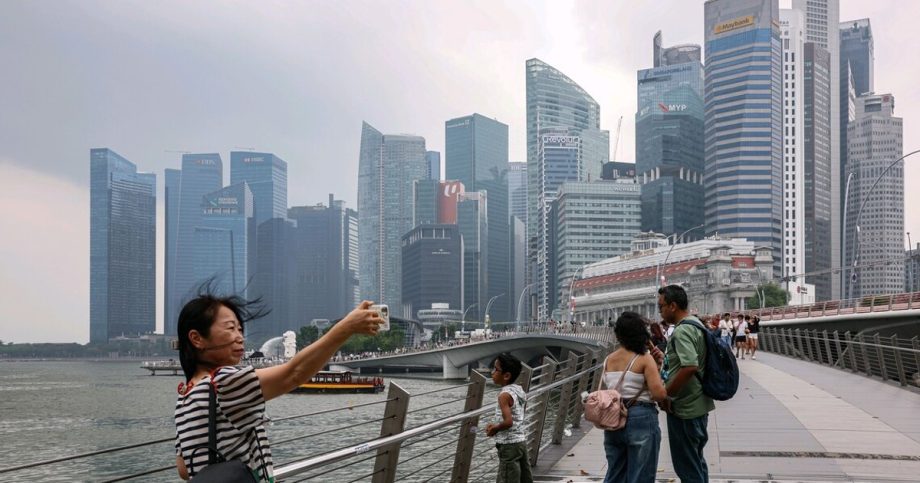
Overall, Singapore experienced more than seven weeks of haze in 2026. Air quality first entered the unhealthy range on Sept 4, and the Republic was hit with bouts of haze until air quality improved from around Oct 26.
The situation also raised questions about the air quality indicators in Singapore and if they were sufficient in helping people plan their activities.
Read Full Article At Source