What happened?
Singapore’s blue chip stocks are often known for their dividends.
Earlier, we shared that the attractive dividend yield of Singapore stocks makes the market still worth looking out for.
As the Singapore stock market remains close to all-time highs, we have seen several blue chip stocks and small and mid cap stocks performing well over the past few months.
In our recent Beansprout community webinar, I received questions about which sectors or parts of the market could continue to do well from here.
In this article, we highlight three themes we are watching closely and what they could mean for investors looking at the Singapore stock market.
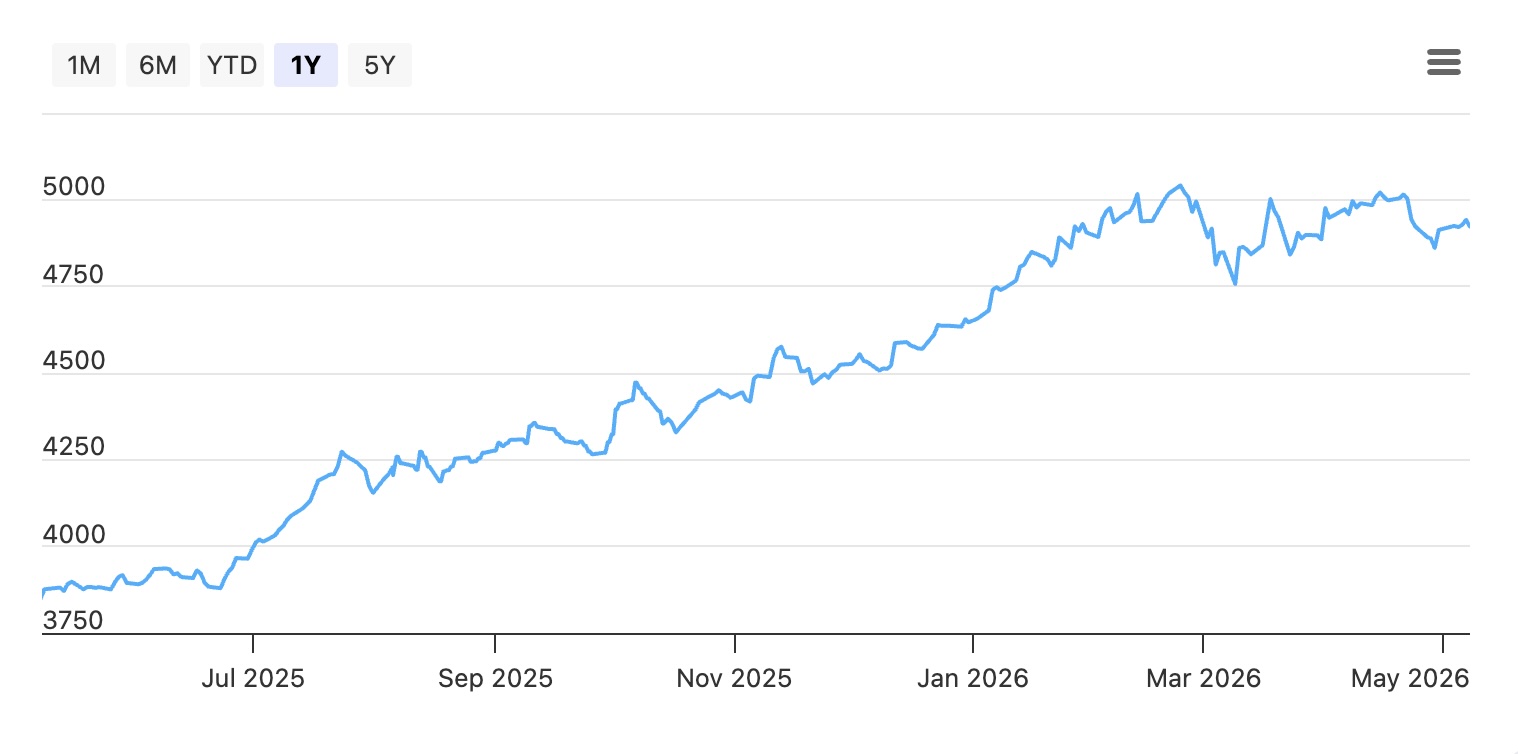
3 Key structural themes for the Singapore Market
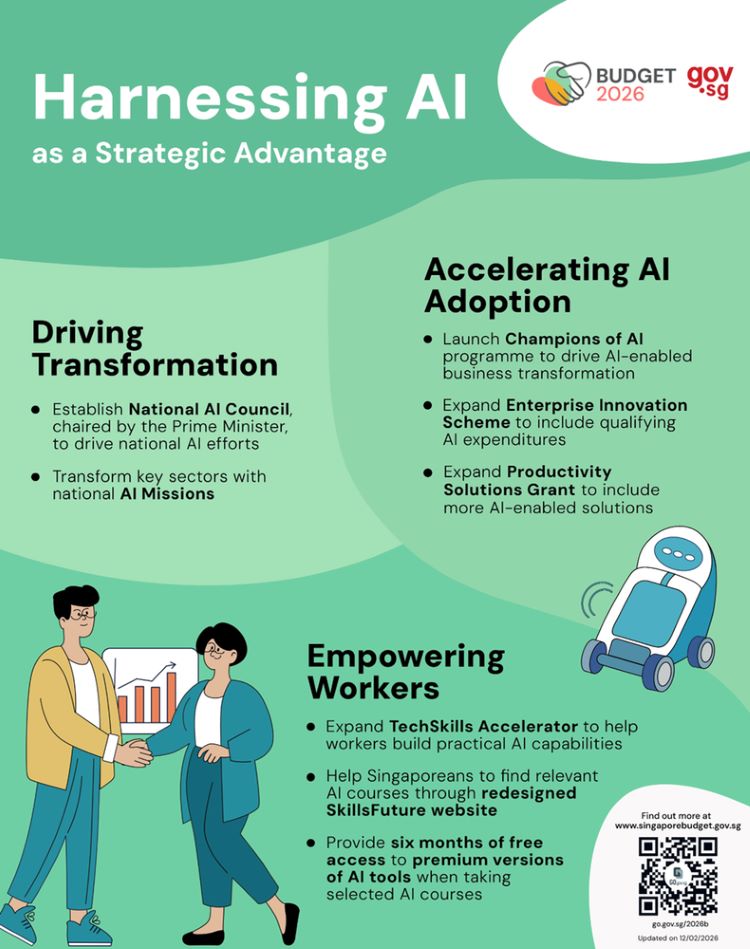
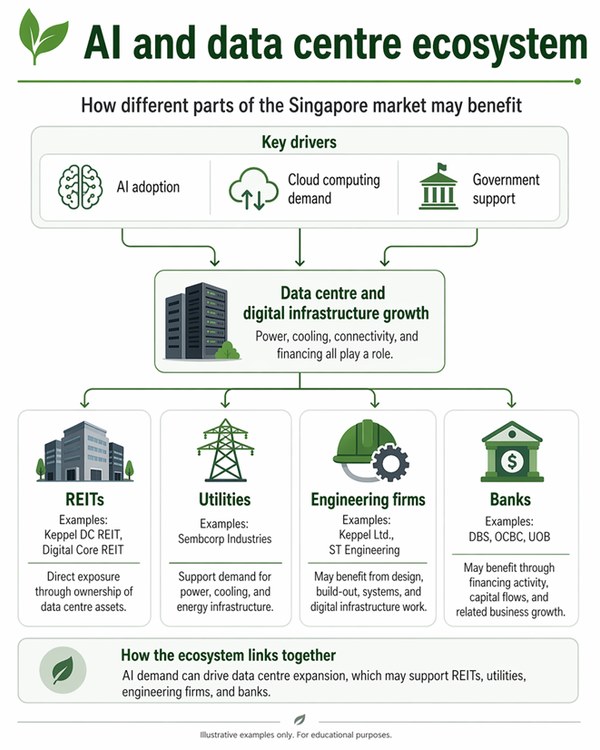
We see three structural themes shaping the Singapore market over the next few years: energy and food security, AI and data centre growth, and continued government spending.
These are not short-term cyclical drivers. They are longer-term shifts backed by government support and real economic needs.
Together, they reflect how Singapore is positioning itself for resilience and growth through securing essential resources, building digital infrastructure for the AI era, and continuing to invest heavily in the economy through public spending.
We think that these themes may point to the areas of the market that could see more sustained support over time, with capital more likely to flow steadily towards sectors backed by policy support and long-term demand, rather than quick short-term moves.
#1 – Singapore stocks linked to energy and food security
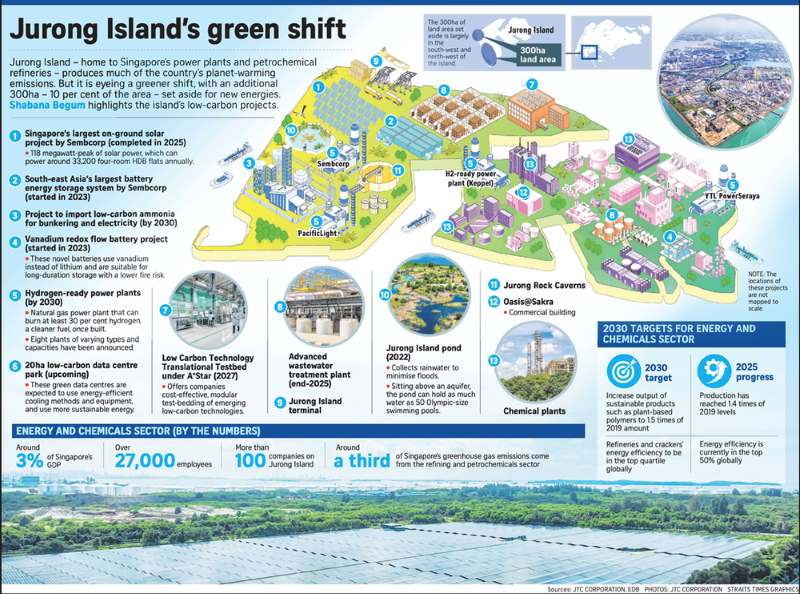
Singapore’s energy security is becoming an important long-term structural theme for the market.
Today, according to the Energy Market Authority of Singapore (EMA), about 94% of Singapore’s electricity still comes from imported natural gas, making energy supply a key vulnerability. To address this, the country is expanding LNG import capacity, centralising gas procurement through GasCo, and scaling up solar deployment to 3GWp by 2030.
At the same time, Singapore is also diversifying through regional renewable energy imports from Indonesia and Australia. These steps are aimed at strengthening energy resilience and supporting long-term economic stability.
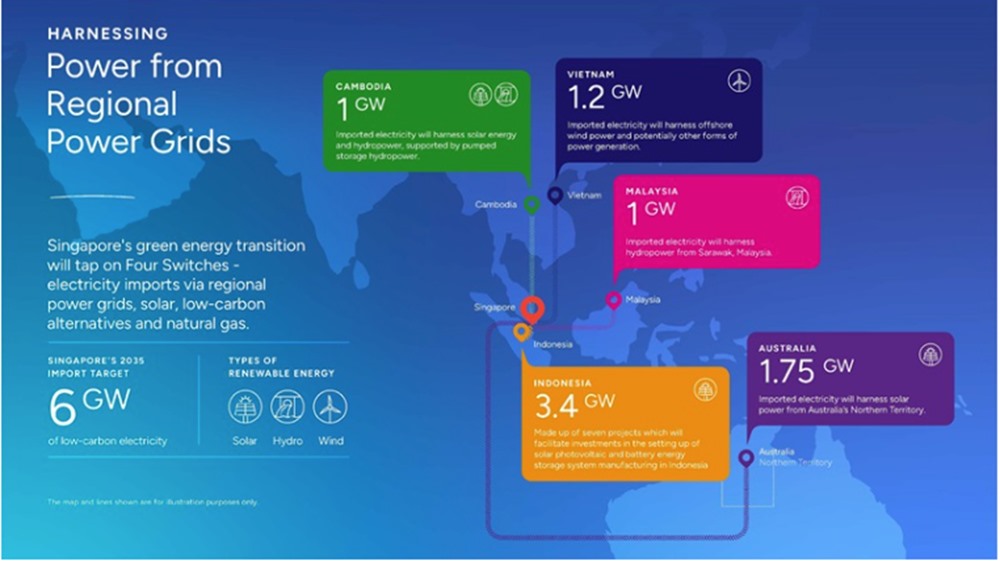
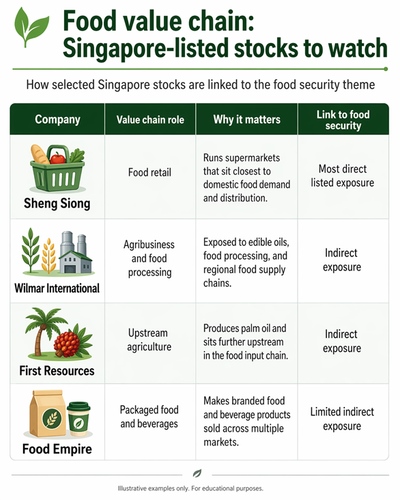
This theme also creates potential opportunities for Singapore-listed companies.
Sembcorp Industries is the most direct beneficiary, given its strong position in gas imports, utilities, and renewable energy projects, including solar and energy storage.
Keppel Ltd. also stands to benefit through its infrastructure and energy solutions business, especially in areas like subsea cables and regional power connectivity.
ST Engineering could gain from rising demand for smart grid systems, digital infrastructure, and urban energy solutions.
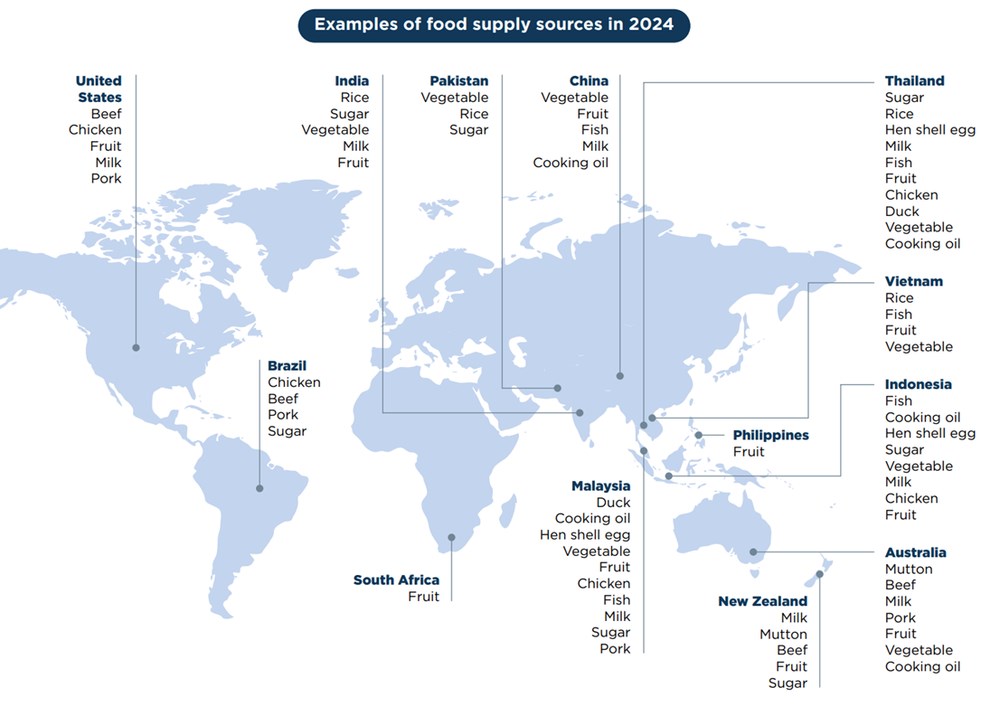
Food security is another long-term theme worth looking at.
Singapore’s food security strategy has moved beyond the original “30 by 30” target launched in 2019. Under the Singapore Food Story 2 framework introduced in November 2025, the focus has shifted towards more practical and outcome-based goals.
By 2035, Singapore aims for local farms to supply about 20% of fresh produce needs, including leafy and fruited vegetables, beansprouts and mushrooms, and about 30% of protein needs such as eggs and seafood.
Rather than focusing on self-sufficiency, the new approach is built around resilience and flexibility.