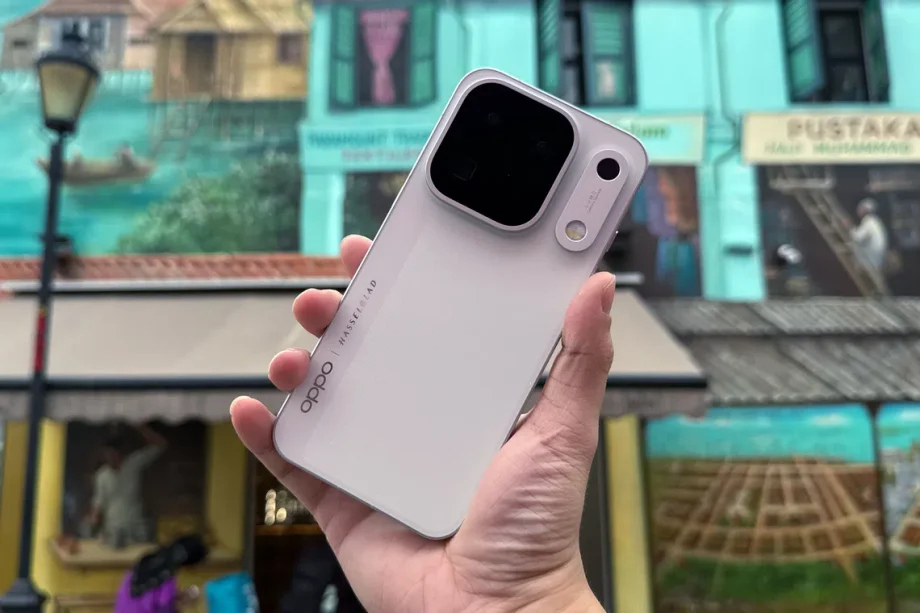
Triple 200MP cameras? Is that all for S$2,199?
OPPO wasted no time in being among the first out of the gate to launch a 2027 Android phone. Heck, it’s barely been six months since it launched its first overseas Ultra model. That, however, means the OPPO Find X10 Pro Max is very exposed to incoming competition, and you need every advantage afforded in a time of memory price hikes. That’s a big play for a big phone.
At S$2,199 for 512GB, OPPO has pulled out all the stops with a first-ever triple 200MP rear camera array, a larger silicon-carbon 8,000mAh battery, and a new agentic AI partner for its AI Mind Pilot feature. No quarter was spared: even its previously functional design also saw a major switch to squarish camera islands. The review below covers these tweaks to see whether they improve the device or feel like gimmicks.
In line with its premium positioning, the Pro Max phone seems like an Ultra in durability, display quality, and out-of-the-box ColorOS 17. The key difference is that the Find X10 Pro Max uses MediaTek Dimensity 9600 Pro instead of its usual Qualcomm pick for Ultra-grade mobiles. That, and we don’t know if OPPO wants to make another 2027 Ultra to cannibalise its Pro Max just to please two chipset designers at once.
Those thoughts are for another time. Here, we judge the handset for what it’s worth: OPPO probably got the cameras right (and we’ll check that, too), but what about the rest of the phone? Is S$2,199 for 512GB still a sound buy in an uncertain world? Let’s see.
Subtle design language, bold premium handling
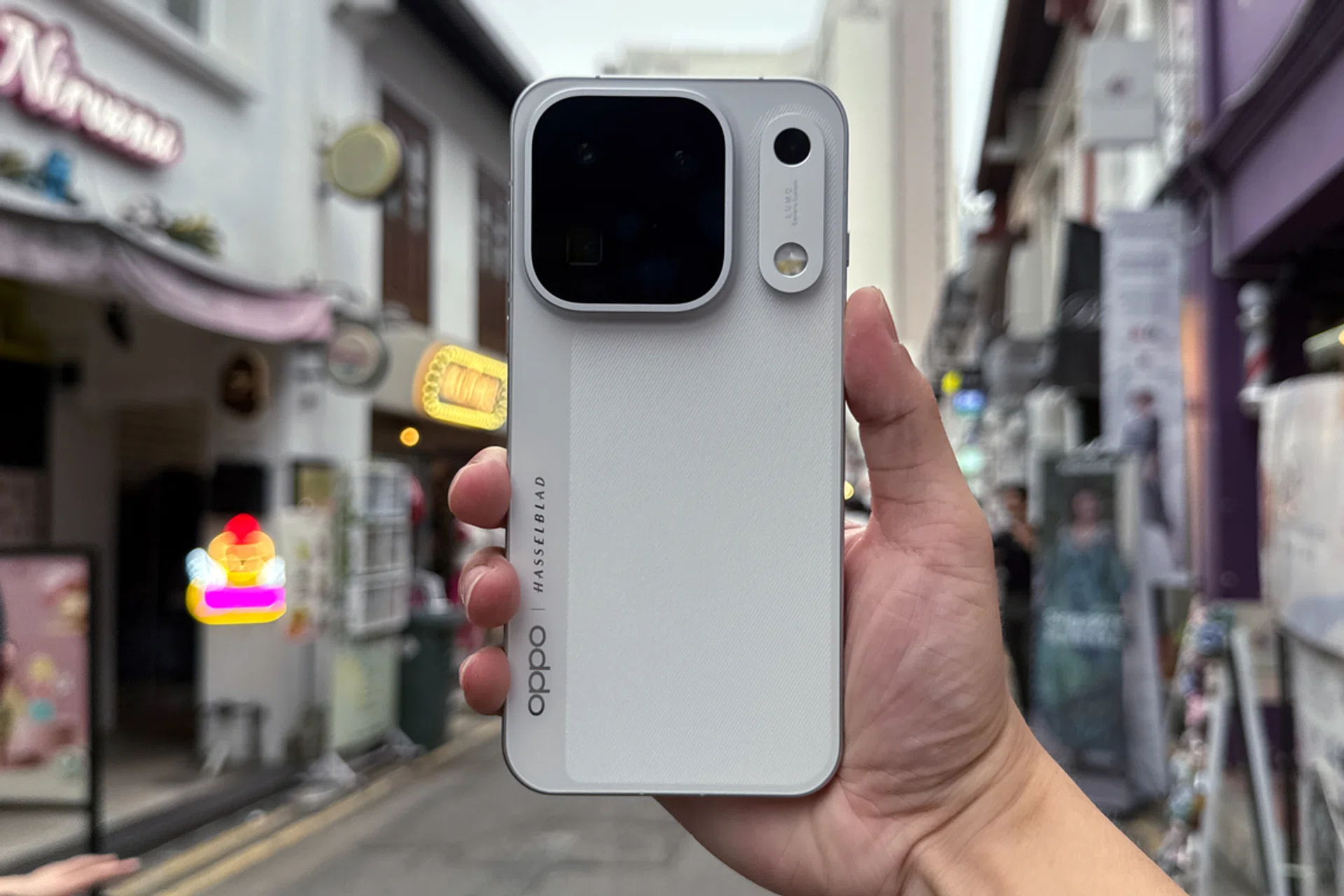
OPPO Find X10 Pro Max in Luna White.
Photo: HWZ
The Luna White colourway (as seen in our review unit) is a two-toned, off-white style popular with folks who renovate their BTOs to flip for profit: a safe bet with little personality to speak of. That, sadly, is a practical colour choice for a premium handset, because you’re likely to slap a case on for extra protection and personalisation. That said, the OPPO Find X10 Pro Max has more character: its lens housing has a thin Hasselblad Orange outline that teases you just outside your peripheral vision.
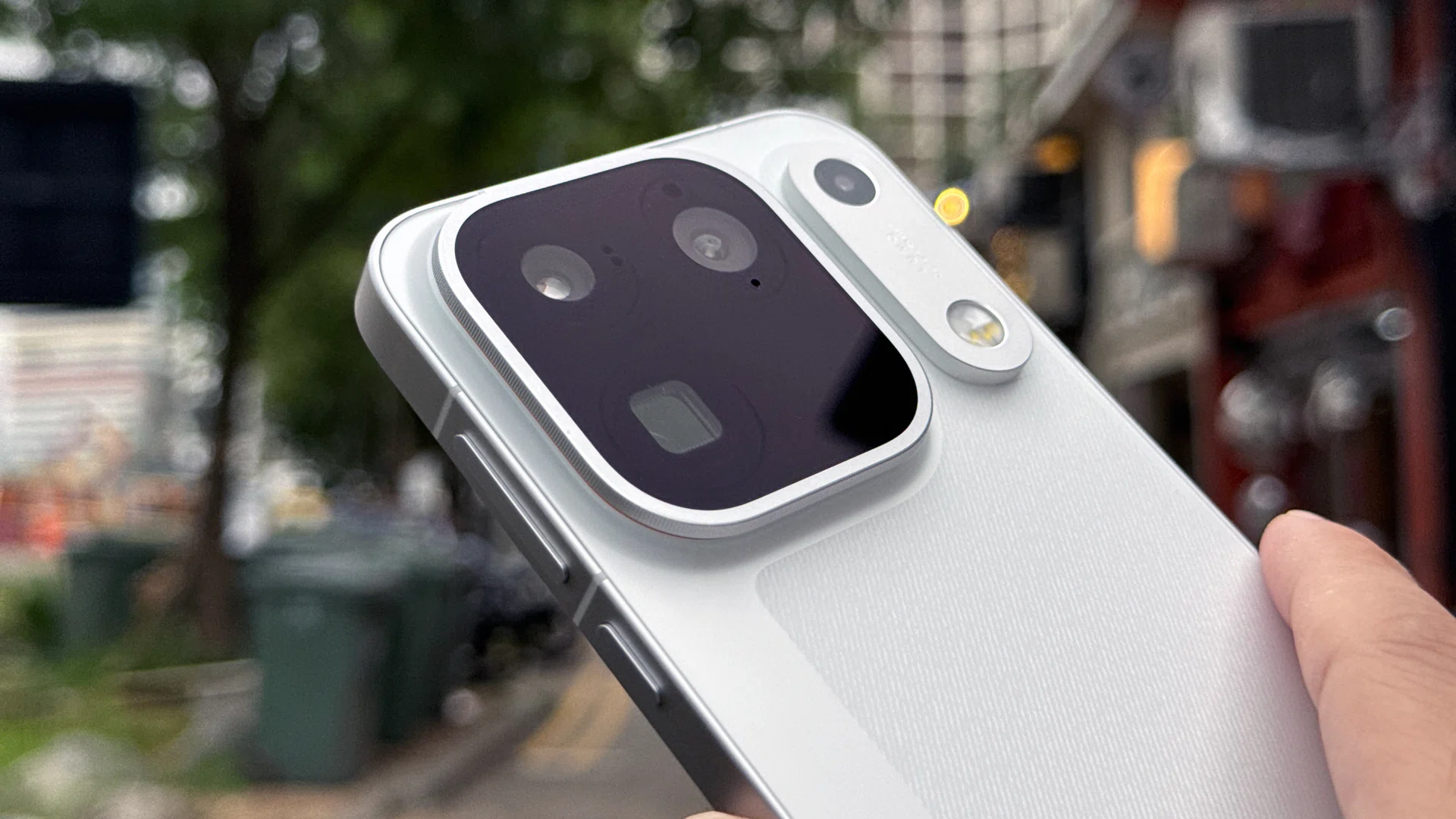
Squarish camera island: Yay or nay?
Photo: HWZ
A major design change is the squarish camera island. It keeps the phone from wobbling when you place it face up on a desk. We’re impressed that someone at OPPO found a design alternative that looks better than its rivals’ gaudily rimmed clock-face camera modules. The downside, however, is that the gap between the square island and oblong flash module is so narrow that you need a cotton swab to keep your device clean.
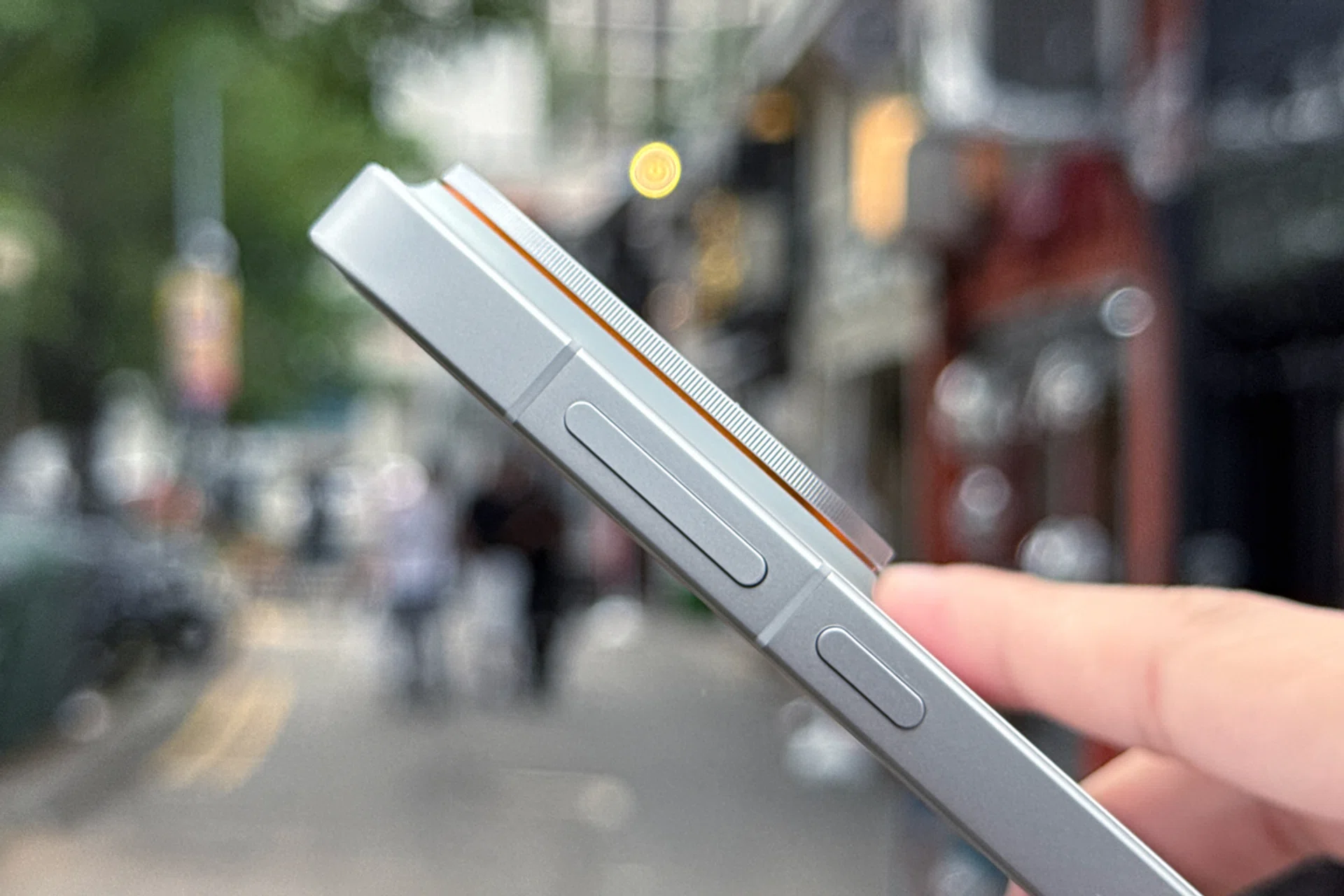
Power button and volume rockers on the OPPO Find X10 Pro Max. Note the subtle orange rim around the camera block.
Photo: HWZ
Snap Key, its dedicated programmable side button (located opposite the pictured power and volume keys), returns. So does the phone’s IP68 and IP69 dust- and water-resistance ratings, all within a manageable 8.4mm thickness and 233g or 235g weight (depending on colour).

OPPO Find X10 Pro Max’s 6.78-inch LTPO AMOLED display.
Photo: HWZ
One major addition to its 6.78-inch LTPO AMOLED display is the support for BT.2020 colour gamut. This means your OPPO Find X10 Pro Max offers the same colour-space support as a modern, high-end OLED TV. A side perk is longevity, since OPPO’s blend of red, green, and blue emissive diodes helps reduce blue light output and extend its lifespan by another 30% (according to OPPO).
We couldn’t test that without a longer review period, but our time with the phone confirms it has everything you’d expect from a vibrant, sharp (~450 PPI), smooth AMOLED panel that goes between 1-144Hz refresh rate with 2,000-nits full screen brightness to fight the power of the Singapore sun (although we couldn’t fully test that either. Thanks, haze).
A caveat is that the 144Hz refresh rate is only available in three game apps: Call of Duty: Mobile, PUBG Mobile, and Free Fire / Free Fire Max.
If we had to pick a favourite, it would be the phone’s 1.15mm symmetrical bezels helping to elevate its viewing experience. Your eyes do need some bezels to demarcate and focus on content, and uneven ones are simply distracting. OPPO Find X10 Pro Max has that sorted out for you.
ColorOS 17, Manus AI agent, and a strange preinstalled app
The OPPO Find X10 Pro Max runs ColorOS 17, OPPO’s latest Android 17-based operating system. To support it, OPPO recently added Manus, an agentic AI platform, to its existing AI Mind Pilot, which already includes ChatGPT’s GPT Agent. Below are two articles that go into more detail about these changes:
Functionally, AI assistance from Manus or ChatGPT within AI Mind Pilot is allegedly identical—the agentic chatbot is designed to help users reduce the number of steps required to achieve the same outcome, such as brainstorming your day’s plans, searching your photo album for specific memories, and more.
Even without connecting a Manus or ChatGPT account, OPPO’s Mind Space defaults to the free version of Manus’ agent, and it delivers basic yet fairly impressive agentic performance. The subsection below describes how we figured that out, so you can skip it if you don’t need to see the homework or the clarification.
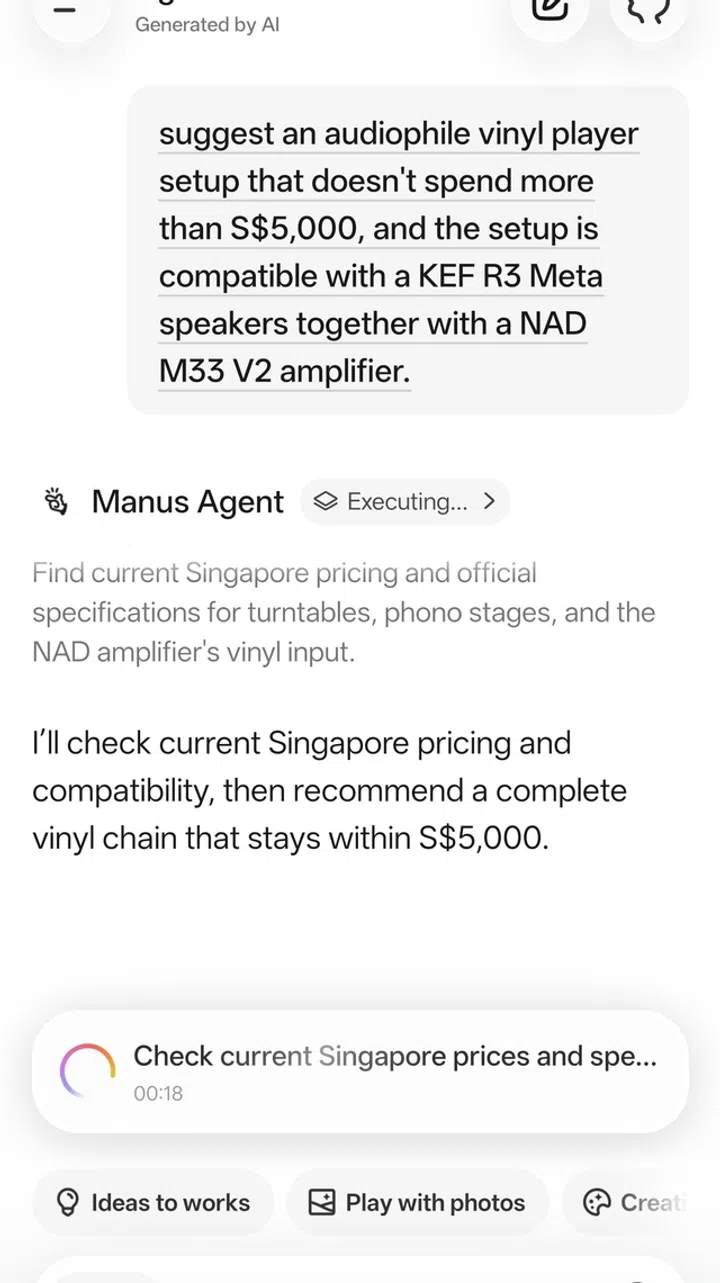
The prompt we used. For testing purposes, we also gave other AI chatbots the same prompt.
Screenshot: HWZ
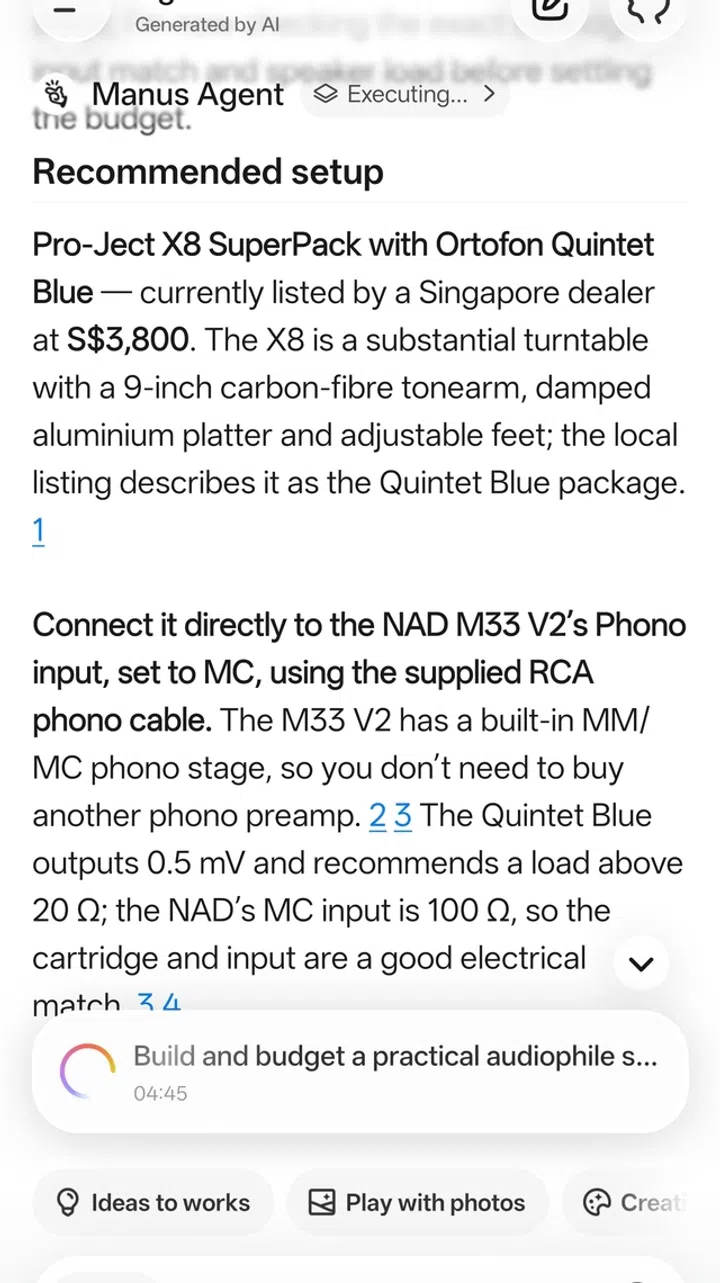
The response from AI Mind Pilot’s built-in Manus AI
Our trial example was a simple recommendation test for a compatible vinyl player setup to go with specific audiophile equipment. While several answers could potentially be correct, its recommendation of a Pro-Ject X8 turntable with a supplied Ortofon cartridge was well within our expectations. It even left some budget aside for RCA/XLR cables, although it didn’t recommend any.
What felt impressive was the work it showed. AI Mind Pilot not only wrote down every step of its inference and logical process, but it also picked up on what wasn’t said outright (the named amplifier has a built-in phono pre-amp input, so you don’t need a separate turntable pre-amp unit to boost its output signal) and factored that in. It also included all its references, so you can click on them to double-check how it digested the sources and manufactured its output.
All of that happened in 7 minutes. Something this big usually takes a seasoned buyer weeks of manual research, planning, and countless website visits before they start auditioning gear (which is why agentic AI helps reduce the steps required).
This also gives newbie audiophile users a good starting point for deeper research or for clarifying things they don’t understand (e.g., why phono preamps are needed, cartridge compatibility, and more).
We also tried the same question on Gemini and ChatGPT to cross-check OPPO’s integration of Manus’ agentic AI.
Google’s Gemini was also accurate, recommending two combos: the Rega Planar 6 with an ND5 Moving Magnet cartridge and the Technics SL-1200GR2 with a Hana SL Moving Coil cartridge. They included descriptions of the expected sound profile, a specs cheat sheet, and clarification on which RCA/XLR cables are included in the budget. It did so faster than Manus.
OpenAI’s ChatGPT was the least accurate of the three, though it also recommended the same Rega with a different Ortofon cartridge. It didn’t use local pricing or availability to set its budget, nor did it account for the amplifier’s built-in phono input, having suggested a pre-amp for the vinyl chain.
While Manus took the longest of the three, it was no less capable than Gemini. That doesn’t mean you can be lazy with AI, though, since these examples only show that it can help kickstart a brainwave. That’s right: AI doesn’t replace your brain, though many people we see daily would try (and sometimes succeed) at challenging that presumption by behaving otherwise.
Google Gemini is also integrated into OPPO AI Mind Space, but it’s for answering questions based on organised notes and screenshots on the phone. So OPPO AI is also a mix of first- and third-party AI tools, each with its own strengths and use cases.
That said, OPPO AI Mind Space differs from Samsung’s Galaxy AI integration, especially in its Bixby-level control over phone settings. At the time of review, Find X10 Pro Max hasn’t received the update that lets it dig through your files. We tested this by asking it to find photos of reviewed phones in our photo albums.
Outside of agentic AI use, most of its preinstalled apps are first-party apps from OPPO or Google/Android, with a few third-party apps for online shopping, livestreaming, and travel booking. They are rarely redundant, and it comes down to whether you are a user or customer on those platforms.
However, our model also came preinstalled with MyDigital ID, which is a funny choice since it’s an official Malaysian government app (the Singaporean equivalent would be Singpass). From this, we assume our pre-release review unit came from Malaysia. Hopefully, retail units in Singapore will have the correct local app preinstalled when it goes live.
Setting up and using the OPPO Find X10 Pro Max feels almost painless, which is uncharacteristic of Chinese Android phones. Its peers can vary on bloatware discipline (and it can go both ways). OPPO’s premium flagship alternative still delivers the high-end experience you’d expect from its premium price, and that’s before we look at benchmarks or photography.
Imaging performance (ft. teleconverter kit)
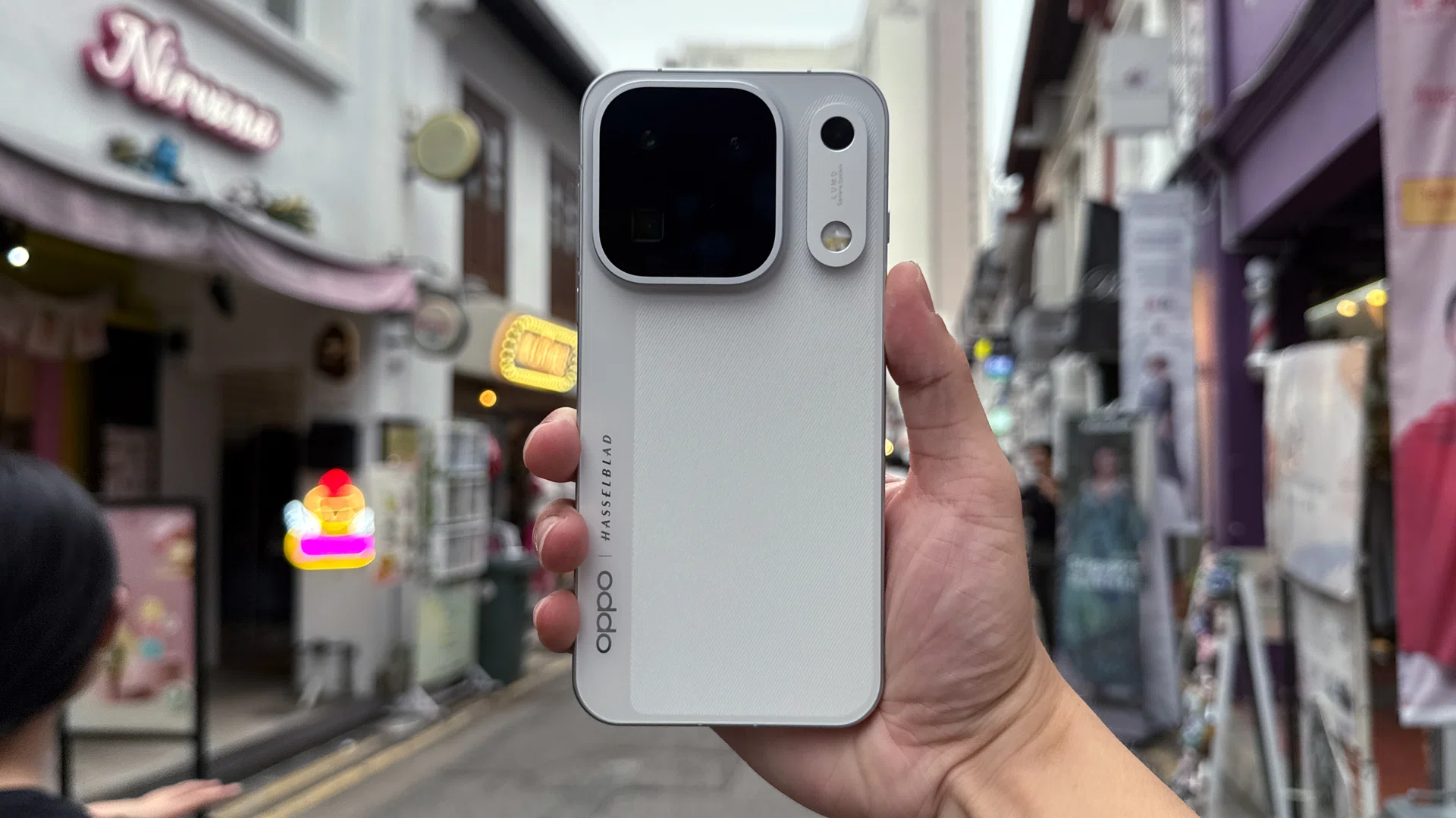
Rear cameras on the OPPO Find X10 Pro Max
Photo: HWZ
OPPO Find X10 Pro Max’s world-first triple 200MP rear camera array was the headline we used at its announcement. To recap:
- Main camera: 1/1.3-inch ISOCELL HPC sensor, f/1.5 aperture, CIPA 6.5-rated stabilisation, 24mm (at a 35mm-equivalent)
- Ultrawide: 1/1.56-inch ISOCELL HP5 sensor, f/2.2, AutoFocus, 13mm (~0.6x of main camera)
- Telephoto: 1.56-inch ISOCELL HP5 sensor, f/2.1 + OIS, CIPA 7.5 stabilisation, 70mm (~3x optical zoom relative to main camera)
OPPO’s colour science and tuning rely on its in-house Lumo True Image Engine algorithm, which prioritises “true-to-life” photography over dramatised looks.
Keen-eyed readers will notice the same sensor was used for ultrawide and telephoto, and that the main camera uses relatively new sensor technology that increases single-pixel full-well capacity (by up to 60%) for cleaner signal processing and a wider dynamic range. It’s not the sexiest sentence to write for a phone review, but it’s critical for camera-forward buyers who want better photography through more convenience, easier access, and sharper results.
The Hasselblad partnership returns on this device, but it’s the same Hasselblad experience as its predecessor: Master Mode for manual controls, Portrait Mode for skin tone and bokeh separation, and its unique XPAN format for cinematic 65:24 aspect ratio shots.
The cameras get tons of tiny, incremental hardware and software improvements, but we think it’s better to show what they can do in the right hands.
Note: There’s nothing HWZ or its editorial team can do about the ongoing haze in Singapore (short of recommending an air purifier). Even Dr.Vijay’s permaban powers have limits. That said, we didn’t edit it out because we want to retain the authenticity of the phone’s imaging prowess.
We can safely say the OPPO Find X10 Pro Max is among the best choices for a camera that “happens” to be attached to a premium phone. It’s hard to get a bad shot with it, even when the haze cramps your style. Imagine what the phone could produce if everyone played nicely and did their jobs honestly.
If we had one nitpick, it’d be the strong fisheye effect on the ultrawide camera. We don’t mind post-editing to correct its distortion since that’s what ultrawide lenses are for. Maybe we’re not as trendy as we think, since ultrawide shots are all the rage among younger shooters (and OPPO has definitely put serious money into getting this right).
Optional teleconverter kit
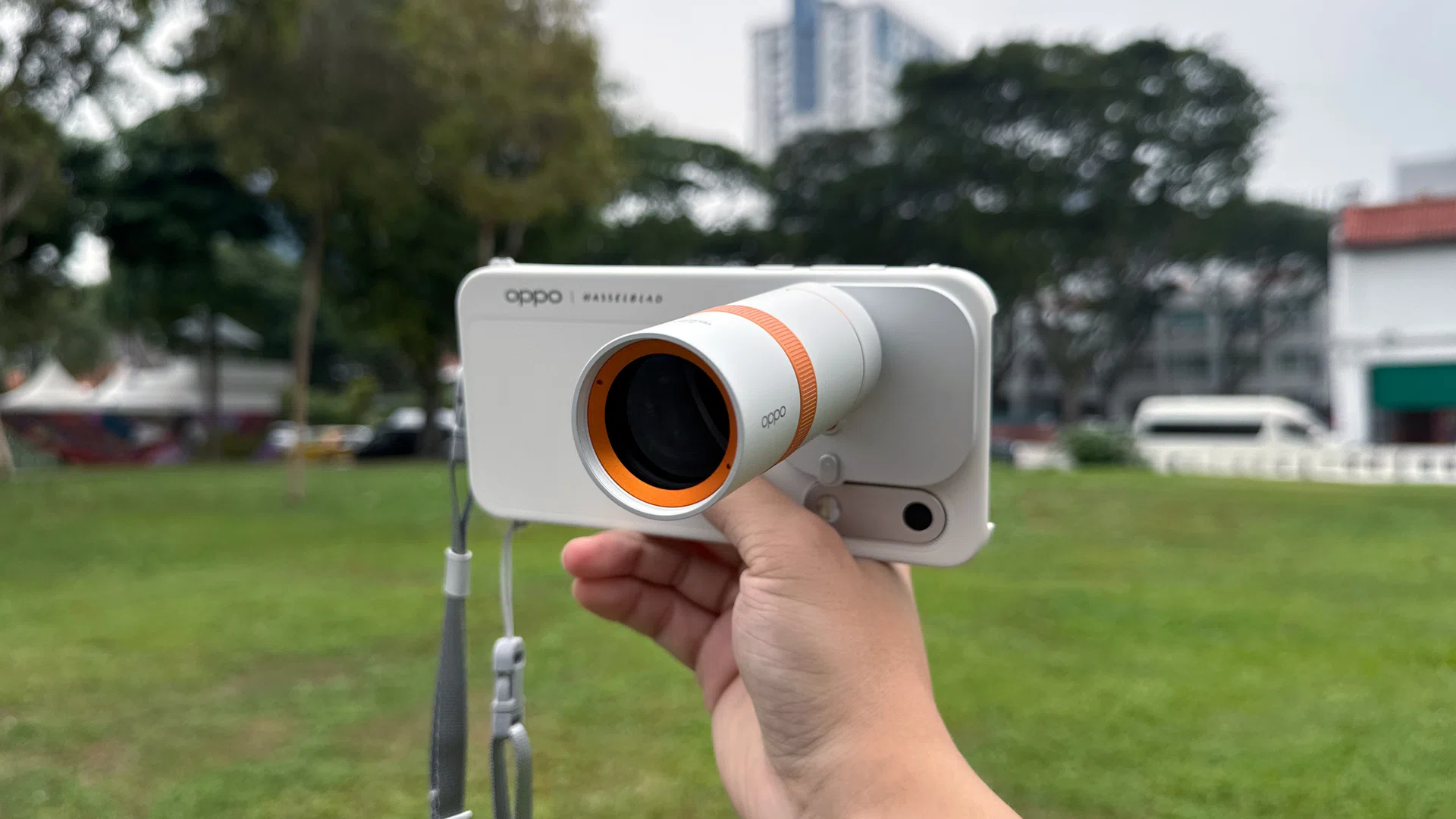
The 3.28x teleconverter kit for the OPPO Find X10 Pro Max. Comes with a phone case, a lanyard, a grip, and a carrying pouch.
Photo: HWZ
Like Vivo, OPPO’s Find X10 Pro Max also offers an optional teleconverter kit sold separately. The lens tube offers 3.28x optical magnification, “unlocking” 10x, 20x, and 40x zoom beyond its default focal range of 1x, 2x (crop zoom), 3x (optical zoom), and 6x zoom. Despite the added manufacturing overhead, this approach seems more manageable for phone makers because it frees up scarce component space while still offering 10x or more zoom for users who need it. Plus, it gives people an excuse to spend more money.
As with past reviews, we don’t factor paid add-ons or optional attachments into our scoring because they vary widely in purpose and quality (if it’s included FOC, that’s a different story). As such, the teleconverter kit doesn’t add or deduct points from the OPPO Find X10 Pro Max, but we’ll still try it out for you.
Our main gripe with the optional teleconverter kit is its portability. The included carrying pouch feels insufficient and too narrow to hold and access all its gear (the arm attachment, lens caps, lanyard, phone case, and slide-in lens cover, not including the teleconverter). Half of them are required for stable teleconverter use, so we have no choice but to switch to a better, bigger pouch. As a paid add-on, we also felt it could include a basic maintenance toolkit and cleaning cloth. While it may sound bratty and spoilt to pick on the teleconverter kit this way, attention to detail like this is usually what separates a premium experience from a mere “top-up a bit, can already” one.
Beyond its pouch, the teleconverter is easy to equip, and it takes some practice to use (not entirely unreasonable for users willing to pay for it). It’s money well spent if you can afford the time and effort to master it. We think it’s fitting that the kit stays optional, since you’re unlikely to meet impressive cocks in Bugis every day.
Benchmark performance
How we test smartphones: here.
The OPPO Find X10 Pro Max uses the MediaTek Dimensity 9600 Pro for processing power. Dimensity’s 9000-series platforms are MediaTek’s highest-end products, with 9600 Pro designed for 2027 5G-capable Android phones and beyond. In return, its perennial rival, Qualcomm, offers the Snapdragon 8 Elite Extreme Gen 6, which launched just one week after MediaTek announced its chip.
Inside, the Dimensity 9600 Pro uses 8 CPU cores. It has two big cores, Arm C2-Ultra (2MB L2 cache), followed by two sets of triple Arm C2-Pro cores with 1MB and 512KB of L2 cache, respectively. Like Qualcomm’s high-end processor platforms, the lack of “small” or “efficiency” cores likely reflects the increased behind-the-scenes AI workload demands in modern mobiles, and current optimisations make it possible to use these cores without severely hiking up battery consumption.
This, alongside the Vivo X500 Pro Max, is among the first 2027 Android phones to see official retail in Singapore. Our comparisons will inevitably also include 2026 or older premium flagship models.
While benchmarks are synthetic and for comparisons only, it’s still reassuring to see the MediaTek choice holding its own in the Find X10 Pro Max. Real-world use also revealed no odd ends.
Battery life
Our battery benchmark uses PCMark for Android’s Work 3.0 Battery Life, with results shown in minutes. This controlled benchmark simulates real-world usage, such as web and social media browsing, video and photo editing, parsing data with various file formats, writing, and more. The test starts at 100% and ends with 20% left on the device.
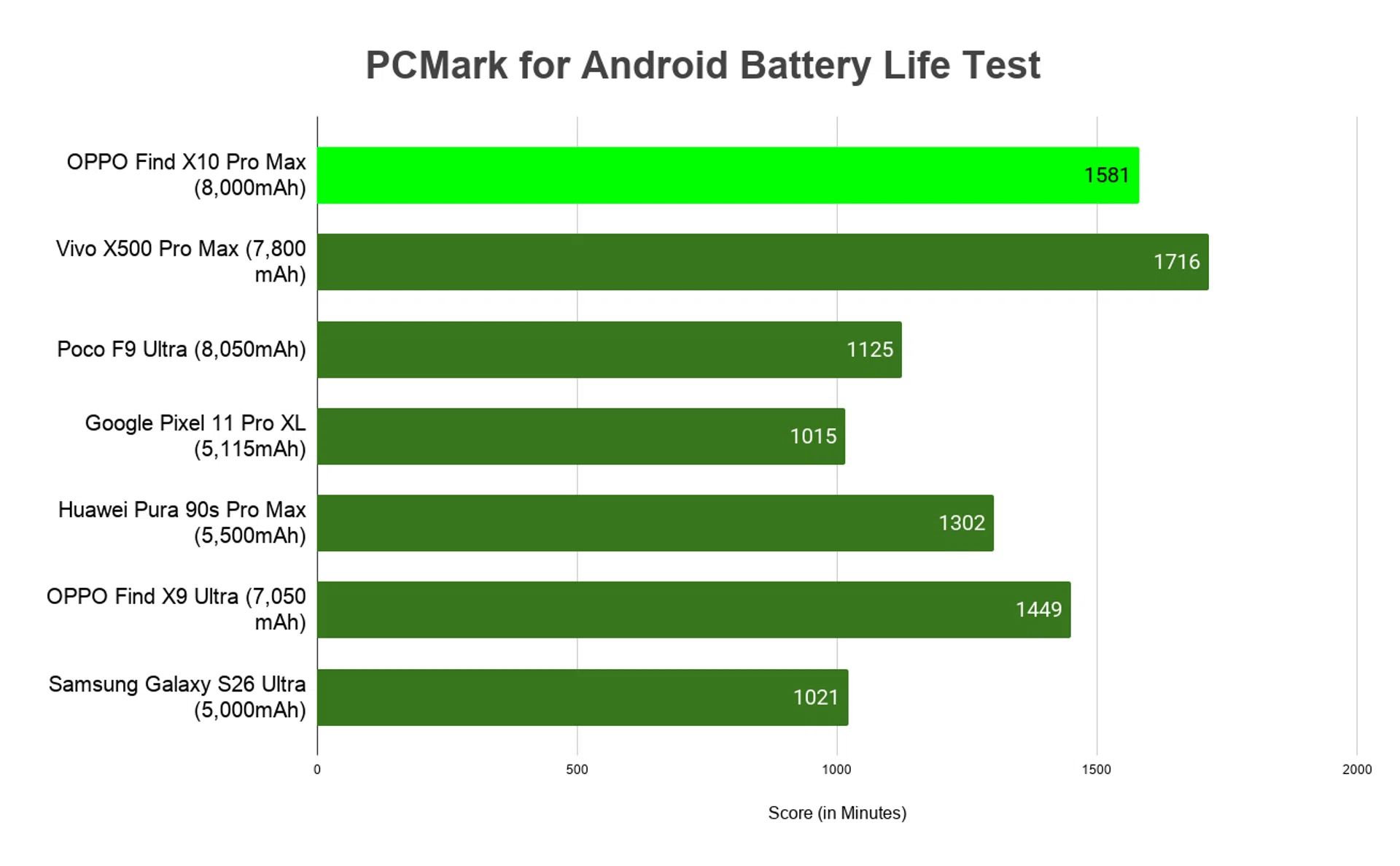
Battery life test, uptime in minutes. The longer, the better.
Photo: HWZ
OPPO Find X10 Pro Max’s silicon-carbon 8,000mAh battery netted us more than 26 hours of continuous uptime with 20% left in the tank. It has similar uptime to Vivo’s X500 Pro Max, which uses the same chipset.
This means two things: OPPO managed to improve upon its class-leading 24+ hours Find X9 Ultra (and also its first-ever overseas Ultra model), and its exceptionally high uptime is not a fluke since it can be replicated by another brand (technically, they share the same parent holding company, but you get the point).
We can confidently say OPPO’s premium flagship handsets are the go-to pick if consistent and long battery life is your top priority. The repeated appearance of Android phones with 24+ hours of uptime also shifted our future expectations for premium-grade handsets, making it the new gold standard for this criterion.
The phone takes less than half an hour to charge from 0-50% and around a full hour to reach 100%, which are also standard wired charging speeds (without sacrificing safety) for truly premium handsets.
Note that OPPO Find X10 Pro Max offers three performance modes to manage output and battery uptime. All benchmarks here used the default Balanced Mode, and users can switch to Power Saving or High Performance when needed, at the cost of the other.
Conclusion
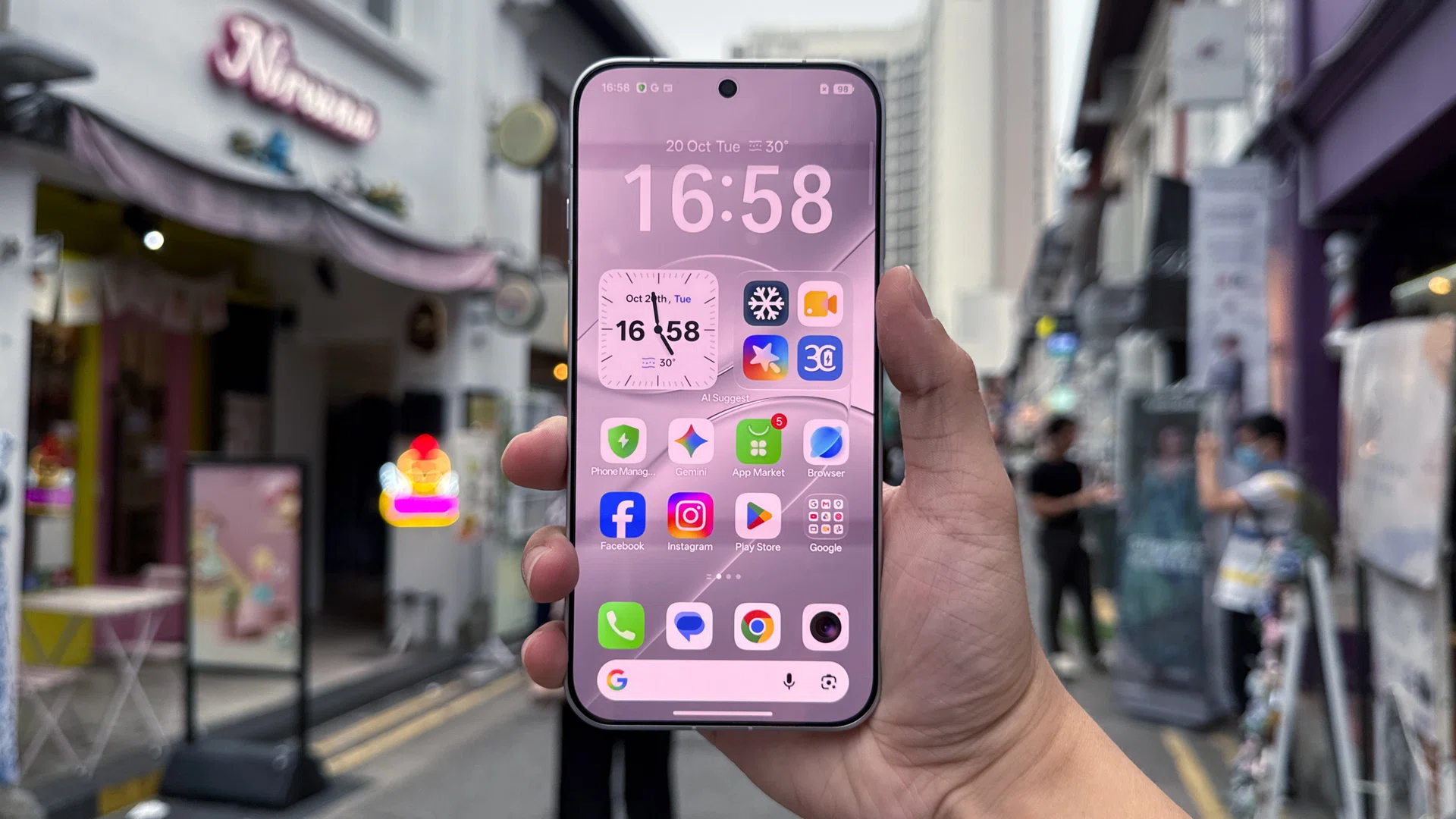
OPPO Find X10 Pro Max, front
Photo: HWZ
OPPO knocked it out of the park with the Find X10 Pro Max, but not necessarily for the reasons you’d assume.
The brand repeated the success of its first overseas Ultra with this year’s Pro Max model, making the OPPO Find X10 Pro Max a sensible choice for Android phone users despite ongoing component shortages and uncertainties.
In many ways, it represents the best of what you might get in 2027. MediaTek’s highest-end chipsets have been strong for a few years now, and you can expect the Find X10 Pro Max to perform smoothly for everyday use. It maintains excellent display quality and build durability, and it remains a top choice for users who are very picky about phone photography.
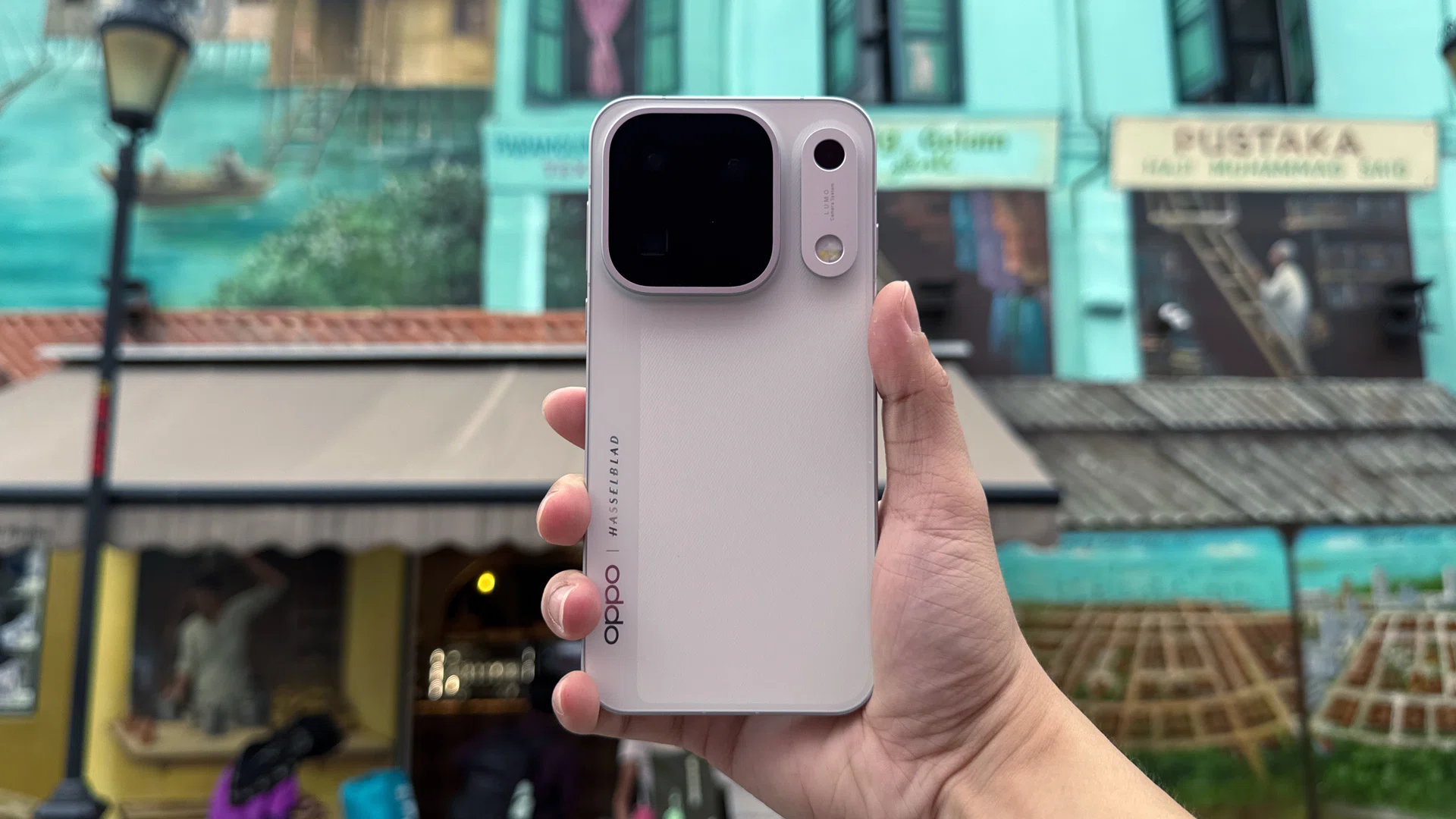
OPPO Find X10 Pro Max, rear
Photo: HWZ
This model also addresses the areas where premium phones tend to falter. OPPO maintained (and even extended) its battery uptime, and it treads the thin line between gimmicks and features with care, keeping its core user experience clean, fluid, and easy to understand.
We didn’t care much for its improved AI Mind Pilot, but we can see why it’s impressive, helpful, and pleasant to use. That’s a welcome addition in a space rife with gimmicks.
Still, the main reason to get the phone is its triple rear cameras, and they received considerable upgrades, making it less of an impulse buy. Mild improvements to its design, display, and battery also help the purchase decision.
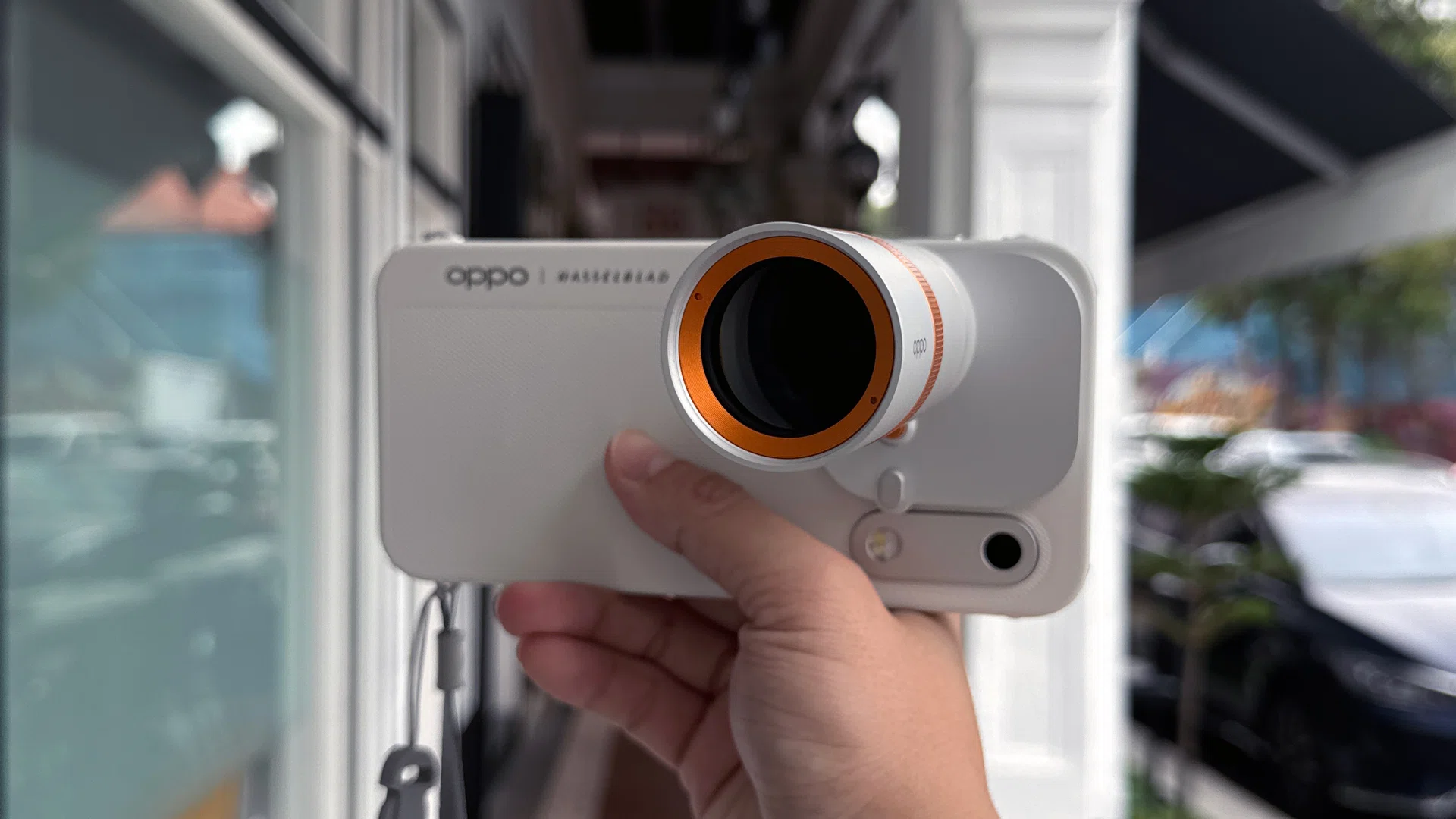
Teleconverter kit, anybody?
Photo: HWZ
By some strange stroke of luck, the Find X10 Pro Max also ended up being a relatively better option for now, bucking the price-hike trend affecting consumer tech products with RAM, storage, or both. OPPO wasn’t entirely unscathed since it didn’t bring in a 1TB version of this phone. But the 512GB version is S$2,199. That’s the same launch price as its predecessor, and it’s also a whopping S$300 cheaper than its brother from another mother, the Vivo X500 Pro Max (S$2,499 for 512GB). We guess those savings can go to the optional teleconverter set.
To make the upgrade or switch less painful (since the preceding Ultra model launched just six months ago), OPPO also offers a tantalising pre-order promotion at launch, including heavy discounts on both the phone and select accessories.
The sum of its parts and the care it has received are why we gave the OPPO Find X10 Pro Max an Editor’s Choice award. However, we’re still keeping an eye out for upcoming Qualcomm-backed Android phones in 2027 to see whether future launches will raise our expectations.
OPPO Find X10 Pro Max officially retails at S$2,199 (16GB RAM + 512GB storage). The pre-order period runs from 22 to 28 October 2026, with street retail starting right after. Official retail platforms are:
Read Full Article At Source