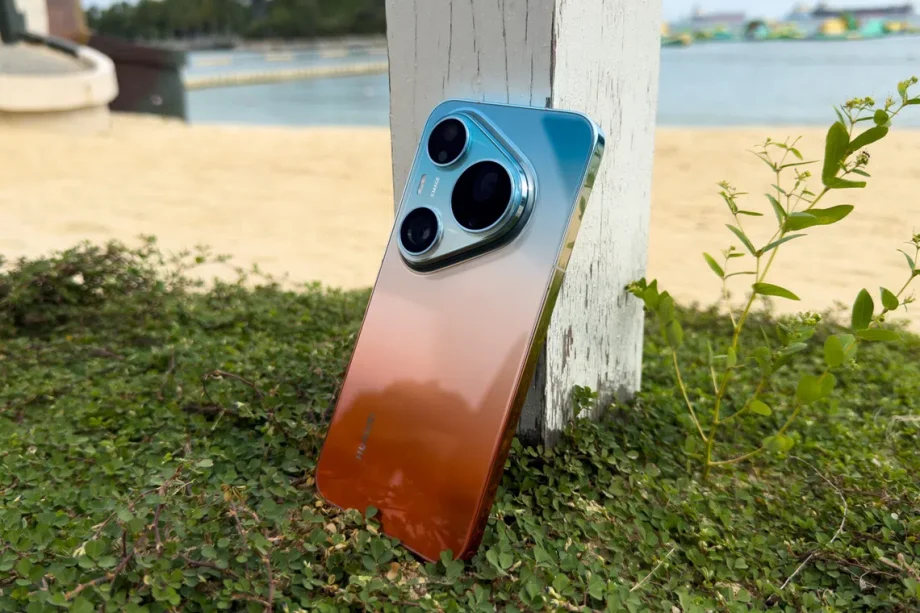
Over the years, we’ve tried a lot of Huawei devices, but they always had the same caveat: there’s no native Google Mobile Services support. For some, that is the ultimate dealbreaker. But for others, some inconvenience can be lived with, since there are workarounds for most commonly used apps.
But what makes these phones worth the inconvenience? Usually, it’s been the impressive cameras. Remember the Huawei P20 Pro from 2018 the first grabbed our attention? That only continued to improve year after year with the Mate 20 Pro, P30 Pro, Mate 30 Pro, P40 Pro+, Mate 40 Pro, P50 Pro, P60 Pro, the Pura 80 Ultra and many more. The new Huawei Pura 90s Pro series is no different with a really compelling focus on its new camera system.
This year, while there’s no Ultra model, you get the Pura 90s Pro and Pura 90s Pro Max devices available with the latter being the first Huawei phone to debut with the “Pro Max” nomenclature. The lack of an “Ultra” model might not be a problem considering how these devices are positioned:-

Both devices have similar cameras, except for the new 200MP telephoto camera that’s featured only on the Pura 90s Pro Max model. Without the complexities of the Pura 80 Ultra and its world’s first dual switchable telephoto camera lenses using a 50MP main sensor, the new Pura 90s Pro Max aims to use the 200MP camera to reduce costs and be better equipped to battle the rising component costs that’s plaguing the entire tech industry. Coupled with less memory at 12GB (rather than 16GB on the Pura 80 Ultra), the new Pura 90s Pro Max is able to offer compelling overall features at S$400 less than its more expensive predecessor.
Will its better price point help the Pura 90s Pro be the iPhone Pro Max killer or the lack of official Google Mobile Services still hinder Huawei’s offering? Could it perhaps be the best companion phone for photo taking alongside your main driver? Let’s find out.
The most unique-looking phone in a long time
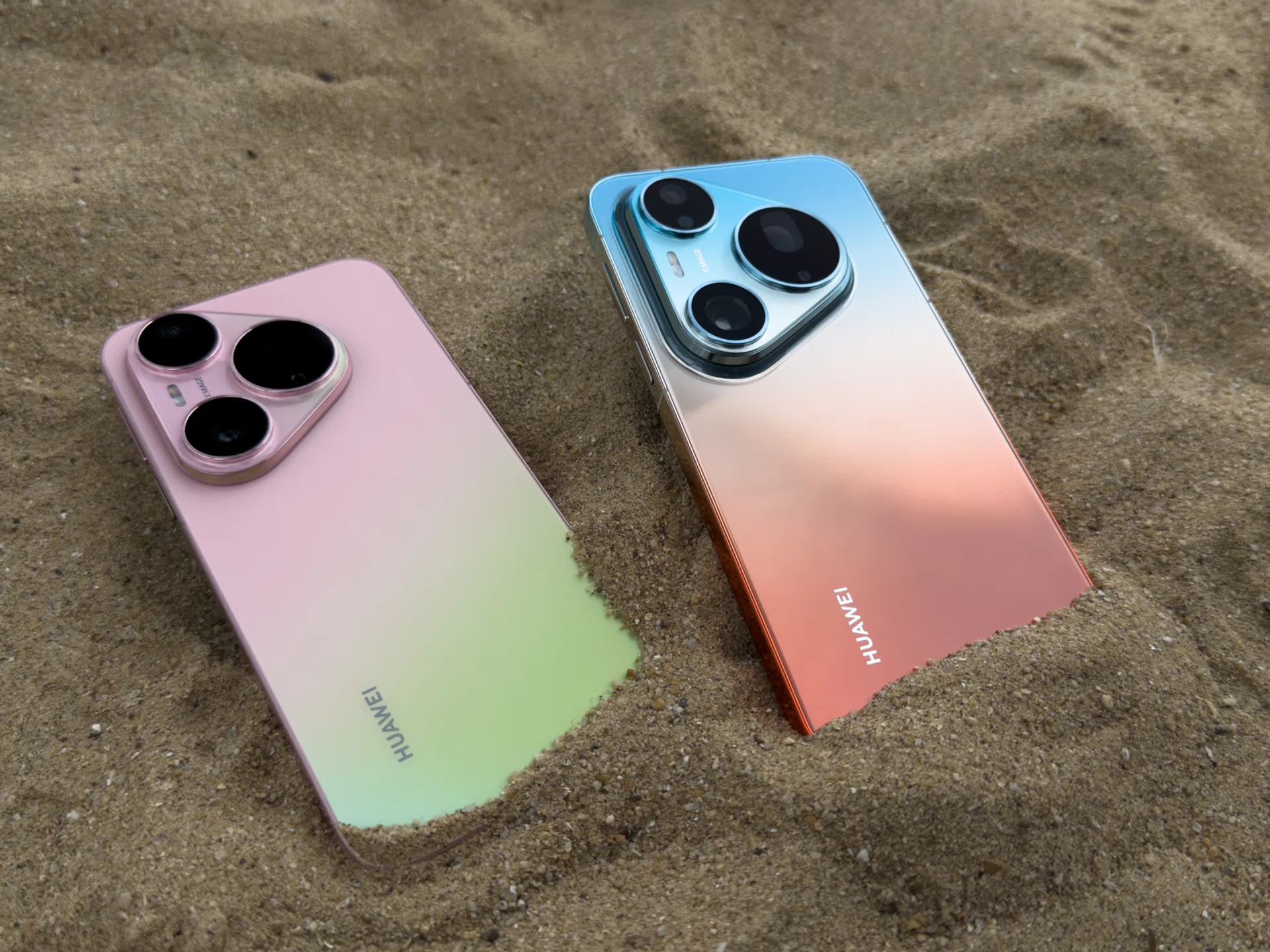
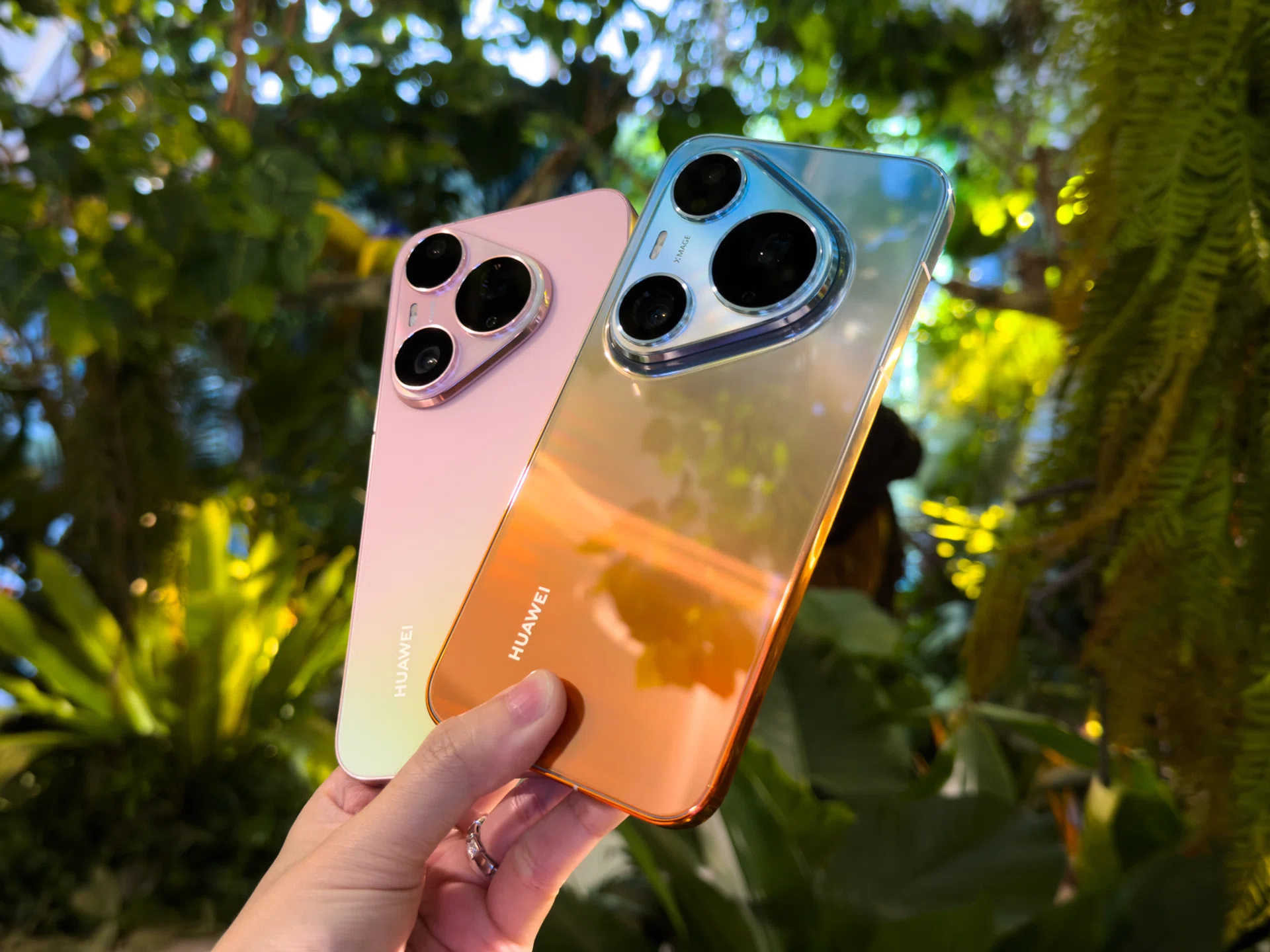
Left to right: Huawei Pura 90s Pro, Huawei Pura 90s Pro Max
Photo: HWZ
Black and white phones are a dime a dozen these days, and it’s always a breath of fresh air when brands are brave enough to try new colours. Huawei has taken it to the next level with the Pura 90s series, with the Pro and Pro Max series each getting a unique ‘hero’ colourway.
While the Pura 90s Pro’s Guava Soda colourway gets a more subdued pink-and-green gradient on the back plastic cover, its matte metal chassis comes in pink only. To better embrace the colour theme, fortunately, Huawei paid attention to the smaller details, like incorporating a subtle gradient in the glass covering the triangular camera bump, and the metal power button is green-tinted while the volume rocker is pink.
It’s definitely a refreshing design, but the Pura 90s Pro Max takes the cake.
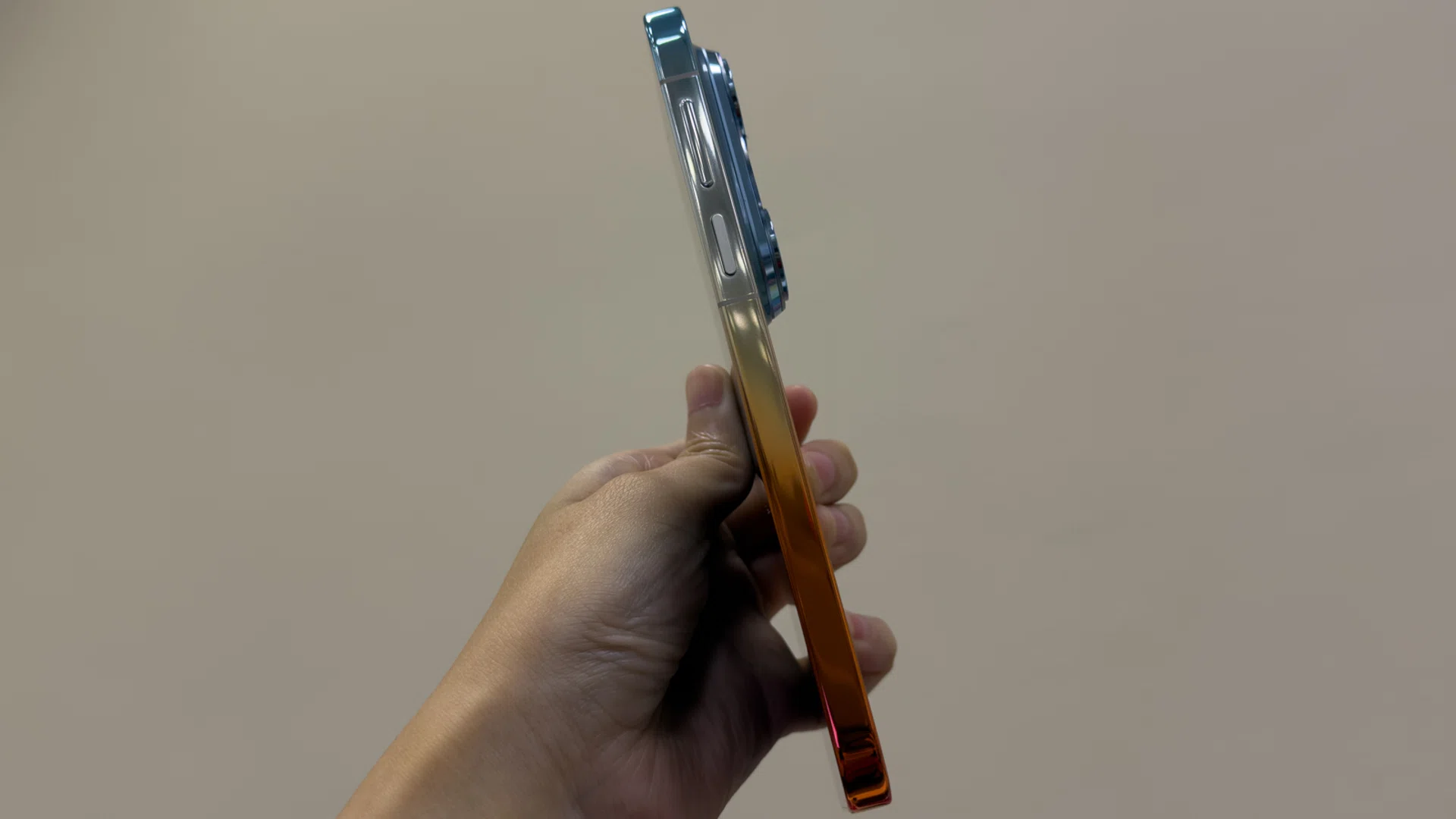
We quite like the unique design.
Photo: HWZ
The Ocean Orange colourway is extremely eye-catching on the rear, reminiscent of the orange hues of a sunset over the blue waves of the sea. But the unique part is the gradient incorporated into the metal chassis to match the plastic backing, possibly through controlled heating or an electrochemical anodization process.
Regardless of the technique used, the outcome impressed us so much, when we first got the device, we spent a bit of time wracking our teammates’ brains to recollect if this approach has been adopted in any prior mobile device. (Spoiler: we couldn’t think of another phone that has adopted such a design on its metal chassis.)
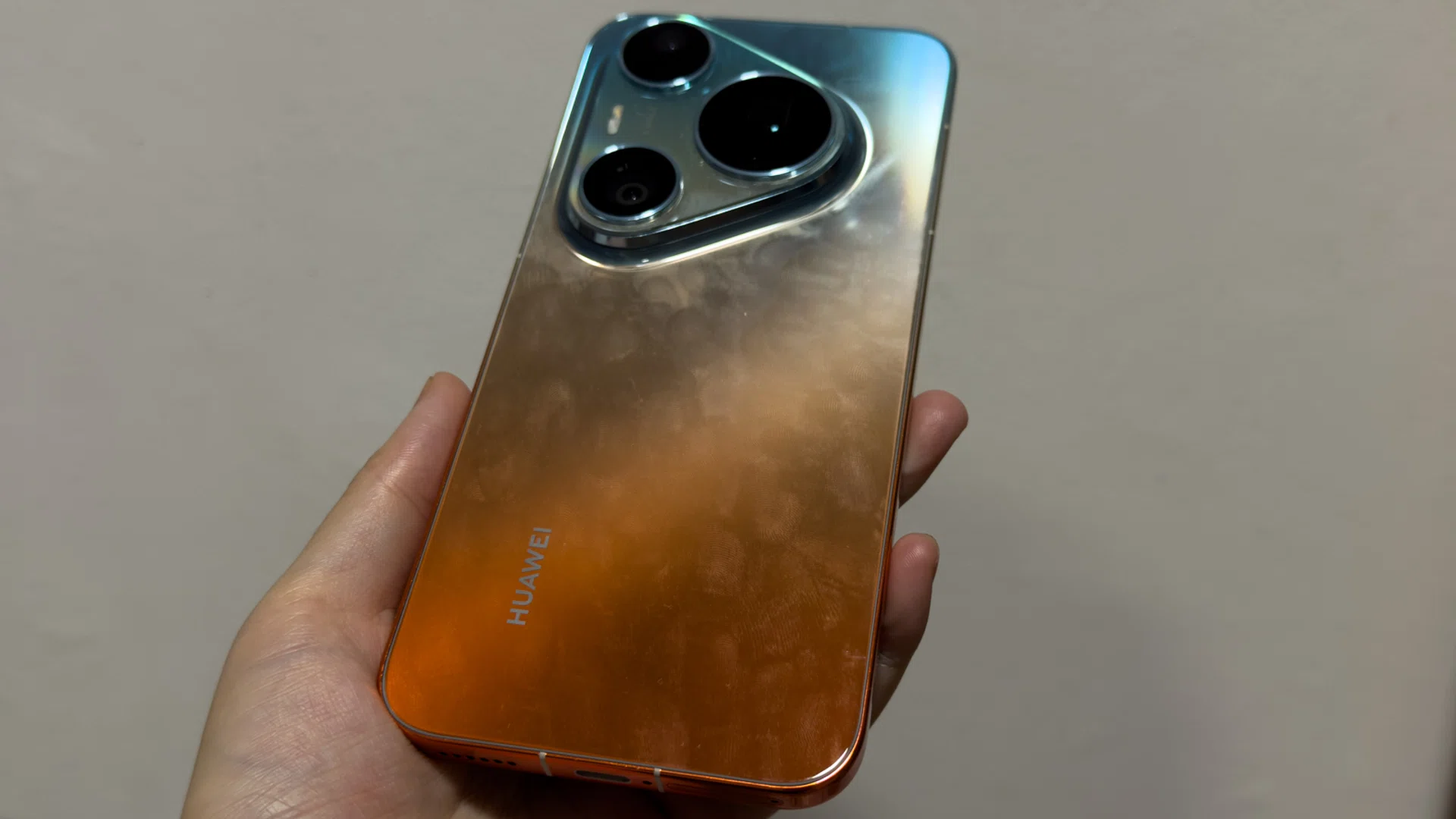
Sadly, the back is an absolute fingerprint magnet.
Photo: HWZ
However, the downside of the Pura 90s Pro Max’s design is the glossy back and sides that attract very obvious oily fingerprints all over the phone. If you purchase this device, be prepared to wipe it down thoroughly every few hours if you detest the sight of oily smudges.
The 6.9-inch LTPO AMOLED display is spectacular, with vivid colours even in Normal mode that look gorgeous when watching videos. The screen has a 1-120Hz adaptive refresh rate and supports 10-bit colour and HDR10.
The standard colour temperature has a slight warm tint that makes it a little less fatiguing to the eyes, but it’s easily adjusted in the settings if you prefer a cooler tone.
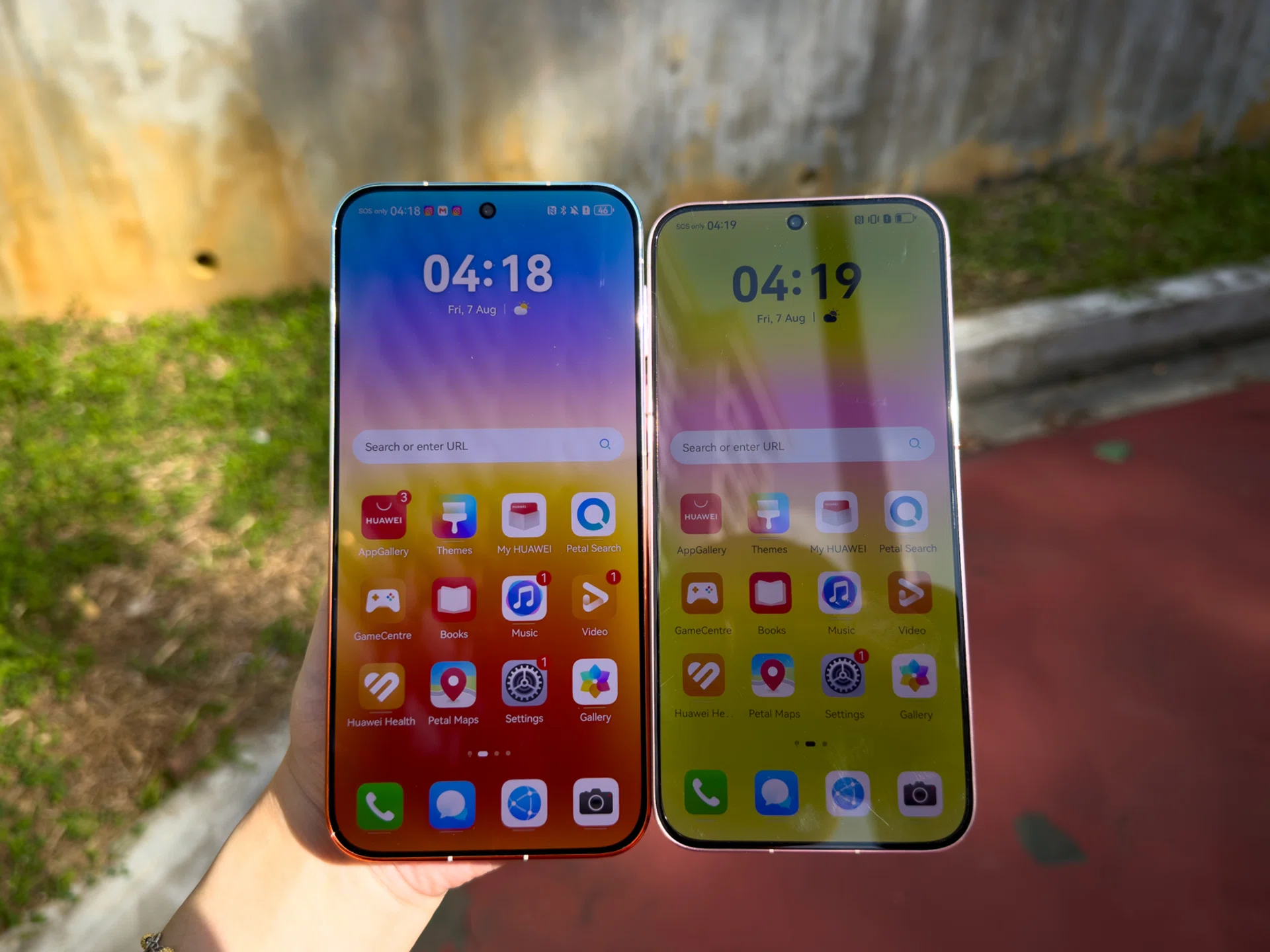
The added anti-reflection on the Pro Max model works as expected.
Photo: HWZ
Protected by Kunlun Glass, the display’s anti-reflection coating is quite noticeable when using the device under bright sunlight. Its smaller brother, the Pura 90s Pro, doesn’t have this anti-reflection layer, and we’ve noticed a large difference when compared side by side, as seen in the photo above.
Peak screen brightness is unchanged from last year, with a maximum rated brightness of 3,000 nits. There’s IP68/IP69 dust and water resistance on both models, which is already very reassuring, but we’ve also taken the phones to the beach and buried them in the sand with no issues afterwards.
Still no Google Mobile Services, but does it matter?
Software has been a prickly topic for Huawei over the last few years, and not much has changed in this regard.
There’s still no Google Mobile Services natively, and you’ll have to resort to workarounds like GBox to (unofficially) get the Google Play Store and download apps that might not have been ported to the Huawei AppGallery. Fortunately, Huawei’s AppGallery has a number of services offered natively:-
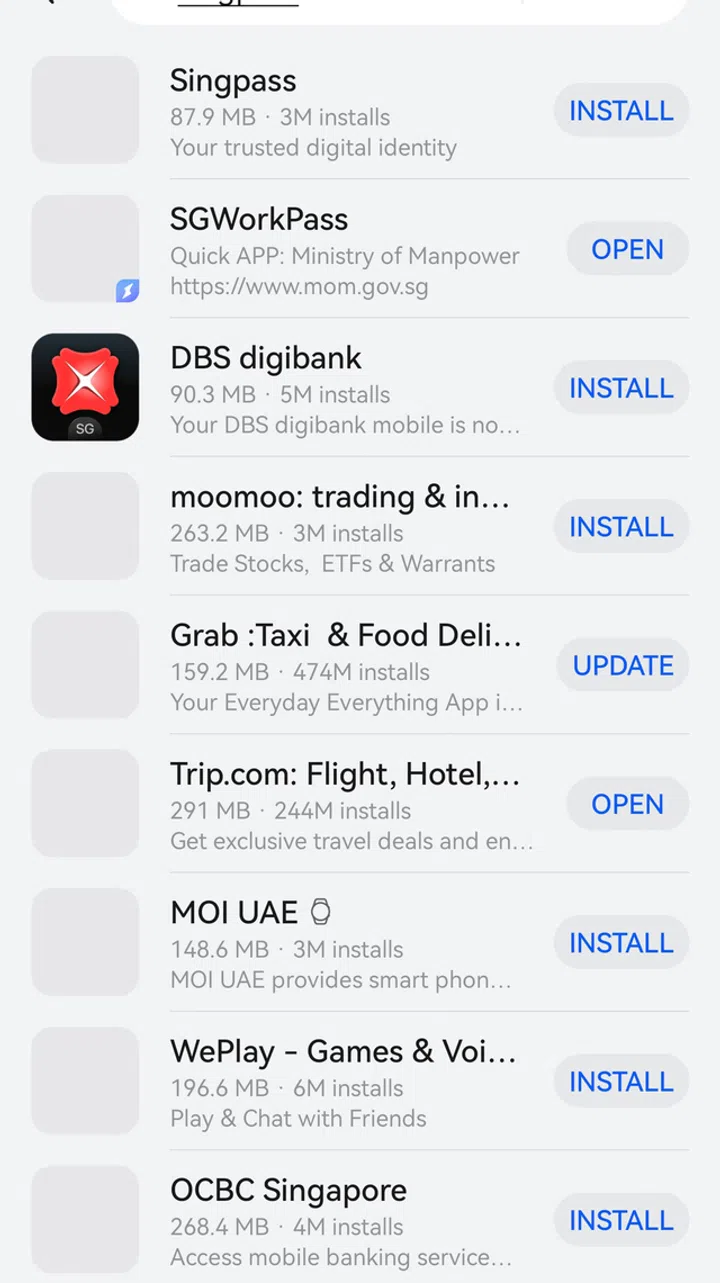
Most major local apps are available in the Huawei AppGallery.
Photo: HWZ
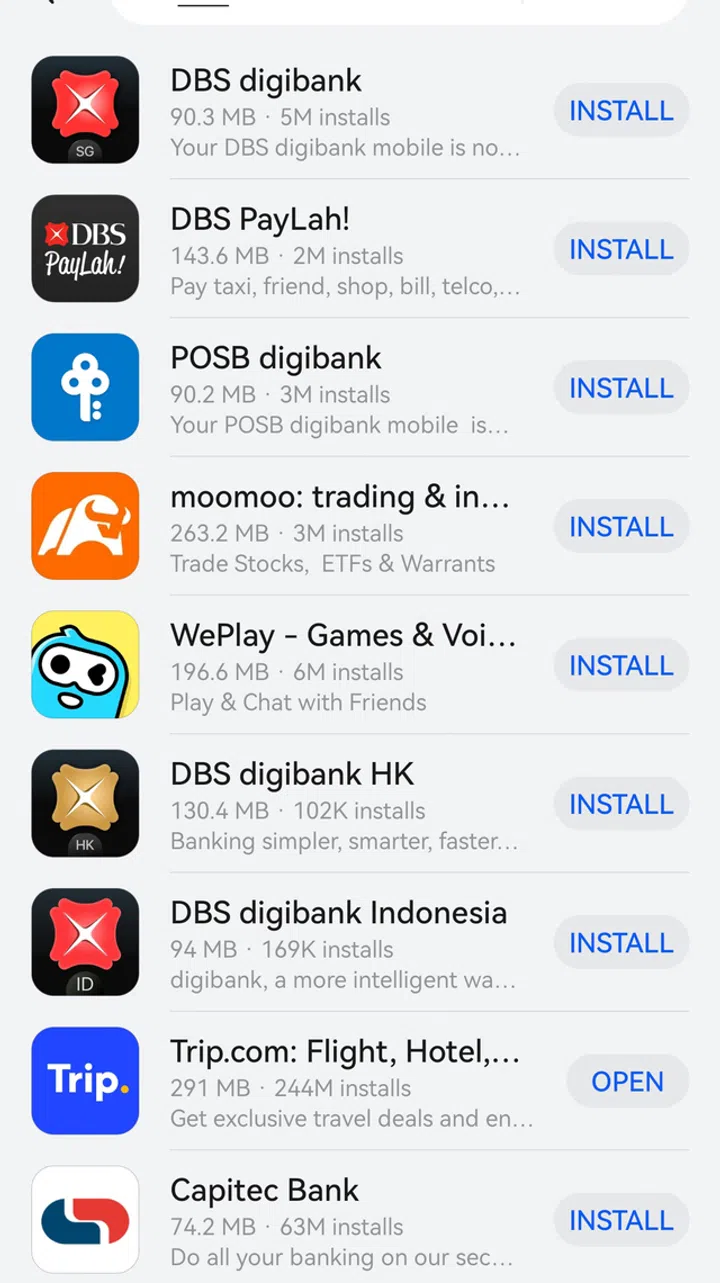
Banking apps are mostly available as well.
Photo: HWZ
You’ll be able to get pretty much any app you want from either app store, and most of the daily apps we might need like Singpass, banking apps and other apps like Grab, social media platforms and more.
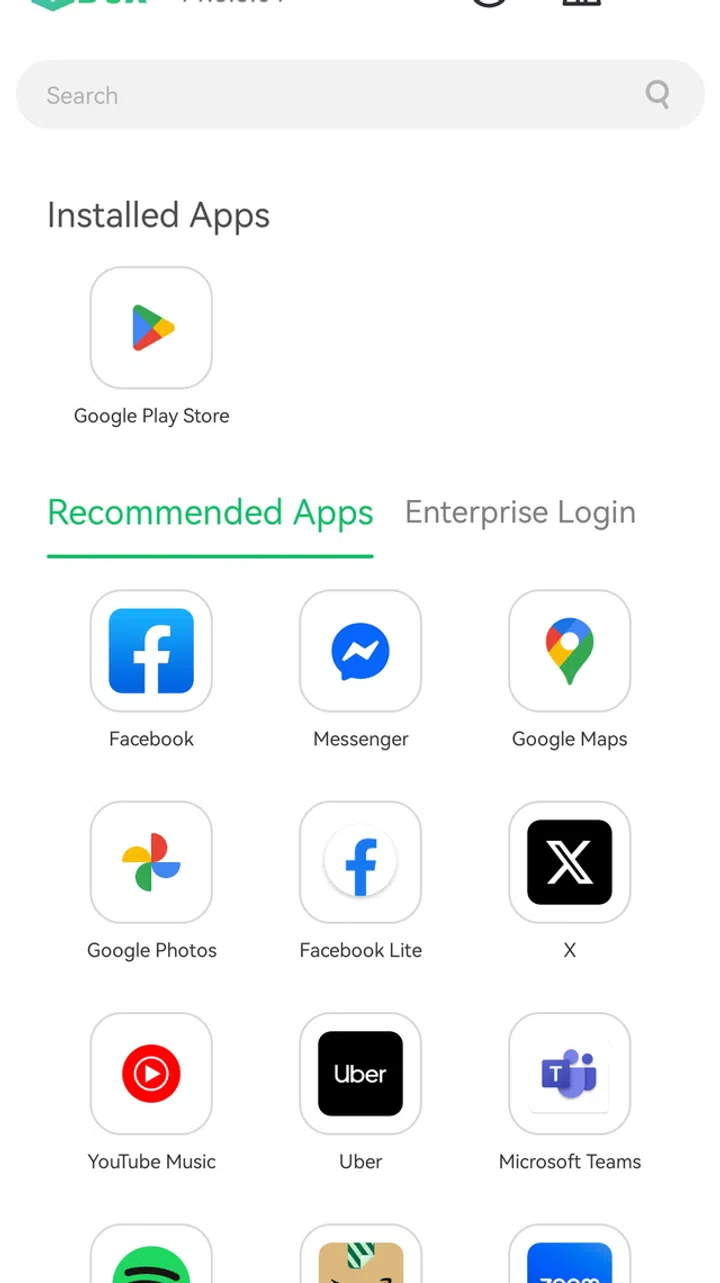
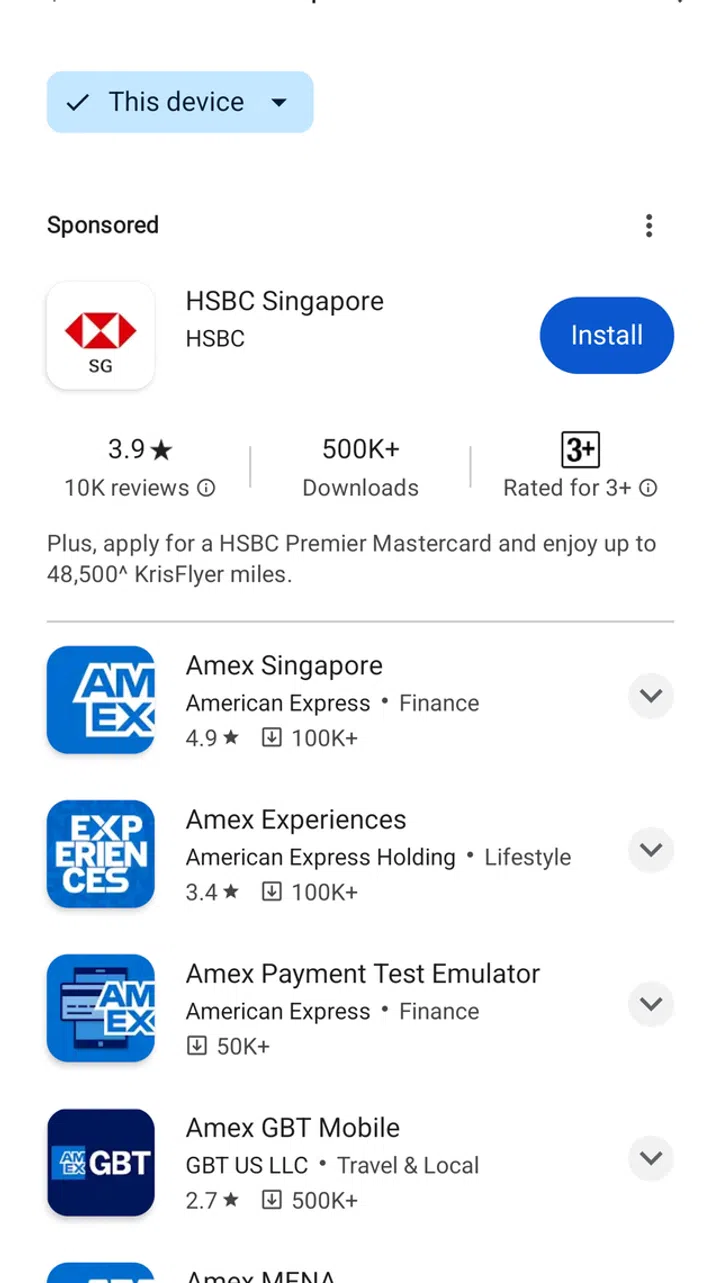
Apps like Gmail, Drive, Google Maps and more can all be downloaded from GBox as well. Unfortunately, one of the apps that is unable to work on the phone is Google Pay, so if you’re a fan of tapping your phone to pay for your expenses without opening specific apps, this might be a big bummer. Android Auto will also not work, so if you’re used to linking your phone to your car, this might annoy you too.
Having the necessary apps present is one part of the consideration, but do they all work as expected, equivalent to those on the Google Play Store? While we can’t vouch for all apps, we’ve tested some and can confirm that the DBS/POSB apps and Singpass work just fine. Other apps that aren’t on the AppGallery but can be downloaded via GBox, such as Amex SG, work too. Your mileage will definitely vary here, including how often these apps are updated.
The phone runs on EMUI 16, which is a major upgrade since this version of Huawei’s OS is built on Android 16 AOSP (Android Open Source Project), marking a long-awaited change from older EMUI versions that were built on Android 12.
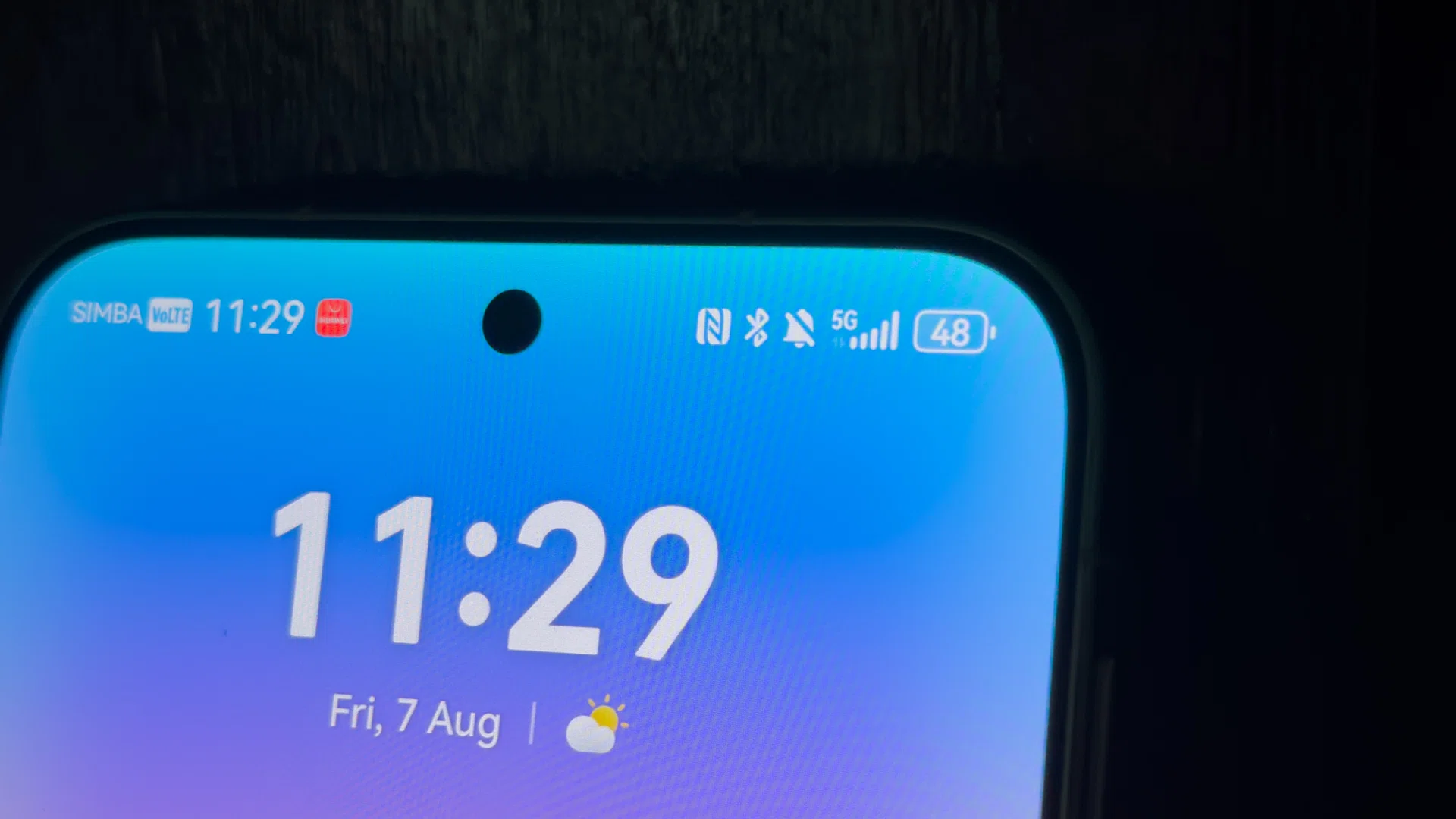
Finally, we get 5G with the Pura 90s series.
Photo: HWZ
Additionally, 5G is finally back on the menu for Huawei phones sold outside of China, with the Pura 90s devices being able to connect to 5G networks, as seen in the above photo.
So are the caveats too many? It really depends. If you’re someone who cannot get by without tapping your phone to pay for items, it might be a dealbreaker. But if you can use QR codes for payment, or even tap a physical card (the horror), then the pain of not having Google Pay is heavily mitigated.
Aside from that, most apps are supported either via AppGallery or GBox, so it’s unlikely that consumers will face too many issues in getting apps of their choice.
Celia AI assist
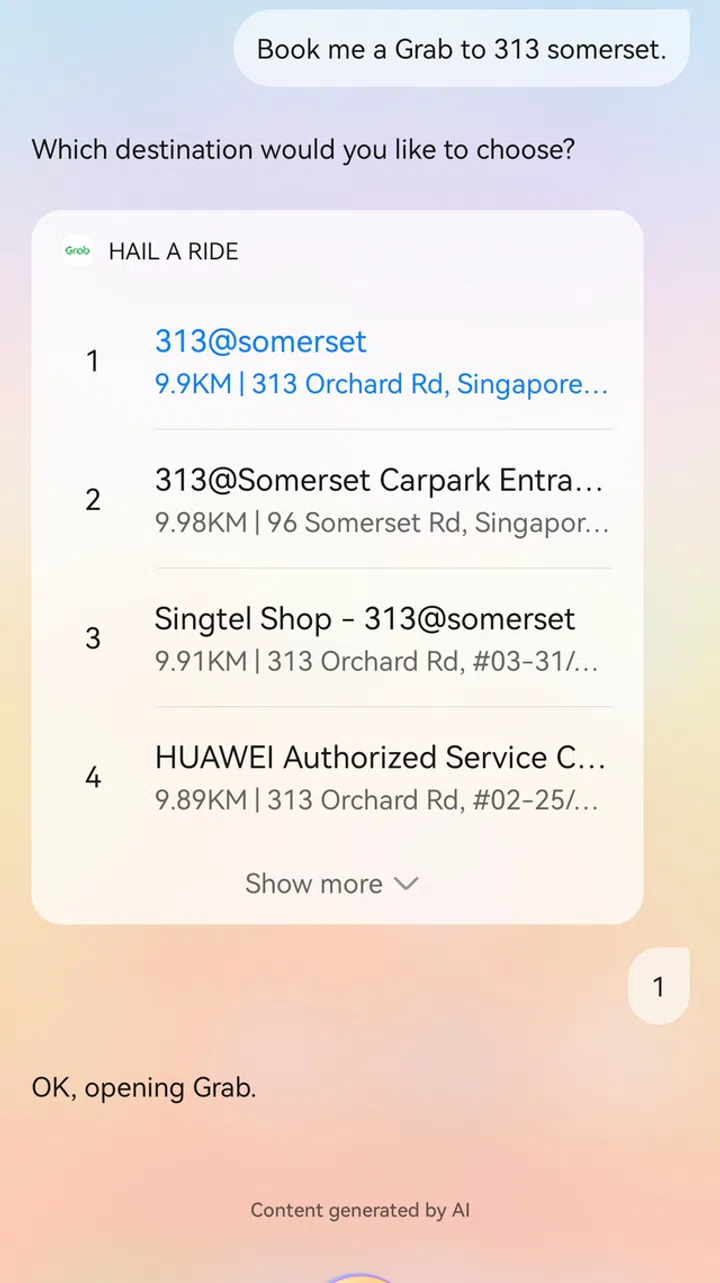
You can start booking a grab without even needing to open the app yourself.
Photo: HWZ
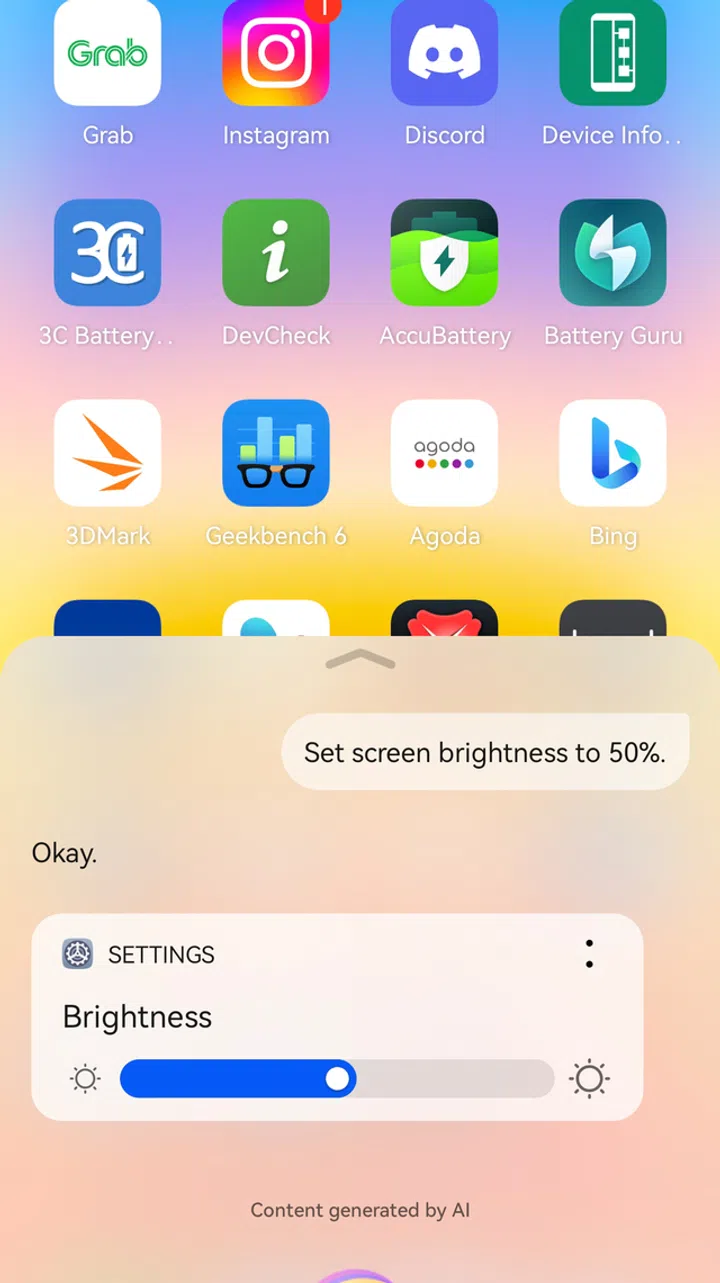
Celia can change some hardware settings.
Photo: HWZ
One key point to highlight is Huawei’s Celia AI assistant. There have been some upgrades to it, with the ability to use the voice assistant to call a Grab car directly from any screen without opening the app. Aside from that, it’s even able to change some hardware-level settings like the phone’s brightness simply by voice command, which even Google Gemini can’t do.
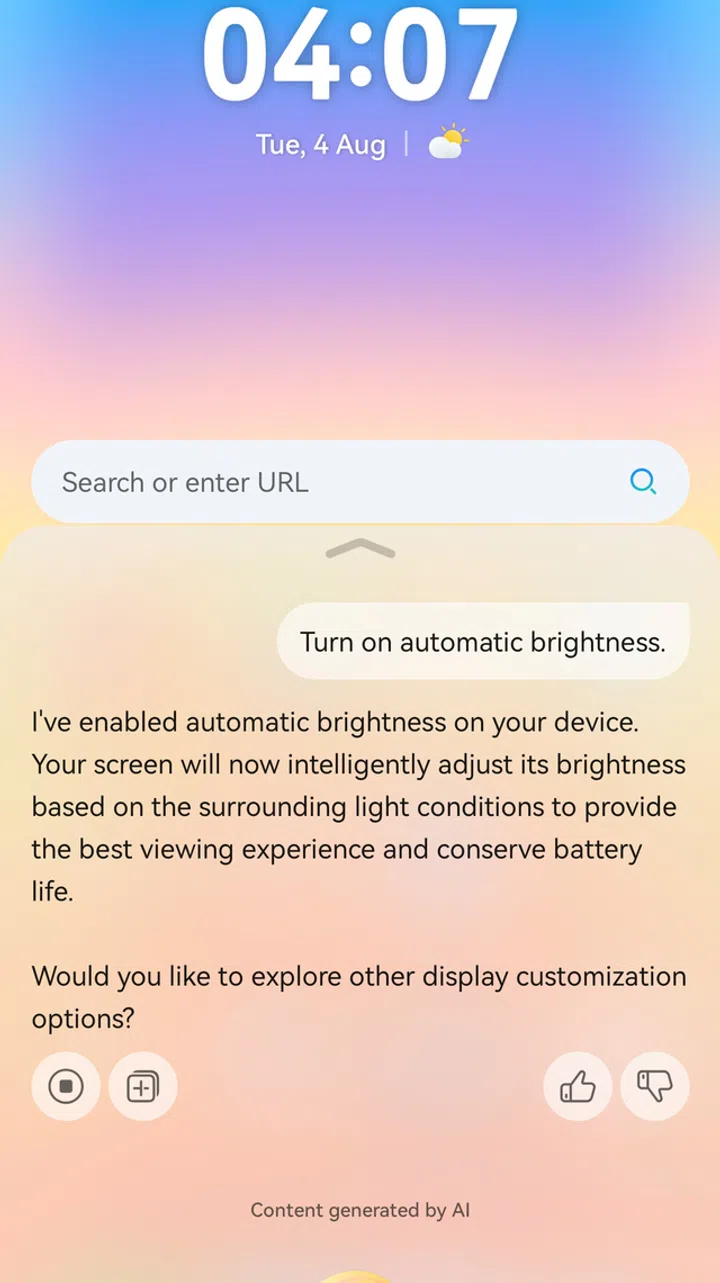
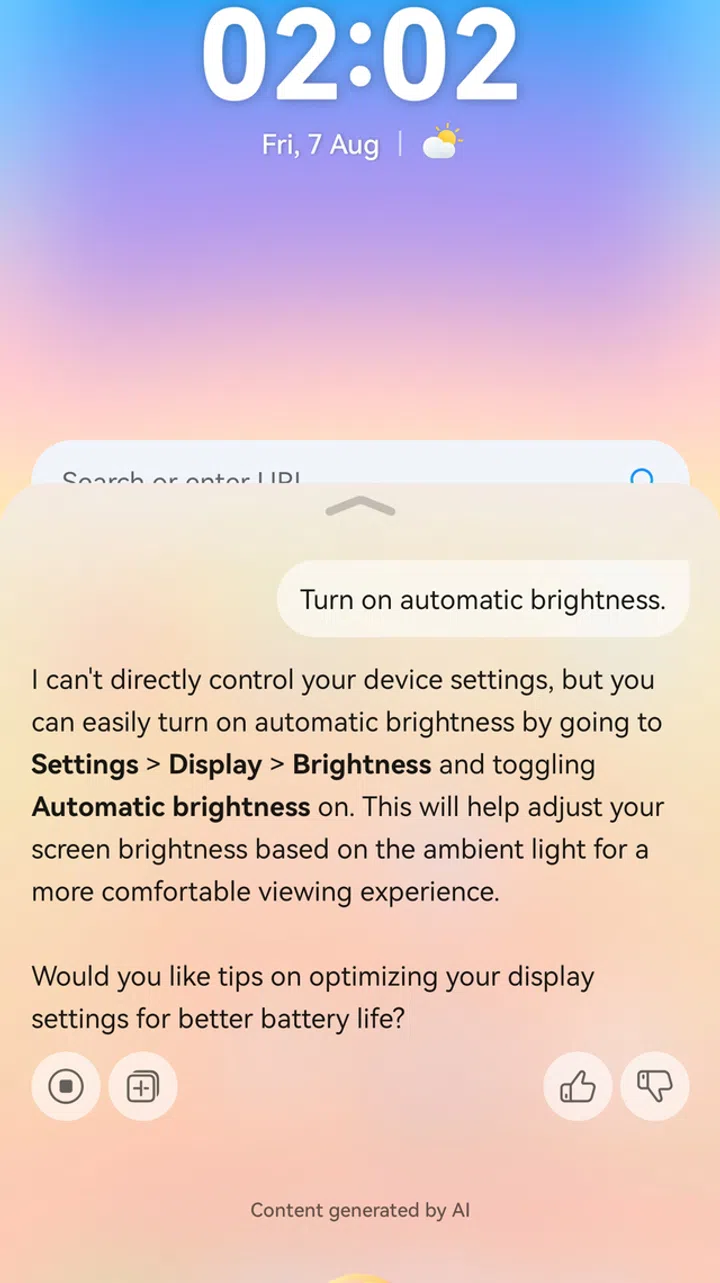
It does get a little contradictory sometimes, as evidenced by the phone first telling me that Celia turned on automatic brightness (it hasn’t), then telling me Celia cannot turn on automatic brightness after.
There’s certainly still work to be done here, but an improvement is an improvement, no matter how small.
Imaging performance
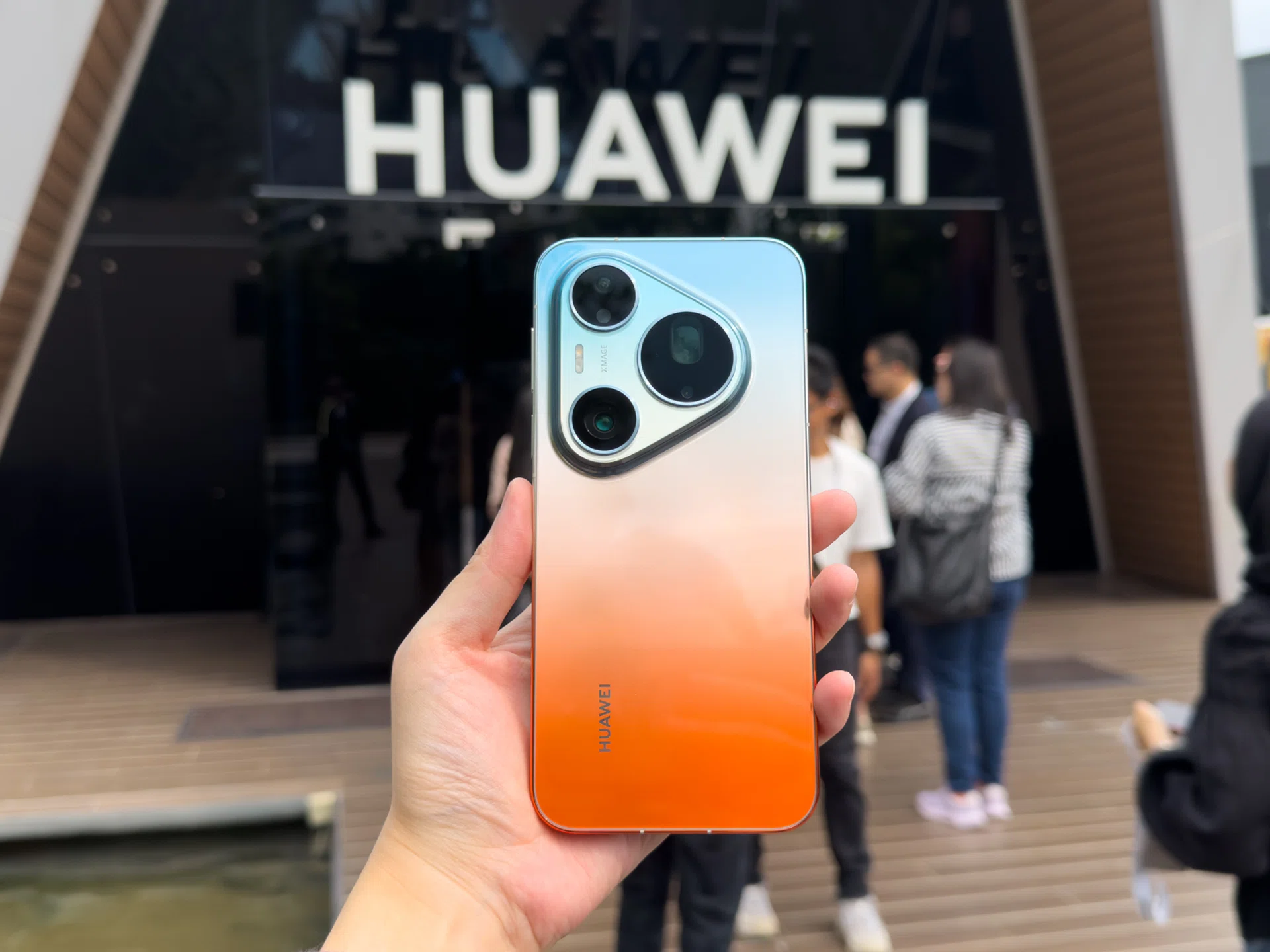
The Pura 90s series devices still retain that triangular camera bump at the rear.
Photo: HWZ
Huawei has moved away from the interesting dual-telephoto camera idea of the Pura 80 series, opting instead for a more traditional 3-camera rear array. Here are the specs of the cameras:
- 50MP main camera (24mm, f/1.4 – f/4.0 variable aperture, 1/1.28-inch RYYB sensor, OIS)
- 200MP telephoto camera (96mm, f/2.6 aperture, 4x optical zoom, 8x optical-quality zoom, 1/1.28-inch RYYB sensor, OIS)
- 40MP ultrawide camera (13mm, f/2.2 aperture, AutoFocus)
As expected, the photos out of this phone are excellent. In well-lit environments, the phone handles colour, exposure and detail well, balancing between the three effortlessly. The dynamic range is good and there’s plenty of contrast and vibrancy in shots.
Portraits are nice as well, with good background blur while retaining detail and texture in faces.
Switching to the 4x optical telephoto camera, Huawei has done a good job here too. There’s a touch more contrast, but portraits taken with this lens are fantastic. I found myself regularly switching to this focal length to get closer to my subjects. Next, we compare how the different lenses and zoom levels perform with the same shooting scene:-
10x shots are decent. There’s definitely a good bit of computational algorithms working behind the scenes to boost the detail, but the 10x zoom shots are mostly useable.
In low-light conditions, the phone fares decently as well. It’s able to brighten up scenes enough and still retain detail.
We have to give a shoutout to Huawei’s new AI Composition and AI Deglare tools.
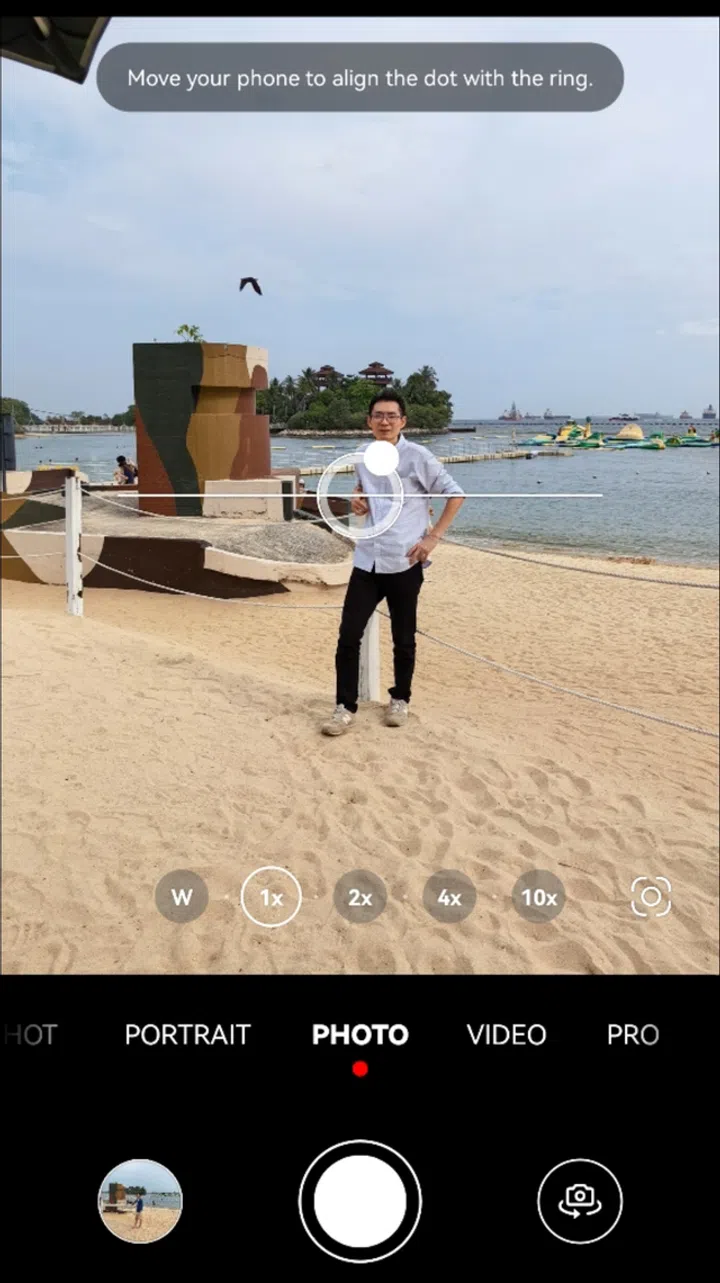
AI Composition will help you find a good angle.
Photo: HWZ
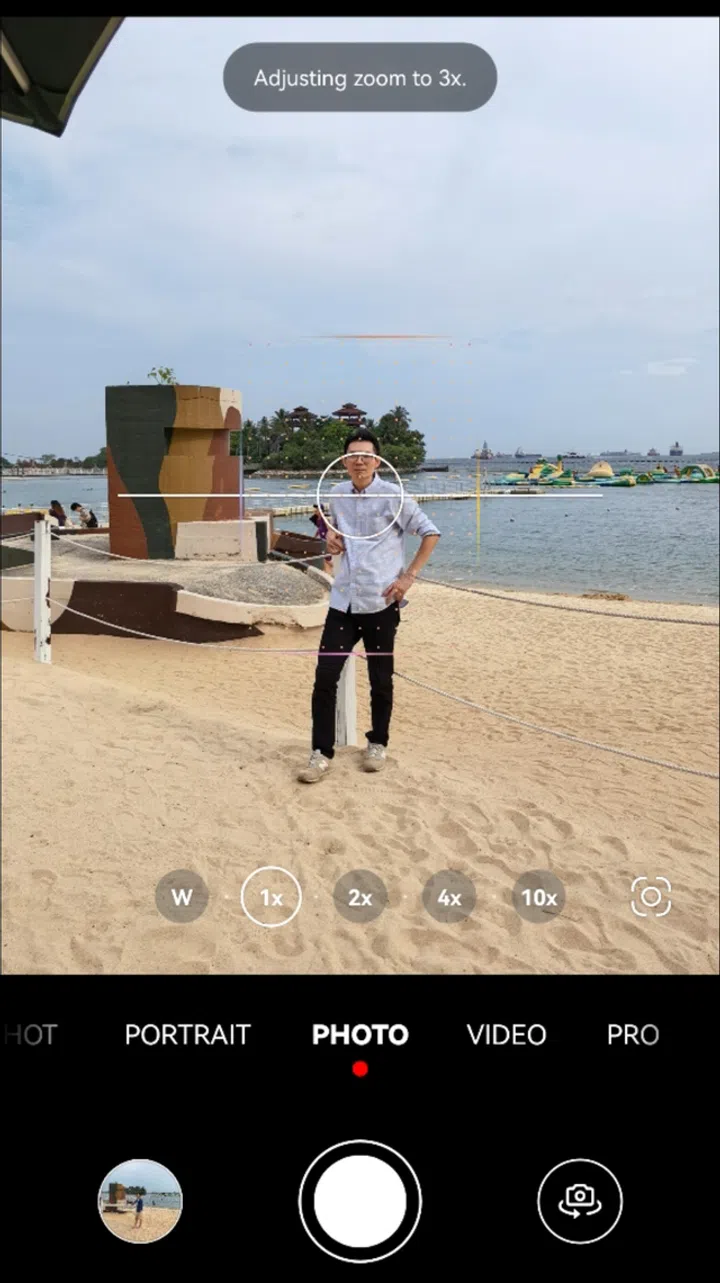
And it can even help you zoom in to frame your subject better.
Photo: HWZ
AI Composition helps to frame subjects and automatically zoom in to get the ideal composition. We’ve found that this works best with human subjects and animals; non-living objects tend to not be as readily picked up by the feature.
Additionally, the auto zoom is restricted to the lens you start off with. So if you’re on the 1x main camera, it can zoom to a maximum of 3.9x digitally. If you want 4x zoom and above, you’ll have to do it yourself. We’re chalking it up to yet another software peculiarity by Huawei, although this should be fixable as well via software updates.
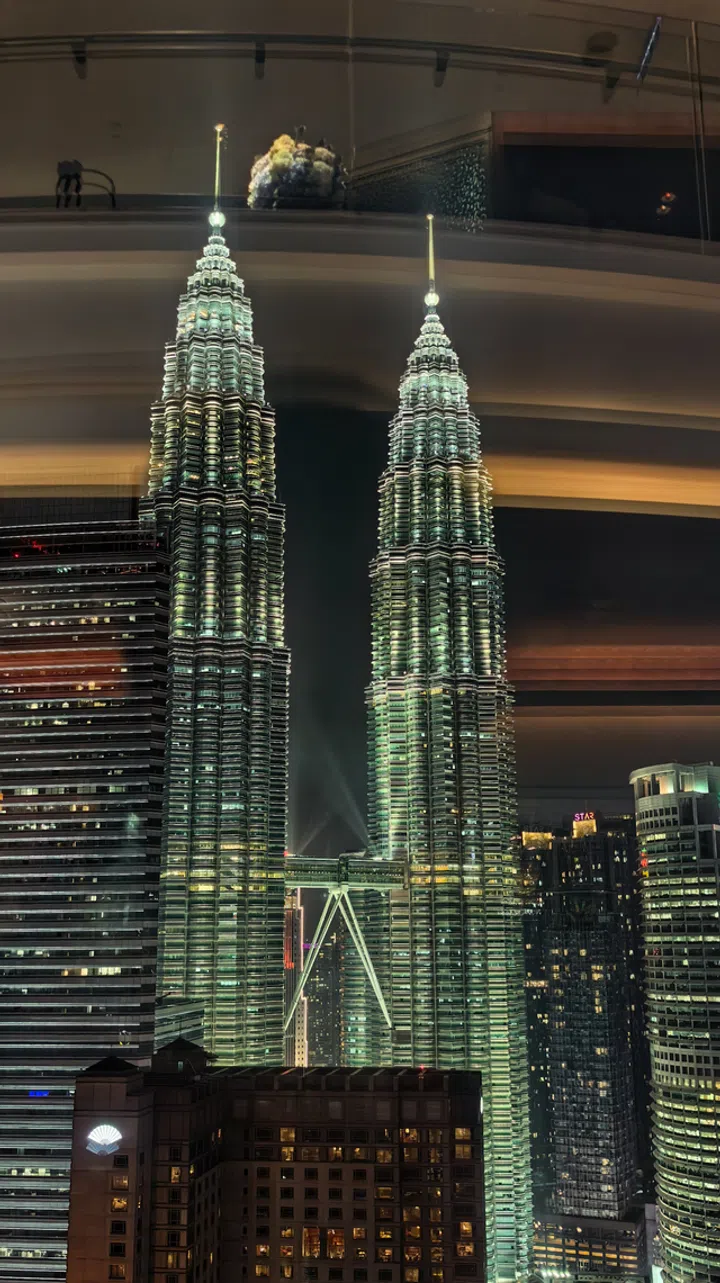
Before AI Deglare
Photo: HWZ
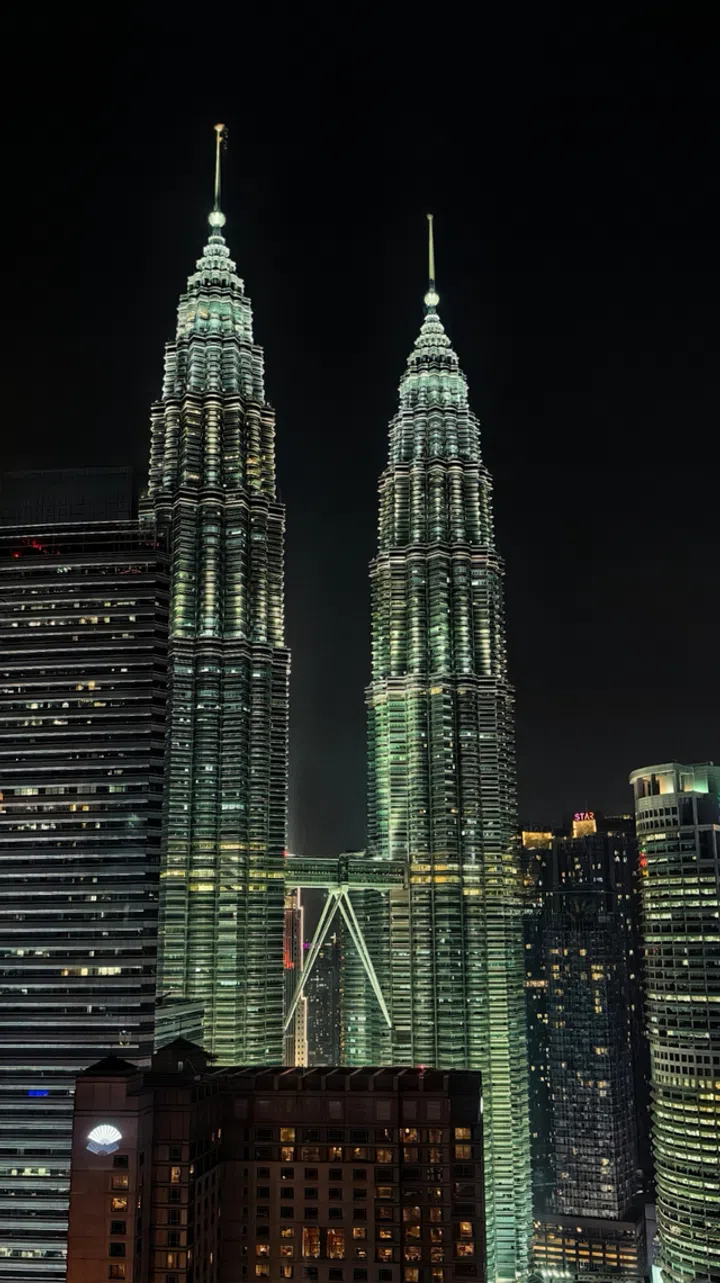
After AI Deglare
Photo: HWZ
AI Deglare is also impressive, and it works just as the name suggests: by removing reflections and glare off glass surfaces so you’re left with a clean image. Just check out the sample images above to see how well it did in our testing.
You will find this feature within the edit function in the Gallery app, under AI tools. If you want to see them in action, check out the video embed at the start of the story or here.
Benchmark performance
The Huawei Pura 90s Pro Max uses the Kirin 9030S processor, which is manufactured using a 5nm silicon process technology. It’s a nice upgrade from the 7nm Kirin 9020 processor, but we don’t expect it to be anywhere close to the recent Qualcomm flagship chips. In fact, it might be closer to the Qualcomm 8s Gen 3, which is a processor from 2024.
As such, we’ll mostly be pitting this smartphone against competitors in and around the S$1,500 price tag mark. The details on how we benchmark phones can be found here.
Disclaimer: The Huawei Pura 90s Pro Max does not support all the Vulkan features required for the 3DMark Solar Bay benchmark and hence, so we have omitted it.
Despite the lacklustre benchmark figures, the Huawei Pura 90s Pro Max actually performs fine in everyday usage. Games run relatively smoothly, even if the phone does heat up a little under intense loads. When benchmarking or gaming, the max temperature we’ve seen the phone get to is 40°C, which is warm to the touch, but not uncomfortably so.
That being said, the processor inside is nowhere near the level of a recent chip like the Snapdragon 8 Elite Gen 5. So if you’re doing a lot of content creation, gaming, video editing, or multitasking and running a lot of apps on your phone, you might notice the phone starting to struggle after a while.
Battery Life
Our battery benchmark uses PCMark for Android’s Work 3.0 Battery Life, with results shown in minutes. This controlled benchmark simulates real-world usage, such as web and social media browsing, video and photo editing, parsing data in various file formats, writing, and more. The test begins when the battery is at 100% and ends when 20% remains on the device.
Disclaimer: The Huawei Pura 90s Pro Max unit we have on hand appears to be an European model, with a battery capacity of 5,500mAh instead of the 6,000mAh that Singapore units get. As such, we’ve listed the actual battery benchmark results for the 5,500mAh unit as well as an estimated result for a 6,000mAh unit via extrapolation.
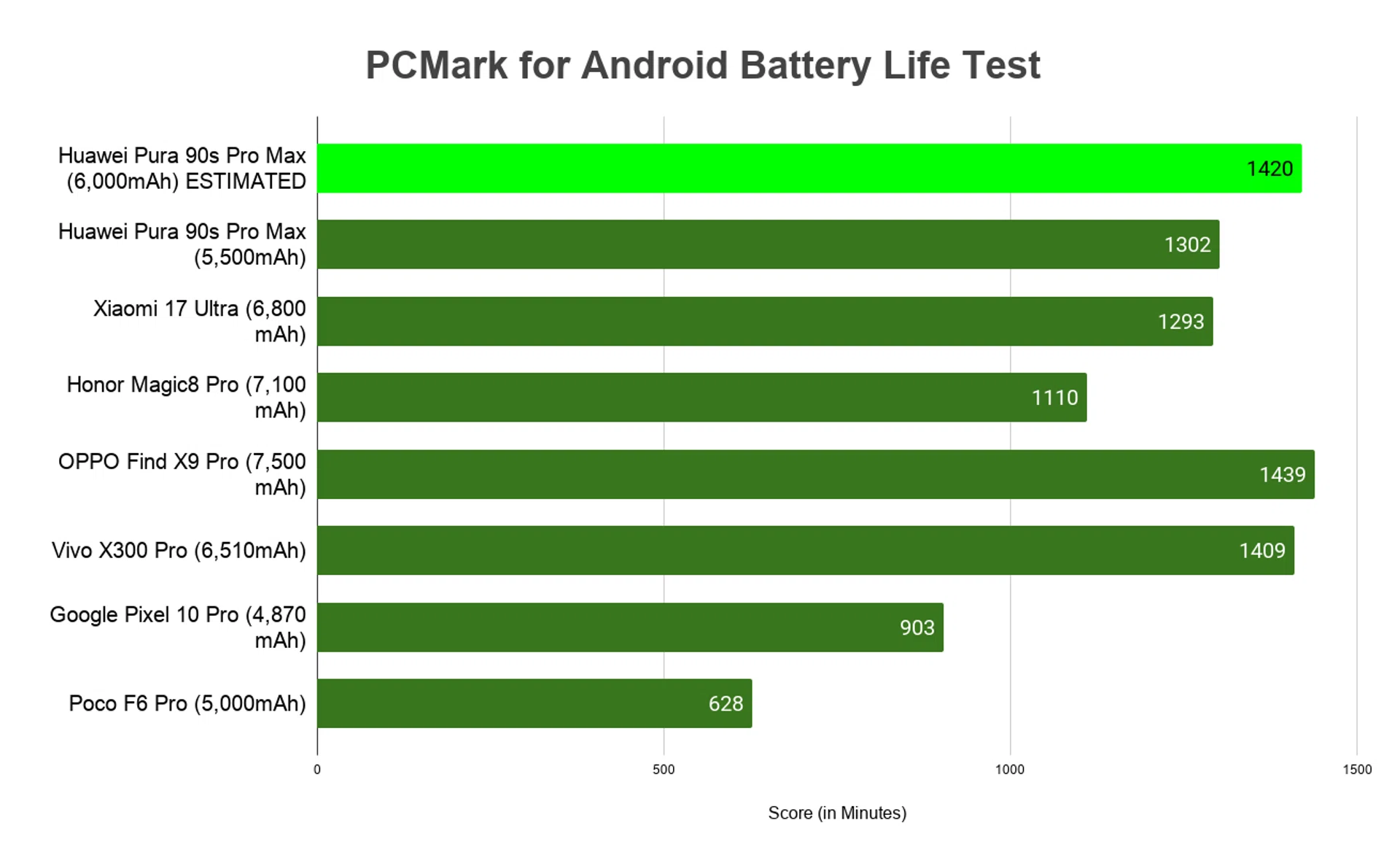
Battery life benchmarking.
Photo: HWZ
Despite the smaller 5,500mAh battery in our unit, we still got an excellent result from the battery benchmark. It performs even better than other competitors with larger batteries like the Xiaomi 17 Ultra and Honor Magic8 Pro.
Additionally, the phone supports 100W wired charging (with the included charging adapter and cable in the box), and 80W wireless Huawei SuperCharge, although you’ll need to purchase the Huawei wireless charger separately for it.
A full charge from 0-100% took just 79 minutes with the included charger, but if you’re using a third-party charger and cable, it’ll take you noticeably longer to get the phone up to full. Plugged into a third-party 165W charging adapter with a 200W cable, it took over two hours to get the phone from 0-100%.
Worth your S$1,500?
Despite the naysayers, Huawei has come up with yet another great phone. In terms of hardware, the Pura 90s Pro Max is remarkable in a few ways. The finishes are refreshing and attractive, the display is fantastic, and the camera hardware is mostly excellent. Its price of S$1,498 is also slightly more palatable than its rivals.
It’s main weakness is that it’s hobbled by the lack of Google Mobile Services. Some will find this a dealbreaker and we can’t certainly see why. However, it’s also true that this is less of an issue these days thanks to better support for Huawei’s AppGallery, and workarounds like GBox and the Aurora Store.
The Huawei Pura 90s Pro Max is a capable device for mobile photography.
Photo: HWZ
For people who want their smartphone to serve as their main photography device, the Huawei Pura 90s Pro Max delivers that in spades. The shots out of this phone are gorgeous, and with a few more updates to AI Composition, it could even be a lifesaving tool for IG boyfriends to avoid the dreaded “you took such an ugly photo of me” complaint.
The performance of the phone might not be on par with other flagships, but we have to note that Huawei is limited by its own HiSilicon processors. They are good enough, but there’s no getting around the fact that they aren’t as performant as the latest chips from the likes of Qualcomm and MediaTek.Hopefully, we’ll continue to see improvement in the near future as Huawei’s processors get better.
Appropriate comparisons for this phone would be competitors such as the Vivo X300 Pro and the OPPO Find X9 Pro, both of which cost a tad more at their official price points. However, the biggest draw for those devices is that they’re powered by more advanced and powerful Qualcomm chips and have full Google support. And if you absolutely must have Google support and don’t want to fiddle around with GBox, it’s a clear answer.
But if you can do without GMS, or want a photography-focused secondary device for your older main driver, the Huawei Pura 90s Pro Max is a compelling alternative. It’s slightly more affordable, takes great photos, and, with its iridescent design finish, looks unlike any other phone currently on the market. If you want a head-turner and make a statement, Huawei has you covered.
Pricing and availability
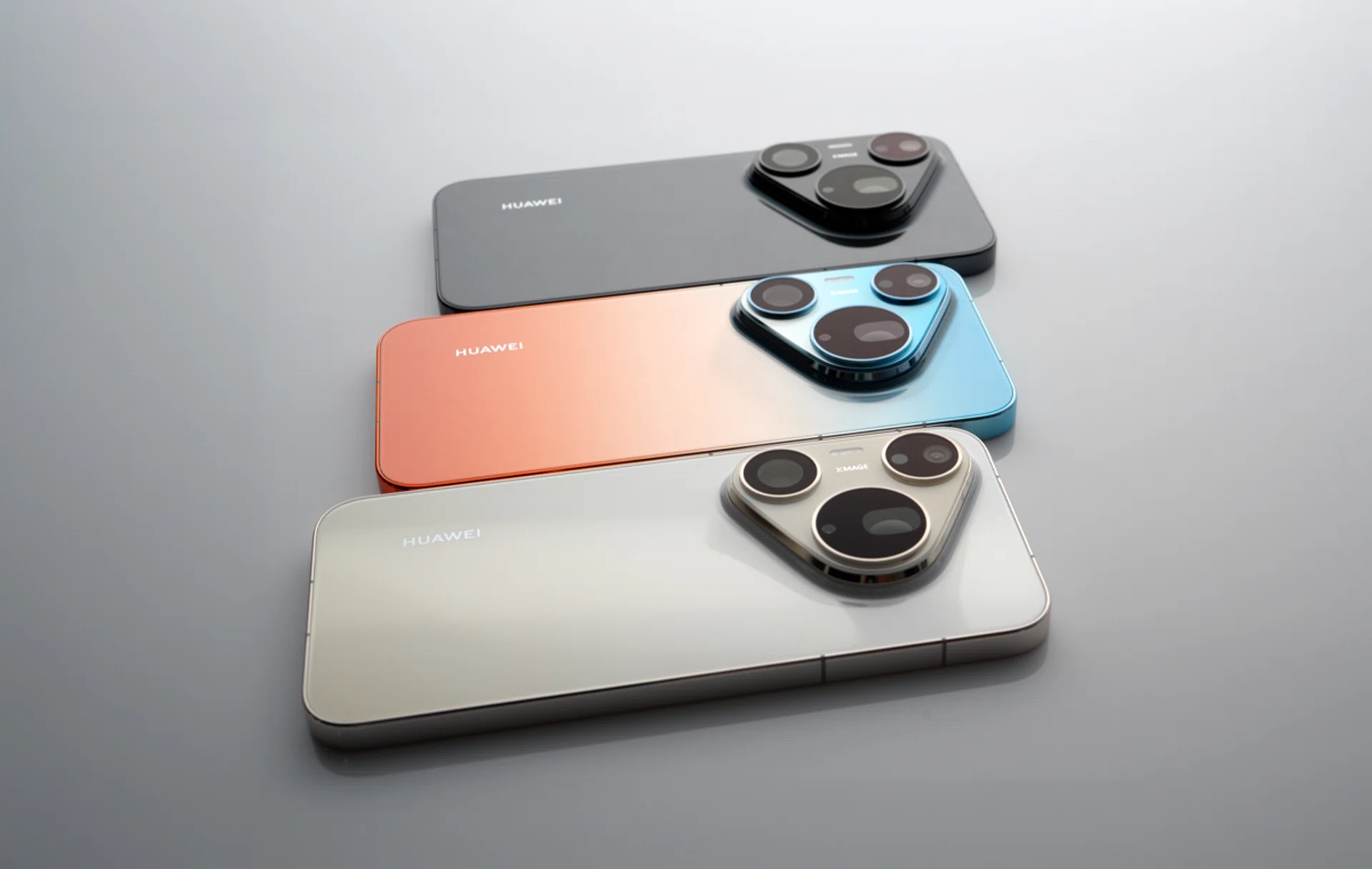
The Pura 90s Pro Max comes in three colour options.
Photo: HWZ
The Huawei Pura 90s Pro Max is available in Blush Gold, Orange Ocean and Graphite Black, and comes in a single 12GB RAM + 512GB storage configuration.
You can purchase the phone at Huawei’s Shopee, Lazada and TikTok stores, Huawei Experience Stores, as well as Singtel, and authorised retailers such as Best Denki, Challenger, Courts, iShopChangi and MetaPod.
Read Full Article At Source