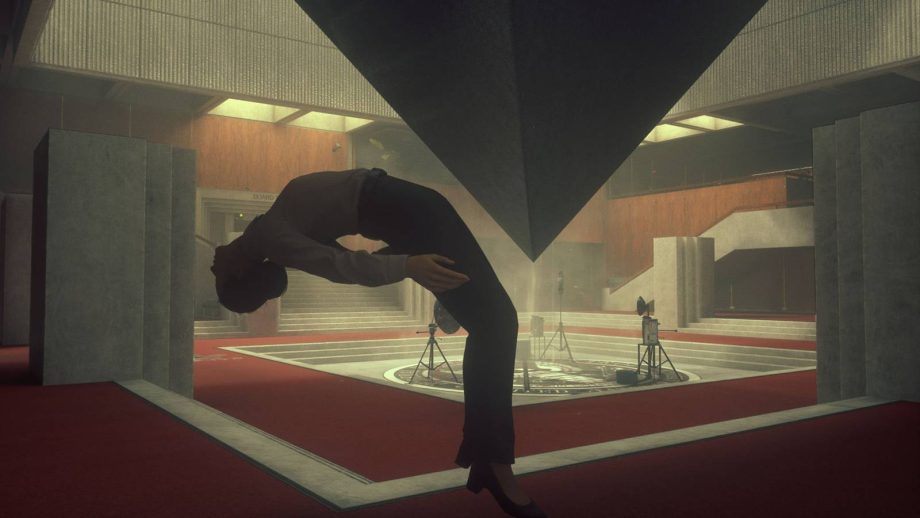
As a sequel to 2019’s Control, Control Resonant makes an effort to stand on its own. The lockdown in the Oldest House is over, and Dylan Faden is charged with saving the world (a.k.a. Manhattan), which is now suffering the effects of both the Hiss and a new paranormal entity. While I didn’t mind these changes, developer Remedy Entertainment loses track of a precious narrative element that made Control a scary experience in a very particular way. The Oldest House, the most interesting character of the first Control, becomes a piece of memorabilia as Dylan hops around a warped Manhattan.
The Oldest House is an entity in itself. Within Remedy’s universe, it is called a “place of power,” which means that paranatural forces have affected it. From the outside, it looks like a regular government building. The brutalist architecture, the somber tones, and its imposing height make it weird, but, you know, a government-owned kind of weird. But the Oldest House is more than meets the eye.
Control Resonant neglects The Oldest House
-
 Image: Remedy Entertainment
 -
 Image: Remedy Entertainment
 -
 Image: Remedy Entertainment
First, it existed before becoming the Federal Bureau of Control’s headquarters. Instead of being built or rented, the place was found. Second, the Oldest House is only visible to those who are looking for it, which means that one must first conceive its existence for it to actually materialize in the reality they exist in. The Oldest House is alive and connected to other dimensions. Its corridors may become interdimensional mazes, and its doors may lead people to other parts of the planet, challenging anyone’s understanding of reality.
The interdimensional building was not scary in Control because an entity inside of it was killing people and making them float around in creepy poses; it was scary because the place contradicts the assumptions we foolishly made about it. If we strip the Oldest House of all the lore Remedy wrapped around it, we will still find a house, and as such, we expect something from it. It doesn’t really matter if the Oldest House is structured literally as a house or a skyscraper. It must have doors, windows, and walls. Once we understand that it is a place in the world, we assume it must respect the laws of logic. It can’t be anything beyond what it really is: a physical structure whose traits are limited by its condition as a real element made of real things — at least that’s what we assume.
However, as soon as a house starts to fail to meet our expectations, we are sucked into the realm of the unknown and eerie. Think of the house in Shirley Jackson’s The Haunting of Hill House, which lost its sanity because “no live organism can continue for long to exist sanely under conditions of an absolute reality,” a house that, “not sane, stood by itself against the hills, holding darkness within.” In the story, Jackson narrates how the interior of the house feels unnerving, as if it is constantly changing. There is also the infamous house in Mark Danielewski’s House of Leaves, where the illogic condition of its interior becomes a living nightmare for the characters. Without bizarre creatures, both stories are unsettling. Seeing characters having their own minds challenged by what seems like the impossible is a primordial kind of fear — one that can more easily be invoked by houses.


Read Full Article At Source