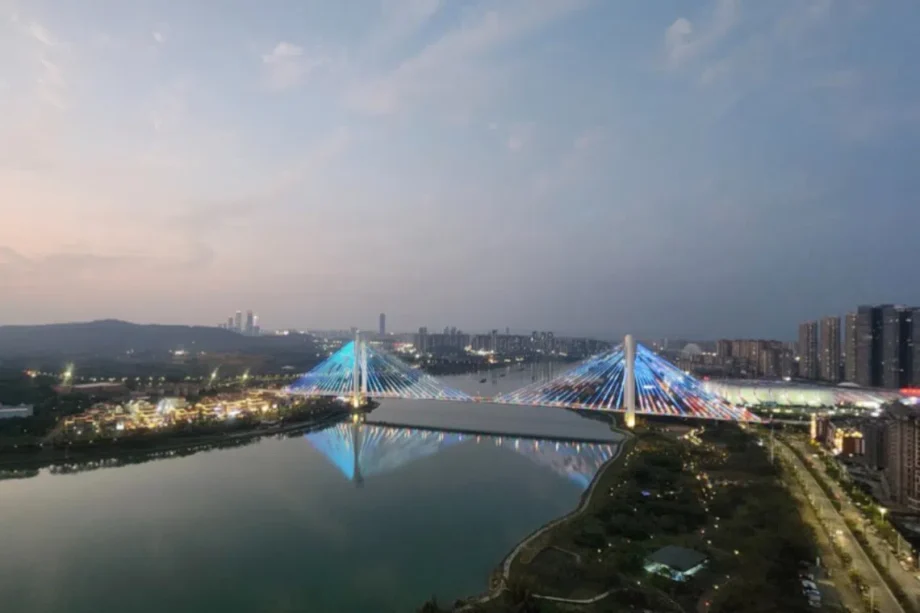
SINGAPORE – When Alice (not her real name) arrived in Nanning, the capital of Guangxi Zhuang Autonomous Region, in March, she was impressed with the number of high-rise developments in the city.
The apartment the Singaporean public servant stayed in was about 2,000 sq ft, with rent at $500 each month.
Fellow Singaporeans there tried to convince her to live there – a sprawling development called Nanning Skyfame ASEAN Maker Town, where a full manicure service was $8, Starbucks coffee was $3 and a bowl of wonton noodles with 20 wontons cost $2.
Except that when Alice, in her 30s, looked from the balcony, she saw low- and high-rise developments peppered across the city with little activity. Many looked to have been abandoned.
The city had promised much, and for the last 30 years, a number of investment schemes played into potential buyers’ fear of missing out.
Nanning had Foxconn, the factory that once employed 50,000 workers, where iPhones were produced.
But amid a US-China trade war that saw Apple AirPod manufacturer GoerTek move from China’s Shandong province to Vietnam in 2018, Foxconn did the same.
In 2024, it left Nanning. Developers of nearby skyscrapers built for Foxconn employees could not sell their stock. The vast Foxconn site was also left empty.
But Alice and other Singaporeans The Straits Times spoke to said they were sold on more promises by “recruiters”, who excitedly described the cheaper but more lavish lifestyle they would enjoy in an exciting city – the next Shenzhen, they were told.
There were significant plans for the region of more than 50 million people.
They include the Pan-Beibu Gulf Economic Zone launched in July 2006 to connect southern and south-western provinces in China with ASEAN and the New International Land-Sea Trade Corridor (ILSTC), which allows goods to be moved from western China to ASEAN by road, rail, sea and, soon, river.
There is also the China-Singapore Nanning International Logistics Park, which was established in 2018.
It serves as a key node along the ILSTC passage, with a total planned investment of more than 10 billion yuan (S$1.9 billion) from Singapore shipping company Pacific International Lines and local partners.
But the lifestyle multi-level marketing sales pitch Alice and others received turned out to be a Ponzi scheme, a variant of the 1040 Sunshine Project that started in 1998. The scheme has seen many Chinese nationals convicted for their involvement in pyramid schemes.
It also resulted in the murder of a recruiter in Malaysia in 2016 over losses suffered by investors.
On Sept 4, the Ministry of Foreign Affairs (MFA) and the Singapore Police Force (SPF) revealed that 52 Singaporeans have been arrested by the Chinese authorities in Guangxi province over their alleged involvement in pyramid scheme activities.
They were nabbed as part of a wider law enforcement operation in Guangxi in southern China against suspected pyramid scheme activities and related offences.
Alice recalled that she had suspected it was all a scam when she looked around her.
“It was like an eerie ghost city. It looked like the construction of nearby blocks and units were halted halfway. The recruiters said there were neighbours, but other than the Singaporeans we were with, no one else was there,” she said.

A photo taken by Alice during her trip to Nanning in March. Alice recalled that she had suspected it was all a scam when she looked around her.
PHOTO: ALICE
Frank (not his real name) was in Nanning with his ex-colleague and his ex-colleague’s family in 2014.
He added: “They showed me a condo complex, which looked like a ghost town. They claimed the condo would be near an ASEAN village with pavilions representing Singapore, Malaysia and Indonesia, and that this village will soon be a huge tourism spot.”
Like Alice, the retired engineer in his 60s did not throw in any money. None of the Singaporeans ST spoke with invested in the scheme.
Many others did, paying between $26,000 and $50,000 to enjoy the lifestyle.
The recruiters, also fellow Singaporeans, were never clear what the investment was for. Instead, they focused on how potential investors could recoup their money – by recruiting others.
They were told each new recruit – a close friend, parent, relative – was worth $10,000.
Recruiting friends
Alice said the first surprise was when she boarded the plane to Nanning Wuxu International Airport. There were many Singaporeans on the flight, and they all appeared to be familiar with each other.
She had agreed to travel there on the behest of a close friend, who insisted she see up close an investment opportunity in Nanning, Guangxi.


Read Full Article At Source