Marvel as We Know It Is Over

Marvel as We Know It Is Over


This is an IGN opinion piece from Alex Zalben, who has been covering movies and TV for years with a focus on Marvel and DC, as well as hosting the regular live show and podcast Comic Book Club. One time he touched the Spider-Man balloon before the Macy’s Thanksgiving Day Parade and cried.

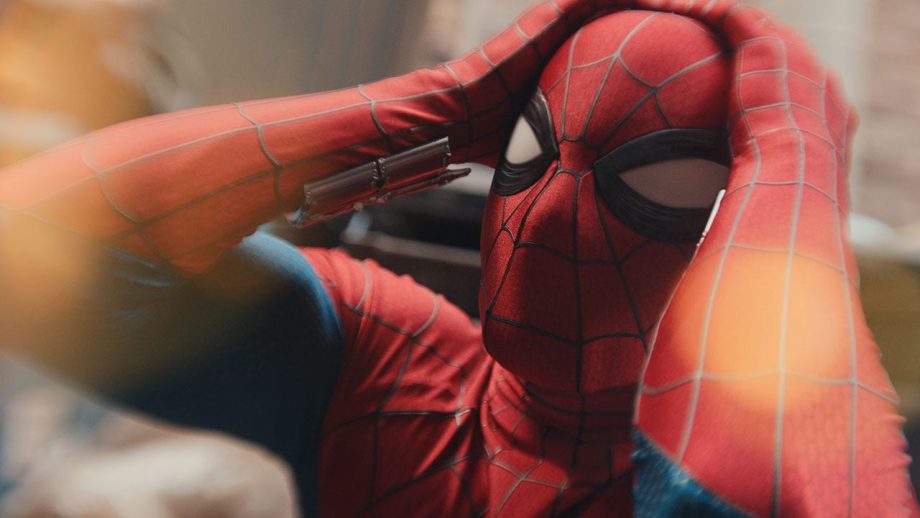
This weekend, Spider-Man: Brand New Day swung higher than a spider has ever swung before with a record-breaking box office that didn’t just include the number one opening day of all time, beating Avengers: Endgame, but also toppled Endgame’s weekend record with a stunning $360 million for the biggest US opening of all time (it came in hot at number two of all time internationally, but still, not too shabby). And while that’s a reason for Sony Pictures to celebrate like only a spider can, it clinches a feeling that’s been bubbling for the past few years: The Marvel Cinematic Universe as we know it is over.

Pretty toxic take, right? Stop raining on our parade? If you can listen to the reasoning for a moment over the cries of “oh, Marvel is so back,” you can see a pretty clear pattern here, and a clearer path for success for Marvel Studios that will be impossible to ignore. The short version? Going forward, they’ll be making Spider-Man movies, Avengers movies, and that’s pretty much it. Sure there will be outliers, and we’re all excited (or, most of us are) for the MCU’s upcoming X-men reboot. But no Marvel movie or TV property has reached the heights of Spider-Man or Avengers, and in a time when Marvel – and perhaps more importantly, its parent company Disney – is wrestling with how to replicate the monoculture success of its first 10 years, they’re going to slip back into what comfortably works. Thus far that’s been Peter Parker and movies that are labeled Avengers movies, but are basically the modern equivalent of Circus of the Stars (look it up, kids).

How the MCU Got to This Point

While probably too much ink has been spilled over the state of the MCU post-Endgame, it’s undeniable that, whatever you think about the quality of the movies and TV shows being produced by the studio, the actual viewership, be it in movie theaters or on streaming, has dropped over time. Part of that has nothing to do with Marvel and is an indicator of changing habits with moviegoers and streaming viewers, and is something that every studio and production company is wrestling with… And frankly will continue to wrestle with, as “change” has been the operating word of the entertainment industry since a train first came through a tunnel on screen, spooking audience members into thinking it was going to crash right into them.

But when it comes to Marvel specifically in the past five years versus the entire history of film, the box office returns haven’t been returning the same way they did reliably prior to 2019. There have been pops here and there, but if we’re looking at the billion-dollar worldwide benchmark that has become the default success marker in the past decade, only Spider-Man: No Way Home and Deadpool & Wolverine have crossed that point, while the rest of the MCU has barely scratched or passed the $500 million mark. Is that still an insane amount of money? For sure. But we’re talking about what studios look at, which includes what shareholders look at, which is a non-stop, upwardly moving spiral of profit. The Fantastic Four: First Steps capping out at $522 million ain’t gonna cut it, and frankly isn’t that much better than the disastrous worldwide take of The Marvels ($206 million).

Fantastic Four: First Steps capping out at $522 million ain’t gonna cut it, and frankly isn’t that much better than the disastrous worldwide take of The Marvels ($206 million).

On the TV side, we’ve been seeing the same sort of attrition, with viewership sloughing off over time. An important note here for clarification: while box office numbers are widely and regularly reported, streaming numbers are a little trickier. There are plenty of fan rankers and tracking of “social conversation,” but self-reported numbers by streamers often require multiple asterisks of clarification (“the second biggest streaming debut for a character named Loki this month on a Tuesday,” etc., etc.). So it’s helpful to look at outlets like Nielsen, which provide independent reporting of streaming viewership usually on about a month delay. That said, where once Marvel was a regular on Nielsen’s charts, later seasons of TV have barely scratched the Top 10 Streaming Originals chart, with Daredevil: Born Again failing to chart at all, and Wonder Man popping in for its first week then popping out. And not to keep focusing on that billion number, but the billion minutes benchmark that Netflix regularly breaks on Nielsen’s chart has been a faraway dream for Marvel TV’s Disney+ shows for the past few years.

Without getting too in the weeds here, we’ll also clarify that when it comes to streaming, big pops aren’t the only important measure, and the vast library of MCU movies and TV shows on Disney+ is assuredly a subscription draw for the company, as is the repeated binge viewing of MCU sagas leading to big events like Avengers: Doomsday.)

The point here is that the MCU, as it stands, is not working the way it should be, both in movies and on TV. And the cracks are starting to show even in the past week leading up to Spider-Man’s boffo BO (and no, not the kind he gets from jumping around in that costume all day). First, Marvel canceled the already renewed Wonder Man, conveniently after show co-creator Destin Daniel Cretton was done with his press tour and red carpets for Brand New Day, which he directed. As noted above, Wonder Man wasn’t a ratings killer, but it was one of the more universally critically acclaimed series from the MCU in recent history, and even nabbed a surprise Emmy nomination for star Yahya Abdul-Mateen II. And a day later, Mahershala Ali stuck a stake in the long in development Blade reboot, essentially saying he’s moving on from the project. (For his part, Marvel boss Kevin Feige earlier called himself a “gigantic loser” for not getting the movie, which was announced in 2019, to work.)

The Shifting Priorities of Kevin Feige

It’s hard not to look at these two items of news and see how Marvel is shifting priorities. Yes, critical acclaim is important, but so are shows and movies that make their money back. While there was no official reason for the un-renewal of Wonder Man, with a change in Marvel’s corporate structure – Brad Winderbaum was promoted to Head of Marvel Television, Animation, Comics & Franchise, and the comics division is moving from New York to LA – usually comes a reassessment of priorities. Similarly, there’s only so many times Marvel can come close to shooting Blade before it becomes unreasonably expensive to produce what should be a quick and dirty vampire killing movie. Like Wesley Snipes once quipped, some motherfuckers are always trying to ice-skate uphill, and despite what should have been a smooth downhill skating sesh (Ali as Blade? Come on), it’s clear this was actually becoming a money pit proposition for them that would never make its budget back.

And looking forward on the TV side, while there are possibly more announcements to come at this month’s D23 Expo that may prove the whole thesis of this article moot, right now on the live-action side we have VisionQuest debuting in October, bringing the – successful, both in viewership and critically – WandaVision/Agatha All Along trilogy to a close, and Daredevil: Born Again Season 3, which should hit next March. But otherwise, nothing live-action has been announced, and nothing seems to be in production that potentially could hit your screens next year (or the year after, though there’s time). As for animation, we’ve got additional seasons of Your Friendly Neighborhood Spider-Man and X-Men ‘97 coming, as well as Marvel Zombies Season 2. But this seems to be a focus on sure hits – or hits that meet the expected mark – versus the “movies on TV” approach Marvel took for years that didn’t quite pan out.

So what about the movies they have announced? Surely the future of Marvel movies is more than Avengers: Doomsday, Avengers: Secret Wars, and whatever form Spider-Man 5 takes. And yes, there will be other films. Specifically, as announced at San Diego Comic-Con, we’ve got Ghost Rider and Black Panther III, both coming in 2028.

The latter is a no-brainer if Marvel is, indeed, taking the sure bet route. Ryan Coogler is a visionary director who nabs Oscar nominations for Marvel that aren’t just of the special effects variety. And Black Panther cracked a billion dollars with a culture-shifting movie that continues to be ranked among the best Marvel movies ever made, and even some non-exclusive-to-Marvel lists. Wakanda Forever, the sequel, was a watch complicated by the tragic demise of star Chadwick Boseman, but continued that Oscar nom trend and tapped out at $859 million worldwide. The Threequel could continue that downward box office trend, but with a reliable director and stars and a clear vision for the movie, if we’re talking bets it’s more likely this will match or overperform the sequel, rather than underperform.

But the Black Panther franchise is better viewed as its own, unique thing, like how the Guardians of the Galaxy trilogy were James Gunn movies more than Marvel movies. The success of Black Panther III doesn’t get Marvel back on track, it merely continues to cement Coogler’s status as a director with vision who crafts unique theatrical experiences (see his surprise announcement that this will be the first Marvel movie shot entirely on celluloid).

Ghost Rider, on the other hand, has a lot going for it: Ryan Gosling is a beloved movie star who has been dying to do his take on the flame-headed motorcycle driver; and director Shawn Levy is a reliable, on-budget, on-time filmmaker who directs crowd-pleasers ranging from Free Guy to, more importantly, Deadpool & Wolverine. But there’s actually a lot working against this somehow becoming a billion-dollar franchise, and not the least of it is this is the third take on Ghost Rider after the goofy Nicolas Cage movies, and the not-quite-beloved take on the character on Agents of S.H.I.E.L.D. Similar to how The Fantastic Four: First Steps had a cap for being the fifth time around with the characters, Ghost Rider could knock it out of the park or it could strike out. Also of note, Gosling isn’t the reliable box office draw folks seem to think he is. Barbie was a world-wide success, but you can’t credit Gosling for that alone. And of his entire filmography, only La La Land and Project Hail Mary have cracked half a billion worldwide. Again, a huge amount of money, but not a guarantee that Ghost Rider is Marvel’s next billion-dollar franchise.

And then there’s X-Men. Yes, there’s excitement there to see what Marvel Studios can do with the characters, unfettered from the Fox movie universe. And – mild spoilers for Spider-Man: Brand New Day past this point – it doesn’t hurt that one of the X-Men characters was introduced in the aforementioned massive box office success. But there’s thus far been a ceiling for X-Men movies at the box office that’s only been surpassed by Deadpool movies starring Ryan Reynolds and Wolverine/X-Men movies starring Hugh Jackman. Devoid of that duo, there’s not as much juice in the X-Men on screen as the massive popularity of the characters might imply.

And yet, Marvel Studios is reportedly hooking the whole next “Saga” on them, putting all their chips in the mutant pile and hoping that this particular reinvention will pay off in a way that’s more in line with the MCU reboot of Spider-Man than the MCU reboot of Fantastic Four. Could it work? For sure, anything can work. But X-Men movies showed diminishing returns over two decades, and X-Men ‘97 hasn’t exactly been tearing up the Nielsen charts. (Again: this is not about quality, it’s merely about what Marvel is using to chart their path forward.)

The ‘Batman Problem’

Call it “the Batman problem,” to cross over into rival Warner Bros. and their staple of DC Comics based characters. Even with successes here and there, every time there’s a nod towards a greater DC universe, someone high up in Warner Bros. realizes they really only make money on Batman movies, and the gravitational pull of The Dark Knight veers the universe in that direction (what James Gunn and Peter Safran will do with the DCU when this becomes apparent is a whole other article). In Marvel’s case, Spider-Man movies traditionally make money, movies with “Avengers” in the title will make money (TBD, but it’s all but guaranteed that Doomsday will have a huge opening weekend), and that’s their Batman – the ones that will keep pulling them back. Heck, there’s an argument to be made that Spider-Man: Brand New Day, which also includes The Punisher (Jon Bernthal), the Hulk (Mark Ruffalo), and Yelena Belova (Florence Pugh), who is now called Black Widow apparently, is a de facto Avengers movie as well.

Look: Hollywood loves safety. For all the big talk Nicole Kidman puts out there for AMC about movies being the source of all dreams or whatever, success rarely leads to the opportunity to take more risks; it leads to the chance to double down on what works, and keep copying that until the ink runs out. Marvel tried to make dozens of characters and franchises work post-Endgame, and those bets have not paid off for, as noted, a variety of reasons.

After seven years of unsuccessful risk-taking, Marvel is all out of risks, and will be all in on safety. If you’re Marvel, are you going to plunk $250 million down on a Nova movie? Or put double that money towards Spider-Man 17 because you know you’re going to get it all back? Gone are the days when they can put a raccoon and tree in a theater and dominate the conversation. Instead, it’s a brand new day for Marvel… But only if you’re Spider-Man, Avengers, or anything else that is a sure-fire hit. Marvel may continue, but the Marvel Cinematic Universe… No more.


Read Full Article At Source