Meta unleashes generative AI image creation for advertisers because there can never be enough AI slop

Meta unleashes generative AI image creation for advertisers because there can never be enough AI slop


If you’re in the rare minority that feels that the world needs more AI slop, rejoice. Meta is now adding Muse Image to several of its products and services, including a particularly concerning use case. 

Developing a fancy generative AI tool may sound innocuous and par for the course, since AI image generation can be useful for ideation or for translating concepts into visuals for reference and learning. However, as announced on its newsroom, Meta is also including Muse Image for advertisers on the Meta Advantage+ campaign management platform. 

We’ll talk about why this is a problem in a bit. First, let’s cover what’s good about Muse Image

Per Meta’s own explanation, Muse Image is its first image generation model developed out of Meta SuperIntelligence Labs and is a part of Meta AI. It was just announced (7 July 2026).

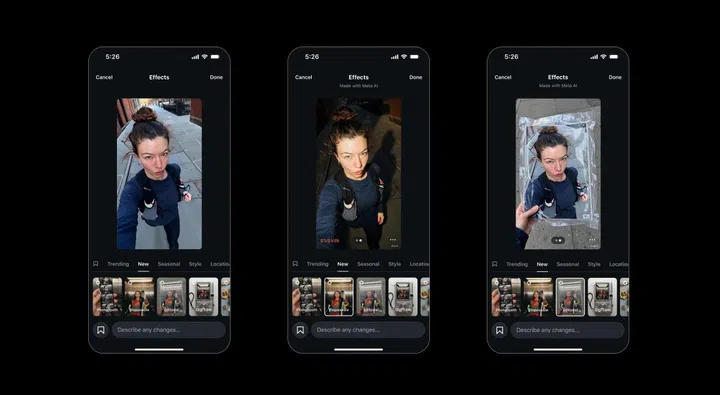
The image generation tool is available in several forms. For example, it’s powering over 30 effects for Instagram Stories, allowing users to type text prompts or select an effect for their short-lived social media updates (and they are quite nicely done).
Muse Image Meta AI

Example of Muse Image’s model powering 30+ effects for Instagram Stories.

Image: Meta (Instagram)
The image editing tool is quite robust, allowing you to use natural conversational language to erase photobombers, create QR codes, restore old photos, and do all sorts of practical things. However, it’s also capable of creating mock images from scratch using text prompts.

Other ways that Muse Image works with Meta products and services include WhatsApp (typing image prompts to share in chats), and Meta said it will also be added to Facebook, Messenger, and the most problematic one of them all, Meta Advantage+ for advertisers.

Why generative AI for advertising presents a significant problem

Muse Image Meta AI

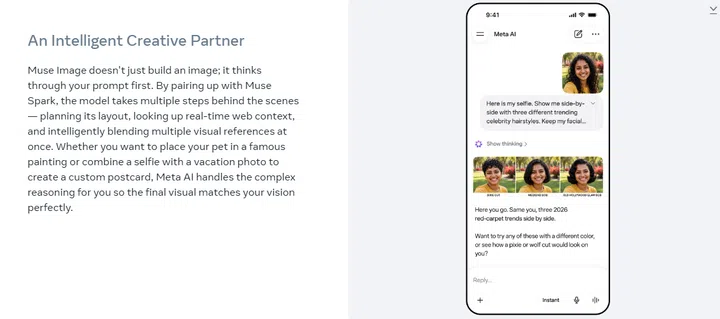
Example of using AI in a personal capacity without having to actually cut your hair.

Image: Meta (Muse Image)

If you’ve not noticed by now, we’re not against using generative AI to improve your day-to-day admin or using it to tidy up your real photos. Mobile AI (such as Galaxy AI and OPPO AI) has proven itself capable of understanding the assignment at hand. Neither are we against using AI for self-expression and experimentation in a personal context (whether that is done in good taste is another topic altogether).

The ability to create images from descriptions (text prompts) and use them for advertising is the real problem here. At its core, you can create non-existent scenarios and pay Meta to put them up and blast them out for you. 

Even without the advertising component, Meta products like Facebook are already saturated with AI slop from self-important users passing off shallow summaries as nuggets of wisdom.

Muse Image Meta AI

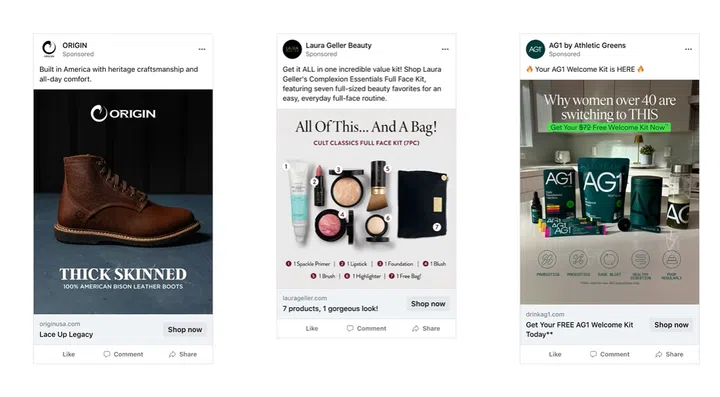
Meta’s example of using Muse Image for advertising on Meta products.

Image: Meta.

That, sadly, is the optimistic version of irresponsible use of generative AI. Singapore now has to combat AI-generated terrorism, in which AI-generated content not only overwhelms social media feeds faster than online platforms can catch up, but also subtly influences unsuspecting viewers and evades the strict usage policies of these same channels.

Closer to home, Singapore has already had to contend with AI advertising that has falsely represented products or services before. One (of several) high-profile incidents is the use of AI-generated images for property listings. Per the linked article, a generated or edited image can differ greatly from the actual property, adding frustration and introducing more pitfalls to the buying journey.

With generative AI like Muse Image usable for advertising on Meta’s platforms, it falls on Meta to ensure it’s even better at handling user-generated AI slop across Facebook, Instagram, and WhatsApp today.

Perhaps Meta’s 8,000 global job cuts (with about 100 Singapore-based workers affected) two months ago shouldn’t have happened so quickly, if at all. 

Source: Meta (newsroom)


Read Full Article At Source

Share. Save. Don't Miss The Buzz: XFacebookRedditLINETelegramWhatsAppGmail