ASUS exec: AI memory shortage could last until 2030

ASUS exec: AI memory shortage could last until 2030


If you’ve been wondering why laptops, graphics cards and just about every other piece of computing hardware seem to be getting more expensive, well, the reason is what we have already known for a long time: AI.

And ASUS co-CEO S.Y. Hsu says this situation is not going to get any better anytime soon.

Speaking during a media roundtable session at the launch of the ASUS ExpertBook Ultra laptop, S.Y. painted a picture of an industry still struggling to keep up with the relentless demand coming from AI infrastructure. According to him, the memory shortage that has been affecting parts of the technology sector isn’t going away anytime soon either.

“The memory shortage is very, very serious,” said S.Y.

The ASUS executive also shared how he had recently met representatives from the world’s three largest memory manufacturers and came away with a rather sobering outlook. Based on those discussions, he believes the current supply crunch could stretch all the way to 2030 as AI server demand continues to soak up available capacity.
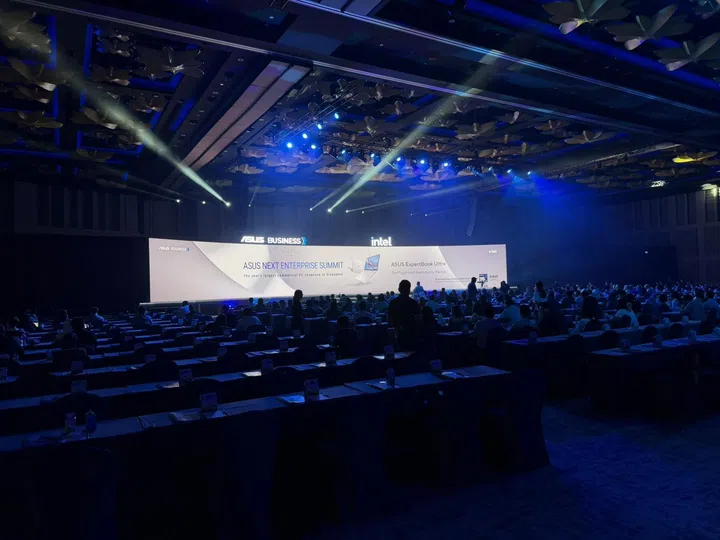
ASUS Next Enterprise Summit

ASUS co-CEO S.Y. Hsu was in Singapore to attend the company’s Next Enterprise Summit, which also sees the launch of the new ExpertBook Ultra laptop.

Photo: HWZ

That’s perhaps not entirely surprising. The AI boom may have started with chatbots and image generators, but behind the scenes it has sparked a massive arms race among cloud providers, all of whom are investing billions into new AI infrastructure. Building those systems requires enormous amounts of memory, particularly high-bandwidth memory (HBM) used alongside the latest AI accelerators.

According to S.Y., even memory makers themselves are struggling to stay ahead of demand.

He pointed to SK Hynix’s plans to significantly expand production capacity over the coming years. Yet despite those investments, he said suppliers are still being told by major cloud service providers that their future requirements could be several times larger than current levels.

“In the beginning of this year, some CSP (Cloud Service Providers) customers told them they needed three times the capacity compared to 2025,” S.Y. said.

His comments offer an interesting glimpse into the ripple effects AI is having across the broader technology industry. Consumers may not be buying AI servers themselves, but they are competing for many of the same underlying components. Memory remains one of the most critical parts of everything from notebooks and desktops to smartphones and data centre hardware.

So, that raises another question: if AI infrastructure continues consuming an ever-growing share of memory production, does there come a point where AI-capable devices become too expensive for everyday consumers?

S.Y. doesn’t think that’s necessarily the right way to look at it and instead, argued that consumers tend to evaluate technology based on the value it delivers rather than its headline price. As an example, he pointed to users buying systems such as Apple’s Mac mini specifically to run AI workloads locally.

“They are spending money because they are using AI to help their productivity,” he said. “It depends on how you use it and the value that machine brings back to you.”

ASUS’ commercial regional director for ANZ, Malaysia and Singapore, Emma Ou, echoed a similar sentiment when discussing pricing strategy. She acknowledged that rising component costs are becoming a long-term reality for the industry and will inevitably influence product pricing. At the same time, she says manufacturers need to ensure new devices offer meaningful improvements rather than simply passing higher costs on to customers.

Of course, whenever discussions turn to soaring AI demand and multi-billion-dollar infrastructure investments, I couldn’t help but also wondered if all this is just another technology bubble?

S.Y. says he isn’t convinced with this thought.

While much of the industry’s focus over the past two years has been on training ever-larger AI models, he believes the conversation is beginning to shift towards practical deployment and inference workloads. More importantly, he argues that businesses and even consumers are already paying for AI services because they see genuine value in them.

He cited enterprise adoption of AI tools, particularly coding assistants and productivity-focused services, as evidence that the technology is moving beyond experimentation and into everyday business use.

“Those kinds of services have already created real value for enterprises,” he said. “If this trend continues, I don’t think it is a bubble.”


Read Full Article At Source

Share. Save. Don't Miss The Buzz: XFacebookRedditLINETelegramWhatsAppGmail