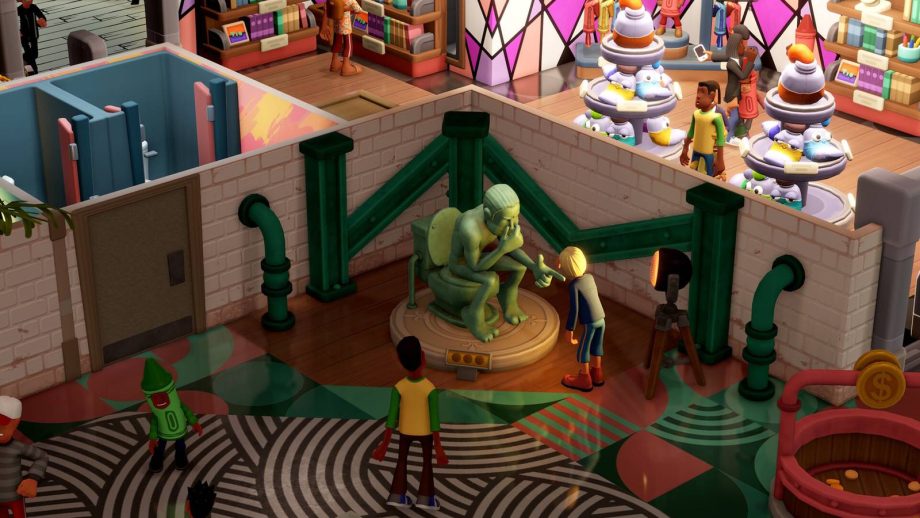
Two Point Museum‘s Arty-Facts DLC, out now on PC and console, drops you into a run-down industrial port with $100,000, a third of a cubist triptych, and a painter who only knows how to paint one thing: love. (No, not like that. It’s still an E-rated game, after all.) Anyway, your job is turning these unusual beginnings into a five-star museum, which sounds a lot like every other major challenge in Two Point Museum. But this very much isn’t just more of the same. Where the Zooseum DLC (the game’s previous expansion) experiments with different ways to interact with exhibits, Arty-Facts occupies itself with the complexities of managing the artistic temperament, thinking deeply about your museum design — and using it to manipulate your guests into shelling out more cash.
Art experts start with a specific emotion they specialize in, and they can only paint variations of that emotion. The variations are certainly… interesting, like a theme on “love” that consisted of a clawed purple hand with an evil-looking eye in the center of the palm. The people loved it, though, so who am I to criticize? But single emotions only get your museum so much attention.

Commissioning artwork is a bit like sending expeditions off in other museums, but your expert’s emotions and unique style influence which events you’re likely to see. In my current museum, one of my favorite experts has the “technicolor” trait, a cute way of saying he uses too much paint and everything he does costs more. On the bright side, the quality is typically very high, which means more donation money for me. Others might have a “destructive” work style or additional quirks that make you stop and think more carefully about which projects suit them best and how to train them, something you don’t have to pay close attention to in other museums.