Patch Notes is a weekly newsletter bringing you the best of Polygon, sent on Fridays and published on the site on Sundays. You can subscribe here.
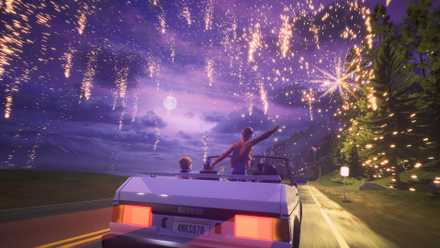
People are really digging Mixtape, the buzzy new coming-of-age game and this week’s major release. It’s “overwhelmingly positive” on Steam! IGN gave it 10/10! Simon Cardy’s lovely review is full of personalized nostalgia — “Beethoven & Dinosaur may have made it just for me,” he admits — while our own Giovanni Colantonio was inspired to make and publish a mixtape of his own in his review. (Give it a listen.) Whether they love it unreservedly or not, this game certainly resonates with critics of a certain disposition — and age. As my editor put it after seeing the mostly glowing review scores, “The Millennials have logged on for Mixtape.”
I’m technically a Gen Xer, but I can relate. I’ve certainly made a lot of mixtapes in my time (on actual tapes — and MiniDiscs!) I’ve moped and mourned my youth while it was still happening. I’ve burned to get out of this dead-end town small village in the English Midlands.
And I dig Mixtape, too. The game’s musical taste is impeccable and the presentation is verging on sublime. It’s a completely lush and enveloping experience to play. From such a small studio, the assuredness of the execution and seamlessness of the delivery is mind-blowing, Naughty-Dog-level stuff. It’s gorgeous.
But — unlike Simon Cardy and some other writers — for me, Mixtape doesn’t feel personal. Developer Beethoven & Dinosaur has been so careful to make the game universally relatable (to, er, white Millennials) that it has lost some flavor.

The studio is Australian, and director Johnny Galvatron has clearly drawn on his own experience to make Mixtape. But he chose to set the game in the universally recognizable, movie-certified teen dreamscape of Northern California. And the time period is a generalized 1990s that sometimes looks and sounds like 1993, sometimes like 2002, and sometimes like last week.
I get it, but while playing Mixtape, I couldn’t stop thinking about last year’s Despelote, a somewhat similar memoir-game about growing up. Where Mixtape is expansive and inclusive, Despelote is incredibly specific to its creator’s memories of growing up in Quito, Ecuador, during the country’s qualifying run for the 2002 World Cup. With a fraction of the resources available to Beethoven & Dinosaur, but a similar level of visual and sonic creativity, Despelote transports you to an exact time and place, rebuilding it from real memories in a way that’s totally transporting. As a result — and despite having much less in common with the milieu — I felt much more connected to the person who made it, and more connected to the game.
I’d never say Mixtape was ersatz — it’s clearly been made with real feeling and an honest desire to connect to players. But boy, I wish it was set in Australia. I wish I’d been walking the unfamiliar streets of suburban Geelong, where Galvatron is from, rather than the pine-lined streets of a Hollywood adolescence I’ve seen before and feel like I’ve lived before. Now that would have been a trip.