When a studio creates a bold new game that connects with a mainstream audience, it can find itself at a crossroads. Do you follow that up by doing the same thing again or taking another big swing? That was the position Housemarque found itself in after 2021’s Returnal. The dazzling PlayStation 5 shooter introduced more players to a shapeshifting studio known for creating innovative, arcade-style games. Those new fans who found Housemarque through Returnal’s unique bullet-hell roguelike experience would surely want more from a studio that rarely ever makes sequels to its own games.
Now, five years later, Housemarque has returned with a fair compromise. Saros isn’t Returnal 2, but a totally new game. It is, however, a clear variation on a theme. It repeats virtually all of Returnal’s gameplay beats, but modifies them with a tweaked approach to defense and lots more opportunities for progression. In a video interview with Polygon, creative director Gregory Louden and associate design director Matti Häkli explained how Housemarque landed the tricky balancing act of giving players the experience they’re craving while still doing something new within a familiar framework. It all comes down to the finer details.
While Housemarque aims to innovate with each of its games, there was never a question as to how it would follow Returnal. Players loved the game and the developers did too, even after playing it over and over again. The team felt there was plenty more room to push its big-budget spin on the roguelike, but a proper sequel was never really in the cards.
“After Returnal, we were like, okay, this really worked. What we’re doing seems to be resonating. We found something,” Louden told Polygon. “But very early on as well, we also said we want Returnal to stand on its own. We want it to be its own thing, but we did want to take some elements. We did want to reuse all of these lessons and experience from building these shapeshifting worlds. We wanted to explore cosmic horror in another lens. We wanted to create another character for you to study and examine, but we also wanted to add new elements… We just wanted to build on our success and have this evolution, but then also create something really bold and new for players.”
Saros was born out of that idea. Loosely inspired by The King in Yellow, the 1985 horror story collection by Robert W. Chambers, Housemarque looked to once again tackle cosmic horror in a sci-fi shooter. Saros’ world is a small example of how the team approached that. Carcosa is visually different from Returnal’s Atropos thanks to its yellow color motif, and its design ethos is entirely new. The art team’s mission statement was to create a “stranger in a strange land” feeling, Louden said. Italian futurist architecture and Icelandic photography helped craft an entirely new artistic starting point.
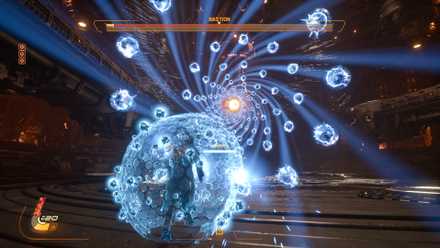
Though the location was new, Housemarque still wanted players to do the same basic actions in it: shoot powerful weapons enhanced by DualSense feedback, dodge waves of glowing balls, gather gameplay-changing artifacts, die, and try again. Saros may feel rather identical to Returnal in that sense, but the changes to the formula, like the addition of an energy-absorbing shield, are a big deal for Häkli.
“I actually think of Returnal as an obstacle course,” Häkli told Polygon. “It’s all about avoidance. You want to avoid the bullets, you want to avoid taking damage. When we added this shield in Saros, we really flipped the dynamics of the combat gameplay and how you see the environments or the encounters. And this shield turns the obstacle course into a playground where you can start using the shield, creating openings, finding your way through, and really have this more aggressive play style, rather than just avoiding and backing out. It’s way different because of that.”

If you’re playing spot-the-difference between Saros and Returnal, game flow is the big thing to look for. Dashing through shots, shielding against waves of blue orbs, and eventually parrying red ones back at enemies all turn Saros into what Housemarque calls a “bullet ballet.”