Singtel Singapore took a practical step into the AI conversation, launching a new programme called AI.dea designed to help small and medium enterprises actually do something with AI, rather than just talk about it. Developed in partnership with SIM Academy, the initiative focused on helping SMBs move from early experimentation to real-world deployment, a challenge many businesses were still struggling with.
At the launch, the message was fairly clear. AI was no longer optional. But figuring out where to start, and more importantly, how to scale it safely, remained a challenge. According to Singapore’s Digital Economy Report 2025, only 14.5% of SMBs had implemented AI solutions, compared to 62.5% of larger enterprises, highlighting a growing gap.
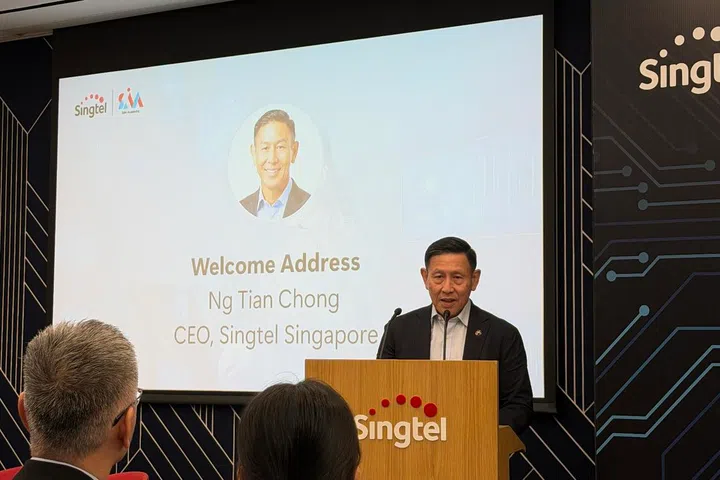
The numbers driving the urgency are stark. According to the Infocomm Media Development Authority’s (IMDA) Singapore Digital Economy Report 2025, only 14.5% of SMBs have implemented AI solutions, compared to 62.5% of larger enterprises. That, said Singtel Singapore CEO Ng Tian Chong, is a competitive gap that simply cannot be allowed to widen.
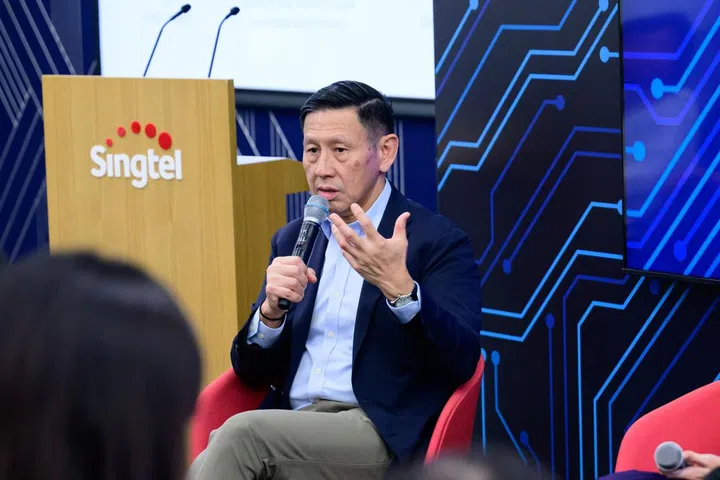
“AI has quickly become a key driver of business transformation, but many organisations are still figuring out where to even begin,” he said. “Singtel Singapore’s own journey has shown that success with AI requires more than just technology. It takes the right capabilities, governance, and mindset. With AI.dea, we are bringing these lessons to SMBs, helping them adopt AI applications before committing to full-scale deployment so they can realise tangible business outcomes.”
SIM Academy CEO Ho Seong Kim positioned the programme as a national contribution. “As Singapore advances its National AI Strategy, SMBs, the foundation of our business ecosystem, must be equipped to participate meaningfully in this transformation,” he said. “As the selected learning partner for this programme, we leverage our expertise in applied, outcome-driven learning to help SMB leaders build in-house capabilities, develop actionable adoption strategies, and implement AI with confidence.
From hype to hands-on execution
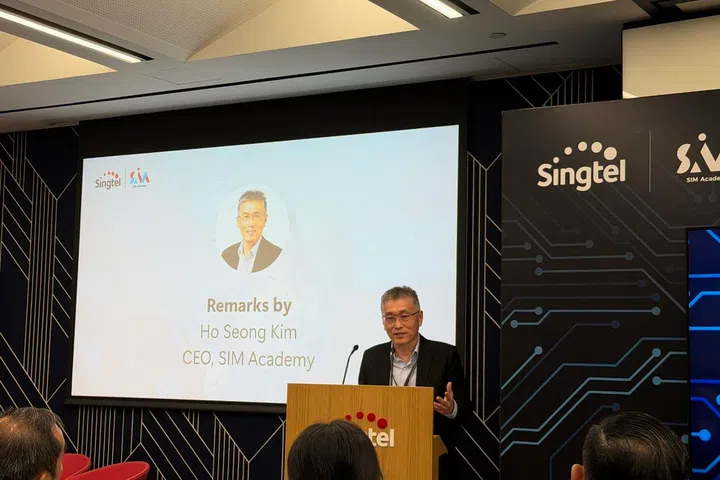
SIM Academy CEO Ho Seong Kim
Photo: HWZ
Singtel framed AI.dea as a bridge between curiosity and capability. The programme was structured to guide businesses through identifying use cases, building proofs of concept, and eventually preparing for full implementation.
The pitch is simple and pointed. AI.dea is built to help small and medium enterprises (SMBs) in Singapore move beyond AI experimentation and into real-world implementation. The programme runs over eight days across several weeks, in three phases, and eligible SMBs can receive up to 90% in funding from SkillsFuture Singapore. The programme fee is S$15,000 before GST, meaning a qualifying SMB could pay only around 10% of the headline cost.
During the session, speakers described the current AI landscape as something of a double-edged sword. On one hand, there was excitement and urgency. On the other hand, confusion arises with companies unsure which tools to use or how to avoid costly missteps. One analogy compared AI adoption to navigating a sea filled with “sirens”, from fear of missing out to the promise of a silver bullet solution, all of which could derail organisations if not approached carefully.
The programme aimed to counter that by introducing structure. Over multiple phases, participants would define their AI ambition, prioritise use cases, and test them through guided pilots before committing to larger investments.
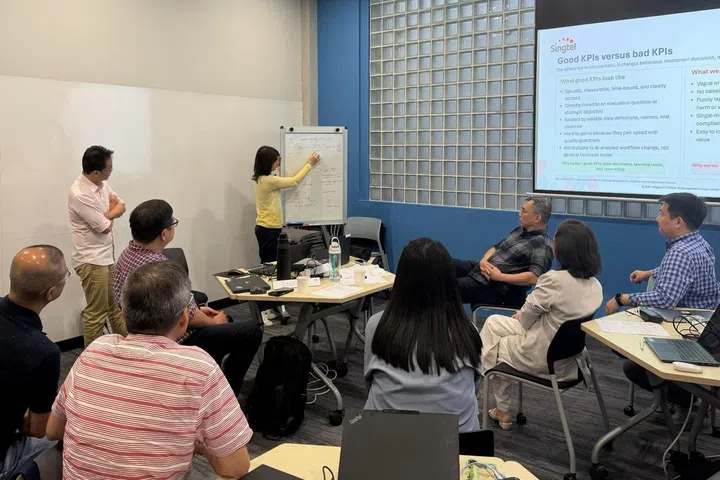
Phase One of the programme is for C-suite and director-level participants, who are taken through a process of assessing where they want to go and prioritising their needs. The facilitators challenge participants on every chosen project. Why is this one more important than the others? Does it genuinely transform the business? Phases Two and Three bring in project managers to plan and implement a proof-of-concept (POC). By the end of Phase Three, participants should be close to completing their POC and ready to present whether it has been successful.
A structured path with real-world use cases
Rather than focusing purely on theory, AI.dea leaned heavily into practical application. Participants were expected to design and validate AI use cases tailored to their business needs, with support from practitioners with real deployment experience.
The programme also addressed less glamorous but equally critical areas such as governance, data protection, and risk management. These were highlighted as key barriers for SMBs, especially those without dedicated internal expertise.