SINGAPORE – A microforest blooming outside City Square Mall in Little India has been expanded, after a study showed that the green refuge can help lower temperatures by up to 5 deg C compared with the surrounding urban areas, while also providing a home for native wildlife.
Originally measuring just 260 sq m, roughly half the size of a basketball court, the microforest was expanded to twice its size in January 2026.
The CDL MicroForest, developed by real estate company City Developments Limited (CDL) in collaboration with experts from the National University of Singapore, was officially launched in March 2025. It was also supported by the National Parks Board.
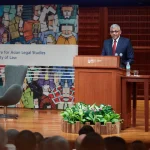
The findings of the year-long study conducted by NUS researchers were presented at a public forum on March 20 held at the Singapore Sustainability Academy at City Square Mall.
The study, which began in February 2025, also found that areas within 2m of the microforest’s edge recorded lowered temperatures compared with nearby urban surfaces farther away.
“Despite its compact footprint, the microforest at City Square Mall has been surprisingly effective as a green urban sanctuary,” said Associate Professor Adrian Loo, deputy director at NUS’ Centre for Nature-based Climate Solutions, who co-led the study.
He added: “It’s a timely reminder that forests can lower temperatures significantly, and there are many other cool benefits as well.”
Microforests refer to small, dense patches of greenery that mimic the layered structure and biodiversity of a tropical rainforest.
For the CDL MicroForest, experts scoured plant nurseries for various native shrubs and saplings of different heights, as well as fruiting trees to attract native fauna.
The study’s findings come at a time when Singapore is looking to help its residents build up resilience to rising temperatures driven by climate change. The Straits Times had previously reported that the country could face warmer weather from the second half of 2026, when the El Nino climate phenomenon is expected to return.