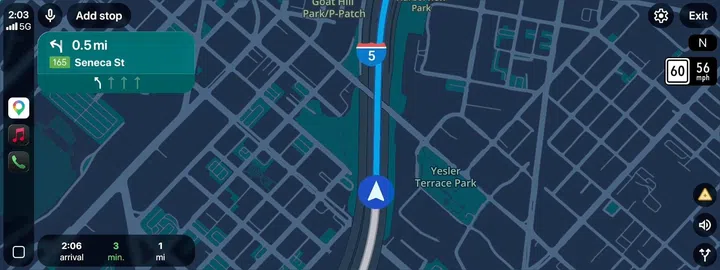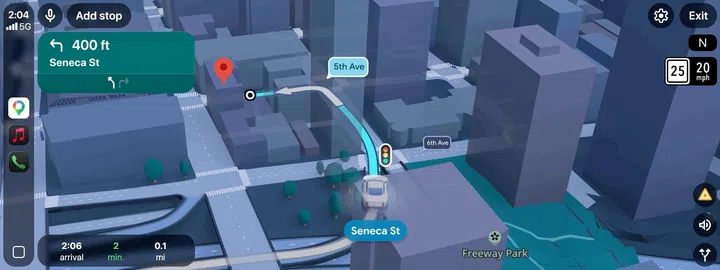
Think about the last time you drove somewhere unfamiliar. The flat blue line, the robotic voice counting down metres, the frantic zoom-in as you realise your exit is coming up, and you have absolutely no idea which lane you need to be in. Google Maps has, for all its dominance, always felt like it was telling you what to do rather than helping you see what is actually ahead. That, Google says, is about to change.
On 12 March 2026, Google announced two major updates to Google Maps: Ask Maps, a Gemini-powered conversational feature that answers complex, real-world questions a standard map could never handle, and Immersive Navigation, a complete redesign of the driving experience that the company calls its biggest navigation upgrade in over a decade. Both features are live in the US from today, with Ask Maps also rolling out simultaneously in India.
Miriam Daniel, VP and GM of Google Maps, sets out the ambition plainly: the goal is to fundamentally change what a map can do by combining the world’s freshest map data with Gemini’s capabilities to turn exploration into a simple conversation and make driving more intuitive than it has ever been.
Ask Maps is the Gemini-powered assistant you can actually use

Ask Maps is, in essence, a Gemini assistant that lives directly inside Google Maps. Rather than typing a destination or browsing through category tabs, users can now tap a new Ask Maps button and pose genuinely specific questions in natural language.
Google’s own examples give a good sense of the ambition. You can ask, “My phone is dying, where can I charge it without having to wait in a long line for coffee?” or “Is there a public tennis court with lights on that I can play at tonight?” These are not questions a standard map search handles well. They require the app to understand context, availability, and intent at the same time, and then surface relevant results on a customised map so you can visualise your options before you commit.
For trip planning, the feature goes further. Ask something like “I’m headed to the Grand Canyon, Horseshoe Bend and Coral Dunes. Any recommended stops along the way?” and Ask Maps draws on information from over 300 million places, including reviews from a community of more than 500 million contributors, to produce clear directions, estimated arrival times, and insider tips from real people, like how to find a hidden hiking trail or get a free entry ticket. The kind of knowledge that used to require an hour of browser tabs.
Personalisation is built into the experience from the start. Your results are shaped by the places you have previously searched for or saved in Maps. So if you ask for a spot to meet friends after work, something like “My friends are coming from Midtown East. Any spots with a cosy aesthetic and a table for four at seven tonight?”, Ask Maps already knows you prefer vegan restaurants and filters accordingly, surfacing midway options without you needing to spell that preference out.
Once you have a place in mind, Ask Maps makes it straightforward to act on it. You can book restaurant reservations, save places to a list, share them with friends, and navigate there in a few taps.

Ask Maps is uniquely helpful, tapping into Maps’ fresh information about the world to show you everything you need to know before you go, personalising responses to you, and making it easy to turn plans into action.
Miriam Daniel, VP & GM, Google Maps

On privacy, Daniel addressed concerns directly in a pre-launch briefing, stating that Ask Maps is not linked to any other apps or personal data outside of Maps. However, according to TechRadar, when asked whether Ask Maps results could one day include ads or paid placements, Google did not rule that out. This is worth keeping in mind when evaluating how much weight to give the feature’s recommendations. Independent assessment of how Ask Maps performs in everyday real-world conditions, beyond Google’s own carefully chosen demo scenarios, will require wider testing once the rollout is underway.