Reflecting on the 30 years she has spent researching Macanese cooking, university lecturer and writer Annabel Jackson says: “I wonder whether a more helpful way to define Macanese cuisine is to see it as a product of the domestic kitchen, cooked by different women of different nationalities.”
Jackson has published several books on Macau and its cuisine, which is known as the world’s first fusion food. When asked what ingredient can be used to represent Macau’s culinary heritage, she chooses tamarind.
Tamarind, a sweet-sour fruit that is native to Africa and commonly used in Southeast Asian cooking, first made its way into the kitchens of Macau via the Portuguese maritime trade centuries ago. Although it is not as prevalent in Macanese cooking compared with spices such as turmeric, Jackson says it still offers a glimpse into how the local cuisine came to be.
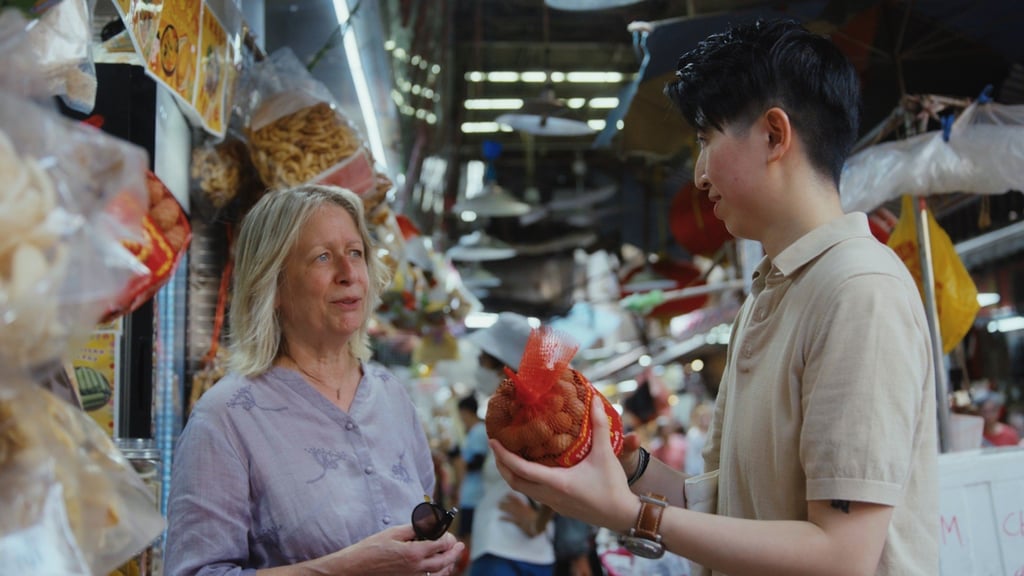
“To have a deeper understanding of Macau, I think it’s really important to understand that the Portuguese colonial project was to marry locally,” she says.
Jackson explains that because Macau was one of the ports on Portuguese trade routes, women sailed there on the ships coming from other outposts like Malacca and Goa. “So all of these women arrived in Macau, all with Portuguese bosses or husbands, possibly. And all these ideas started to co-mingle in the kitchens of the Macanese,” she says.
Jackson points out that tamarind makes more subtle appearances in local recipes. For example, Worcestershire sauce, one of the British influences found in Macanese food, contains tamarind extract. The sauce is used in minchi, a signature dish of minced meat stir-fried with potatoes.
“Tamarind pops up quite a lot in dishes, but I wouldn’t say it’s the star of the dishes,” she says. “It’s just one way of adding layers of flavour, especially when we are not using a tremendous amount of spice.”
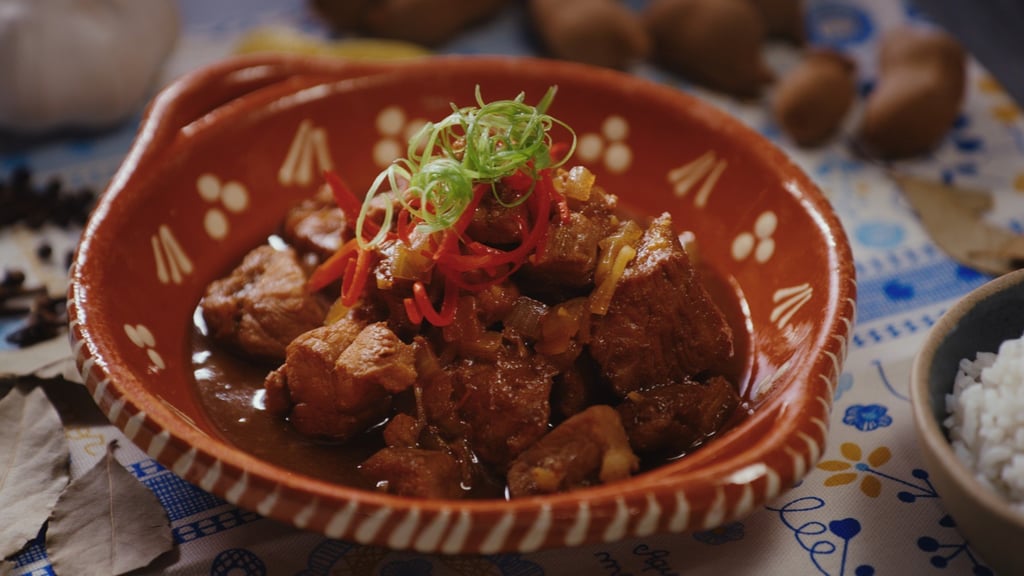
Just the name of the dish alone conveys the rich cultural tapestry behind Macanese food. Porco is the Portuguese word for “pork”, while balichão is a pungent local sauce that resembles belacan, a Southeast Asian fermented shrimp paste.
Tamarinho refers to the use of tamarind in the dish, with the local spelling differing slightly from that of the Portuguese word for the fruit, which is tamarindo. “Here, we spell it with an ‘h’, and it’s part of the Macanese patois,” Jackson explains.
Porco balichão tamarinho is a slow-cooked braised pork belly dish that is rich in flavour. Jackson was joined by her friend Otilia R. Novo, a chef and lecturer at the Macao University of Tourism, to prepare a more health-conscious version of the dish that uses pork collar instead.
“Macanese recipes are traditionally handed down orally within the family, so each family would have their own particular recipe for porco balichão tamarinho,” Jackson notes. “But as it goes down the generations, we might change the cuts of pork, or we might substitute onions for shallots, which were a bit more sophisticated. We might add in other elements such as ginger.”
This can present a dilemma to a researcher like Jackson, who has been exploring Macau and its gastronomy since 1994, when she wrote her first book, Macau on a Plate.
“There is some kind of conflict with the desire today for cookbooks and to have definitive, authentic recipes written down. And I do believe there’s a space for having one recipe as a kind of historic document that can sit in a museum,” she says.
“But I think we have to allow cuisine to flow freely. And a hybrid cuisine, by definition, uses substitutions and changes in different people’s hands, so we can’t cling to a sense of one recipe.”
According to Jackson, cuisine is a cultural product that will always evolve because people in society will never stand still. But therein lies a paradox: how can a cuisine be preserved when it is actively changing?
“I would like to argue that there’s a very good case for preserving the memory of Macanese food, but it must be allowed to continue to develop,” Jackson says.
Just as the local cuisine grew from the kitchens of people from different cultures who made Macau their home, it is individuals like Jackson, Novo and the chefs, bartenders and bakers who are now putting their own marks on the city’s culinary heritage, to help redefine it for the years to come.
Watch the video to learn more about tamarind and see Annabel Jackson make porco balichão tamarinho with chef Otilia R. Novo.