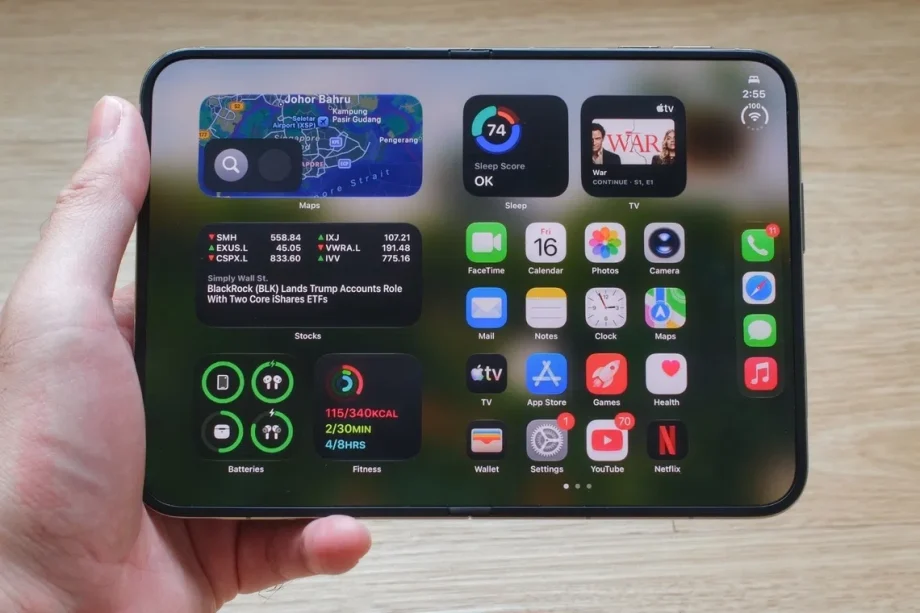
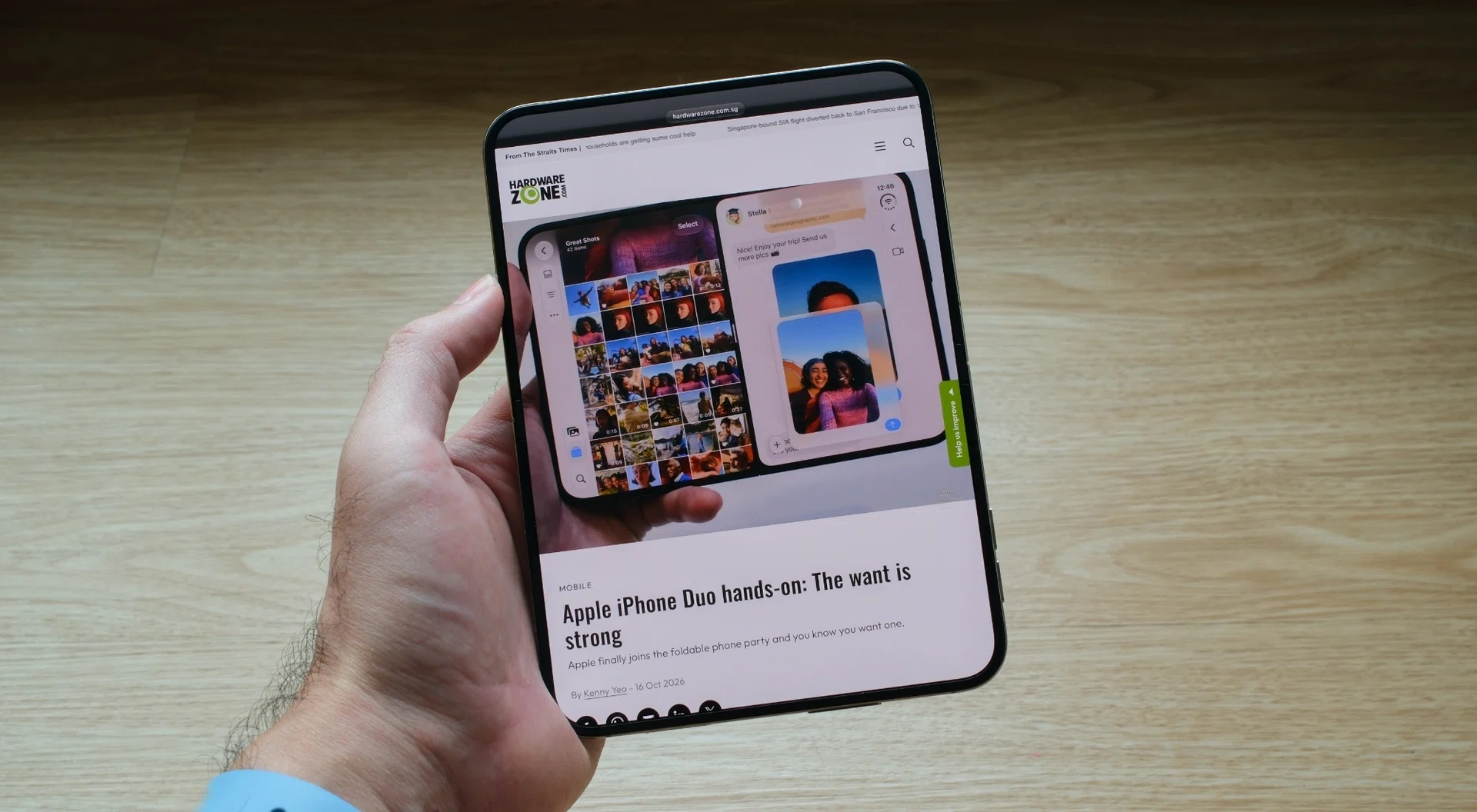
It has taken years, but Apple has finally made an iPhone with a folding display. It’s called the iPhone Duo, mostly because Apple intended it to feel like an iPhone when it’s closed and an iPad when it’s unfolded. Apple would like users to think they are getting two devices in one, because this is a phone that starts at S$3,099. That’s more than the cost of a base iPhone 18 Pro Max and iPad mini together. Can it possibly justify its mammoth price tag? Let’s find out.

Design & handling
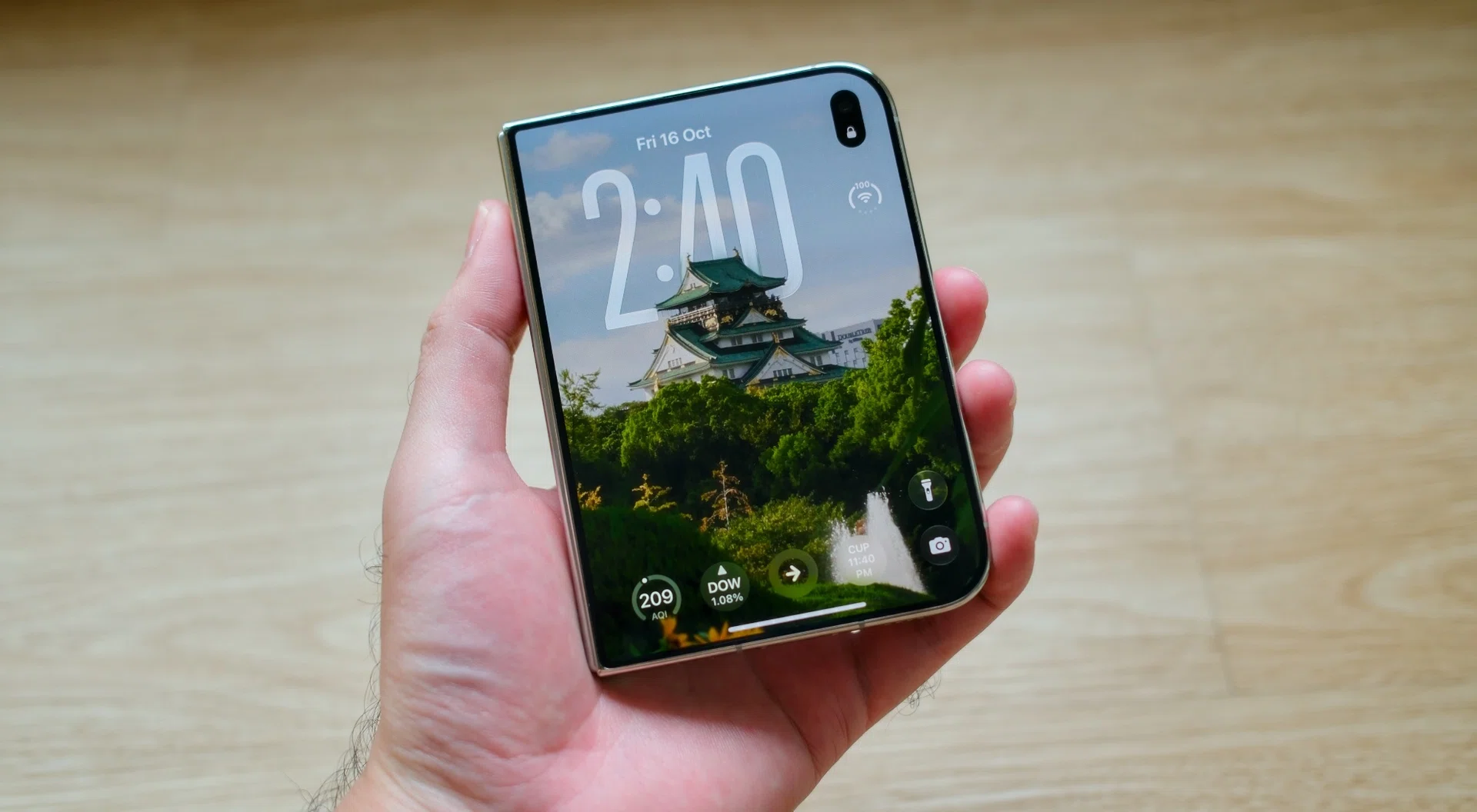
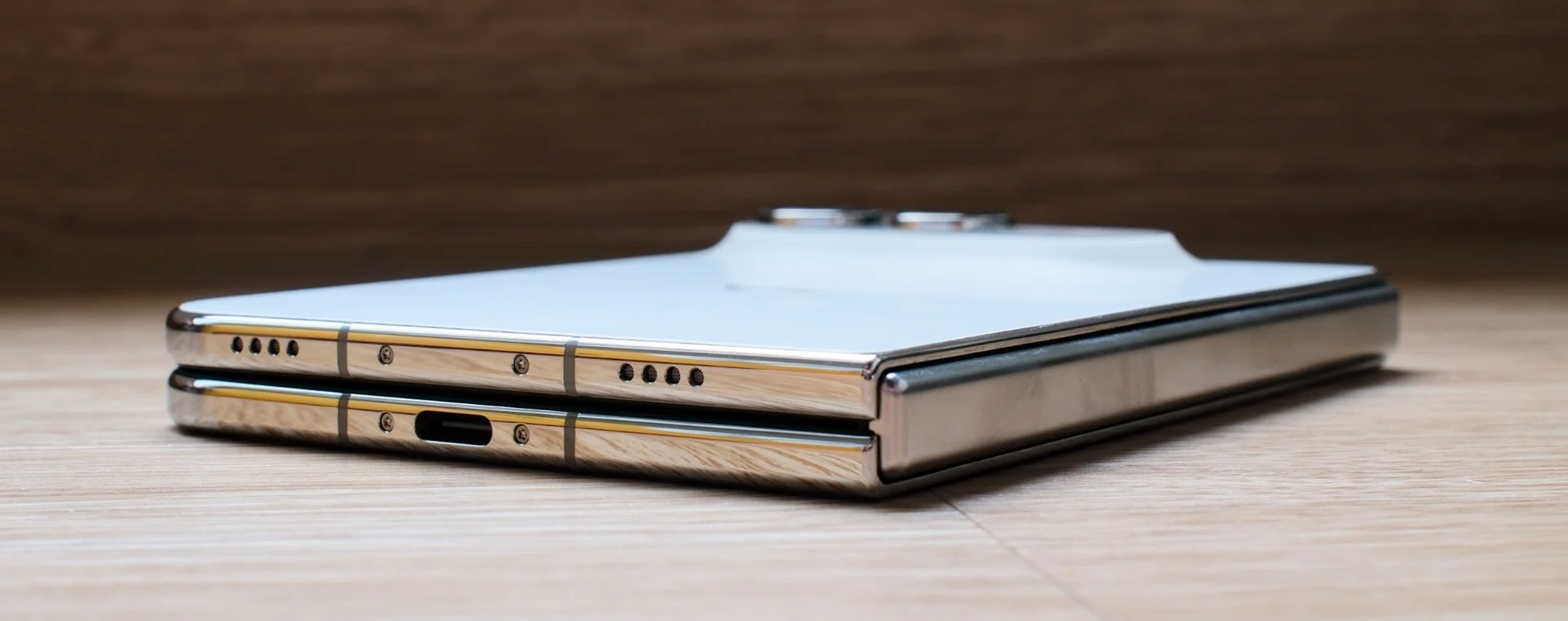
Though the Duo is small, it’s thickness makes it feel bulky in the hands.
Photo: HWZ
With its 5.4-inch outer display, the iPhone Duo isn’t a big phone, but it feels surprisingly substantial and chunky in the hands. That’s because it weighs 254g (yes, over a quarter of a kilo) and measures 11.3mm thick when folded. To give these figures some context, Samsung’s Z Fold8, which has similarly-sized outer and inner displays, is 201g and just 9.7mm thick when folded. Tipping the scales at 254g also means it’s slightly heavier than the iPhone 18 Pro Max, which is already a pretty heavy phone. The Fold8 is surely the more compact and svelte phone, and it fits pockets more comfortably. It feels more natural to use closed too.
The Duo feels very chunky in the hands when it’s closed, and that problem is exacerbated if you use a phone case – which you will, because who isn’t going to protect their precious folding phone? With Apple’s Folio with Kickstand case, the Duo measured a stumpy 15mm when it’s closed. That’s about the thickness of two conventional slab phones stacked on top of each other. But because it’s so short – just under 12cm when folded – it actually slips into pockets easier than both the iPhone 18 Pro and Pro Max, even if it creates quite a sizeable bulge. Overall, even with a case, it’s more pocketable than the iPhone 18 Pro Max, and on a par with the smaller iPhone 18 Pro.
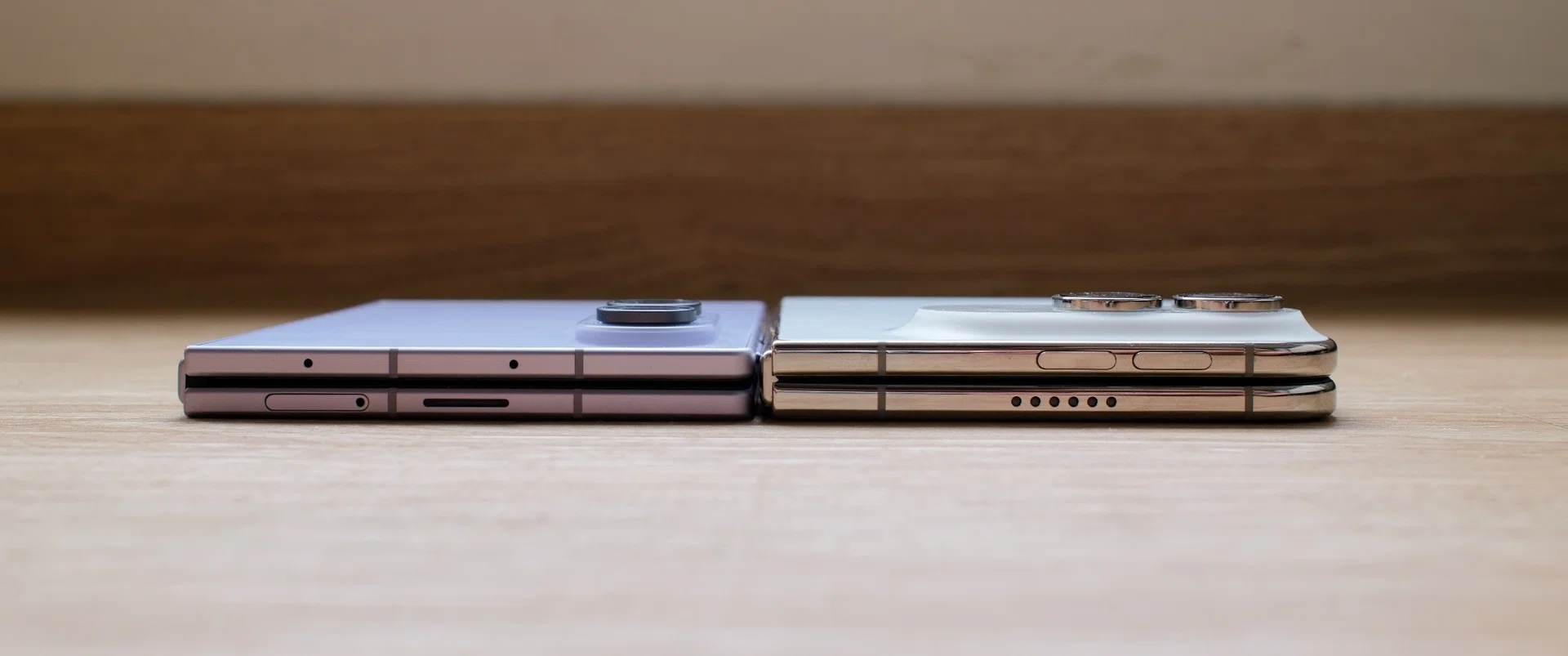
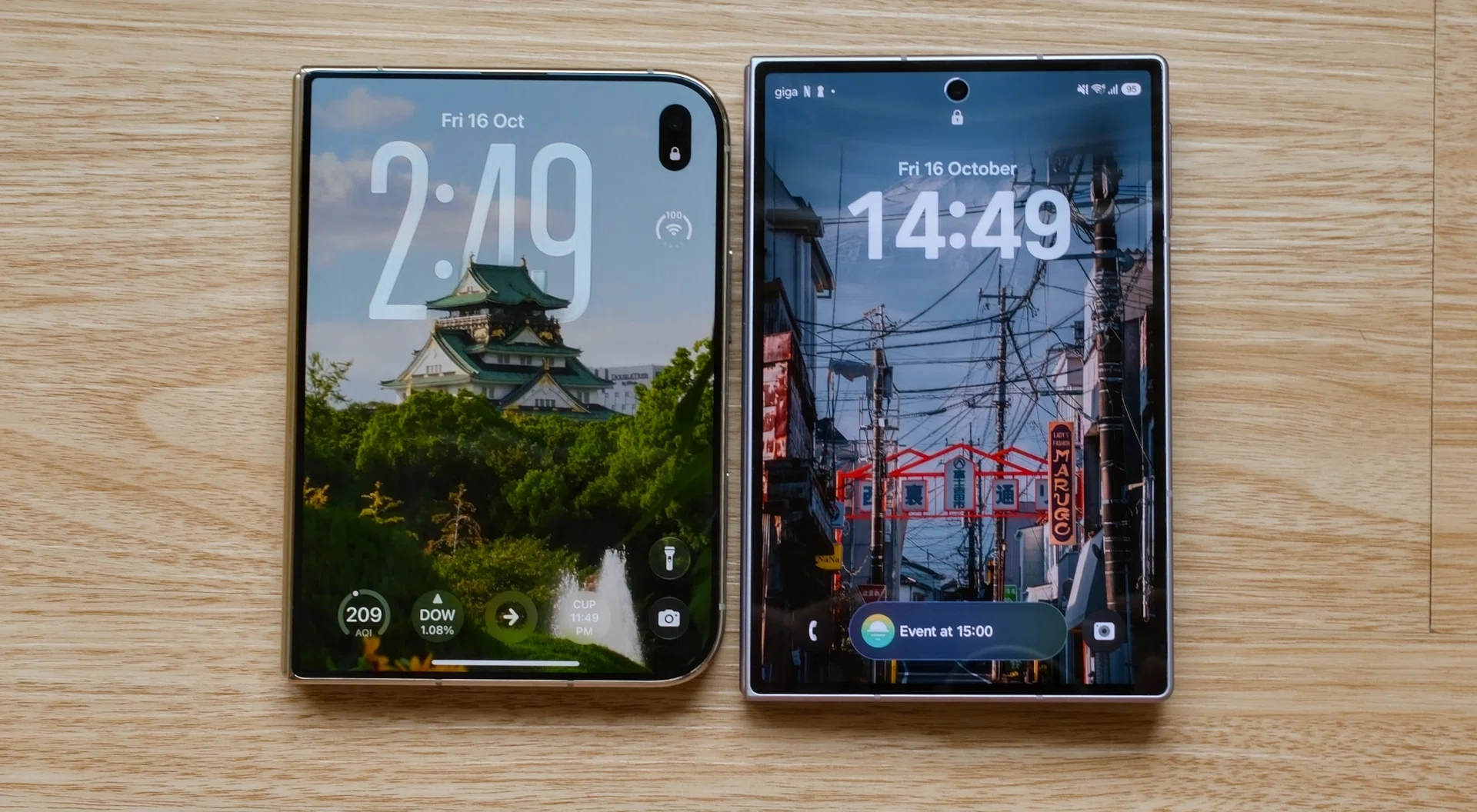
Fold8 on the left, Duo on the right. It may not seem like much, but the Fold8 is nicer to hold.
Photo: HWZ
The upside to the Duo’s heft, however, is that it feels like a more well-engineered product. Along with its titanium frame, the Duo feels solid – almost unbreakable – in the hand. In addition, it also has an IP68 dust and water resistance rating, which is the same as the iPhone 18 Pro and Pro Max. Obviously, I’m not going to dunk the review unit in water, but it’s good to know that it’s no less durable than a regular non-folding iPhone. This means it also trumps the Fold8’s IP48 rating.
One thing that stands out about the Duo is its asymmetric outer display with pronounced rounded corners. This has two effects: it makes the Duo look like a “D” when it’s closed – which may or may not be a coincidence – and quickly lets users know which side to unfold the phone. Happily, when the Duo is unfolded, its weight and chunkiness are less obvious. It feels like how a thin 7.6-inch tablet should feel.
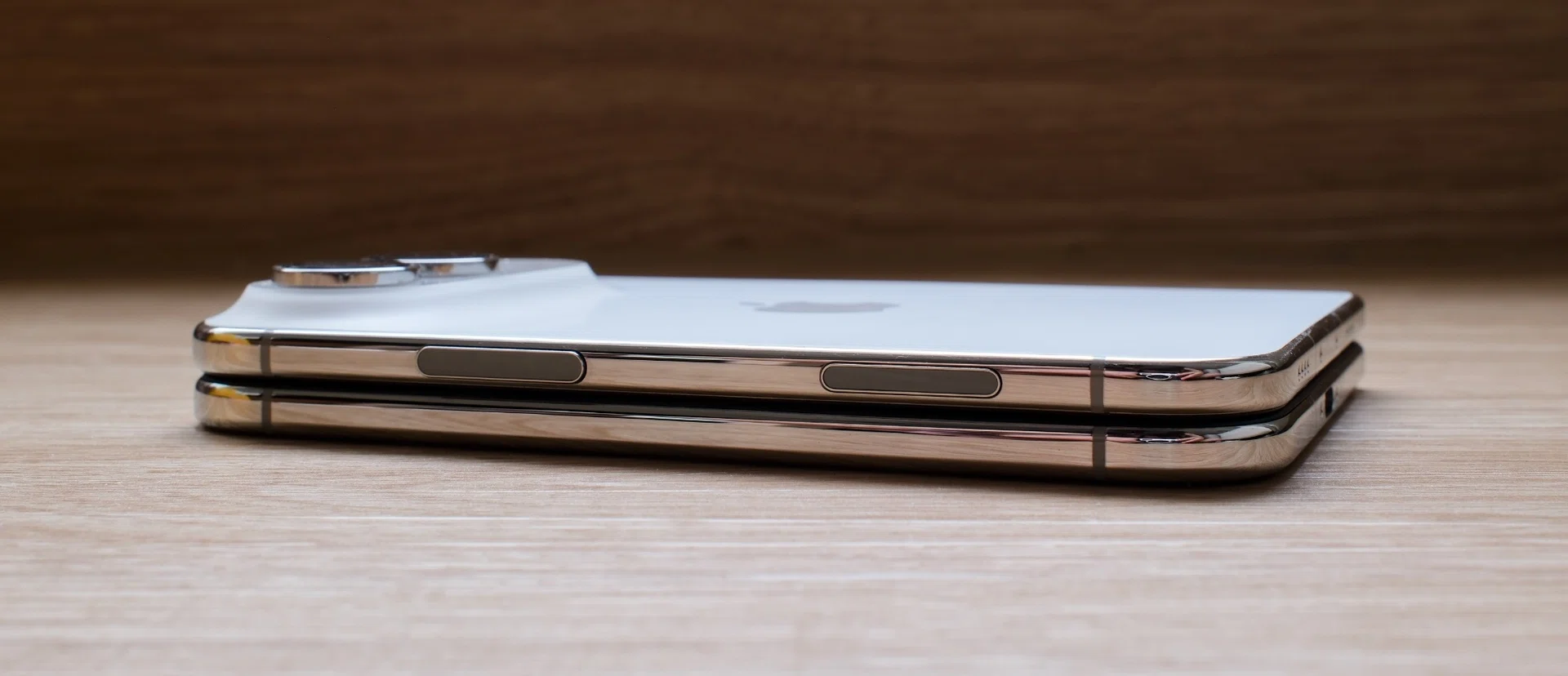
The Duo features Touch ID and Camera Control buttons on the side.
Photo: HWZ
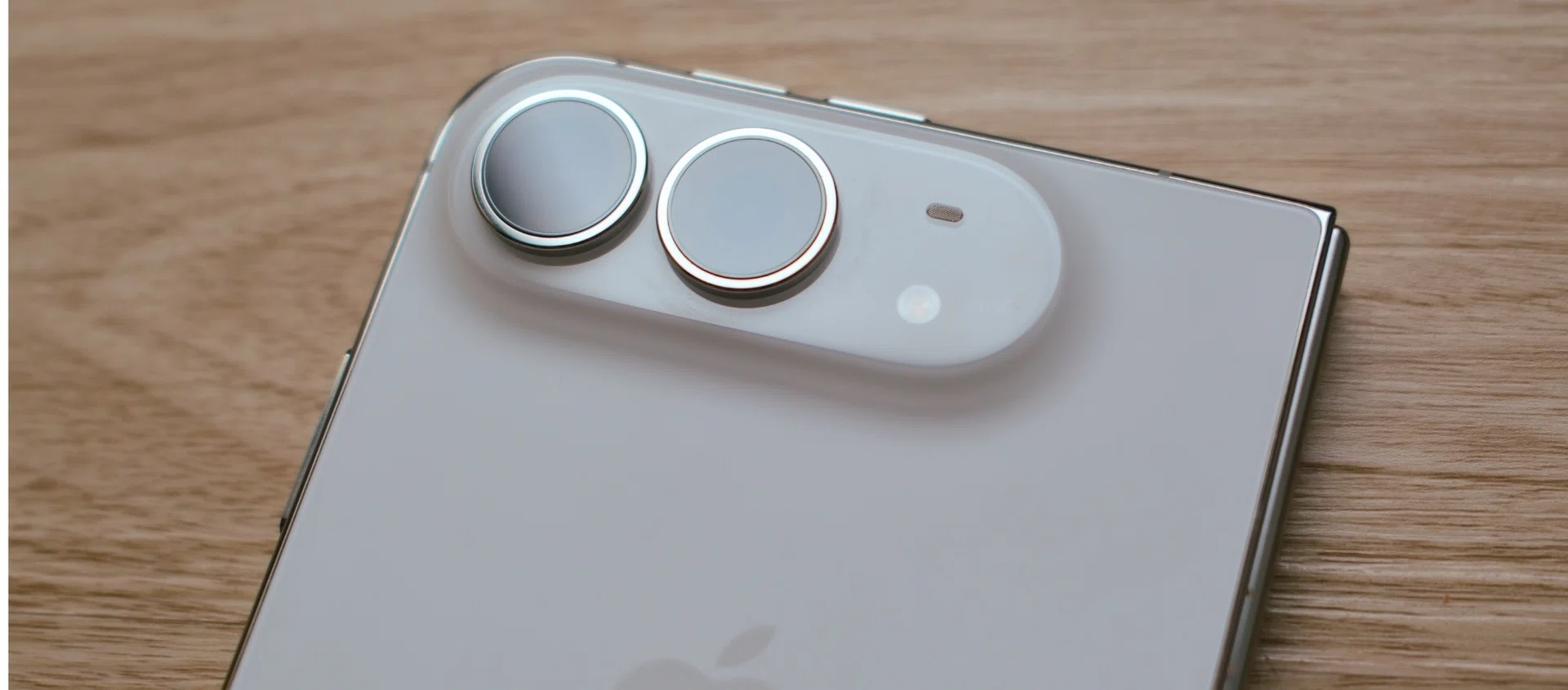
As for buttons, the Duo has quite a few. Aside from the Touch ID button, it also has a Camera Control button. I’ll admit, I was sceptical about Camera Control when it was first announced, but I use it all the time now. Missing from the Duo is the Action Button, which is a pity because I use mine to launch my banking app for QR payments. The Duo has volume control buttons too, but the placement will need some getting used to because it’s on the top. iPhones always had their volume control buttons on the left, but you can’t do this for the Duo because of the hinge.
The hinge and speakers
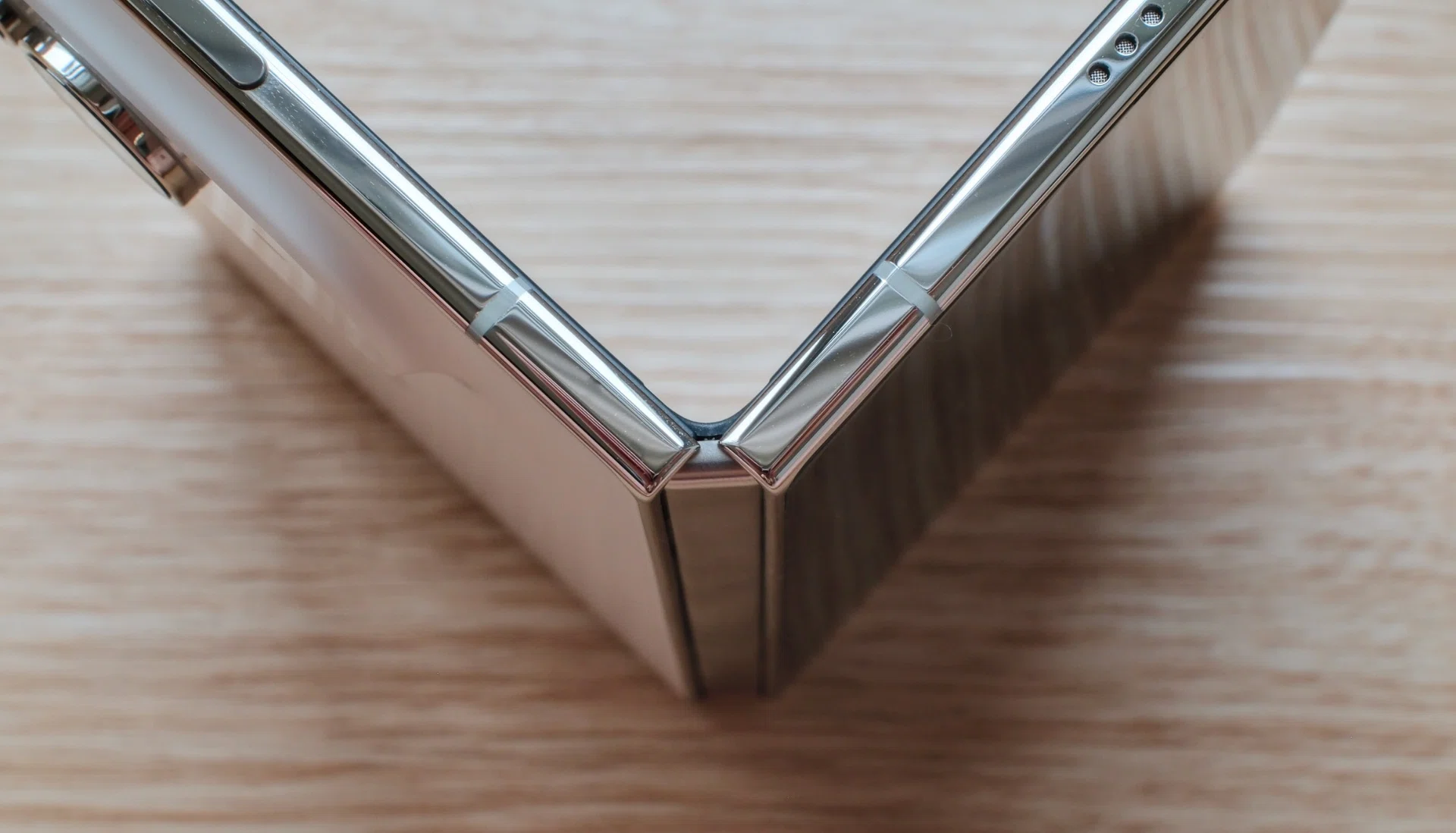
The hinge cover is Grade 5 titanium with a micro-blasted finish.
Photo: HWZ
The hinge is an integral part of any foldable phone. A well-designed one not only minimises the crease (more on the crease later), it can also improve the overall ownership experience by making opening and closing the phone a satisfying and tactile event. Closing the Duo, in particular, feels gratifying because it “clacks” as the two sides come together – which reminds me of the thunk you get when closing the doors of a well-made luxury car.
Apple says the Duo’s hinge consists of over 100 tiny components and that it has a “variable torque profile”. What this means is that the level of resistance that you encounter changes as you unfold the Duo. It feels light at first, but then you are met with more resistance as you unfold it. This is necessary for the Duo to keep its shape as it is unfolded in its various modes. As for longevity, it’s too early to tell. I’ve only been using the phone for the past week; I’ll report back in a few weeks’ time.
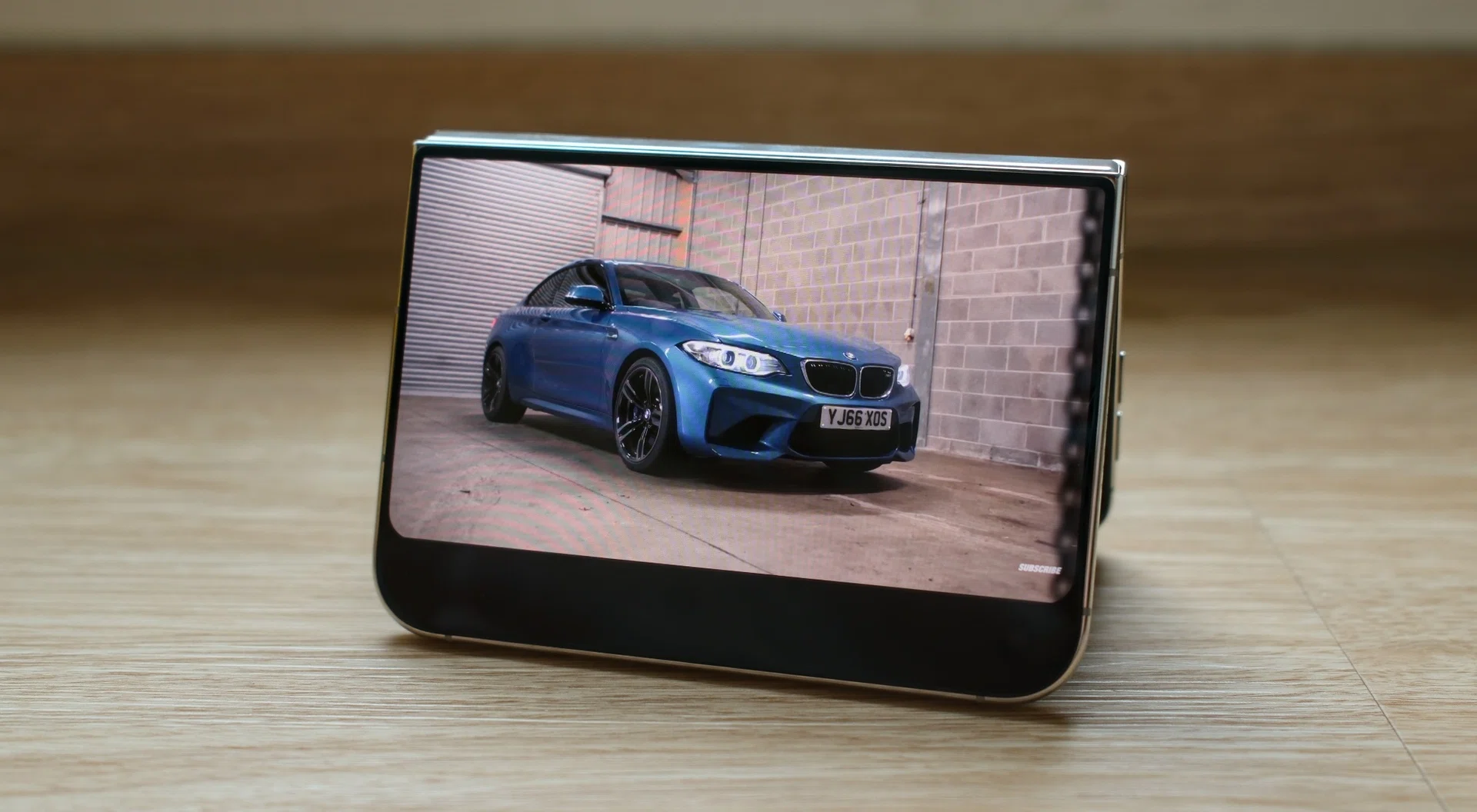
The hinge allows the Duo to be placed in various positions.
Photo: HWZ
The placement of the speakers is quite interesting. To try and ensure stereo sound regardless of how you hold the Duo, the speakers are positioned at the opposite ends of the two parts of the Duo. This avoids them being on just one side when you fold it and hold in landscape orientation (Fold8, I’m looking at you). Does it work? I think it mostly does. But I think it really depends on the content you are watching and how the audio is mastered. On some videos, it sounds fine, but then on others, I could hear some lopsidedness in the sound. Still, it beats having the speakers all on one side.
The largest display on an iPhone ever and that matte finish
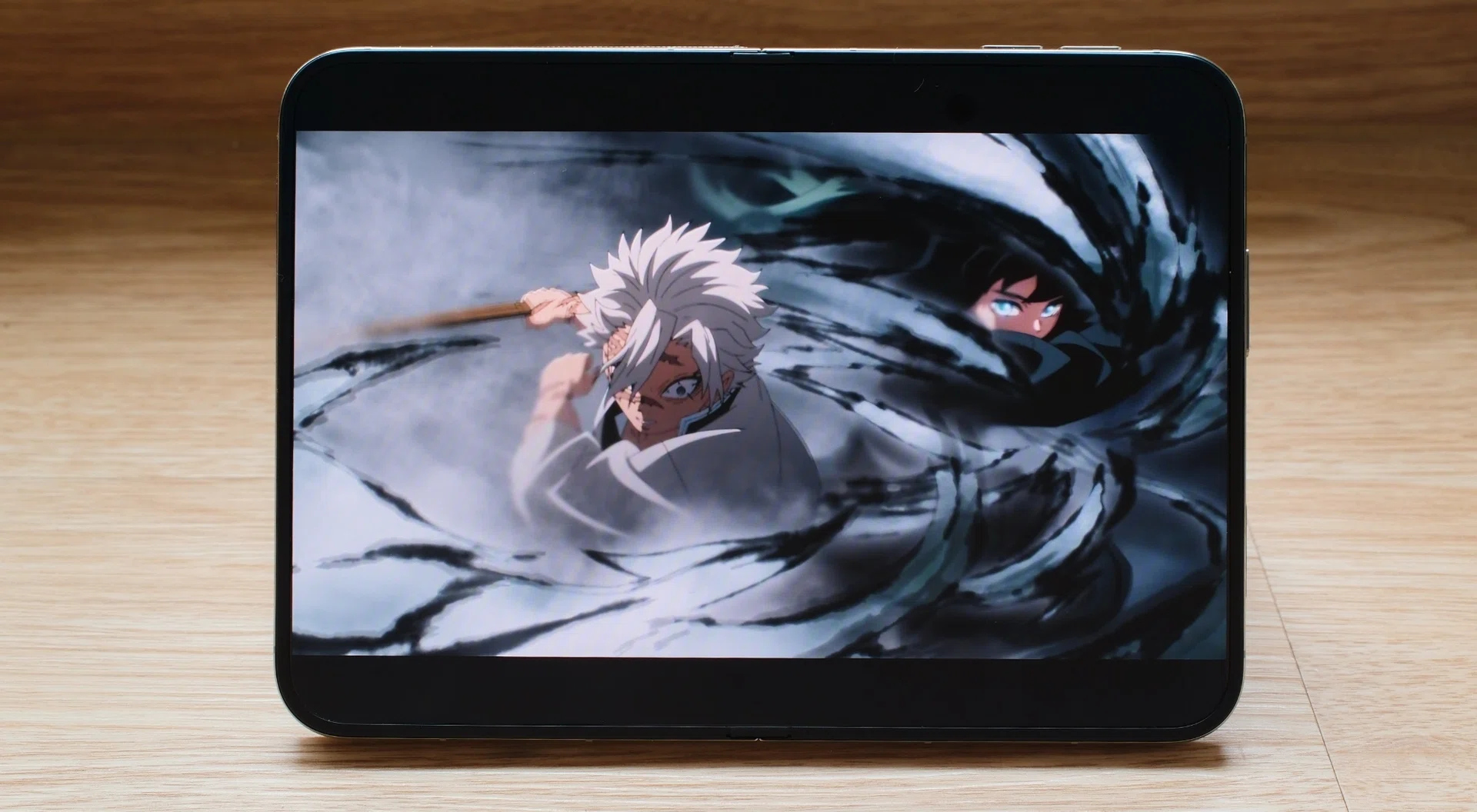
The 7.6-inch inner display of the Duo is 50% larger than the iPhone 18 Pro Max and 80% larger than the iPhone 18 Pro.
Photo: HWZ
The outer display is 5.4-inch, which may sound small, but if you do the math, it’s actually around 90% the screen size of an iPhone 18 Pro. Maybe it’s because of the 1.4:1 aspect ratio, but to my eyes, it doesn’t quite look like it’s 90% the size of an iPhone 18 Pro’s display.
Nevertheless, this is a high-quality OLED display that supports ProMotion technology, which means a refresh rate of up to 120Hz. It also has a pixel density count of 460 ppi – the same as the iPhone 18 Pro and Pro Max. Crucially, it’s protected by Ceramic Shield 2, which I found to be excellent on the iPhone 17 Pro Max. I don’t baby my phones, but even after a year, my iPhone 17 Pro Max’s display is still pristine. I expect the Duo to be the same.
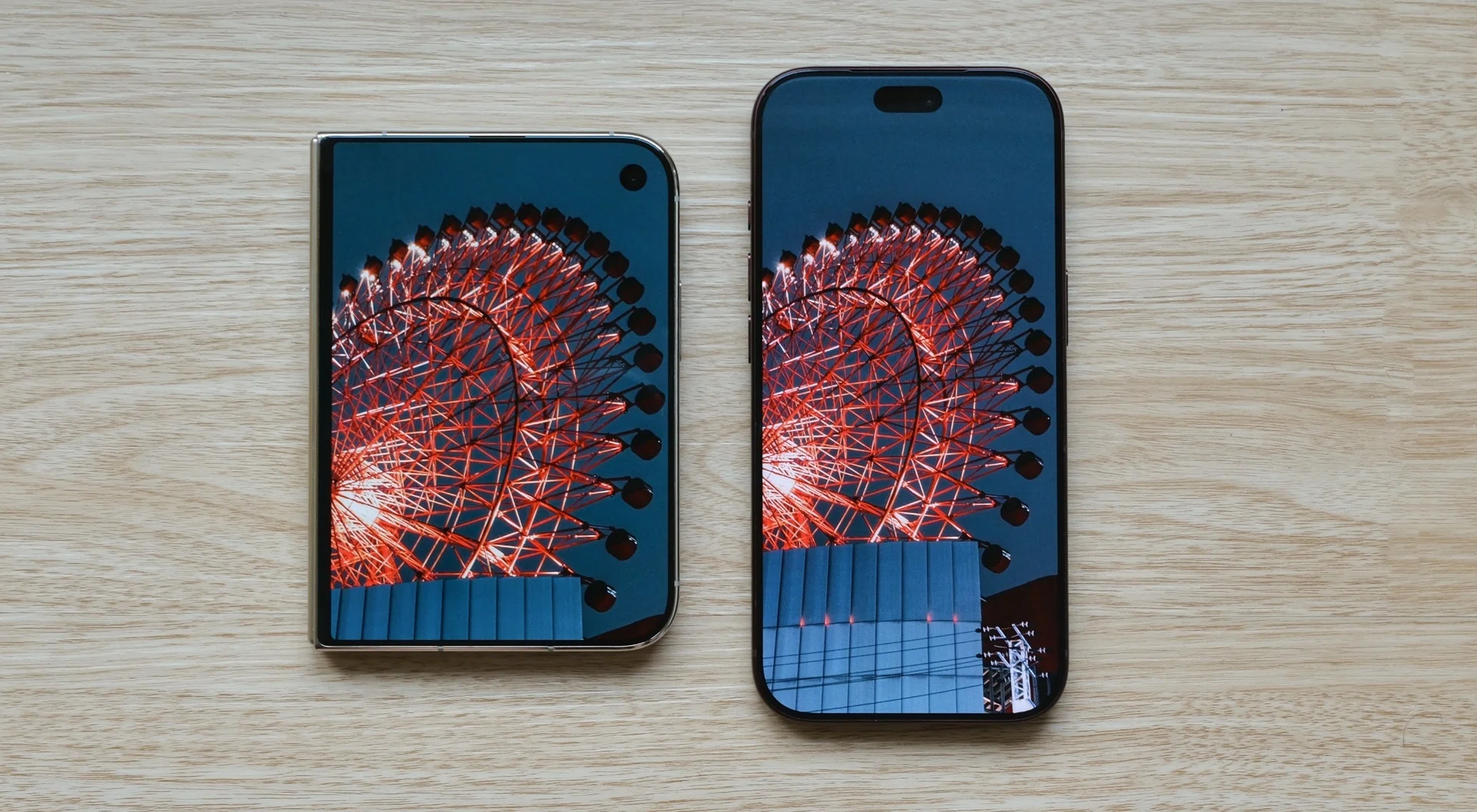
The area of the Duo’s outer display is supposedly 90% that of the iPhone 18 Pro.
Unfold the Duo, and you’ll be greeted by a 7.6-inch inner display. Like the outer display, it features ProMotion, but a slightly lower pixel density count of 430 ppi. It goes without saying that this is the largest display ever found on an iPhone. The first thing most people would notice is that it has a matte finish. As far as I’m aware, this is the first foldable to have a inner display with such a finish, and it makes you wonder why no one has done it earlier. Like most matte finishes on a display, it does dull colours a tad, but this is still a bright and vibrant screen. Peak brightness is 3,000 nits, and it is slightly less legible on a bright day compared to the iPhone 18 Pro and Pro Max, but it’s not a night-and-day difference, and doesn’t render the display unusable on a bright day.
But the upside is that it significantly reduces glare and reflection, and makes the crease less conspicuous. You have to really seek it out to see it. It resists smudges quite well too. However, this is a bit of a double-edged sword because smudges on the screen are onerous to clean. A wipe – even with Apple’s own polishing cloth – will not suffice; you will need some sort of liquid to help lift those smudges off the display.
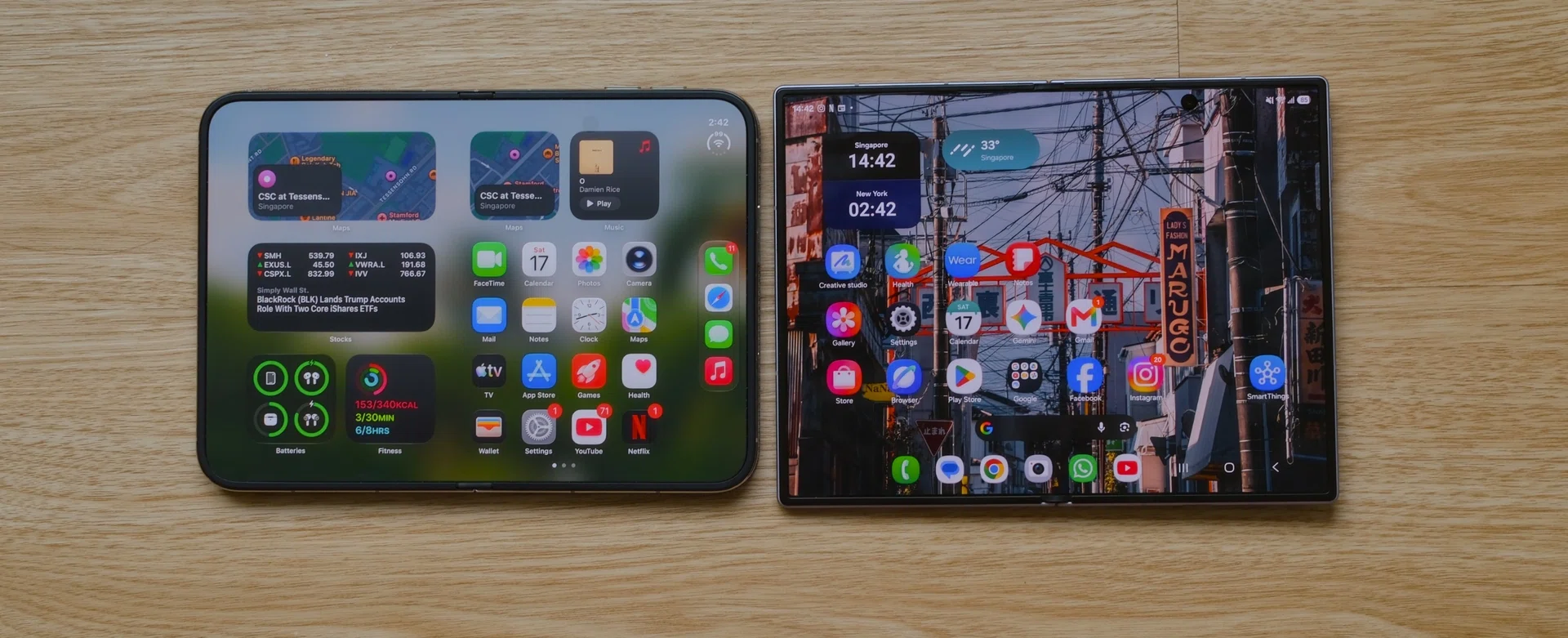
The Duo next to the Galaxy Z Fold8. At 8 inches, the Fold8’s display is bigger.
The matte finish also confers the inner display a premium look and feel. It doesn’t have that somewhat tacky plastic look and feel that some other foldable phones have because of their display coatings. I also find it gentler on eyes, I’ve been reading e-books on the Duo for a bit, and I think it might make my Kindles redundant.
Back to the crease, you can feel it if you brush your finger over it. But again, it isn’t obvious, and isn’t something that will detract from the overall user experience. How the crease will hold up is anyone’s guess. I’ve only been using it for a week, and I don’t appear to have gotten any more conspicuous. Once more, this is one of those things that I will need more time to tell. I’ll report back in a couple of weeks.
Software tricks
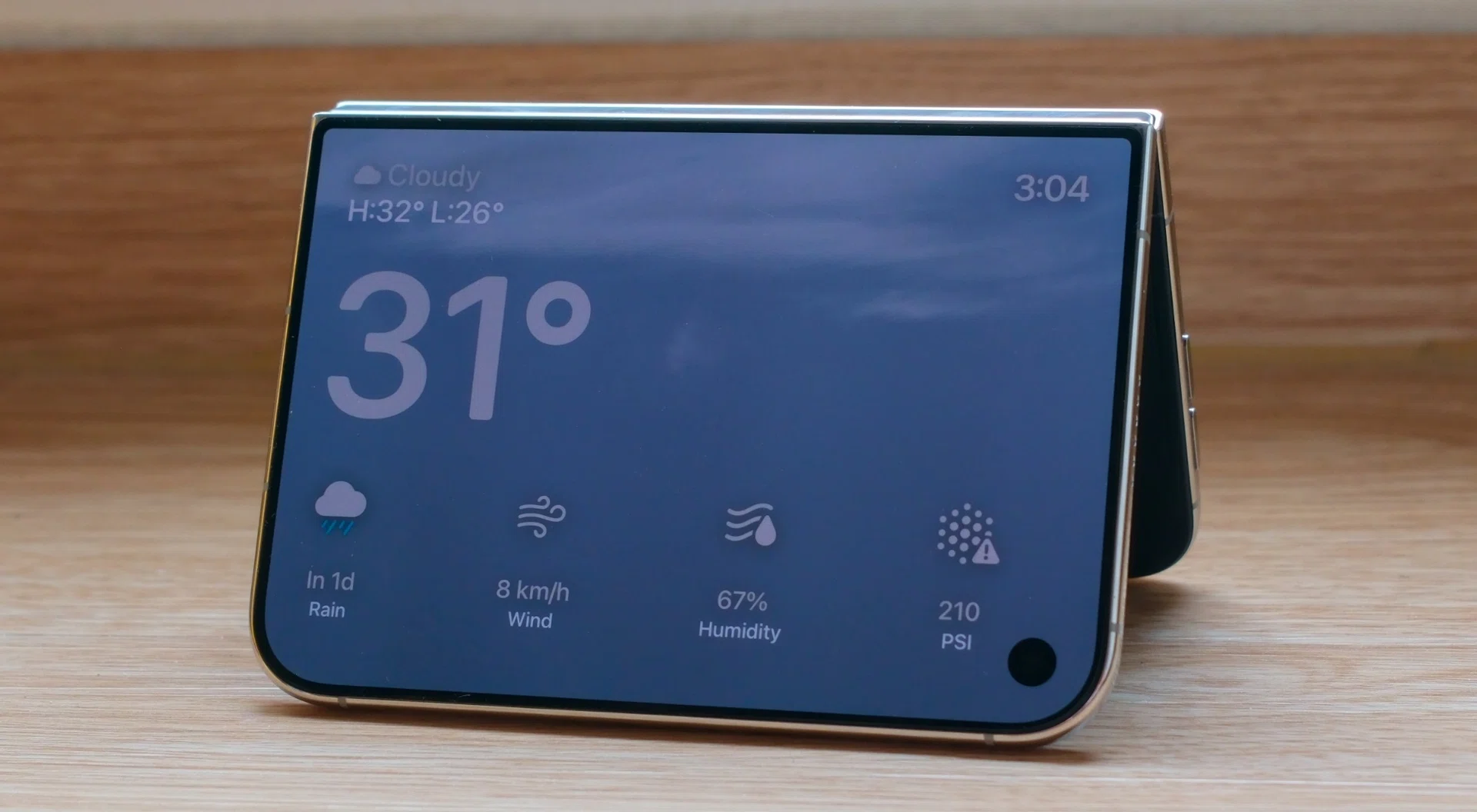
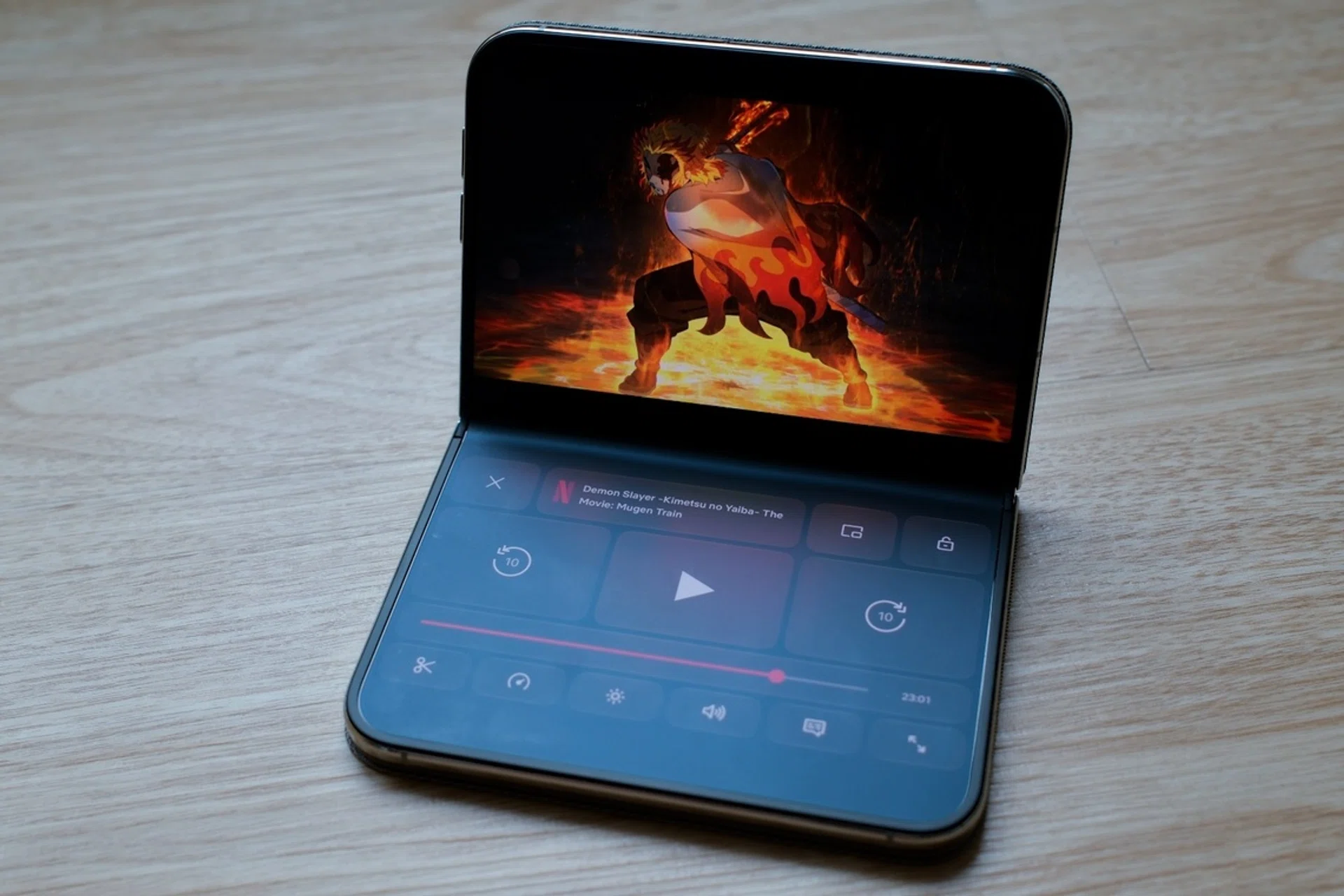
Whenever you prop your Duo up like so, it goes into Standby mode and instantly turns into a desktop display or clock.
Photo: HWZ
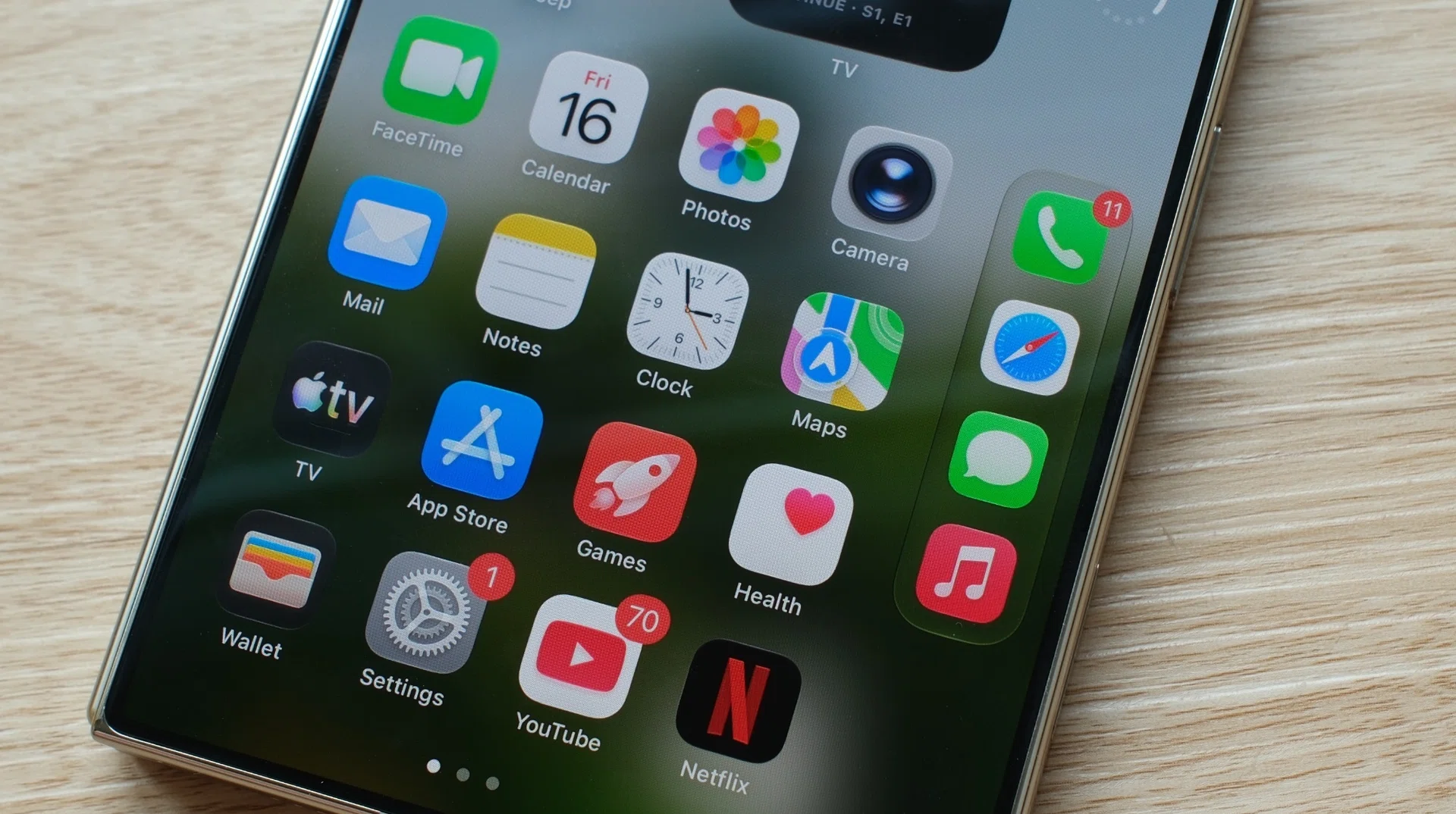
Because of the unique aspect ratio of the displays, Apple had to make some tweaks to the way iOS is laid out on the Duo. The most notable change is that the dock and essential controls have been moved to the side to maximise the amount of vertical space. For longtime iPhone users, this can be a bit jarring at first, but you’ll soon get used to it.
Much has be said about the animation that occurs when you open the Duo that blends the outer and inner displays, it’s undeniably cool, but that’s mostly a visual gimmick. A more tangible new feature is the improved Standby mode. Standby mode isn’t new – your conventional slab iPhones will go into Standby when they’re placed on their sides and connected to a charger. In the Duo, however, it’s invoked on the outer display or inner display whenever it is partially folded and set on a surface. Apple has also introduced new faces, most of which are highly customisable. This ability to turn the Duo into a very expensive desk clock may appear trivial to some, but I see it as a thoughtful and fun way to make the most out of the Duo’s form factor.
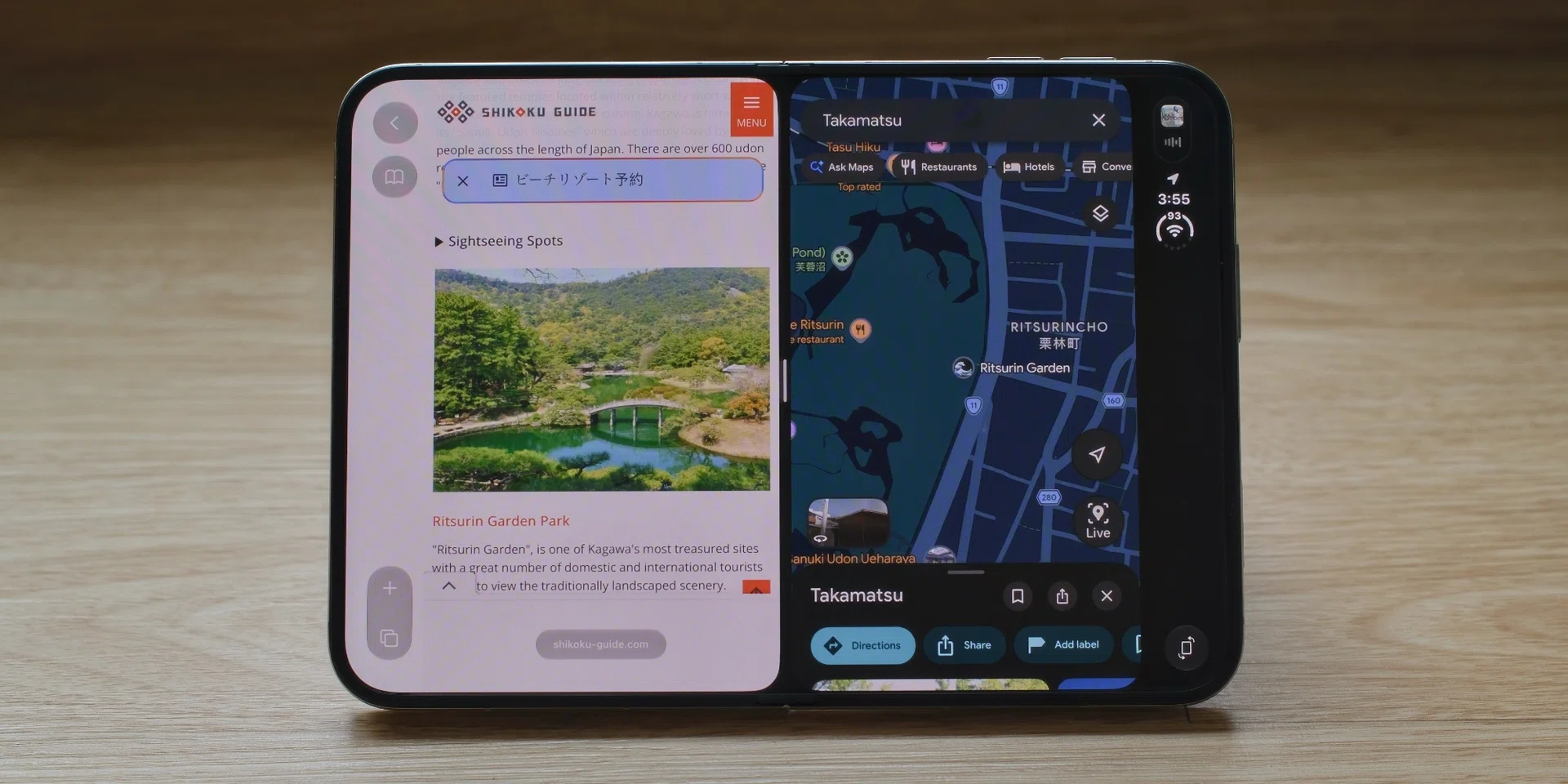
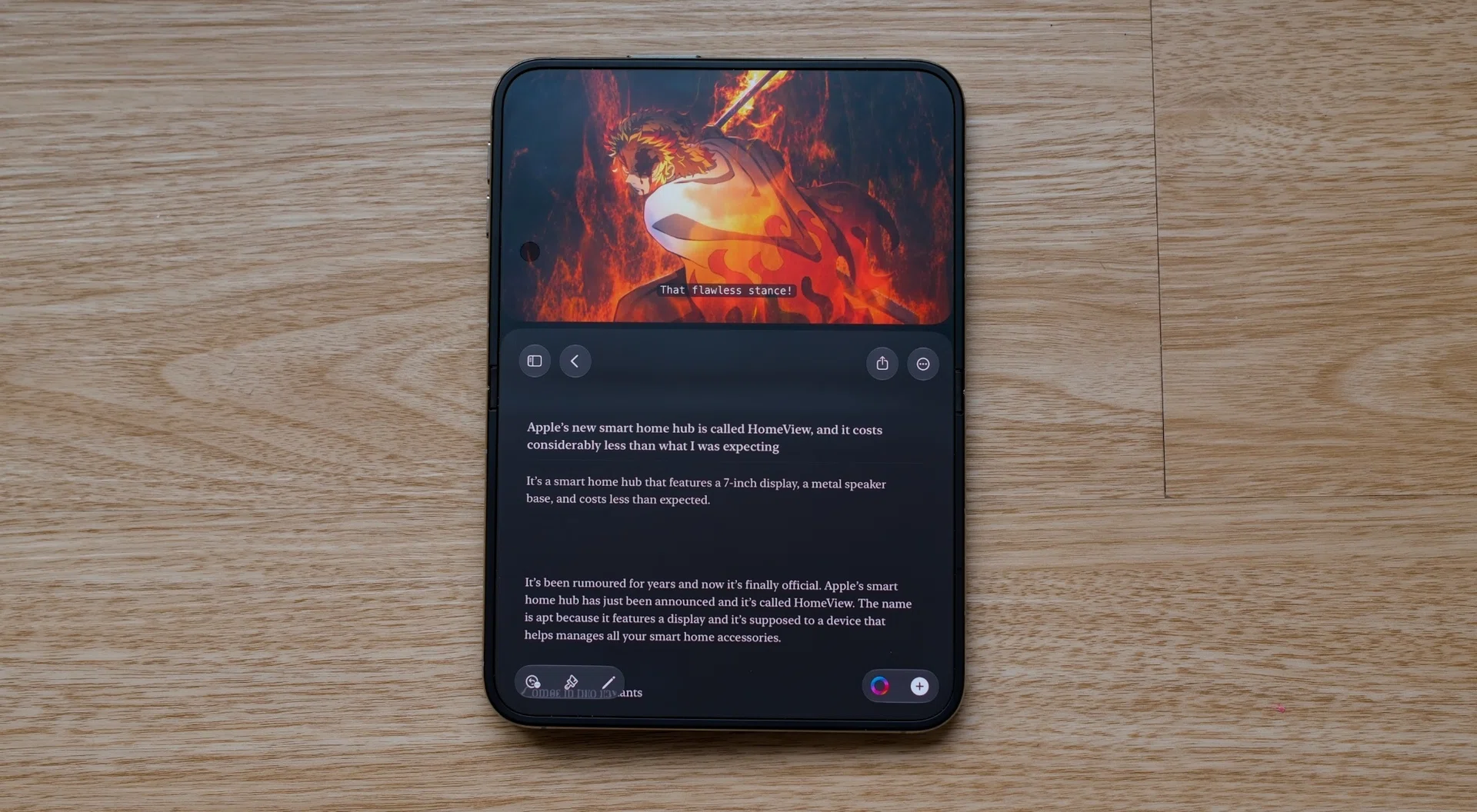
This is the first iPhone to be able to run two apps side by side.
Photo: HWZ
No foldable phone will be complete without some form of multitasking capability, and the Duo is the first iPhone to have Split View, which lets you place two apps side by side on its inner display. Unlike some of its Android rivals and even the iPad mini, Split View on the Duo is limited to just two apps. You can still have a video playing picture-in-picture, so let’s be generous and say you can run up to three apps simultaneously on the Duo.
Regardless, two apps side by side is a reasonable limit. Run any more, and you’ll start to compromise legibility and usability. Even on an iPad mini, which has a noticeably larger 8.3-inch display and a more flexible multitasking system, I never saw the point of running three apps side by side.






Read Full Article At Source