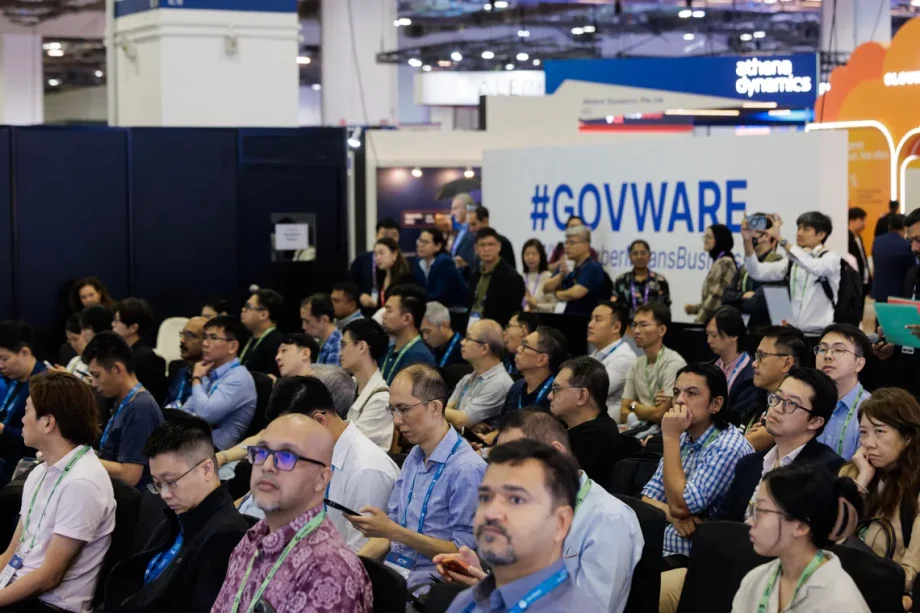
Govware 2026 saw more than 14,000 attendees attend multiple presentations and sessions from more than 300 tech brands and close to 200 domain experts. The event ended last week with multiple AI announcements, with an emphasis on AI security.
These covered:
- How to identify AI-based threats.
- How to deal with AI-based threats.
- 1. Lenovo brings AI governance and security controls to ThinkShield at GovWare 2026
- 2. OPSWAT and ITE to train over 150 students annually in critical infrastructure cybersecurity
- 3. ST Engineering to open Singapore centre for testing the security of autonomous robots, drones and vehicles
- 4. Samsung and Reality Defender team up to detect deepfakes directly on Galaxy devices
- 5. Singapore managers are twice as likely to fall for AI-cloned CEO voices, KnowBe4 study finds
Some of those we found interesting included:
Lenovo brings AI governance and security controls to ThinkShield at GovWare 2026
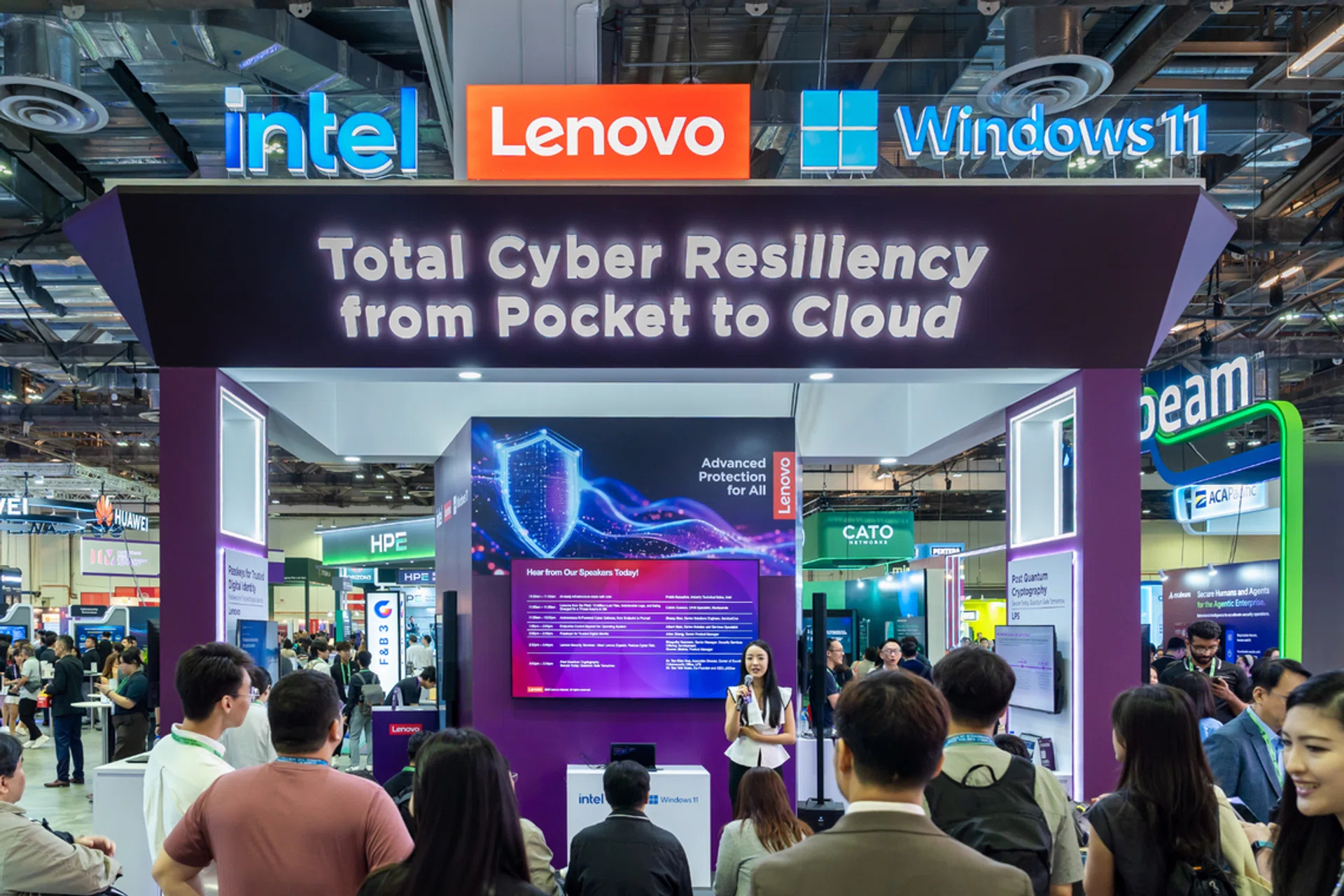
The Lenovo booth with the integration presentation.
Photo: Lenovo
At GovWare 2026, Lenovo announced plans to give Singapore businesses more control over how employees use AI at work by adding SentinelOne Prompt Security to its ThinkShield security portfolio. It helps companies track which AI tools employees use, including Shadow AI. It also helps prevent sensitive company information from being shared with unapproved AI services and protects against threats such as prompt injection attacks. Built into SentinelOne’s Singularity Platform, the solution adds AI security management with existing protections for devices, cloud services, user identities and data. Building on Lenovo’s ongoing partnership with SentinelOne, it addresses a growing business concern, with 90% of IT leaders admitting their organisations have gaps in their defences against AI-driven threats, according to Lenovo research.
OPSWAT and ITE to train over 150 students annually in critical infrastructure cybersecurity
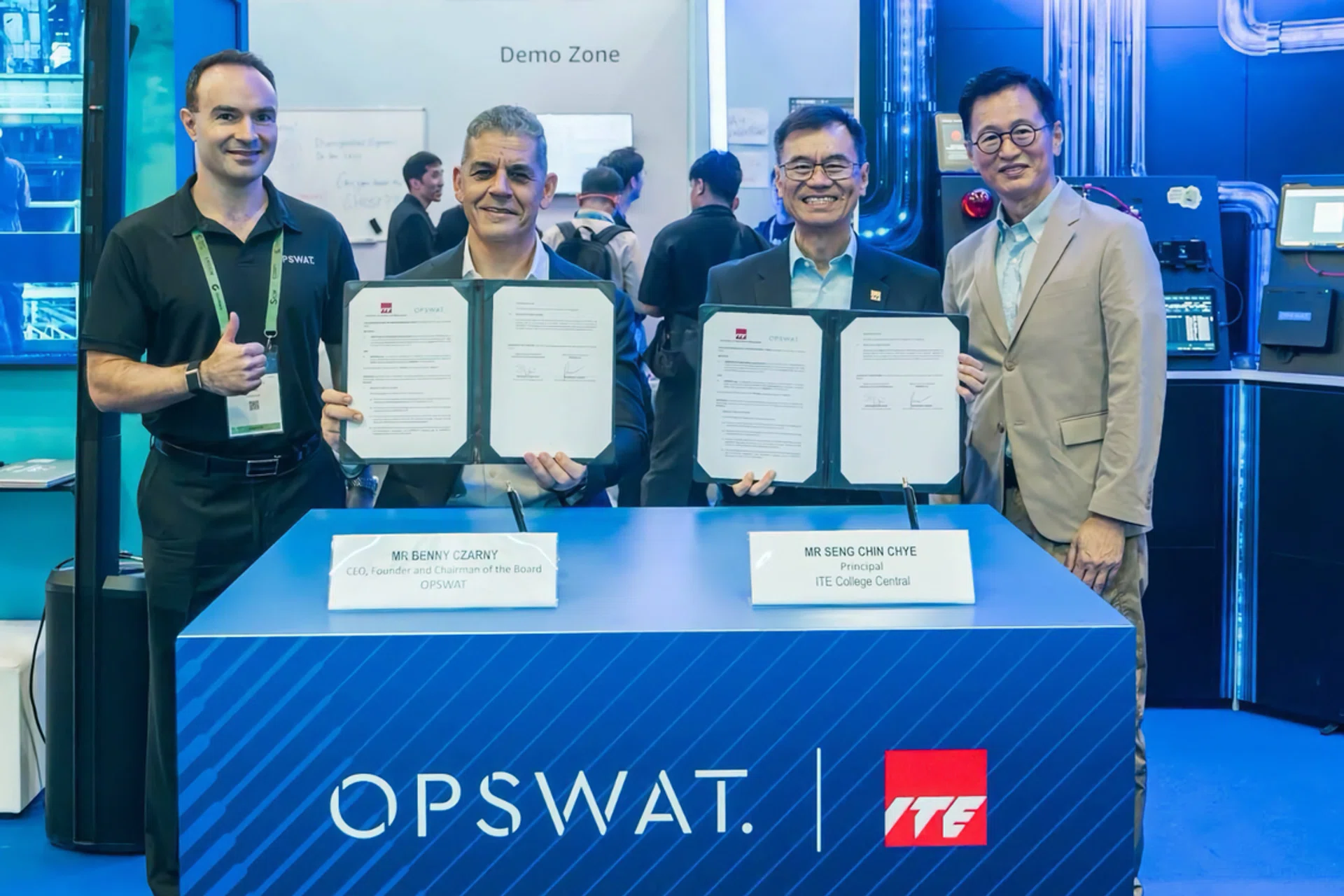
The signing of the agreement between OPSWAT and ITE.
Photo: OPSWAT
Cybersecurity company OPSWAT is teaming up with the Institute of Technical Education (ITE) to train the next generation of cybersecurity professionals in Singapore. The two organisations signed a five-year agreement at GovWare 2026 to set up a dedicated Operational Technology Cybersecurity Training Facility at ITE College Central. The facility will give more than 150 students from the Higher Nitec in Cyber & Network Security course each year the chance to get hands-on experience protecting critical infrastructure, including power, water and transport systems. Students learn to spot cyber threats and check files and data transfers for potential risks in simulated environments, so they can secure essential systems without disrupting operations. OPSWAT and ITE will also collaborate on course development, teacher training, and industry projects. Selected ITE staff will be placed on industry attachments with OPSWAT and its partners to gain first-hand experience and industry knowledge. The initiative is in line with Singapore’s OT Cybersecurity Masterplan 2024, which places greater emphasis on building a skilled local workforce to protect the country’s essential services.
ST Engineering to open Singapore centre for testing the security of autonomous robots, drones and vehicles
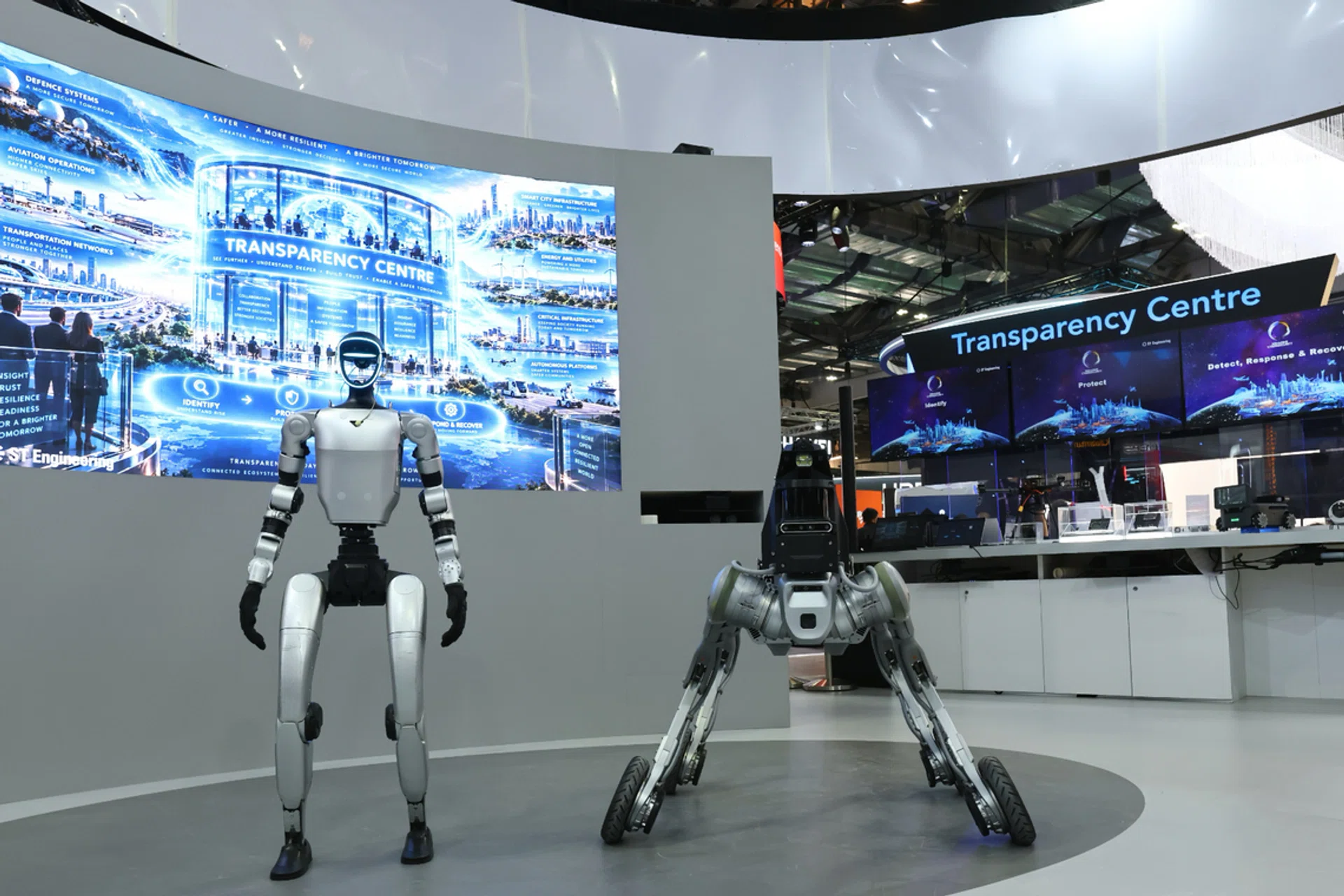
At GovWare 2026, ST Engineering is showcasing its assurance services for autonomous platforms offered at its new Transparency Centre.
Photo: ST Engineering
As AI-powered robots, drones, and self-driving vehicles become more common, ensuring their safety and security has become increasingly important. To address this, ST Engineering is setting up a Transparency Centre in Singapore, scheduled to open in the first quarter of 2027. The new facility will help businesses check their autonomous systems for security weaknesses and potential risks before putting them to work in real-world environments. Using advanced binary analysis, the centre will examine software and firmware for hidden vulnerabilities without needing access to the original source code. Using the NIST Cybersecurity Framework, it will assess risks associated with third-party software. Beyond testing, ST Engineering will also help companies strengthen their systems through hardware-based security measures and better encryption to protect sensitive information.
Samsung and Reality Defender team up to detect deepfakes directly on Galaxy devices
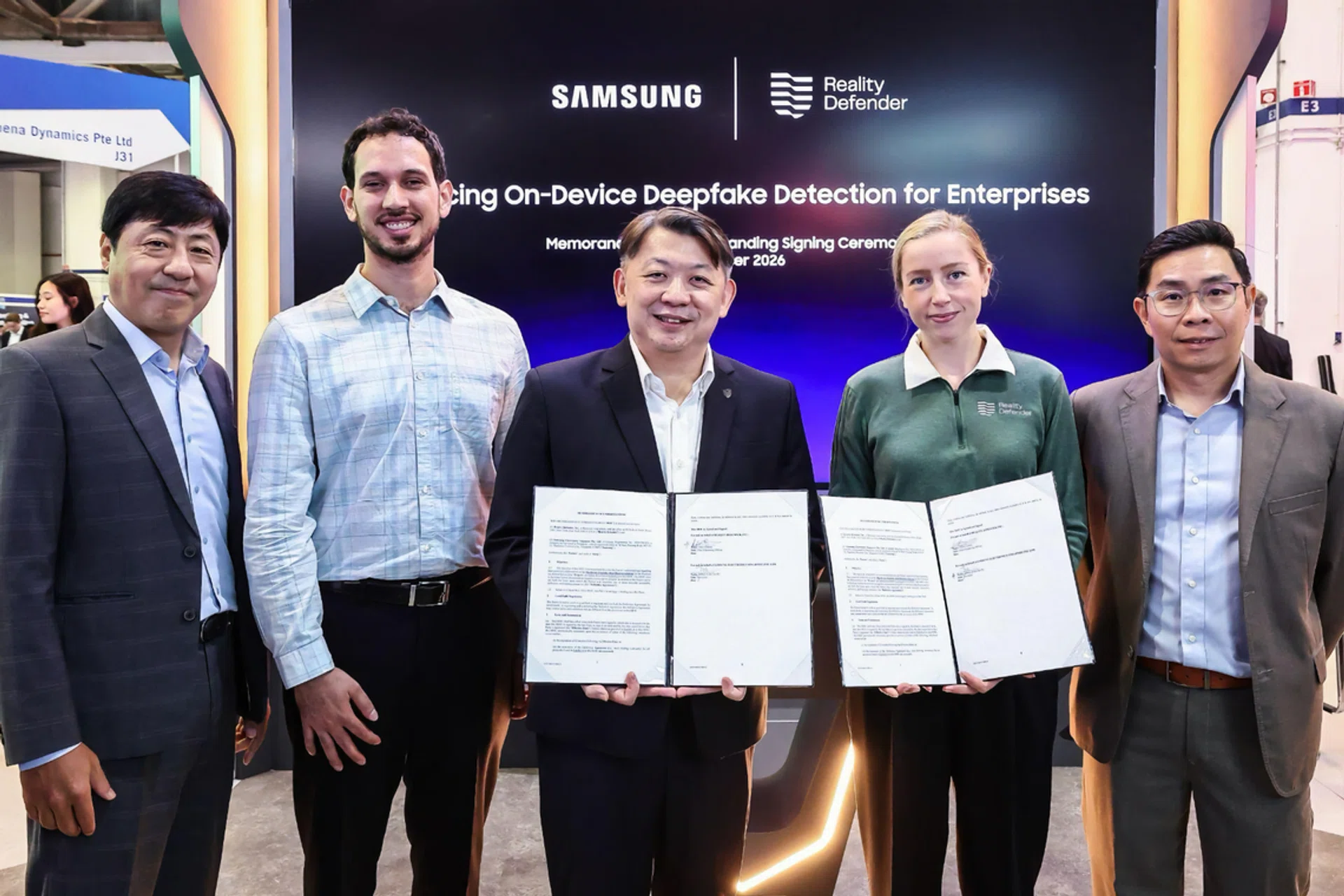
Samsung Electronics Singapore with Reality Defender
Photo: Samsung Electronics Singapore
Samsung Electronics Singapore is working with US-based Reality Defender to help businesses spot deepfakes directly on their Galaxy smartphones, with the signing of an agreement to develop a solution that uses Reality Defender’s AI detection technology alongside Samsung’s Knox. Reality Defender’s security features will be used to identify fake voices, videos and images, including attempts to impersonate company executives or other trusted individuals during phone calls and online interactions. By checking suspicious content directly on supported Galaxy devices, the technology aims to reduce the need to send sensitive information to the cloud for analysis. There is no confirmed launch date for the new solution yet.
Singapore managers are twice as likely to fall for AI-cloned CEO voices, KnowBe4 study finds
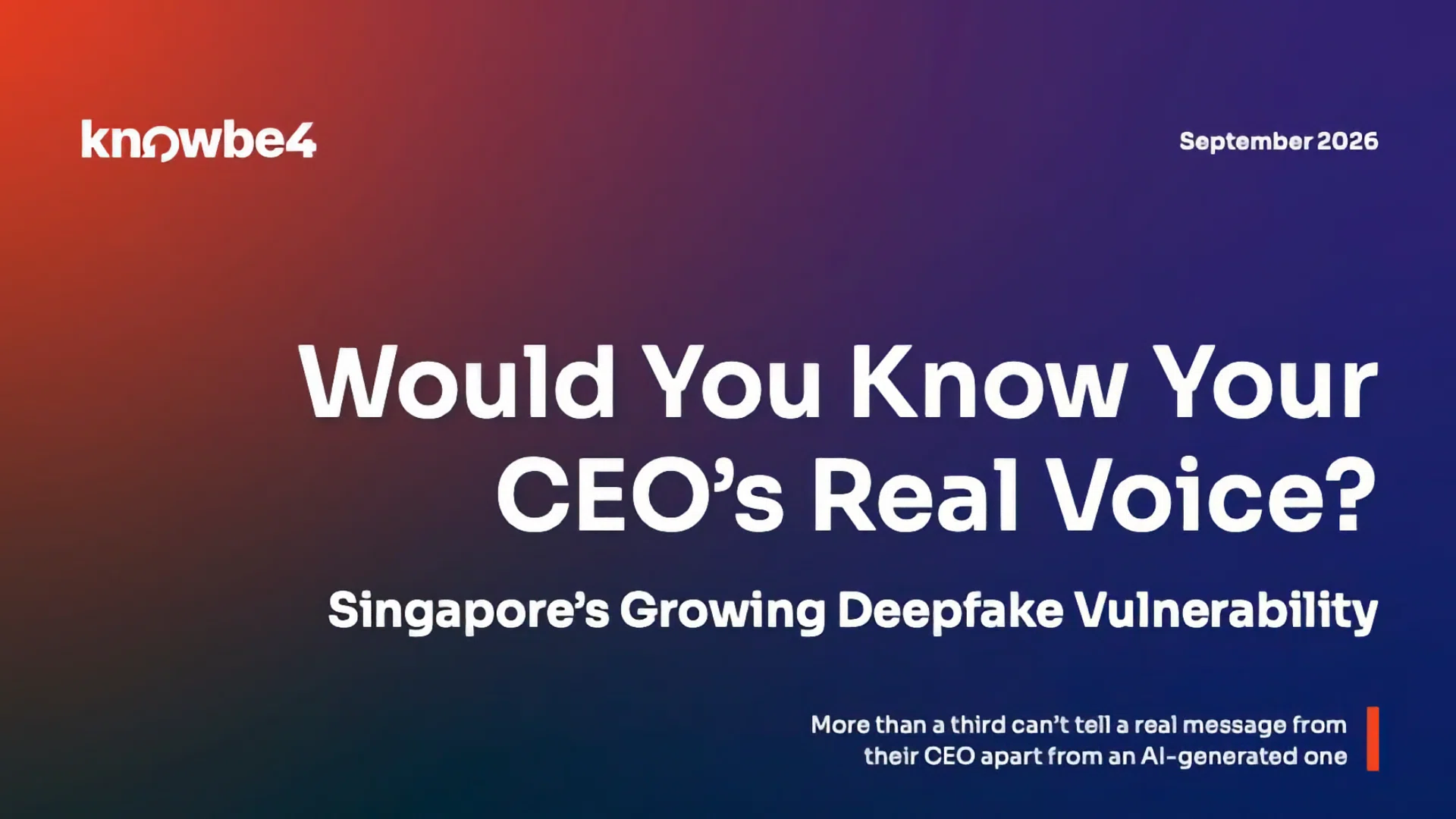
The results of the study from KnowBe4.
Photo: KnowBe4
According to a study, “Would You Know Your CEO’s Real Voice? Singapore’s Growing Deepfake Vulnerability”, by cybersecurity firm KnowBe4, senior managers in Singapore appear to be more easily fooled by AI-generated voice scams than their junior colleagues, despite being more confident in their ability to spot a fake. The survey of 500 office workers in Singapore found that 35% of senior managers would follow instructions from an AI-cloned CEO voice without checking whether the request was genuine. That is more than double the 16% of clerical workers who said the same, even though 78% of senior managers believed they were good at spotting deepfakes. The study also found that 36% of respondents were unsure whether they would recognise an AI-generated message from their CEO. Workplace culture appears to be part of the problem, with half of those surveyed uncomfortable questioning senior executives and 52% worried about the consequences of doing so. Another 9% said they would rather risk a cybersecurity breach than keep their boss waiting. Despite these risks, only 26% had received training on dealing with AI scams involving senior leaders.
Read Full Article At Source
You May Also Like:
- Cyber Security Agency of Singapore awards more than $16 million to 18 cybersecurity projects
- Best Buy Drops a Surprise Discount on the New Asus ROG Xbox Ally Ahead of Cyber Monday
- Nintendo’s Official Cyber Monday Sale on Switch 2 MicroSD Express Cards is Already Live
- The Thousand-Year Door Deal for Cyber Monday
