Banks and investors should make companies’ environmental performance consequential for financing decisions
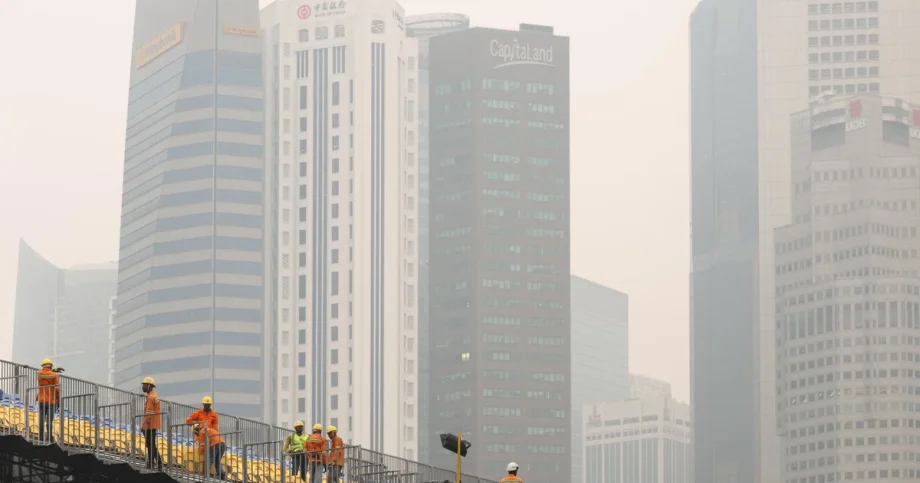
WHEN smoke from forest and land fires in Indonesia reaches Singapore, the consequences are immediately apparent. People check pollution readings, outdoor activities are disrupted and the search for those responsible intensifies.
But scrutiny often fades with the haze. Financial institutions supporting land-intensive businesses should not let their attention wane with it.
This is a question of financial discipline, not just environmental goodwill. In Asia, banks, asset managers and institutional investors provide capital to businesses that depend on forests, land and water.
Poor management of these resources can expose companies to operating disruptions, regulatory action, higher costs and reputational damage. Evaluating such risks requires more than collecting sustainability reports.
Credible information needed
Consider forests. In recent research conducted with fellow National University of Singapore researchers and published in the Proceedings of the National Academy of Sciences, we found that widely used ESG ratings do not consistently reflect measured corporate deforestation exposure.
Instead, the ESG scores responded more strongly to deforestation-related media coverage than actual forest loss.
Ratings may be useful, but financial institutions should not mistake a reassuring score for evidence of limited forest loss in a company’s assets or supply chains.
Geospatial data, such as satellite-derived forest loss maps, should be incorporated into ESG analyses, but a satellite hot spot map should not be treated as proof that a particular company started a fire.
Satellite evidence must be paired with land-tenure information, operating practices and verified supplier relationships.
Banks and investors should demand such evidence when environmental exposure is material, rather than wait for an incident to become a public controversy.
Now consider a less-visible environmental pressure: cooling Asia’s expanding computing infrastructure. The high resource demands led Singapore to restrict new data-centre capacity for several years from 2019, before restarting growth under tighter criteria.
Meanwhile, neighbouring Johor in Malaysia and Batam in Indonesia have attracted substantial investment, with water-supply concerns prompting closer scrutiny of water-cooled developments.
Read Full Article At Source