JAKARTA – Indonesia plans to move away from clearing forests for new rice fields after achieving self-sufficiency in the staple ahead of schedule, although the government has yet to clarify what the shift means for projects already under way in South Papua and Kalimantan.
Hashim Djojohadikusumo, President Prabowo Subianto’s younger brother and special envoy for climate and energy, told a sustainability forum in Jakarta on Oct 6 that the government had hit its rice self-sufficiency target three years early without needing to plant the two million ha of food estates it had planned.
But the Forestry Ministry said the shift was not yet clear-cut, pointing out that it sees Hashim’s remarks as affirming a policy of meeting food needs by raising productivity and making better use of existing land, in line with efforts to protect forests.
“A distinction needs to be made between new expansion plans that require the clearing of forest areas, activities that are already under way, and increasing production on agricultural land that is already available,” Ristianto Pribadi, the ministry’s head of public relations and international cooperation, told The Straits Times in a text message.
“Therefore, we cannot yet say that all activities in the two regions will automatically stop, nor confirm when they will stop,” he said, adding that this was for the Agriculture Ministry and other relevant agencies to spell out, referring to work in South Papua and Central Kalimantan.
At the Indonesia International Sustainability Forum, Hashim, who was speaking on behalf of the Agriculture Ministry, said: “The government sees no further need to expand rice cultivation in so-called forest areas.”
The two million ha food estate programme had, in effect, already met its goal, he said, stressing: “It is a programme that we have already achieved without even planting two million ha.”
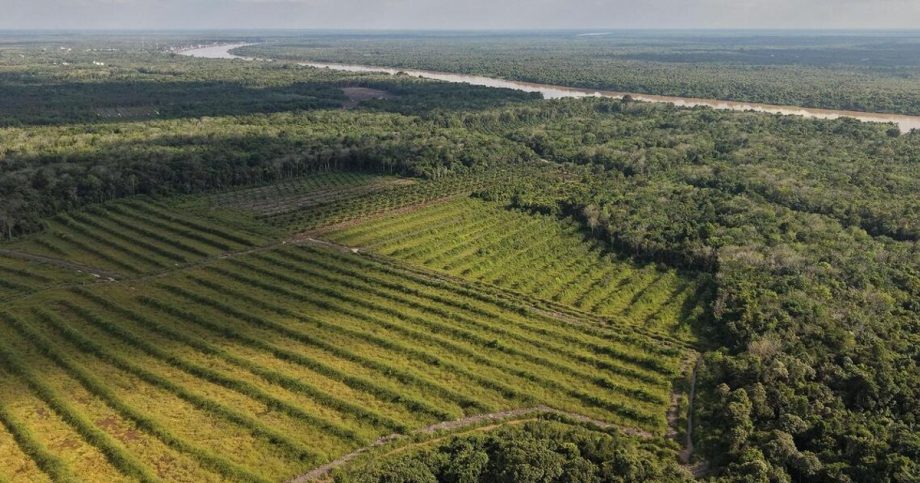
However, thousands of hectares of forest, including swamp forest and peatlands, have already been cleared to create new rice fields as part of the programme.
Mari Elka Pangestu, deputy chair of the National Economic Council, told the forum that the two million ha announced in 2025 for food production “is no longer needed”. She said Hashim had asked her to deliver “the missing part of that message”.
“Moving forward, we will be using degraded land. We have over 12 million ha of degraded land that can be used for this,” said Mari, a former trade minister. These are lands that were previously cleared or had been damaged by erosion or other causes and are either abandoned or underused.
She said Hashim had discussed the plan with the agriculture and forestry ministers, who agreed that any future production of food or biofuel would use degraded land as part of a Forestry Ministry reforestation programme. Biofuels include biodiesel from blending palm oil with diesel and ethanol made from sugar cane.
Arief Cahyono, the Agriculture Ministry’s chief spokesman, did not respond to queries from ST.
On growing crops such as sugar cane and soya beans on degraded land, Ristianto said any increase in production must not add to the pressure on forests and important ecosystems.

This handout photo taken in Merauke regency, South Papua, on March 17, 2025, and released by Mighty Earth shows a deforested area that will be converted into a sugar cane plantation.

Read Full Article At Source