October 5, 2026
SINGAPORE – Despite its busy straits, Singapore’s position near one of the world’s most biodiverse marine areas has allowed it to yield a surprising variety of fishes, though their significance is occasionally lost on those who catch them.
Such was the case at Bedok Jetty in August, when an angler mistook a globally endangered zonetail butterfly ray (Gymnura zonura) for the average stingray. The butterfly ray is distinguished by its wide, triangular body and short tail, compared with the rounder body and long tail of more common stingrays.
Fellow fishing enthusiast Brian Sng, a Singapore Management University software engineering student, quickly realised the value of the catch from the photo he was shown, and informed the angler of his rare find.
To avoid these cases of mistaken identities, Sng, 21, and a group of fellow enthusiasts interested in the scientific study of fish built a free mobile app to help people identify the fishes that live in Singapore’s murky waters.
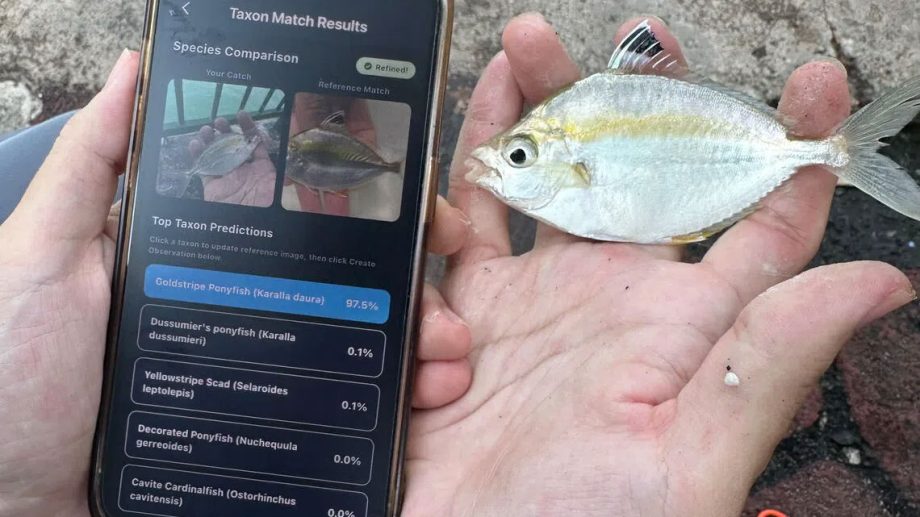
On Sept 17, the Ichthyological Society of Singapore (ISS), which has more than 150 members, launched SGFish on the Apple App Store. The app can identify more than 900 species using an image recognition model.
Users snap a photograph of their catch via the app, and the program will identify the species. It will also log down where each find was made.
To maintain scientific integrity, volunteers and co-founders of the society will manually verify all submitted records before they are officially logged into a database.
Currently, the database has about 2,300 observations covering more than 400 species. Before the launch of the app, this database was compiled using a Telegram bot built by volunteer and fellow app developer Samuel Pua, a 36-year-old cybersecurity professional.
The bot was dubbed Angler’s Pokedex, a reference to the portable electronic encyclopaedia from hit franchise Pokemon that is used to identify and record new monsters encountered.
Pua said the team decided to develop the app partly because time and location details could not be extracted from images submitted on Telegram, making it difficult to pinpoint data accurately.

Read Full Article At Source