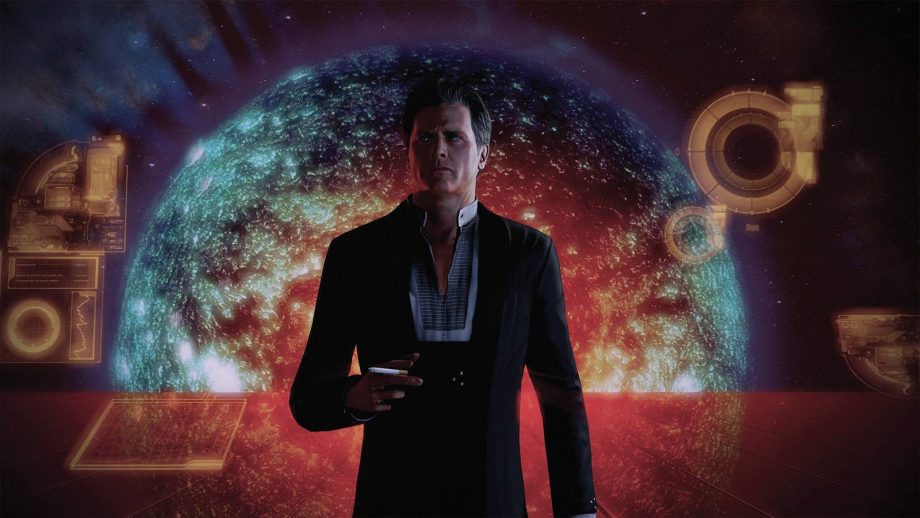
Grab your gavel: Court is in session for eight of gaming’s most misunderstood villains. Their charges? One occupied planet, one erased painting, one underwater utopia gone to rot, and a truly staggering body count. But, all that aside, what if these bad guys were actually making a somewhat decent point? Read between the lines of their melodramatic monologues, and perhaps you’ll realize that, say, a centuries-long guilt trip over one catastrophic mistake was in fact understandable rationale for wanting to tear the world down and start over. Or not: You get to decide. Just read each villain’s case file below before reaching a verdict — you might not love where the evidence actually points.
[Ed. note: This article includes spoilers for the endings of many popular AAA games.]
8
Renoir (Clair Obscur: Expedition 33, 2025)

The case for him: The Renoir who fights you wants to keep the fantasy alive. The real one just wants his family to stop grieving inside it.
Clair Obscur: Expedition 33 splits its central antagonist, Renoir, into two separate people: one painted, one real. The painted-by-Aline Renoir fights alongside Aline to keep the Canvas — and everyone painted into it, including people the expedition has come to love — alive, cutting down anyone who threatens that world. The real Renoir, trapped for years and visibly aged compared to his idealized, painted double, wants the opposite: for the Canvas to end entirely, so the family he’s lost touch with can stop pouring their grief into a fantasy and start healing in reality. Pick a side, and you’re choosing which grieving father’s heartbreak gets to count as the real one.
7
Andrew Ryan (BioShock, 2007)

The case for him: His possibly-understandable philosophy never changed. What did was how far he was willing to go once someone else’s ambition threatened his city.
Rapture, the underwater city BioShock’s Andrew Ryan built at the bottom of the Atlantic specifically to escape government oversight and religious interference, was built on one promise: A man’s success belongs to no one but himself. Ryan never walks that back, not even at the very end, when his own death via golf club is on the line. By then, many of his own denizens have curdled into addiction to ADAM, a gene-altering substance Ryan let flourish with zero oversight because, in his mind, oversight was the villain. His by-your-own-bootstraps philosophy never changed, but his willingness to enforce it certainly did — especially once Frank Fontaine’s black market started outcompeting him at his own game.
6
Kreia (Star Wars: Knights of the Old Republic 2, 2004)

The case for her: She spends the game telling you the Jedi and the Sith are both wrong about the same thing. Neither side proves her wrong.
What do you do about a teacher who’s technically right about almost everything…but makes you complicit in her cruelty anyway? Kreia, the blind mentor guiding your player character through Knights of the Old Republic 2, can see more clearly than the Jedi or Sith about just how broken the galaxy’s entire relationship with the Force has become. Her argument is a good one: Total detachment and total hunger are just two different ways of avoiding the same uncomfortable truth about the Force. That said, she also siphons Force energy directly from her companions, weakening them without asking, which is slightly less defensible. And reminiscent of the same casual cost-benefit math that once led her to help gut the Jedi order she claims to be critiquing from a place of wisdom.


Read Full Article At Source