If you own a laptop, then you know the peril of having not enough ports for all your devices. This is especially true if you use a laptop as your main computer at home. That could mean needing to connect a keyboard, mouse, headphones, monitor and microphone. By then, you might’ve run out of ports for other accessories you’ll use less often, like flash drives.
The problem becomes worse if your laptop lacks older ports – I can think of one brand whose flagship laptop offering lacks USB Type-A, for instance. But it’s not just Apple; not every laptop will have the ports you’ll need.
That’s why USB-C hubs are an important accessory to have if you’re planning to connect a lot of peripheral devices to your laptop. Not only do they expand the amount of ports it has, but many of them also offer features your laptop might not have, including gigabit ethernet, SD card slots, HDMI and DisplayPort output, and more. And if you’re looking for a USB-C hub to complement your laptop setup, here’s a Baseus docking station that’s going for more than half off.
$139.90 $349.90 60% off
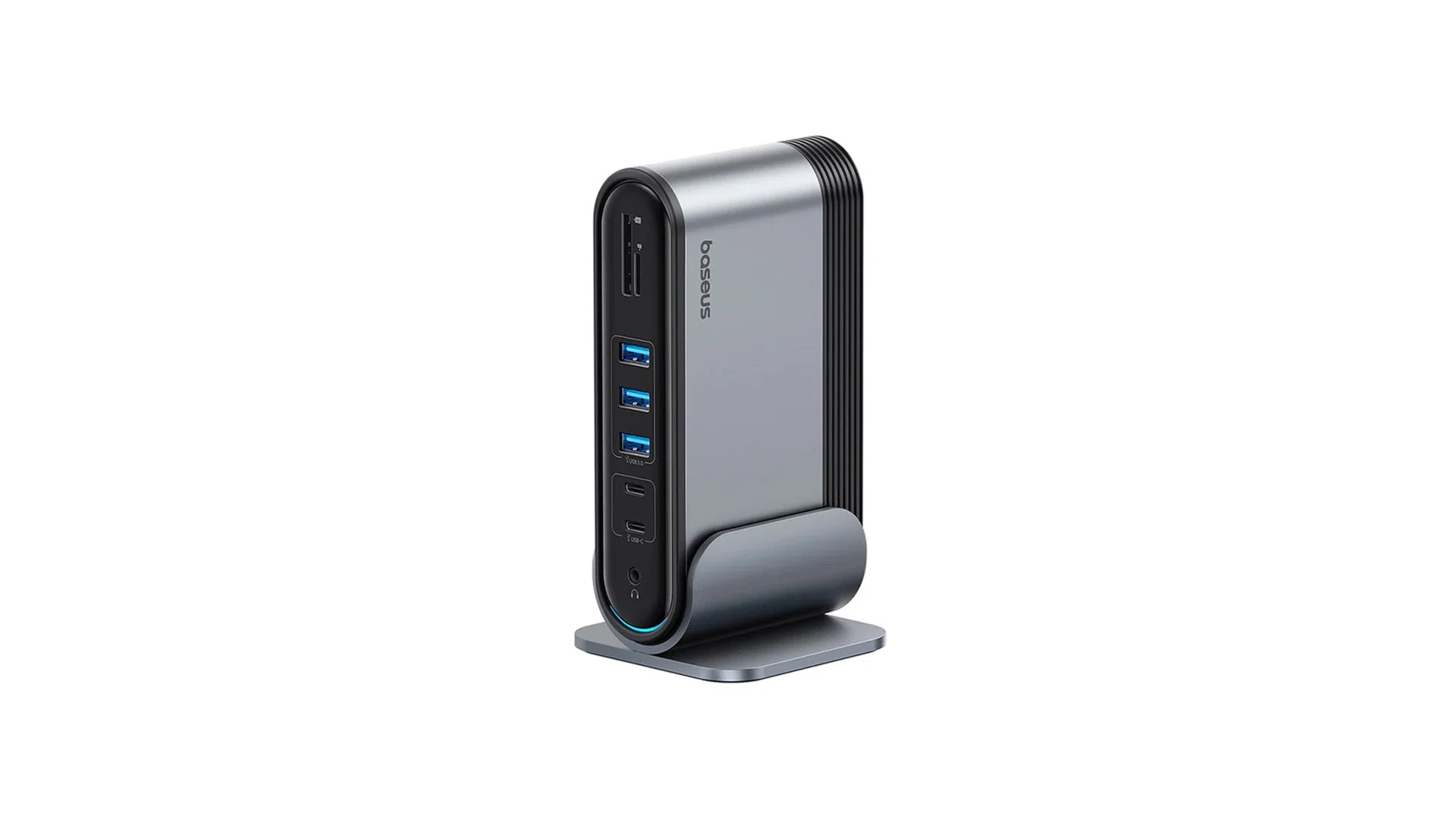
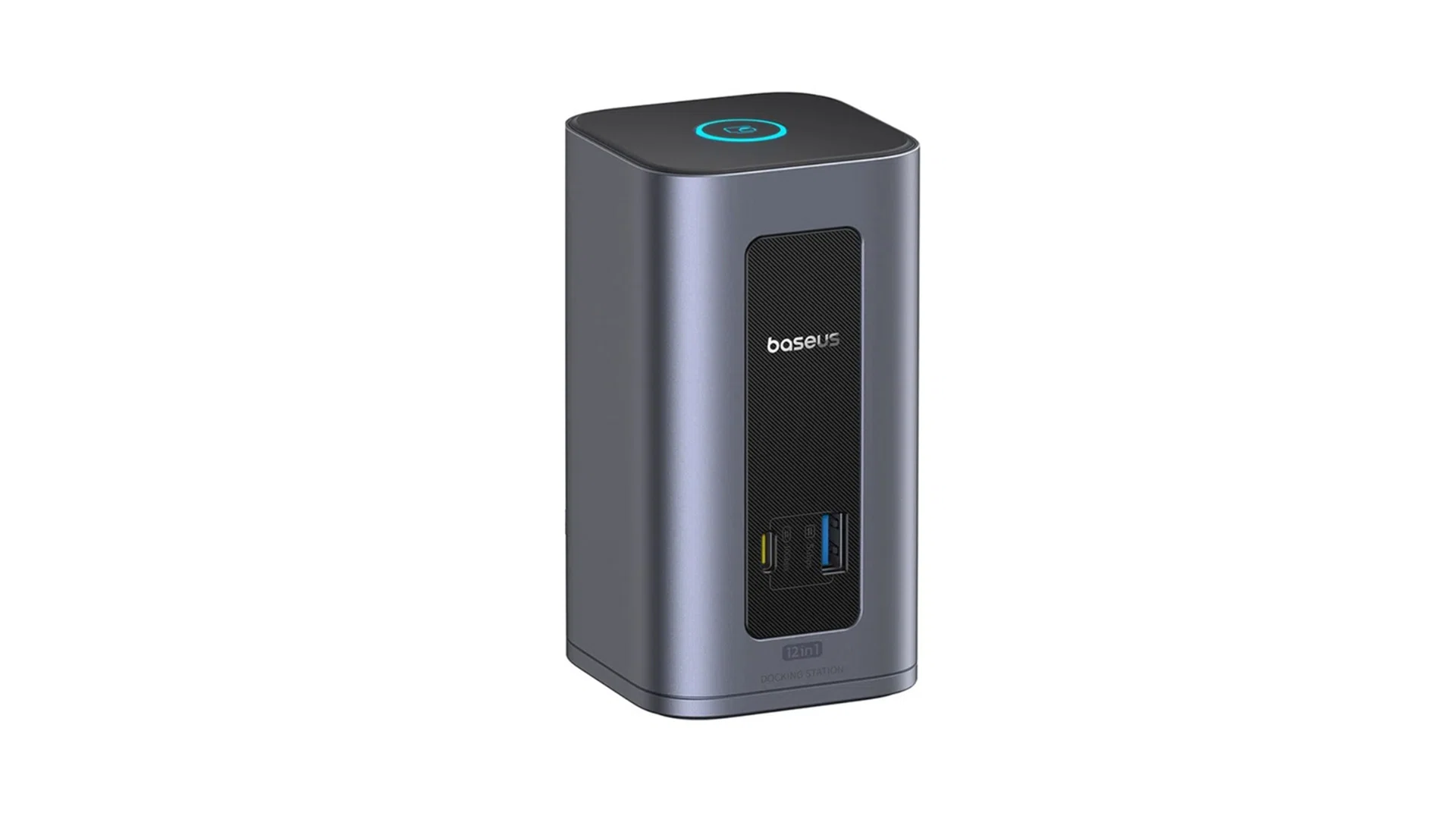
Baseus UnionJoy 17-in-1 Triple Display Docking Station.
Image: Baseus
This Baseus 17-in-1 USB-C hub, as the name suggests, runs the gamut of ports that include USB, display output, SD card storage and ethernet. It also supports USB Power Delivery so you can charge devices like the laptop you’ve connected the hub to, your phone or TWS earbuds (though it does come with a caveat, which we’ll get into later).
It also looks pretty stylish, coming with a vertical stand. While this might mostly be a cosmetic design feature, it does make cable management easier, as cables won’t be running across the desk and are thus easier to bundle up.
A myriad of USB ports
The Baseus 17-in-1 USB-C Hub could classify as a docking station, as it has a total of 9 USB ports, with 7 of them usable for data transfer. This includes 5x USB-A ports, three of which are the slower USB 2.0 (480Mbps) and two of which are the faster USB 3.0 (5Gbps). Just a note, USB 3.0 is an older term; it’s marketed today as USB 3.2 Gen 1, but know that both labels share the same 5Gbps speed.
Read Full Article At Source