We are getting to the business end of the competition for Game of the Year at the 13th Game Awards, set for Dec. 10; with only a couple of exceptions, most of the key competitors are out there. And it has to be said that the likelihood of anything emerging to stop Grand Theft Auto 6 from sweeping the night looks increasingly slim, even though Rockstar’s game is cutting things fine, in terms of the jury having time to play and consider it. But a great many potential spoilers, like Marvel’s Wolverine, have flamed out or underwhelmed in what is turning out to be a much weaker year than it looked on paper. Still, that leaves room for some unexpected and exciting nominees.
At this point, we have a clear idea of what to expect from The Game Awards’ voting body, which is composed of a wide range of international games media (Polygon included), with a 10% contribution from fan voting. There are a number of strong indicators for what will perform well in the Game of the Year category. A high Metacritic rating (preferably over 90) is a must; role-playing games and action-adventures are strongly favored, as are games with strong narrative elements; indie and multiplayer games struggle harder for recognition than AAA single-player adventures. We used these metrics to correctly predict last year’s winner, Clair Obscur: Expedition 33, and the 2024 winner, Astro Bot. In 2025, we also predicted all six GOTY nominees and correctly called 20 other categories.
Below, you’ll find our predictions for the most likely nominees, of which there are six each year, for Game of the Year 2026 — taken only from games that have already been released (or made available for review). Unlike the film industry, where most titles are known quantities well in advance, you never really know what kind of impact a video game will have, or how good it will be, until it’s out (and release date slippage is much more common, too). We’ll update these rankings throughout the year as new games are released. We’ll also list some likely upcoming contenders and some of the 2026 GOTY race’s dark horses, too.
1
Resident Evil Requiem

Why it could win: Resident Evil is a reliable contender at The Game Awards, with three GOTY nominations since 2019, and many more in other categories. Requiem combines the fan appeal of the remakes with the freshness of a new entry, and blends their gameplay successfully, too. It’s slickly produced, digestible, thrilling, with both global appeal and a serious side: a perfect Game Awards GOTY contender.
Weaknesses: Requiem‘s critical reception was very good overall, but perhaps a tiny bit soft to be a true GOTY contender — it sits in the high 80s on Metacritic and OpenCritic. How well it fares in the long run will depend on the strength of the competition, but for now, it’s in the lead.
Momentum (holding steady): Potential challengers to Requiem‘s status as pack leader just keep falling by the wayside. Nothing else released this year combines critical acclaim with a perfect Game Awards genre profile so effectively, and nothing else will until GTA 6 comes out. It’s a lock for a nomination.
Read Giovanni Colantonio’s full review of Resident Evil Requiem.
2
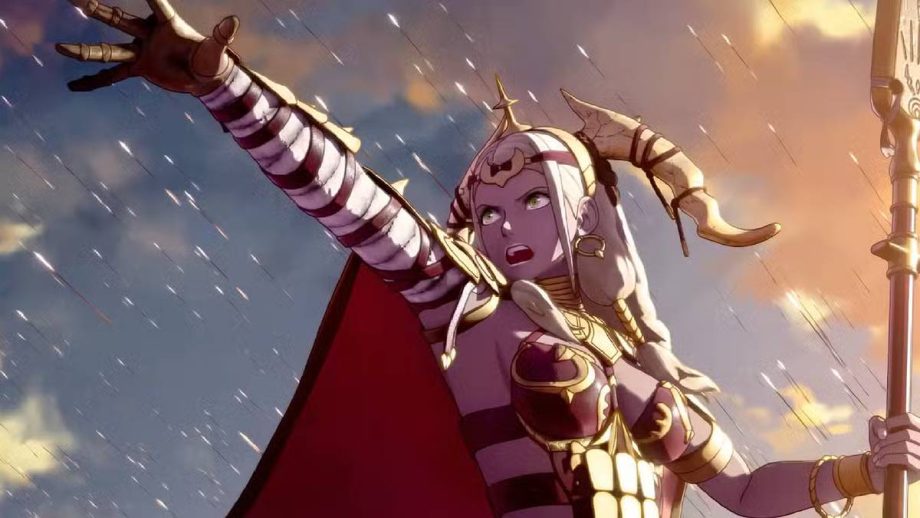
Fire Emblem: Fortune’s Weave

Why it could win: Reviews are very strong, at 89 on Metacritic. Critics love that Fortune’s Weave has united strong storytelling with refined combat in a Fire Emblem game for the first time in a long time, and it helps that it’s done so on an epic canvas. There’s growing recognition at the TGAs for deep and authentic Japanese-developed RPGs like Metaphor: ReFantazio, and there’s big fan support too: Fire Emblem: Three Houses was an unlikely winner of the Player’s Voice award.
Weaknesses: Fortune’s Weave is a tactics RPG, but the Game Awards jury always nominates Fire Emblem games in the Sim/Strategy category, which never overlaps with Game of the Year. If it is nominated, it will be the first strategy game ever to break into GOTY consideration. And as a Nintendo release, it may be eclipsed by the Zelda: Ocarina of Time remake.
Momentum (new entry): The initial wave of excited fan chatter certainly seems to support the critical acclaim for Fortune’s Weave, and it has succeeded in rising above the scrum of September releases.
Read Josh Broadwell’s full review of Fire Emblem: Fortune’s Weave.
3
007 First Light

Why it could win: IO Interactive’s debut James Bond game has made a confident splash with critics, earning a decent 87 Metascore. This kind of slick, cinematic action-adventure usually goes down well with the jury, while the inclusion of some of Hitman developer IO’s trademark “social stealth” gameplay lends it additional gamer cred.
Weaknesses: Licensed games very rarely get nominated for Game of the Year, and First Light‘s critical reception is a little soft, with some reviewers unimpressed by IO’s shift in a more commercial direction.
Momentum (📈 from No. 6): First Light‘s competition in the action-adventure field has fizzled, notably Marvel’s Wolverine, which is out of the running after a poor critical reception and poisonous discourse. That leaves Bond in a surprisingly solid spot. Control Resonant may yet outclass it, depending on its public reception.
Read Ford James’ full review of 007 First Light.
4
Control Resonant

Why it could win: Developer Remedy gets to have its cake and eat it at The Game Awards: It’s a purveyor of mainstream, cinematic action-adventures that retains a level of indie authenticity and cool. It’s usually rewarded with plenty of nominations, and both the first Control and Alan Wake 2 were GOTY nominees.
Weaknesses: A genre switch from tight shooter to open-world action-RPG has met with a pretty mixed response, and although Resonant‘s Metacritic rating is actually higher than the original Control’s (84 to 82), the sentiment seems decidedly cooler — perhaps because, as a sequel, it has lost the element of surprise.
Momentum (new entry): As I write this, we’re in the limbo between review embargo and release; given its middling rating, Control Resonant will need to land with players and start a conversation to stay in contention.
Read Willa Rowe’s full review of Control Resonant.
5
Big Walk

Why it could win: House House’s co-op puzzle adventure has a fantastic critical reputation — it currently sits at 91 on Metacritic, higher than any other game on this list. The developer has pedigree: Untitled Goose Game was a dark horse GOTY contender in 2019, and even won the overall award at DICE. It’s a refined design in a currently voguish genre. Co-op games go down well at The Game Awards (It Takes Two won in 2021). And there’s a good chance jury members have had a good time playing it together.
Weaknesses: As an online multiplayer game, best experienced with a group of friends, Big Walk requires time and social organization to experience properly, which may be tricky for many jury members.
Momentum (📉 from No. 2): Big Walk remains the top indie contender, but that’s only saying so much in a year when indie games have resolutely failed to break through. Although it sold well, it’s not clear if it’s viral enough to stay in the conversation.
Read Giovanni Colantonio, Julia Lee, and Johnny Yu’s full review of Big Walk.
6
Crimson Desert

Why it could win: An action-RPG with huge scope, variety, and amazing technical polish, Crimson Desert is exactly the sort of game that does well at The Game Awards. It sold extremely well globally, and it has the kind of passionate “outsider AAA” following that propelled Black Myth: Wukong to a GOTY nomination in 2024 despite mediocre reviews and also served Kingdom Come: Deliverance 2 well in 2025.
Weaknesses: It just didn’t review well enough. There’s no precedent for a game with a Metascore below 80 getting nominated for Game of the Year, and Crimson Desert sits at 77. Among its many weaknesses in the eyes of critics are story and game design, both of which the jury prizes highly.
Momentum (📉 from No. 3): Somehow, Crimson Desert is still the “outsider AAA” game to beat, after The Blood of Dawnwalker didn’t review as well as expected. But it is clinging on to its nomination by its fingernails. It could still be knocked out of the running by Dawnwalker or Phantom Blade Zero.
Read Marloes Valentina Stella’s full review of Crimson Desert.
GOTY 2026 dark horses

The Blood of Dawnwalker: This vampire RPG from key talent behind The Witcher 3 underwhelmed a little on release, and lives deep in its big brother’s shadow, but it’s going to be a Best Narrative contender and is a perfect Game Awards game in many ways.
Star Wars Zero Company: It would be unprecedented for one strategy game to breach the GOTY field, never mind two, but jury members who have stuck with Bit Reactor’s tactics game have universally fallen in love with it, and will be strong advocates for it.
Pragmata: Capcom’s endearingly old-school sci-fi action game has some strong sentiment behind it, and gameplay that’s innovative enough to register.
Mina the Hollower: Yacht Club’s action-adventure is a little too niche, too retro, and too hard to contend. But critics absolutely adore it, and it could still sneak in as the default indie in Big Walk‘s place.
Pokémon Pokopia: On review sentiment alone, Pokopia would be a lock for a nomination, but as a life sim and a Pokémon game it isn’t what we usually think of as GOTY material.
Upcoming GOTY 2026 contenders

Grand Theft Auto 6: The presumptive Game of the Year looks like a dead cert… as long as it makes its release date, which is only days before The Game Awards’ eligibility deadline.
The Legend of Zelda: Ocarina of Time: Remakes are rarely considered worthy by the jury, but Nintendo’s lavish remounting of what many consider to be the greatest game of all time will surely be the exception that proves the rule.
Phantom Blade Zero: With Crimson Desert on its last legs and The Blood of Dawnwalker looking wobbly, the “real gamers’ game” lobby are pinning their hopes on this slick-looking Chinese action-RPG.
Gears of War: E-Day: With so many mainstream action games and shooters flaming out of the race in 2026, there’s still room for The Coalition’s dumb blockbuster to sneak in.
The Duskbloods: Still technically due for release in 2026, FromSoftware’s Switch 2 multiplayer game looks likely to be delayed into 2027 (or miss the eligibility window) after a difficult beta test. But there’s just a chance it can still be the wildest of wild cards.
Read Full Article At Source