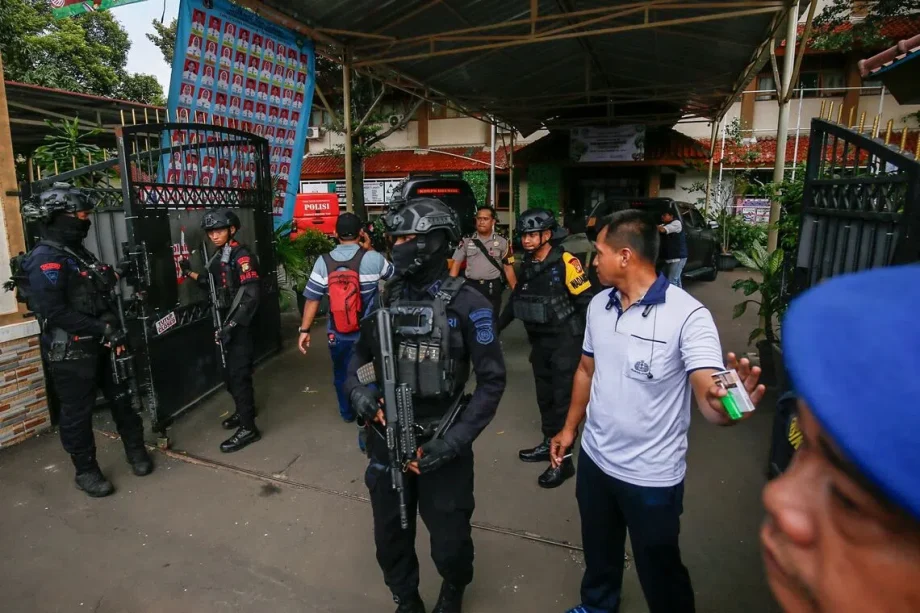
JAKARTA/MANILA/KUALA LUMPUR/BANGKOK – A group of teenagers in Indonesia watched school shootings online, sought out images of graphic violence and followed notorious mass killers on the internet. Then some began planning attacks of their own.
In October 2025, Indonesia’s counter-terrorism unit Densus 88 linked 70 young people across 18 provinces to such networks, with 20 preparing attacks – mainly on schools – using replica firearms, knives and bows.
Some had detailed plans to blow up classrooms, attack teachers, or sabotage cameras, while one filmed a pipe-bomb tutorial. Yet, they lacked clear political or religious ties, with their attraction to violence preceding any ideology.
The cases highlight a growing challenge across South-east Asia: how to identify and intervene when young people are moving towards violence even when they may have no terrorist recruiter, organisational affiliation or even a coherent ideology.
Singapore’s latest terrorism threat assessment by its Internal Security Department (ISD), released on Sept 10, warned of an increasingly diverse extremist landscape. Young people were exposed to influences ranging from ISIS propaganda to far-right extremism, mass-shooter culture and nihilistic violent extremism (NVE), the report said.
The challenge is increasingly regional. Recent cases in South-east Asia have revealed young people encountering overlapping extremist influences and pathways to violence online. The recent violence in Thailand has also highlighted the difficulty of distinguishing extremism from other troubling youth behaviour.
Experts said these pathways are testing counter-terrorism systems built to tackle ideological radicalisation and groups such as Jemaah Islamiyah and ISIS, while putting parents, schools and counsellors on the front line of spotting warning signs.
Such threats must be taken seriously, as they have the potential to cause incidents that can kill people and damage property, they warned.
Alif Satria, a research fellow at the S. Rajaratnam School of International Studies (RSIS), highlighted the influence of TCC, or True Crime Community. It refers to an online subculture centred on real-life violent crimes and their perpetrators.
“The fact that these young people who are influenced by TCC and mass-shooter culture can be radicalised enough to the point of being willing to commit violence definitely means that we should not take this threat lightly,” said Alif.
When violence comes before ideology
For decades, violent extremism in Indonesia and much of the region was closely associated with militant Islamist organisations, giving the authorities familiar markers such as ideology, recruiters and organisational ties.
But newer cases do not always follow that pattern. A September report by the RSIS’ Counter-Terrorist Trends and Analyses journal found that some Indonesian children linked to TCC had no clear political or religious agenda.
Instead, investigators found young people moving between content involving school shootings, serial killers and graphic violence, with some discussing or expressing admiration for notorious mass attackers.
A’an Suryana, a visiting senior fellow at the ISEAS – Yusof Ishak Institute, said the pathways to such violence could vary widely, from misguided religious teachings and household grievances to violent online subcultures. Gaps in supervision at home and in schools could leave vulnerable children harder to spot, he said.
Singapore’s experience shows how these influences can also converge. A 14-year-old detained under the Internal Security Act (ISA) in June had plotted a mass stabbing attack at his secondary school.
He supported ISIS, but also subscribed to seemingly opposing aspects of far-right extremism. Additionally, he idolised mass shooters, including white supremacist killer Brenton Tarrant and the perpetrators of the 1999 Columbine high school attack in the US.
The teenager, who had encountered Roblox video games recreating school shootings before seeking more information about the attacks, eventually drafted a 21-page manifesto detailing plans to stab non-Muslim teachers and students at his school.
His case came amid a sharp increase in youth radicalisation cases in Singapore. Six of eight new ISA cases in the past year involved those aged 20 or younger, while the number of youth cases almost quadrupled from four between 2017 and 2021 to 15 since 2022. Of the 23 youth cases dealt with under the ISA since 2015, 12 had planned attacks in Singapore.
Read Full Article At Source