This is an IGN opinion piece from Matt Purslow, who loves RPGs both on the tabletop and in video game form. He appreciates any game that has an interesting take on the evil within, probably because his first ever RPG character was the son of the god of murder.
My sword slices through the final soldier. As his body hits the forest floor, my work here is done: I have saved two innocent men from being marched to the draining camps. Ambrus, the vampire that rules over this region of Vale Sangora, is rounding up civilians and bottling their blood to create a stockpile of sustenance. It’s my job to disrupt all that, and this latest round of vigilante slaughter is part of that task. These men will not be drained today.
Well, at least not by Ambrus’ troops.
You see, I’ve made the poor decision of conducting this mission at night. When the moon rises, I become a vampire myself, and while that grants me a suite of helpful abilities, such as being able to turn into a wolf and walk up walls, it also means I need to feast on blood. And, well, after all that slaughter, I’m pretty hungry.
As the two men thank me for my heroics, my regular dialogue choices are replaced with “Give in to the hunger”. I resist, choosing the only option that will push forward the conversation. One of the men promises to give me a suitable reward for saving his life. All my response options have been overridden by the hunger. I refuse to select one. The fangs come out anyway. So much for saving these men from being drained.
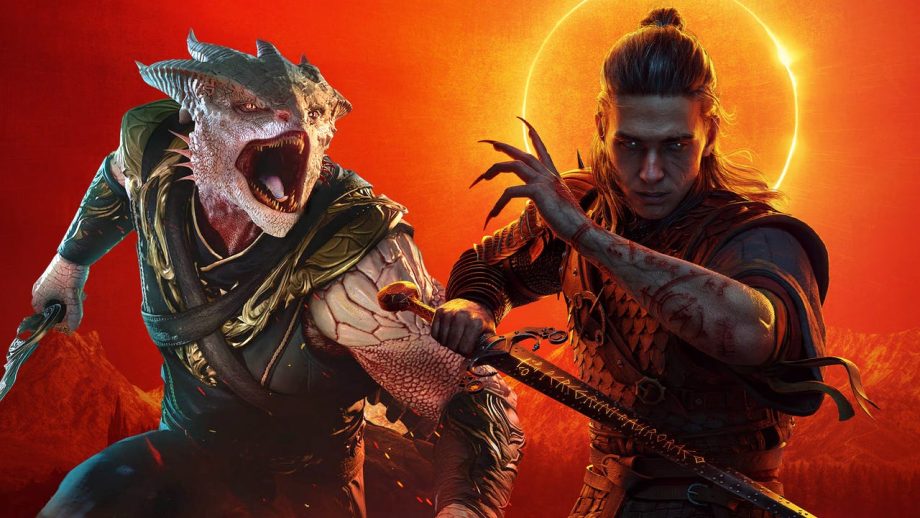
In The Blood of Dawnwalker, being a vampire truly is a curse. Protagonist Coen is sired in the story’s early hours, but it’s an imperfect transformation; during the day he remains a human, but at night the vampirism takes over. Regular health-restoring items like food and water become impossible to palette, and so only blood can repair his wounds. But the red stuff isn’t just a nice-to-have; it’s a necessity. An addiction. And so if you let Coen’s HP linger in the bottom section of his health bar, where it flashes like a warning beacon, you risk the hunger taking over. When you enter conversations, dialogue options are replaced by “Give in to the hunger”. Resist too long, and Coen will chow down on whoever is in front of him… regardless of how important they are to the plot. Yes, you can accidentally kill anyone and everyone, from random civilians to major quest-giving NPCs. Never before has it been so important to keep your belly full.
Coen is far from the only “monster” protagonist in RPGs. Obsidian Entertainment is fascinated by the idea, allowing you to murder most NPCs in its The Outer Worlds duology and Fallout: New Vegas, as well as building an entire campaign around the idea of evil in Tyranny. But Coen feels like an interesting reflection of the Dark Urge, Baldur’s Gate 3’s optional origin story that casts you as a depraved serial killer. As the Dark Urge, you’re given additional layers of choice that allow you to revel in your grisly nature – the most famous of which is probably being able to tear off the hand of wizard Gale when you first meet him, killing the potential companion before he can be recruited.
Like Baldur’s Gate 3’s most sinister origin, Coen quite literally has a dark urge that pushes him to do unspeakable things. But while these characters are reflections of each other, their symmetry is warped. Coen’s urge is systemic – there are conditions that, when met, will trigger his uncontrollable hunger, which can disrupt the decisions you’ve made. The Dark Urge, meanwhile, layers additional choices into Baldur’s Gate 3 that allow you to author your own story of a serial killer navigating the tentacled apocalypse. These two approaches to choice create two very different takes on a similar idea.

Read Full Article At Source