Word on the street is that Apple is working on a dramatic redesign of the MacBook Pro. There are whispers of a thinner, lighter design; a new OLED display; and possibly touch controls. Some believe it will arrive at the end of this year, so why is Apple releasing new versions of the 14 and 16-inch MacBook Pros now? They have new chips, that’s why.
Let’s cut to the chase. The new M5 Pro and M5 Max MacBook Pros that Apple announced last month are spec-bump updates. The laptops themselves are largely unchanged, which means they retain their fantastic Liquid Retina XDR displays, Thunderbolt 5 ports, SD card readers, and more. The significant changes are under the hood, which you can’t see, and they are the new M5 Pro and M5 Max chips, better connectivity, and faster storage.
Introducing M5 Pro and M5 Max
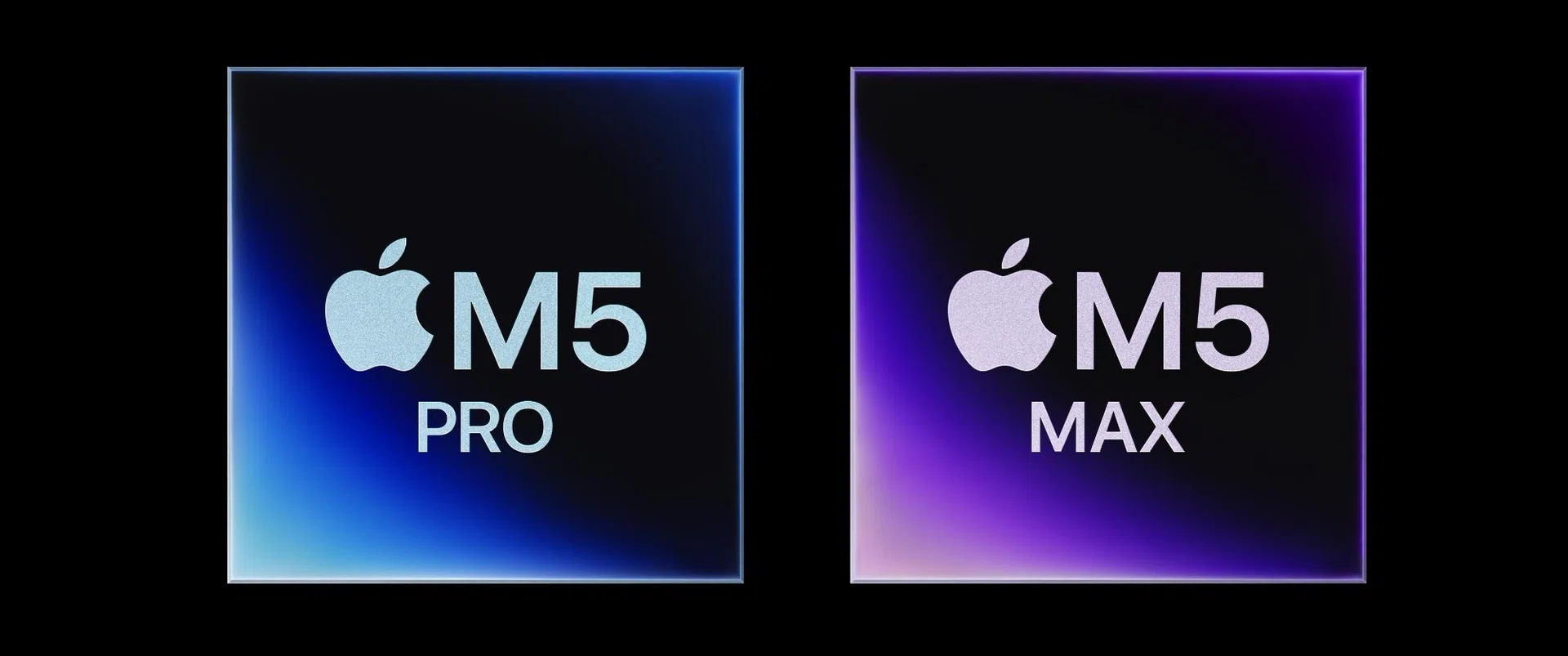
Meet Apple’s new chips, the M5 Pro and M5 Max.
Photo: Apple
One key reason why you might want this MacBook Pro is because of Apple’s new M5 Pro and M5 Max chips. These are vastly different chips from their predecessors because they are built using a new architecture and they possess a new type of core.
To start, the M5 Pro and Max chips are built using Apple’s new Fusion Architecture. To put it briefly, Apple is connecting two heterogeneous dies using a low-latency, high-bandwidth die-to-die interconnect to form a single SoC. Crucially, this allows Apple to improve multi-threaded CPU performance and enhance GPU performance in a way that is scalable and efficient. If this sounds familiar, it’s because both Intel and AMD use a similar approach that they call “chiplet architecture”.

The display uses a mini-LED panel and looks fantastic. This has the nano-texture finish, which is quite effective at reducing reflection and glare.
Photo: HWZ
With these chips, Apple is also changing the nomenclature of its cores and introducing a new type of core. What used to be known as performance cores are now called super cores, and in its place is an all-new type of performance core. This new performance core is built using a unique microarchitecture designed for delivering great multi-threaded performance, while maintaining low-power consumption for lightly-threaded workloads. The goal is to enhance the multi-threaded performance of the M5 Pro and Max chips.
On the subject of cores, it’s interesting to see that Apple has changed up the core configuration of the M5 Pro and M5 Max. These new chips have a lower number of higher-performance super cores, but make up for it with more performance cores. The M4 Pro and Max, on the other hand, prioritise the higher-performance performance cores over efficiency cores. What’s also worth pointing out is that the top version of the M5 Pro has the same CPU core configuration as the M5 Max. This way, you are not losing out on CPU performance at all if you opt for an M5 Pro. They differ only in GPU core count – the M5 Max has more GPU cores.
Take a look at the table below:
|
Chip |
CPU cores |
GPU cores |
Memory bandwidth |
|
M5 Pro |
15 (5 super, 10 performance) |
16 |
307GB/s |
|
M5 Pro |
18 (6 super, 12 performance) |
20 |
307GB/s |
|
M5 Max |
18 (6 super, 12 performance) |
32 |
460GB/s |
|
M5 Max |
18 (6 super, 12 performance) |
40 |
614GB/s |
|
M4 Pro |
12 (8 performance, 4 efficiency) |
16 |
273GB/s |
|
M4 Pro |
14 (10 performance, 4 efficiency) |
20 |
273GB/s |
|
M4 Max |
14 (10 performance, 4 efficiency) |
32 |
410GB/s |
|
M4 Max |
16 (12 performance, 4 efficiency) |
40 |
546GB/s |
These chips also feature higher memory support, greater memory bandwidth, and faster storage. The M5 Pro now supports up to 64GB of unified memory (up to 48GB) and has a maximum memory bandwidth of 307GB/s (up from 273GB/s). And as for the M5 Max, it still supports a maximum memory of 128GB, but maximum bandwidth is now up to a whopping 614GB/s (up from 546GB/s.
Hopefully, you can see that the M5 Pro and Max chips are more than just mere updates over the M4 Pro and Max. Apple has carefully redesigned them to better meet the needs of its users. To know more about the M5 Pro and M5 Max chips, I urge you to read my interview with Apple below.
Faster storage and connectivity
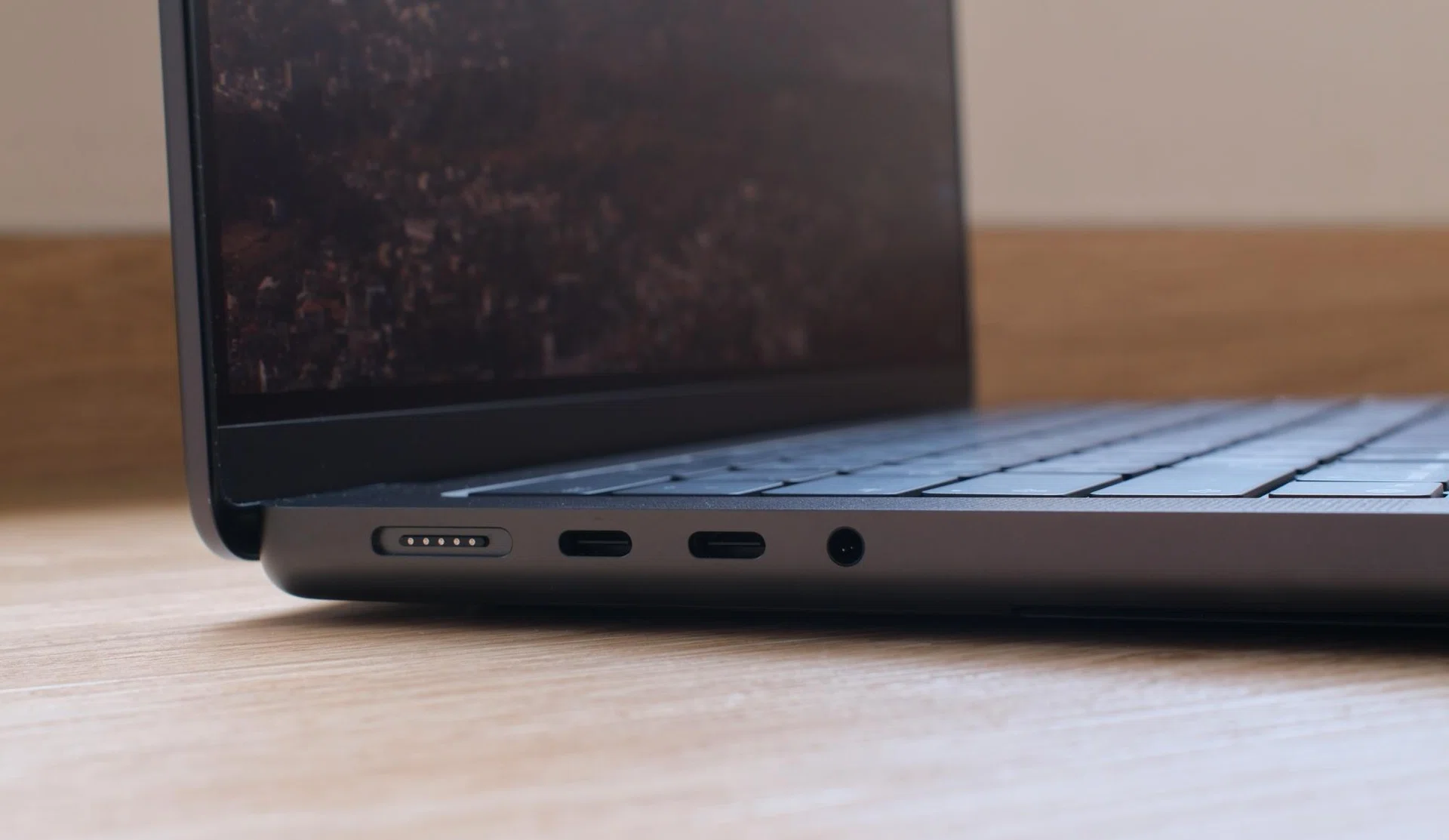
These MacBook Pros have three USB-C ports and they all support Thunderbolt 5.
Photo: HWZ
Thanks to a new custom storage controller and firmware, the M5 Pro and Max MacBook Pros now have even faster storage. The SSDs in them now have read and write speeds of up to 14.5GB/s. I ran tests using Blackmagic’s storage benchmark utility and managed around 12.5GB/s on the read and write tests, which is twice as fast as the old M4 Max MacBook Pro. One thing to note is that my M5 Pro and M4 Max MacBook Pros both came with 4TB of storage.
Connectivity has been improved, too, because these laptops get Apple’s N1 custom networking chip. This means support for both Bluetooth 6 and Wi-Fi 7. This means a maximum wireless data transfer rate of up to 2.4GB/s as long as you pair it with a compatible Wi-Fi 7 router. This is great because the lack of Wi-Fi 7 support was something that was lacking in the last MacBook Pros.
Performance benchmarks

You can tell it’s a new M5 Pro or M5 Max MacBook Pro by looking at the keyboard. Notice how the tab, caps lock, and shift keys now only have glyphs on them and no text?
Photo: HWZ
I received 14-inch versions of the M5 Max and M5 Pro for testing. The M5 Max has 18 CPU cores, 40 GPU cores, 128GB of memory, and a 4TB SSD. The M5 Pro also has 18 CPU cores, but 20 GPU cores, 64GB of memory, and a 4TB SSD. Spec’ed as such, the M5 Pro system is S$5,699, while the M5 Max system is – wait, for it – S$8,249.
Looking at the benchmark results in the gallery below, it’s clear that the Fusion architecture and new performance cores have yielded significant benefits, particularly when it comes to multi-threaded workloads.
In Geekbench 6’s multi-core workload, the M5 Max and even the M5 Pro were about 13% and 9% faster than the M4 Max, respectively. What’s remarkable is that the M5 Pro’s and Max’s multi-core score was greater than even the M3 Ultra’s, which has a whopping 32-core CPU. The new performance cores are doing their job.
In terms of GPU performance, the M5 Max has double the number of GPU cores compared to the M5 Pro, and it shows. On Geekbench 6’s Compute workload, it was over 64% faster. The M5 Max was also over 18% faster than the M4 Max. This advantage translates to gaming, too. The M5 Max was over 42% faster on Cyberpunk 2077 and 35% faster on Assassin’s Creed.
These performance gains don’t seem to have impacted battery life negatively, either. Apple claims battery life should remain the same, and in my experience, I found that to be true. I could easily get through an entire day of work with battery to spare with both laptops.
Final thoughts and buying advice

These laptops are expensive, but then they are also very powerful and capable.
Photo: HWZ
The M5 Pro and Max chips are impressive in that they offer noticeable performance gains over the M4 Pro and M4 Max, which were already very powerful chips. And the fact that Apple has retooled them so comprehensively shows how serious they are about eking out every last bit of performance and efficiency.
The rest of the laptop remains irreproachable. The mini-LED display is top-notch, as is the overall build quality of the laptop. Connectivity is fantastic thanks to Thunderbolt 5 ports, an SD card reader, and added support for Wi-Fi 7. Along with its breathtaking performance, if you are in the market for a high-end MacBook and have the budget, these new MacBook Pros will be fantastic purchases.
Speaking of budget, these are expensive laptops. The 14-inch M5 Pro MacBook Pro now starts at S$2,999 – up from S$2,749. If you need a bigger display, the 16-inch M5 Pro MacBook Pro starts at S$3,649 – up from S$3,499. And as usual, these prices start to climb quickly once you start adding memory and storage. Remember, both our test units cost well over five grand.
Considering their costs, my buying advice remains the same. If you already own a MacBook Pro with Apple Silicon, ask yourself if you have already reached the limits of your system, and can these new chips improve your workflow? For the majority of our readers, unless you are dabbling in very serious creative or AI work, I’m guessing these laptops are excessive, and you may be better served by either the MacBook Air or even the MacBook Neo. Still, there’s no denying that the M5 Pro and Max MacBook Pros are very desirable laptops to have.
Note: You can find the new M5 Pro and M5 Max MacBook Pros on Amazon, Lazada, Shopee, and the Apple Online Store.