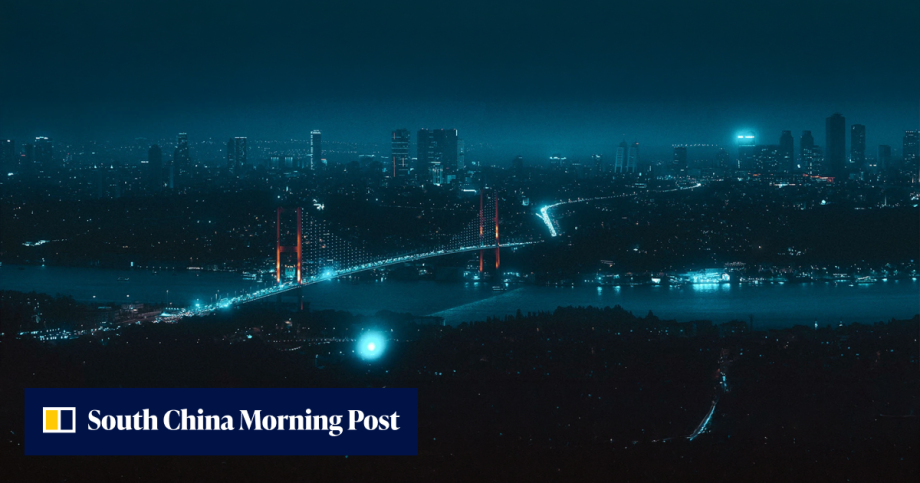
The Istanbul Equation: Why a Growing Number of Hong Kong Travellers Are Rethinking Their Route to the World

The Istanbul Equation: Why a Growing Number of Hong Kong Travellers Are Rethinking Their Route to the World


[The content of this article has been produced by our advertising partner.]

When Hong Kong architect David Leung flew to Barcelona last autumn for a conference, he did something unusual: he broke the journey in Istanbul for 36 hours. He had a hotel room waiting — complimentary, arranged through his carrier’s stopover programme — and used the time to visit Hagia Sophia, eat a slow lunch of meze overlooking the Bosphorus, and walk through the courtyards of Topkapı Palace. By the time he boarded his connecting flight, he felt he had visited two cities for the price of one.

“I used to think of a connection as dead time,” Leung says. “Now I plan for it. In fact, the longer the route you fly, the more you want a break in between.”
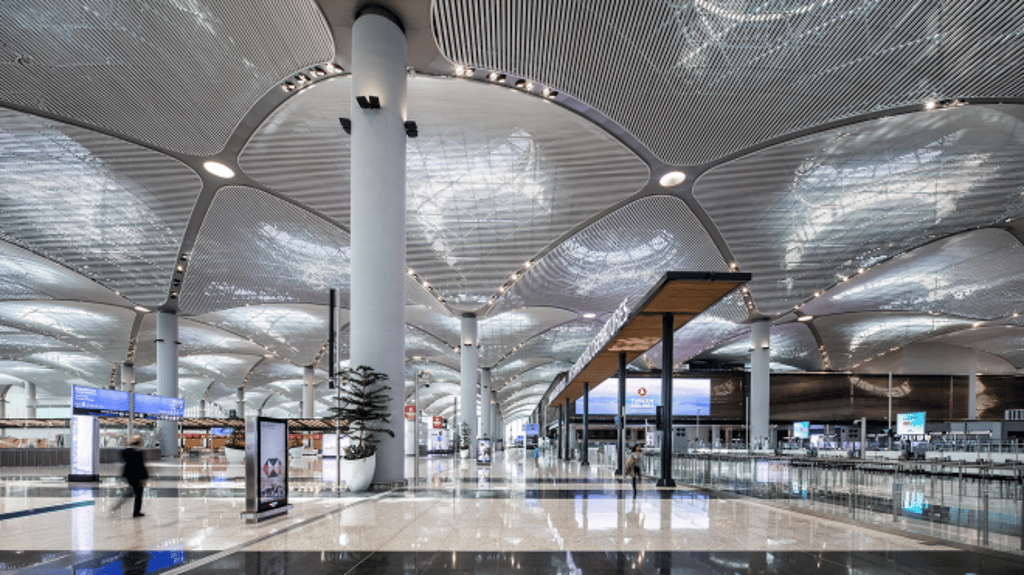
Leung is not alone. A growing number of Hong Kong’s business and leisure travellers are discovering what the data already shows: Turkish Airlines, which holds a Guinness World Record for flying to more countries than any other carrier — over 350 destinations across more than 130 countries — has turned its geographic advantage into something more than logistics. It has turned it into an experience.

The arithmetic is straightforward. Istanbul sits at the crossroads of Asia and Europe, a single, well-placed hub for long-haul travel between Hong Kong and the wider world. With a choice of morning and late-night departures from Hong Kong, travellers can reach Munich, Paris, London, Amsterdam, Zurich, and Athens with efficient connections — as well as destinations that are less commonly served from Hong Kong, such as Pristina, Sarajevo, Skopje, and Tbilisi.
For the city’s business community, this matters more than it might seem. A business traveller with meetings in Europe, the Middle East, Africa, and the Americas can build an efficient multi-stop itinerary around a single hub, rather than relying on multiple airlines and disconnected connections. A family planning a summer in the Mediterranean has options that extend well beyond the usual London-and-Paris circuit. The network doesn’t just connect — it simplifies.

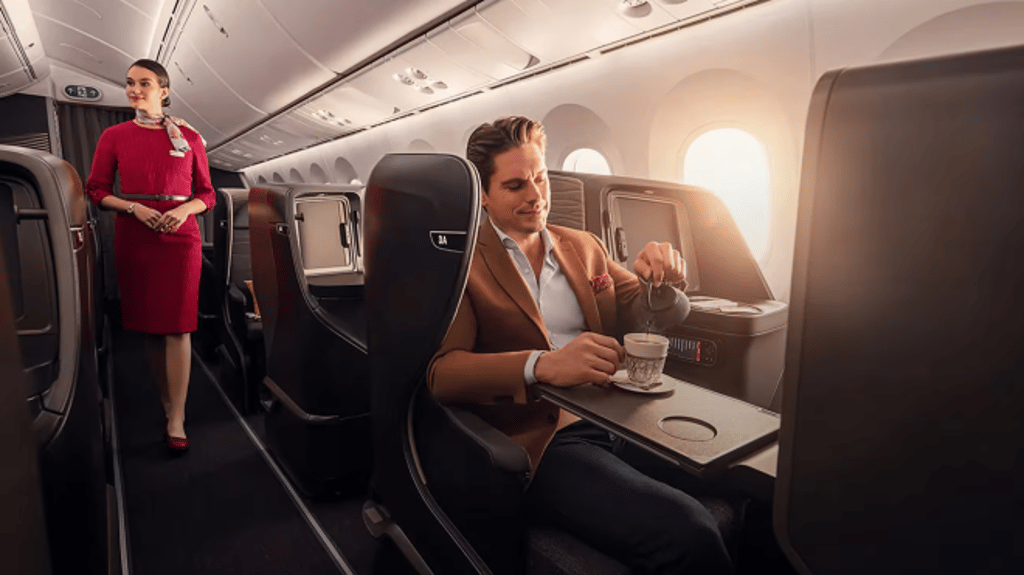
Business Class cabin — flatbed seat with dining service in progress (Turkish Airlines)

What happens above the clouds

The product itself has evolved considerably in recent years, something the industry’s arbiters have noticed. Skytrax has named the carrier the Best Airline in Europe year after year — most recently in 2025 — and has singled out its Business Class catering — menus rooted in Türkiye’s deep culinary tradition, where the line between home cooking and haute cuisine has always been porous. The airline also earned APEX’s World Class designation and top marks in Europe for in-flight entertainment and connectivity.
In Business Class, the experience begins before boarding: the Turkish Airlines Lounge at Istanbul Airport, with its open buffet, shower suites, and panoramic runway views, has become a destination in itself for frequent flyers. In the cabin, flatbed seats, an extensive entertainment library, complimentary and reliable high-speed Wi-Fi make the long-haul hours productive or restful — the passenger’s choice. Even in Economy, the attention to detail is notable: proper tableware, meals that reflect the airline’s culinary heritage, and a standard of service that reflects the warmth of Turkish hospitality across both cabins.

For Hong Kong’s frequent flyers, accustomed to benchmarking every product in their lives, it registers.

The stopover city — and a destination in its own right
But perhaps the most distinctive element of the Turkish Airlines proposition — and the one that generates the most word-of-mouth among Hong Kong travellers — is what happens on the ground.
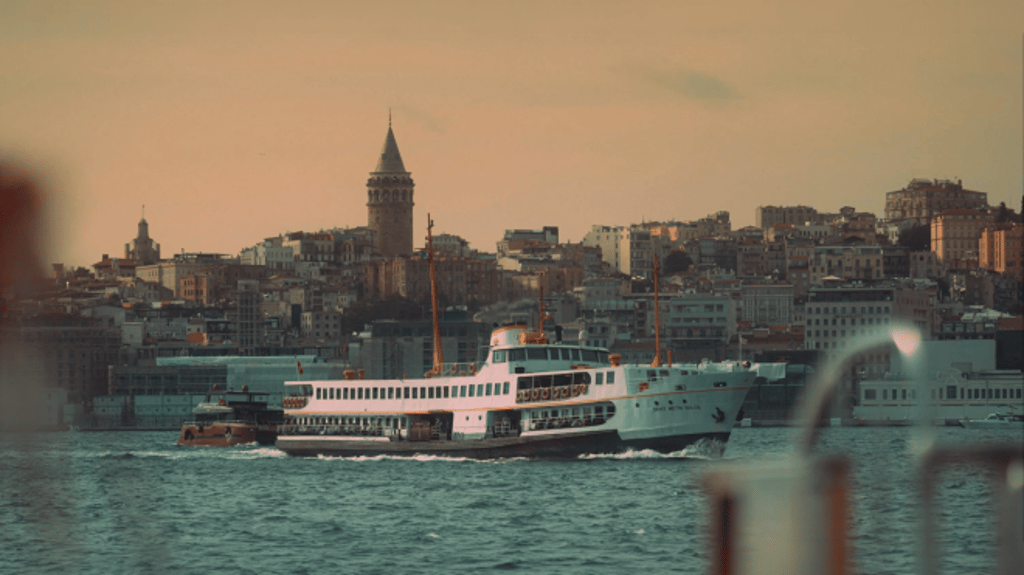
The Stopover in Istanbul programme offers eligible transit passengers complimentary hotel accommodation, transforming a routine connection into a brief urban immersion. The city, straddling two continents, offers the kind of density that Hong Kong residents instinctively appreciate: a centuries-old bazaar two kilometres from a contemporary art museum, a hammam dating to the Ottoman era within walking distance of Michelin-starred dining.
And Istanbul is only the beginning. Türkiye itself — from the lunar landscapes of Cappadocia to the turquoise coast of the Aegean, from the ancient ruins of Ephesus to the thermal terraces of Pamukkale — increasingly draws international travellers seeking destinations that combine history, natural beauty, and gastronomy in a single itinerary. For Hong Kong visitors travelling on long-haul journeys to Europe or beyond, a stop in Istanbul offers the opportunity to break up the trip, recharge, and experience another destination before continuing onwards.

Street-level Istanbul

Redefining the long-haul calculus

The shift is still emerging. Among those who have already tried the routing — particularly the business travel community and the growing cohort of experience-driven leisure travellers — the response has been overwhelmingly enthusiastic.

The airline’s Miles&Smiles loyalty programme, interoperable across the Star Alliance network, provides the practical scaffolding. But the real currency is less tangible: the sense that a journey to Europe or beyond can be more than a matter of getting from A to B — that the route itself can be part of the story.

Leung has already booked his next trip — in Business Class — through Istanbul. This time, he is staying two nights in a five-star hotel, complimentary, through the carrier’s stopover programme.


Read Full Article At Source

Share. Save. Don't Miss The Buzz: XFacebookRedditLINETelegramWhatsAppGmail

Leave a Reply