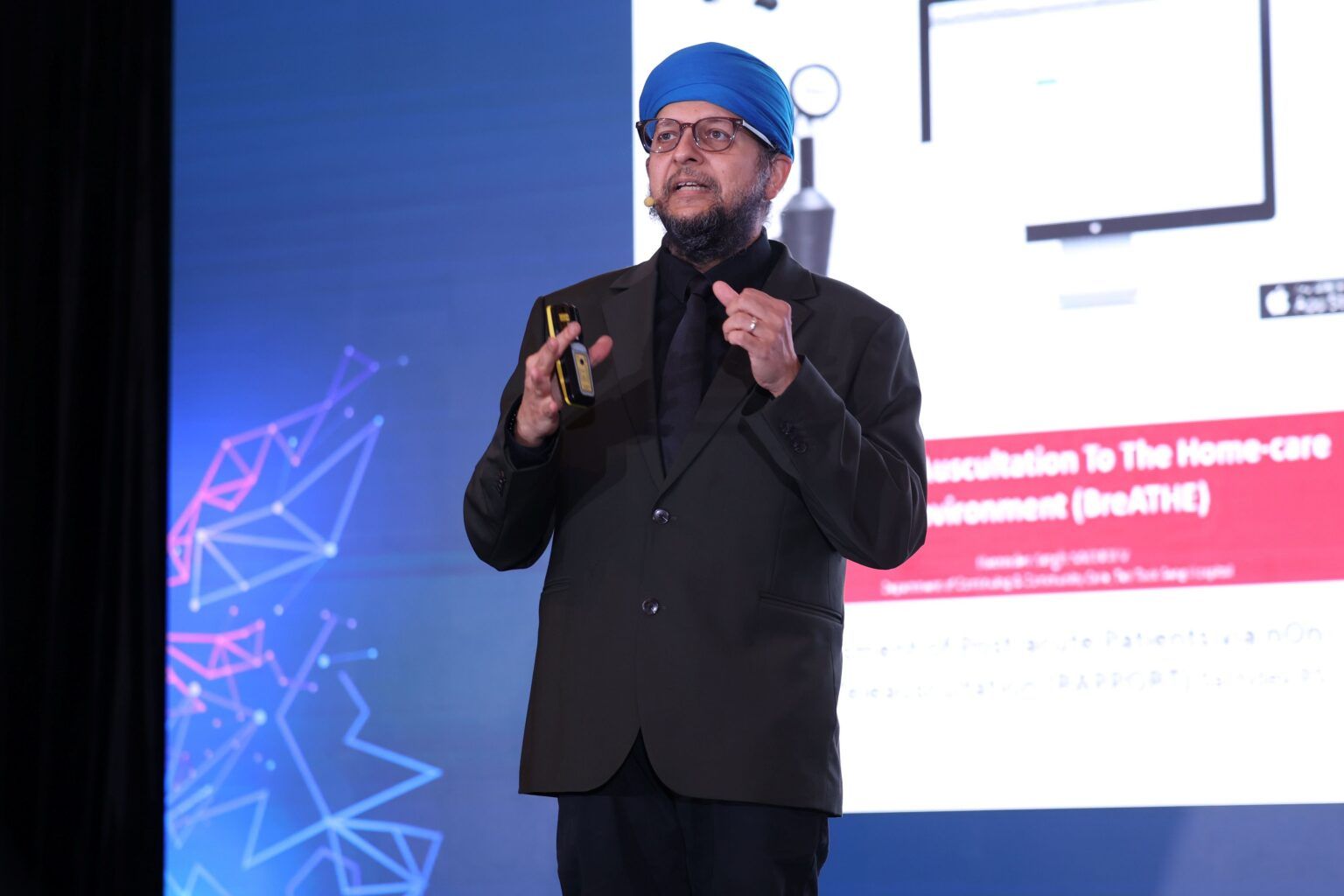
At HealthTechX Asia 2026 event in Singapore, Dr Ravi Sachdev, Chief Clinical Informatics Officer at Singapore’s Tan Tock Seng Hospital, outlined a vision for “24/7/365/360” healthcare.
This was a model that gives patients greater flexibility over how and when they receive care while empowering them to take a more active role in managing their health using easily available tech tools.
The concept centres on two key principles: care should be data-driven, and technology-enabled.
With virtual care, remote monitoring, artificial intelligence (AI), and connected devices, providers today do not have to rely solely on face-to-face encounters and are better positioned to deliver personalised and accessible services.
Virtual care as an experience, not just a tool
The term ‘virtual care’ is often associated with telemedicine or video consultations. But Dr Sachdev emphasised that virtual care is much broader.
“Telehealth is a tool. Virtual care is the experience, how the provider interacts with the patients,” he said.
Virtual care encompasses the entire patient journey, integrating technologies such as wearable devices, remote diagnostics, digital health platforms, and AI-supported decision-making.
The goal is not simply to replicate physical consultations online, but to redesign how care is delivered.
Singapore already possesses many of the building blocks needed to support this transformation, including high smartphone adoption, widespread broadband access, and growing familiarity with digital tools across all age groups.
The challenge, according to Dr Sachdev, is not whether patients can use these technologies, but whether healthcare providers offer opportunities for them to do so.
Evidence suggests that patients are ready.
Studies consistently show strong patient demand for virtual care, with 74 per cent of patients reporting that they are comfortable communicating with doctors using technology rather than in-person, and 67 per cent saying telemedicine increases their satisfaction with care.
Virtual-First Seamless Care model
One model gaining traction globally is virtual-first care (V1C), where patients have the ability to initiate care anywhere.
Read Full Article At Source