Most Apple events that I’ve attended are usually about new products – new Apple watches, iPhones or MacBooks. But the session I attended at Singapore General Hospital last week was a little different. There was no new iPhones or Macs announced. Instead, the focus was on how Apple devices are being used in the healthcare sector, and more importantly, how developers are building tools around the iPhone, iPad and Mac to make certain clinical tasks faster, more consistent, and even predictive.
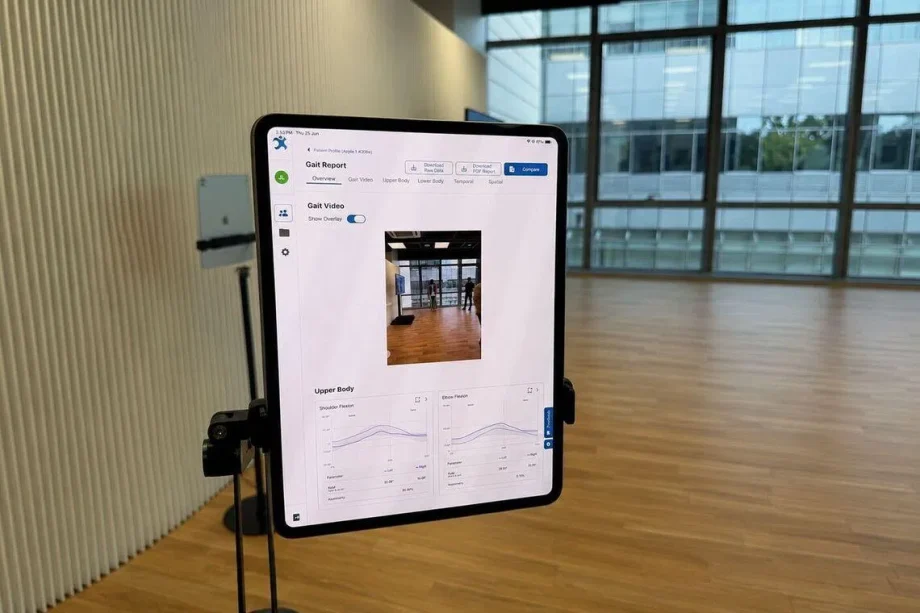
One of the apps that caught my eye was CareCam’s 3DGait, which runs on iPad Pro and uses the tablet’s camera, LiDAR scanner, computer vision and AI to analyse how a patient walks. It was probably the demonstration that made Apple’s healthcare pitch easiest to understand, because gait analysis is usually associated with specialised labs, body markers, sensors, or multi-camera setups. CareCam’s selling point is not just accuracy, but also accessibility and simplicity. Instead of requiring a dedicated lab filled with expensive equipment, 3DGait uses a single iPad Pro to capture a short walking assessment and generate movement insights that can help clinicians assess a patient’s mobility and fall risk.

The process is straightforward. A short walking video is captured on the iPad Pro, after which 3DGait generates movement data that clinicians can review – information stride length, cadence and stance time. CareCam is also exploring how video-derived movement data could support areas such as frailty assessment, stroke rehabilitation, neurological conditions and musculoskeletal care. These are areas where movement can say a lot about a patient’s condition or recovery, but where consistent measurement is not always easy to obtain outside controlled environments. By reducing the amount of specialised hardware needed, 3DGait could make movement analysis more accessible to clinicians and researchers who may not have access to a full gait lab.
Read Full Article At Source