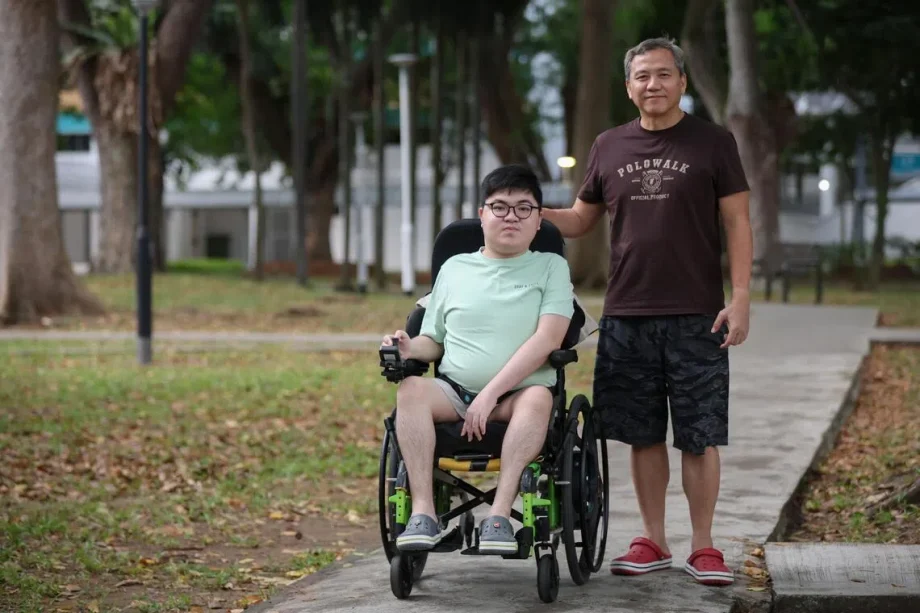
SINGAPORE – For one month in 2022, Michael Sim hit the books with his son, Aaron, who was doing his A levels.
Worried about his economics grade falling from B to C, the then 18-year-old had asked his dad to find him a tutor. The elder Sim did not do just that, but he also took leave and sat with Aaron during the online lessons to help reinforce his learning.
“It was not easy, especially because Aaron does not respond well to pressure. But we also had some great moments together, and it was especially fulfilling when he eventually went on to ace his paper,” says Sim, now 57.
Their father-son relationship has been tested more than most.
Aaron has Asperger’s Syndrome and muscular dystrophy, a genetic condition where muscles progressively weaken and waste away.
When The Straits Times requested an interview with Sim for a Father’s Day article, it was his son who persuaded him to take the spotlight.
“He’s done so much for me my whole life. It would make sense for more people to know about how much he’s helped me so far,” says Aaron, now 22 and a third-year undergraduate in computer science at the National University of Singapore.
Sim, who works in the financial industry, describes Aaron as a calm and composed child who always had a ready smile.
His wife Judy, 58, became a stay-at-home mother when Aaron was born. The couple also have a 24-year-old daughter.
Aaron did not speak in sentences until about age two and would not make eye contact when he talked, but his parents thought he was just a late bloomer.
When they sought help, a speech therapist said he might have Asperger’s, a high-functioning form of autism. Individuals with the condition typically find social interactions difficult and may have restricted interests or display repetitive behaviour.
Shocked, they sought early intervention.
During his early primary school years in Tao Nan School, Aaron had a shadow teacher who observed him in class and gave daily recommendations on how his parents could help him work on his social and communication skills.
With awareness of special needs conditions still in its infancy then, Sim remembers being called to the principal’s office several times over Aaron’s so-called disruptive behaviour.
Changes to class schedules and teachers stressed him. Aaron would then speak loudly and unintelligibly, which led to his classmates teasing him and an eventual meltdown.
During Chinese New Year celebrations in school, Sim made sure Aaron was at a safe distance before the lion dance performance started. The boy would otherwise break down from the loud beat of drums and clang of cymbals.
By Primary 3, Aaron, who had practised taekwondo since he was a pre-schooler, started behaving clumsily and often fell.


Read Full Article At Source