SINGAPORE – Trees are an integral feature of Singapore’s landscape, but the composition of tree species lining the country’s streets and parks has evolved over time.
The Straits Times looks at how species are selected for planting by the National Parks Board (NParks), as well as why some are being replaced.
More than 900 tree species are planted by NParks across streetscapes, parks and park connectors. Each has a role to play, such as improving connections between Singapore’s green spaces, said NParks’ group director for streetscape Oh Cheow Sheng.
“Species are selected for different purposes, including providing shade, visual relief, supporting biodiversity, and strengthening ecological connectivity across our green spaces,” he said.
NParks also engages in urban forest renewal efforts, which involves the selective replacement of trees and introduction of greater species diversity. As part of these efforts, species are carefully selected based on their ecological value and suitability to site conditions, said Oh.

This tree species is the preferred host plant for caterpillars of butterflies such as the common grass yellow.
PHOTO: PATRICIA YAP
Growing up to heights of 30m, this tree has green leaves with a waxy grey-green underside, and serves as the preferred host plant for caterpillars of butterflies such as the common grass yellow. Its flowers, which are usually deep red and faintly fragrant, are pollinated by insects.

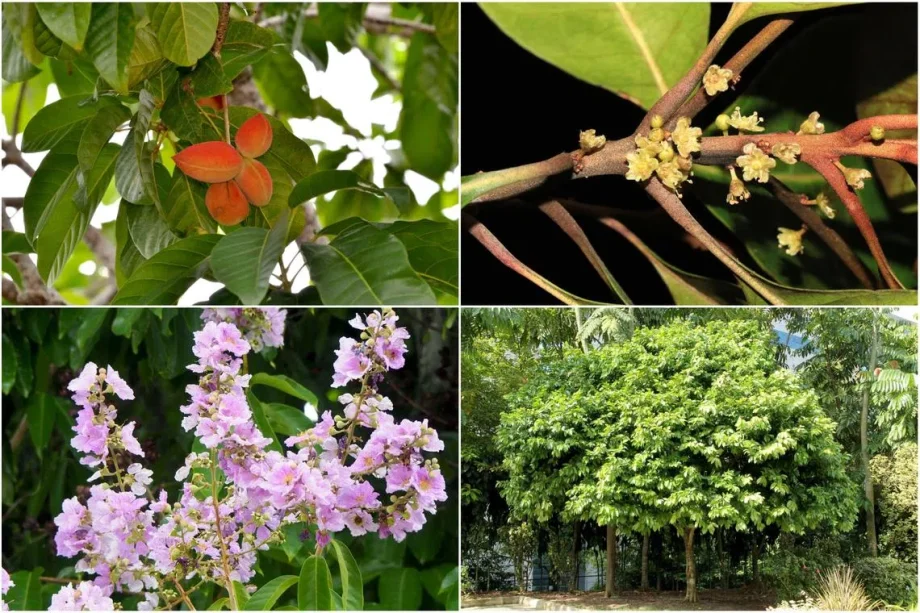
This tree species is a host plant for the common bluebottle, a species of swallowtail butterfly. Its fruits are eaten by birds.
PHOTO: ANG WEE FOONG
This tree produces tiny greenish flowers. When its fruits are ripe, they turn reddish and then black. The fruits are eaten by birds.
It is a host plant for the common bluebottle, a species of swallowtail butterfly recognisable for a bright blue band spanning its wings.

The flowers of this critically endangered tree species are pollinated by insects such as flies and beetles. Birds feast on the seeds of this native tree.
PHOTO: BOO CHIH MIN
Trees from this species can grow up to 35m tall, with trees producing fruits four to five years after planting. The flowers of this critically endangered tree species are pollinated by insects such as flies and beetles. Birds feast on the seeds of this native tree.

This tree species is often found in parks and large gardens because of its ability to tolerate roadside conditions and adapt to a wide range of soils.


Read Full Article At Source