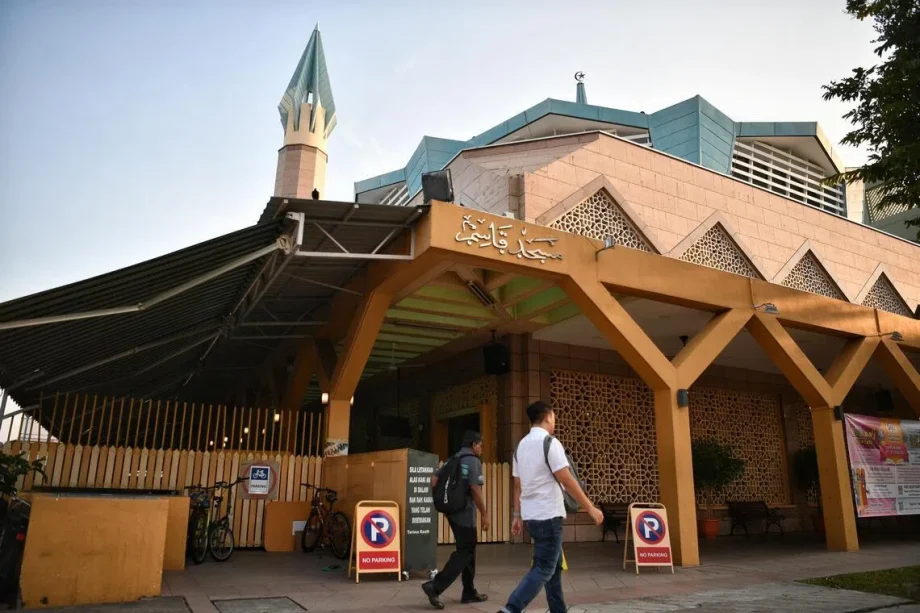
SINGAPORE – The granddaughter of a philanthropist who died in 1935 has lost her claim for income from Islamic charitable trusts (wakaf) he left, which included land he donated to build a mosque a century ago.
Fauziyah Mohd Ahbidin, a kitchen helper who is in her late 60s, had filed a lawsuit against the Islamic Religious Council of Singapore (MUIS) in 2019 to seek a declaration of her grandfather’s will, which she contended entitled her to two-fifths of the net income from the properties her grandfather had placed in wakafs.
Under Singapore law, a wakaf is a permanent dedication of assets by a Muslim for religious or charitable purposes.
The assets are legally vested in MUIS, which manages them to generate income that is distributed to beneficiaries. The original assets are preserved in perpetuity.
Fauziyah’s grandfather, Ahna Mohamed Kassim Ally Mohamed, had created wakafs for the establishment of a mosque known as Masjid Kassim and a burial ground known as Kubur Kassim.
A key issue in the case was whether the Indian Muslim merchant was a follower of the Hanafi sect or the Shafie sect of Islam.
A wakaf is generally irrevocable. But views are split under the Hanafi school of jurisprudence, with the minority view considering it theoretically possible to revoke a wakaf.
Fauziyah claimed that Kassim was a Hanafi, and that under the minority view, a wakaf may be varied.
In a written judgment on May 14, High Court Judge Mohamed Faizal found that the will was valid and that Kassim had intended to grant his son a two-fifth share of the income from the wakaf properties.
However, the judge also concluded that Kassim was a follower of the Shafie school of thought.
Under Shafie jurisprudence, a wakaf cannot be revoked or altered.
In rejecting Fauziyah’s claim that Kassim was a Hanafi, the judge highlighted a probate filing in 1962 where Kassim’s son – Fauziyah’s father – declared on oath that his father was a Shafie.
The judge added that even if Kassim was a Hanafi, Fauziyah’s bid to vary the wakaf would still fail.
He ruled that the majority view applies in Singapore for followers of the Hanafi sect.
“For reasons of doctrinal logic, reasonableness and context appropriateness, a Hanafi in Singapore cannot revoke or vary a wakaf previously dedicated,” said the judge.
The plots of land on which Kubur Kassim stood were compulsorily acquired by the Government in 1987 and are not part of the current claim.
Fauziyah had filed a separate lawsuit against the Government over these plots of land in 2019. The suit was discontinued in 2021.
The land involved in the case has evolved to consist of not only the mosque, but also the East Bay Gardens condominium as well as shop and office spaces at Wisma Indah, a mixed-use complex.
A check by The Straits Times of the latest MUIS annual report showed that the accumulated fund from the Kassim wakafs amounted to $23 million.
Read Full Article At Source