SINGAPORE – Nurul Izzah, 25, had a habit of doom-scrolling on her mobile phone at bedtime, often until the early hours of the morning.
The fourth-year marketing undergraduate at the Singapore University of Social Sciences said the routine started in polytechnic, when she no longer had to wake up early for school.
“I usually did my work until late at night, and after that, I’d participate in... bedtime procrastination and use my phone until maybe 3am,” she said. “It’s a bad habit, for which I’ve been nagged a lot by my parents.”
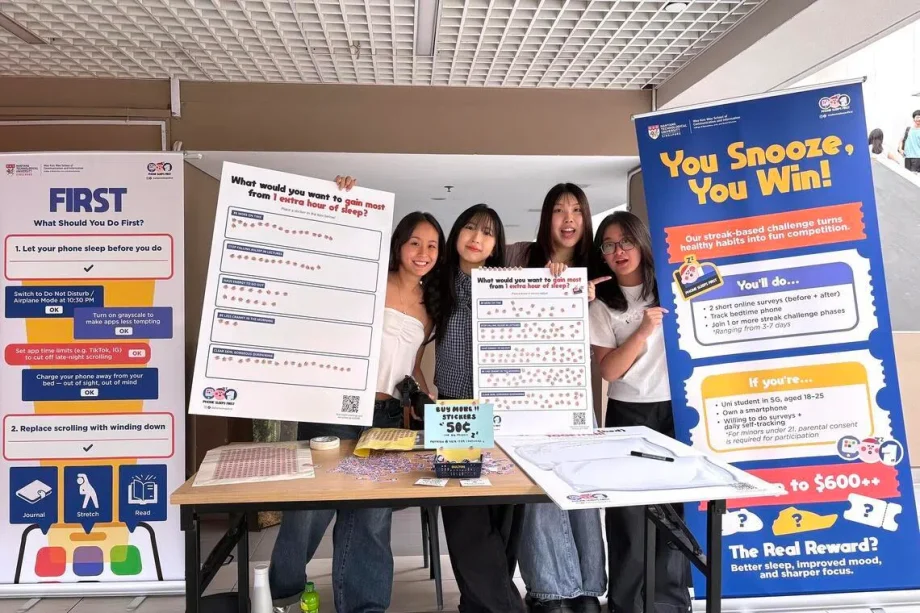
Izzah managed to improve her bedtime routine after joining an initiative organised by four final-year communication studies students from Nanyang Technological University (NTU) in October 2025.
She was one of 313 undergraduates from the six autonomous universities in Singapore involved in the “Phone Sleeps First” campaign, a final-year project to tackle late-night phone addiction among university students.
Numerous global studies have established a link between device use before bed and longer time taken to fall asleep. They also show that youth who use devices at night often do not get adequate high-quality sleep, and are more likely to feel tired the next day.
Participants in the NTU campaign took part in at least one of four challenge rounds, which lasted between three and seven nights each.
Before and after each round, they had to complete surveys about their sleep quality, daytime tiredness and phone use at bedtime.
During the challenge, they were encouraged to follow simple and practical tips to avoid phone use at bedtime.
These included keeping their phones away from their beds, switching on the “Do Not Disturb” mode that silences notifications, and engaging in offline activities like reading or journalling.
They also submitted phone screenshots of their device use during the designated sleep window of 10pm to 6am.

Read Full Article At Source