(This guide is Part 5 of 7 in our Sports Entertainment Upgrade Special.)
Sports fans are gearing up for a busy June, and this calls for having the right TV. The right TV is the difference between merely watching a game and feeling like you’re in the stadium. This guide for TVs and local viewing conditions lays out what really matters when picking a TV for big-match viewing, and the order of priorities is likely to surprise a few of you.
Motion handling: The most crucial factor for sports viewing
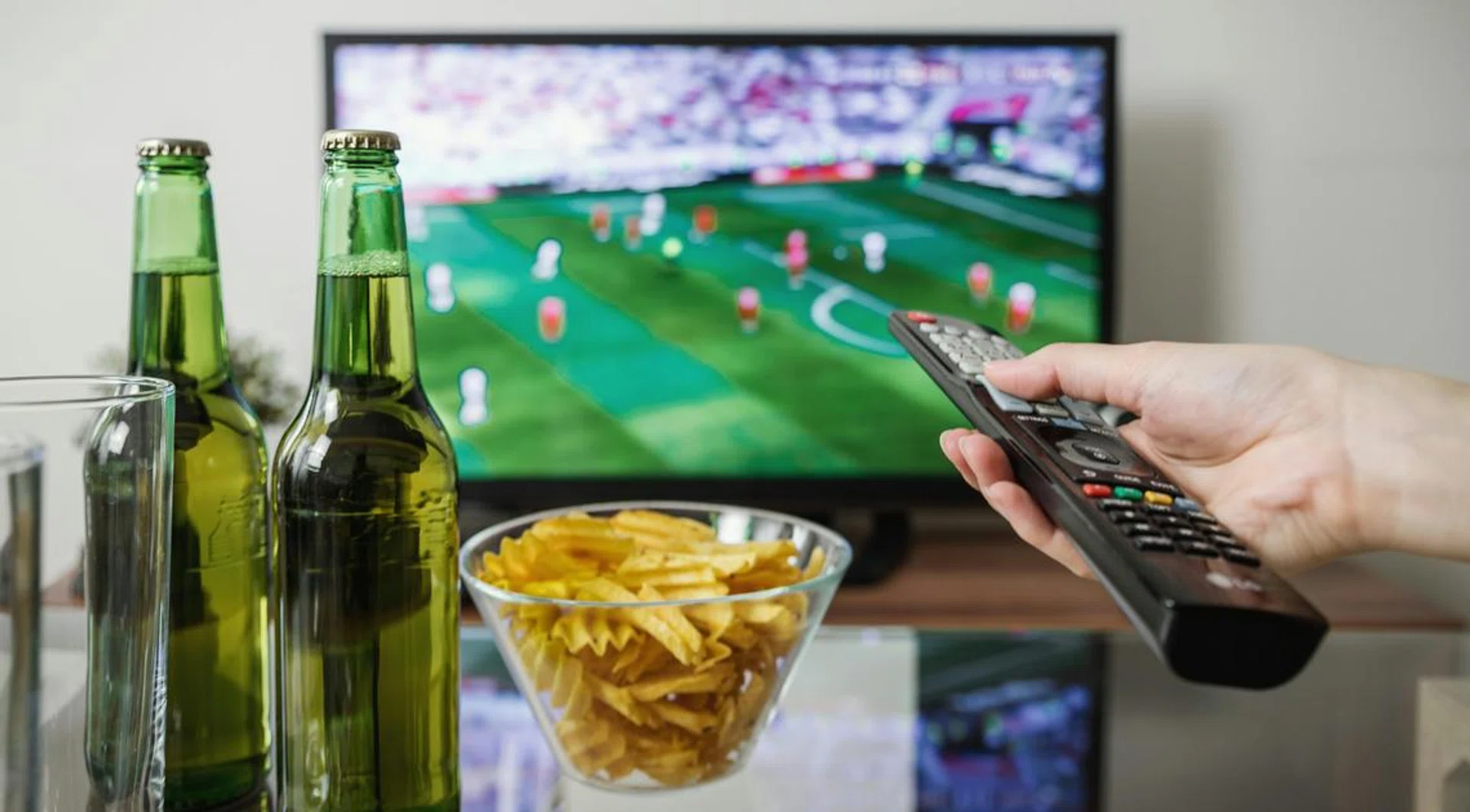
Motion blur can spoil your match experience.
Photo: Pexels
Fast-paced sports like football and basketball live or die by motion clarity. Poor motion handling leads to blur during quick passes, fast breaks or wide camera pans. Higher refresh rates reduced this and keeps player movement sharp, especially during the long horizontal pans that football broadcasts rely on.
A TV could have a great-looking demo reel in a store, but that did not mean it would handle a full-speed counter-attack, an NBA fast break or a goalkeeper launching a ball across the pitch.
That is why a 120Hz refresh rate or higher matters. It helps keep movement clean, particularly when the camera sweeps across the field or court. A low response time also helps, while motion interpolation, often listed as MEMC, smooths out movement, although some viewers prefer to tweak these settings rather than leave everything on maximum.
Buyers should look for:
- A 120Hz or higher refresh rate
- Motion interpolation, often labelled MEMC
- Low response time
One example is the Samsung S95F OLED, which offers up to 165Hz refresh rate with strong motion clarity, suited to both football tracking and NBA fast breaks. That figure aligns with industry consensus stating 120Hz as the sports sweet spot in their 2026 round-ups. Higher refresh rates, while good to have, eventually hit a wall and deliver diminishing returns for live broadcasts.
Brightness and anti-glare: Essential for daytime matches

Glare can spoil the viewing experience.
Photo: Pexels
A dedicated dark home theatre would be nice, but most Singapore viewers are watching in living rooms with windows, ceiling lights, siblings walking past, and someone switching on the dining-area light at the worst possible moment. In daylight, early kick-offs and bright rooms, weaker TVs lose contrast, and the picture goes flat.
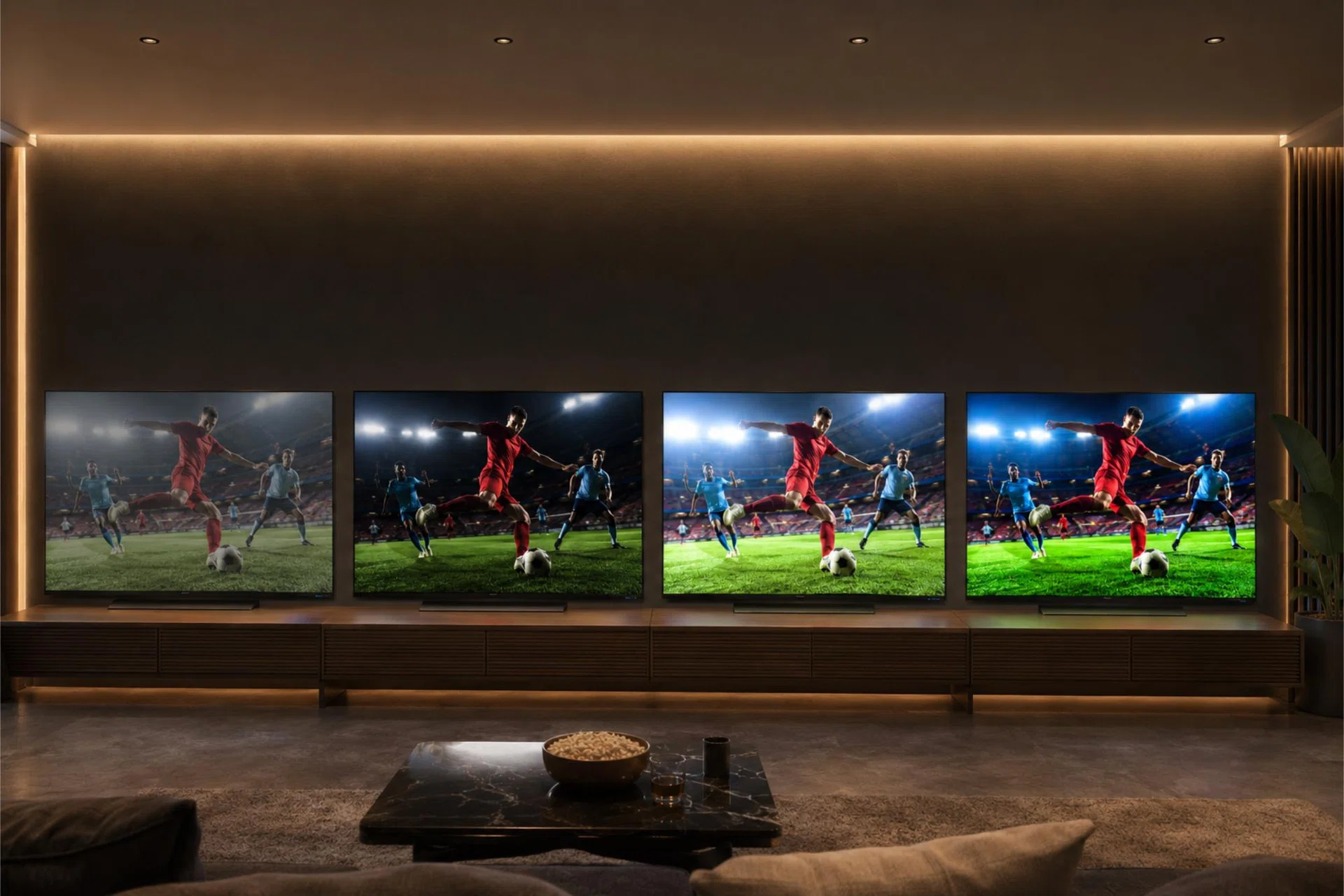
Aim for a peak brightness of around 1,000 nits and above, paired with an effective anti-reflective or matte screen coating. Real-world performance still depends on the panel, processing, and room lighting, but that benchmark gives buyers a useful starting point.
For sheer brightness, miniLED leads. For example, the Samsung QN90F Neo QLED hits well above the 1,000-nit threshold thanks to its miniLED backlighting and Glare-Free screen, making it the easier pick for typical Singapore living rooms during afternoon kick-offs.
Why OLED is still worth considering
miniLED wins on raw brightness, but OLED wins on contrast and colour, which together make a sports picture feel more lifelike. Stadium grass, jersey colours and the gap between bright floodlit pitches and shadowed crowds all read more naturally on OLED’s perfect blacks and per-pixel dimming. Older OLEDs struggled in bright rooms, which earned OLEDs a dim reputation. Newer panels, including those using Samsung’s OLED Glare Free technology, neutralise most of that problem by reducing reflections while preserving the deep blacks and natural colours OLED is known for.
The trade-off: pick miniLED if the room is genuinely sun-drenched or if early afternoon kick-offs are the priority. Pick OLED if the room has manageable light control, viewing angles matter (think a sofa full of family watching the same final), and picture quality is the priority.
What buyers are to look for:
- High peak brightness, ideally 1,000 nits and above
- An anti-reflective or matte screen
As mentioned earlier, one example to consider is the Samsung QN90F Neo QLED. Its Mini LED backlighting delivers strong brightness and handles reflections well, making it suitable for bright HDB living rooms. The set also includes Samsung’s Glare-Free technology, which, in our opinion, works extremely well, as our testing has shown.
We recommend a TV that’s capable of at least 600 nits for average rooms and 1,000+ nits for brighter spaces, with 3,000+ nits only really mattering for rooms with direct sunlight.
Why the screen size matters for sports
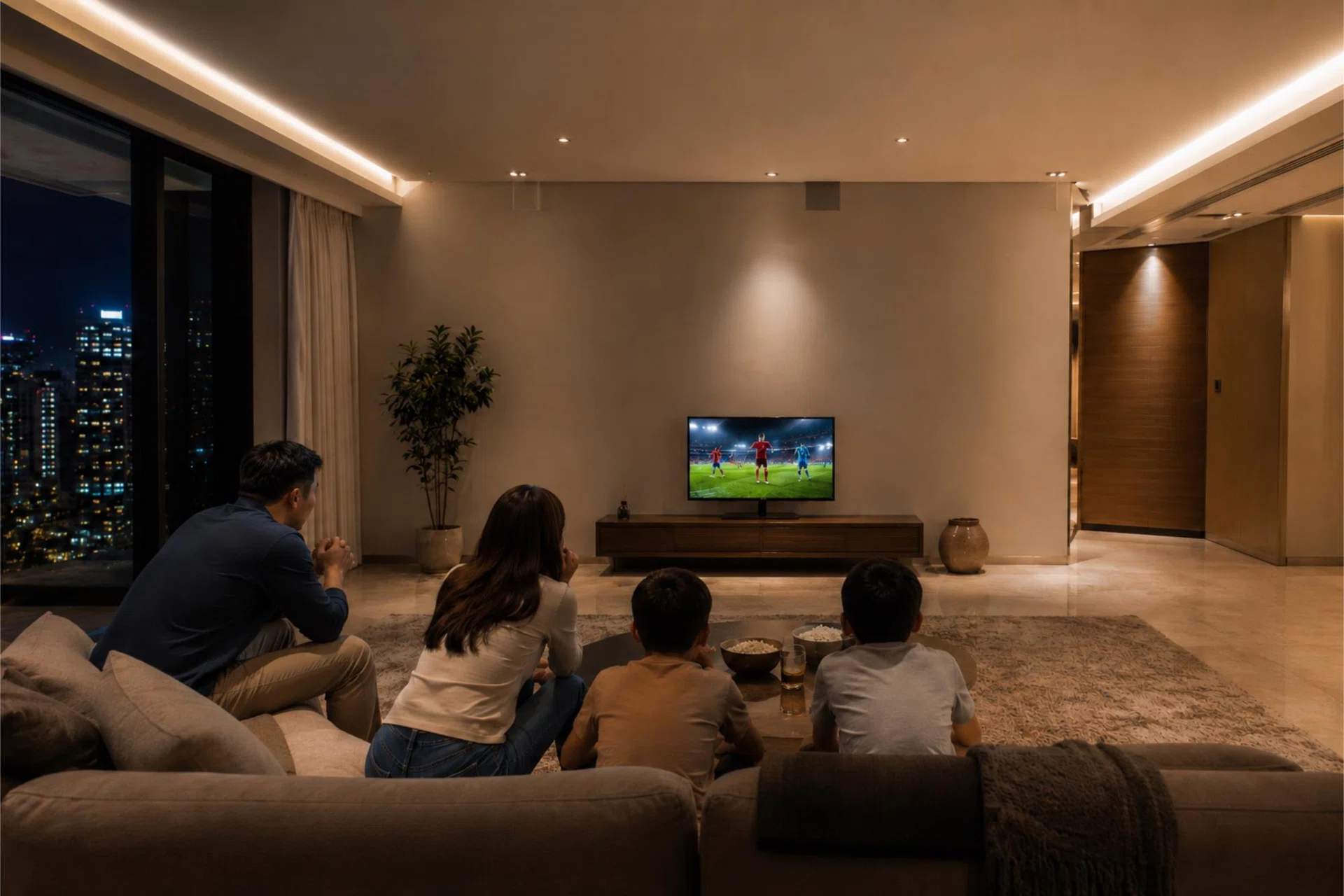
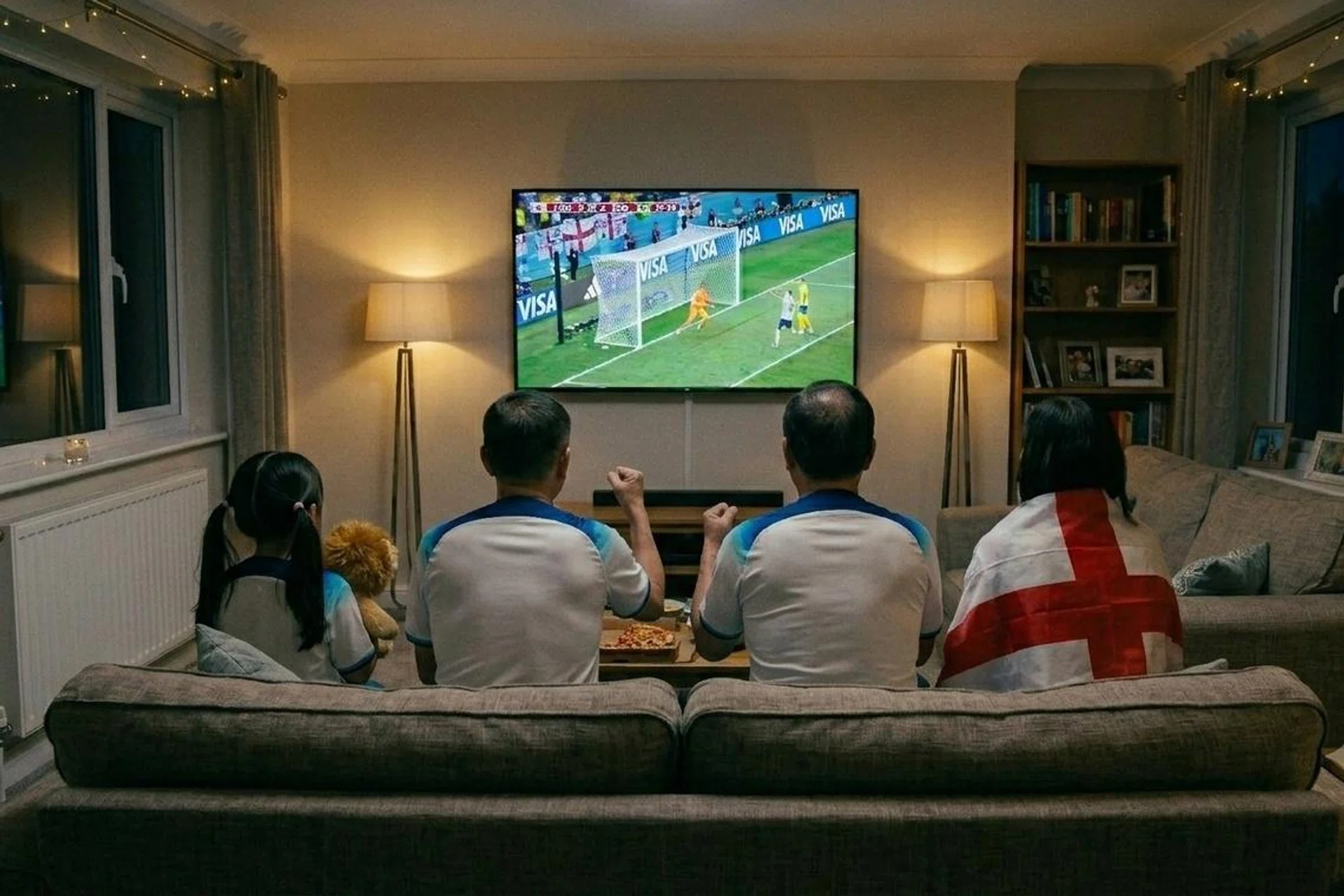
A small screen can make it hard to really enjoy the finals.
Photo: AI-generated image
Read Full Article At Source