In celebration of Stomp’s 20th anniversary, we’re bringing you a series that takes you down memory lane. Stay tuned for more stories of nostalgia, rage and outright madness – and don’t forget to vote on our site for your favourite outrageous Stomp story of all time.
Much has happened in the little red dot — and around the world — since 2006.
To mark Stomp’s 20th anniversary as one of Singapore’s leading digital news platforms, we look back at 20 of the biggest, wildest and most unforgettable events that unfolded locally, regionally and globally over the last two decades.
From the launch of the very first iPhone to Mas Selamat’s prison escape and the Covid-19 pandemic, here are some of the moments that shaped conversations, dominated headlines and left a lasting impact on Singaporeans.
Singapore’s biggest murder cases: ‘One-Eyed Dragon’, Kovan double murder, River Valley High School death
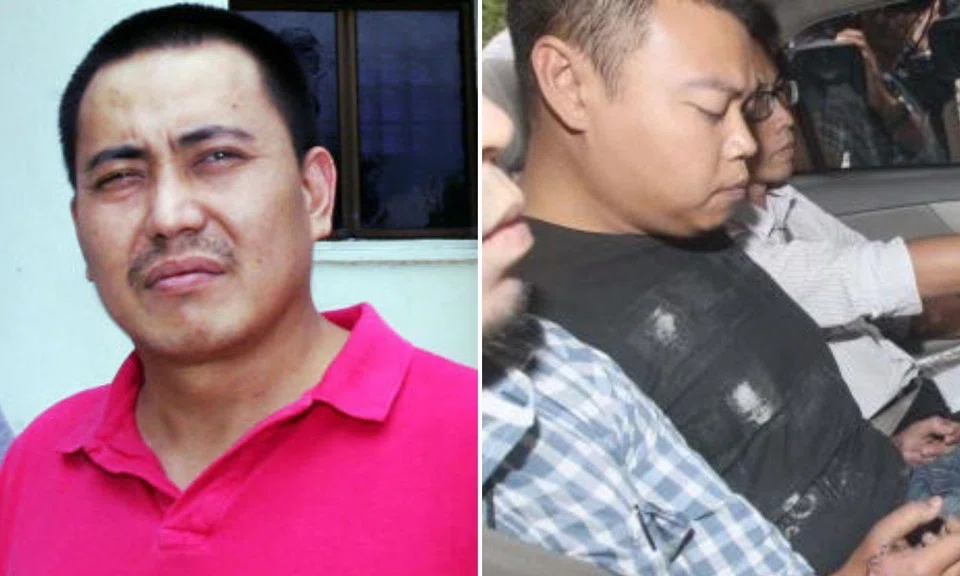
Tan Chor Jin, or the “One-Eyed Dragon” (left), and Iskandar Rahmat (right).
PHOTOS: LIANHE ZAOBAO, SHIN MIN DAILY NEWS
Scroll to continue reading
While murder cases are relatively rare in Singapore, some have left a lasting impression on the public — starting with the cold-blooded killing linked to the “One-Eyed Dragon”.
Nightclub owner Lim Hock Soon was shot dead in his home on Feb 15, 2006, in front of his family. Police later identified suspect Tan Chor Jin, nicknamed the “One-Eyed Dragon” because of his one blind eye, as the gunman. The gang member fled to Malaysia before being arrested, extradited, convicted of murder, and eventually hanged in 2009.
On July 10, 2013, the Kovan double murder case shocked Singapore. Former policeman Iskandar Rahmat stabbed 67-year-old businessman Tan Boon Sin in his home before also killing the man’s 42-year-old son, who had stumbled upon the crime scene and was later dragged beneath the getaway car. The court rejected Iskandar’s self-defence claim, finding intent to kill both victims. He was sentenced to death in 2015 after being convicted of the murders and hanged in 2025 after his petitions to Singapore’s president for clemency were unsuccessful.
On July 19, 2021, a 13-year-old student at River Valley High School was killed on campus by a 16-year-old schoolmate with an axe. Police found the victim with multiple wounds in a toilet, where he was pronounced dead at the scene. The axe was seized and the suspect arrested. He was initially charged with murder, but this was later reduced to culpable homicide after the Institute of Mental Health assessed that he had major depressive disorder at the time of the offence. In 2024, the Court of Appeal upheld his 16-year jail sentence.
The two-decade evolution of social media
In the early 2000s, platforms such as Friendster — which is making a comeback — Myspace and Tagged were hugely popular among youths experimenting with online profiles. Meanwhile, instant messaging platforms like MSN Messenger became a huge part of daily life, with users rushing home after school to chat online.
By the 2010s, newer platforms had taken over. Facebook, Instagram and TikTok reshaped social networking with news feeds, influencers, short-form videos and algorithm-driven content.
Messaging apps also evolved rapidly, with WhatsApp, Telegram and WeChat becoming central to daily communication, replacing SMS and older desktop chat platforms for many users.
This shift radically changed online habits — from carefully curated profiles and desktop chatting to viral videos, livestreams and 24/7 connectivity.
Launch of first-ever iPhone
Remember when the very first iPhone came out? Apple unveiled the original iPhone at the Macworld Expo in San Francisco in 2007, with CEO Steve Jobs calling it a “revolutionary” device that combined a phone, iPod and internet communicator.
The touchscreen handset featured email, web access, a 2-megapixel camera, visual voicemail and Apple’s iOS system, with no physical keypad. Priced from US$499, it marked Apple’s entry into the mobile phone market.
On June 9, 2008, SingTel and Apple announced the iPhone 3G launch in Singapore, bringing faster connectivity, GPS and app support to local consumers.
Mas Selamat’s prison break
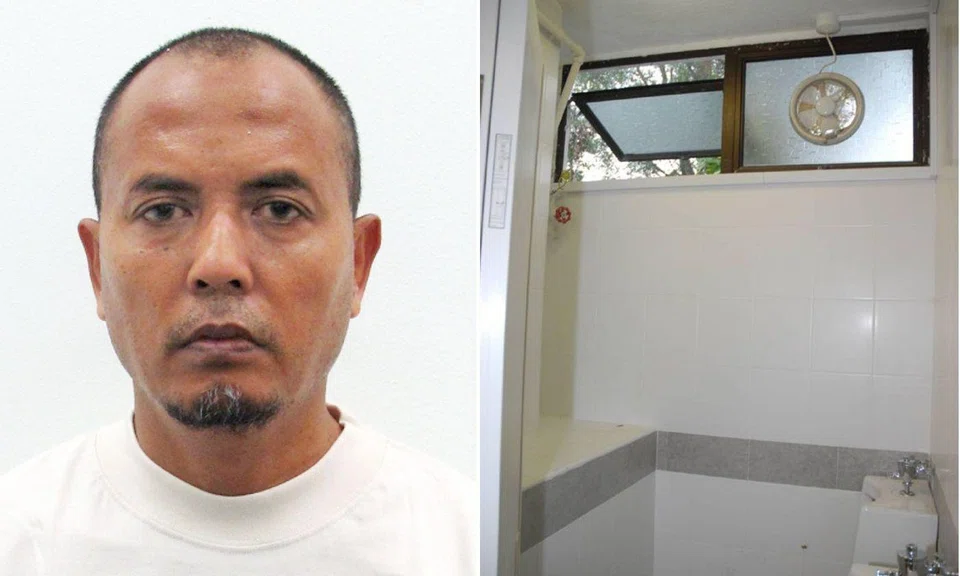
Mas Selamat Kastari made his escape on through this window.
PHOTOS: MINISTRY OF HOME AFFAIRS
Jemaah Islamiyah (JI) leader Mas Selamat Kestari escaped from detention in Singapore on Feb 27, 2008 by climbing through a toilet ventilation window, scaling two fences, hiding beneath an expressway and eventually swimming across the Tebrau Strait into Malaysia.
Sparking a nationwide manhunt, the then-47-year-old evaded capture for more than a year before being found in Johor in 2009. Malaysian counter-terrorism police later said he had prepared his escape in advance and received help from former JI members.
Mas Selamat had been linked to planned kidnappings and terror plots prior to his escape, including a plan to crash a hijacked plane into Changi Airport. Today, he remains detained in Singapore indefinitely without charge, under the Internal Security Act.
Singapore Grand Prix 2008 becomes F1’s first night race
Singapore hosted its first Formula One (F1) race — the SingTel Singapore Grand Prix — from Sept 26 to 28, 2008 at the Marina Bay street circuit.
The event, which followed a 35-year hiatus since the last Singapore Grand Prix in 1973, marked the sport’s first-ever night race as well as Asia’s first F1 street race.
Formula One’s then-commercial rights holder Bernie Ecclestone heralded the Singapore Grand Prix as the “new jewel in the Formula One sports crown”.
Japan’s 2011 tsunami and Fukushima nuclear disaster
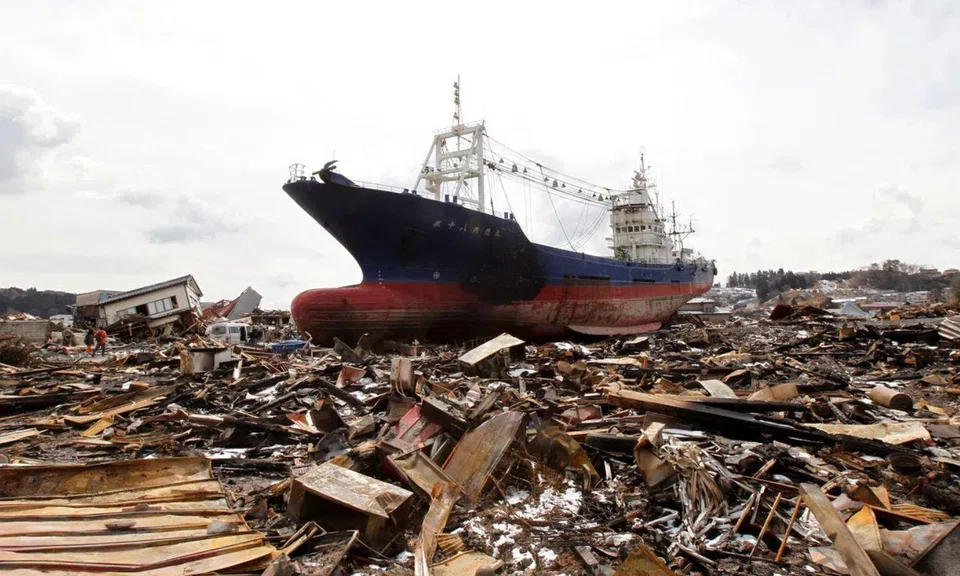
The aftermath of the 2011 tsunami, caused by a magnitude-9.0 earthquake off the Pacific coast of Japan.
PHOTO: REUTERS
A massive 9.0-magnitude earthquake struck off the coast of Japan on March 11, 2011, triggering a devastating tsunami that swept across northeastern parts of the country.
More than 18,000 people were killed or went missing in one of Japan’s deadliest natural disasters. The tsunami also triggered the Fukushima Daiichi nuclear disaster after floodwaters knocked out cooling systems at the nuclear power plant, causing reactor meltdowns and radiation leaks.
The catastrophe forced large-scale evacuations, sparked global concerns about nuclear energy safety and left a lasting impact on Japan for years to come.




Read Full Article At Source