The future of work: AI & workforce transformation

The future of work: AI & workforce transformation


At HP Elevate 2026 in Singapore, Koh Kong Meng opens with a number he wants the room to sit with. Two years ago, HP’s annual global workforce survey found 70 percent of workers said they don’t have a healthy relationship with their work. Last year, the figure climbed to 80 percent.

“The trend is obvious,” says HP’s Managing Director for Southeast Asia and Singapore. “Satisfaction and engagement among employees are declining. We see it as part of our goal to help companies reverse that trend through technology.”

He pairs that with another number. Roughly 85 percent of the devices employees touch at work are HP’s. PCs, notebooks, and a video conferencing kit. “That’s a significant proportion of time, which also means part of our responsibility is to make sure that they work a lot better together,” he says. “Increasingly now, even more so, which is adding software, additional solutions on top of the hardware to make it work better.”

“The future of work is not about adding more technology into the workplace, but about making work feel more seamless, secure and meaningful for people,” Koh says in HP’s press release. He adds that Singapore is an important place for HP to bring this vision to life because it combines enterprise demand, startup innovation and regional connectivity.

He isn’t alone in flagging the engagement problem. Gallup’s State of the Global Workplace 2026 puts global employee engagement at 20 percent in 2025, the lowest level since 2020, with the cost to the world economy pegged at around US$10 trillion in lost productivity. Southeast Asia sits at 25 percent, flat year on year, despite the region’s economic momentum.

That premise frames everything HP shows at this year’s Elevate event: HP IQ, a fresh sweep of AI PCs, new LaserJet products, hardware-enforced security in HP TPM Guard, Workforce Experience Platform enhancements, and a second cohort of HP Garage 2.0, the Singapore startup programme HP set up in 2025.

  1. 1. Why AI at work is now a people problem, not just a tech problem
  2. 2. The 4-to-1 talent gap
  3. 3. Tools alone do not create productivity
  4. 4. HP’s bet: bring more AI to the edge
  5. 5. The rise of personal AI agents
  6. 6. Data foundations still matter
  7. 7. Workforce transformation, not technology transformation
  8. 8. Expectations are rising faster than productivity gains

Why AI at work is now a people problem, not just a tech problem

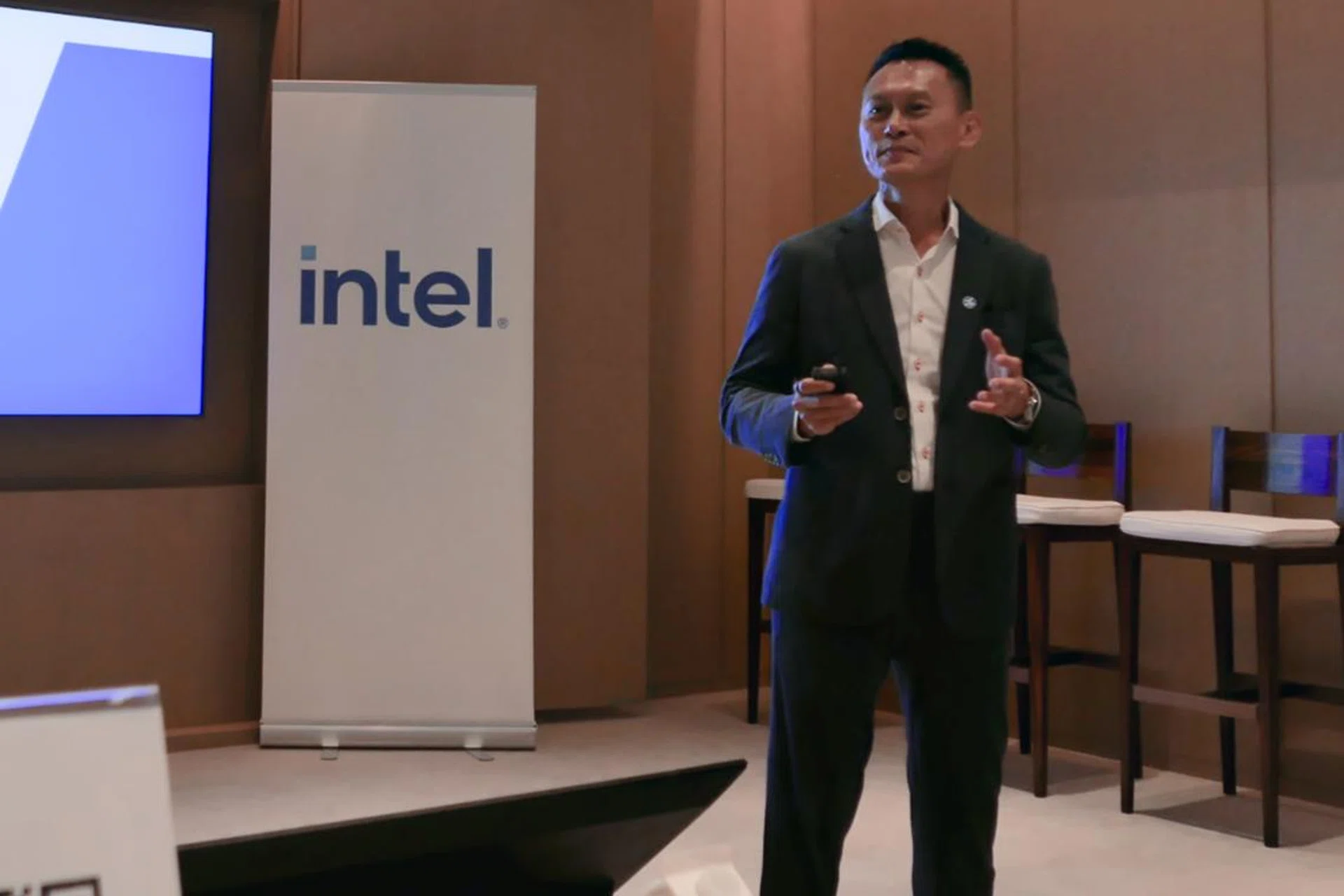
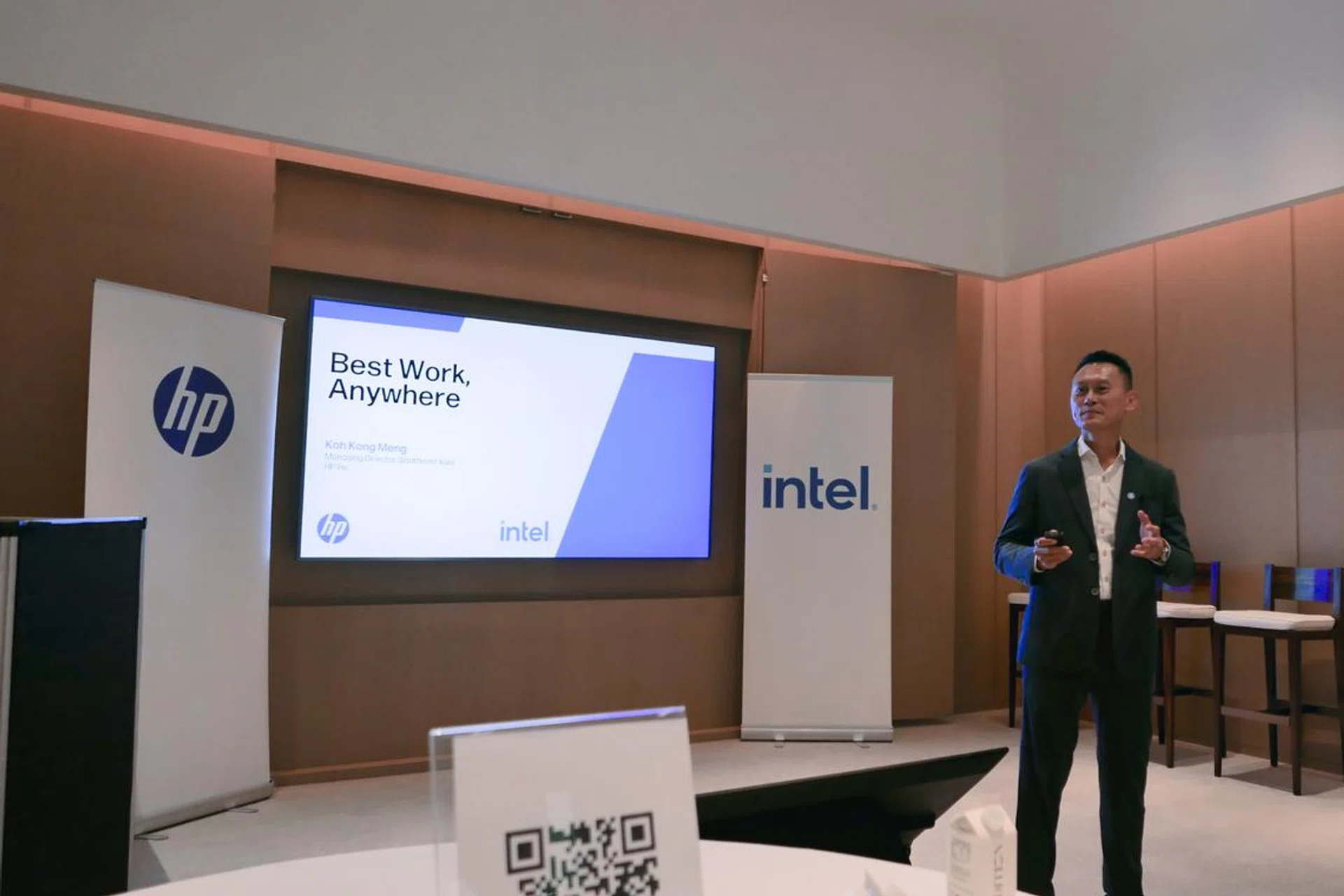
Koh’s keynote speech

HP’s Managing Director for Southeast Asia and Singapore, Koh Kong Meng

Photo: HWZ

The timing matters. Across the region, AI isn’t a side experiment or a shiny demo anymore. It’s becoming part of how companies think about productivity, cost, automation, talent and competitiveness.

Koh says organisations and individuals are often thinking about AI at two different levels. Businesses tend to focus on productivity, lower costs and automation. Individuals, however, are asking a more personal question: how does AI help humans do better work, not just more work?

That human layer is increasingly hard to ignore. Microsoft and LinkedIn’s 2024 Work Trend Index finds that 75 percent of global knowledge workers already use generative AI at work, while 78 percent of AI users are bringing their own AI tools into the workplace. The same report notes that 79 percent of leaders believe AI adoption is needed to stay competitive, yet many still struggle with vision, planning and measuring productivity gains.

Chua Pei Ying, head economist at LinkedIn for Asia Pacific, doesn’t soften the message during the panel.

“I’m not going to sugarcoat this. AI is here, and it’s changing nearly every single job as we know it. AI literacy wasn’t a thing five or six years ago. It didn’t exist. And now we see it’s grown like so many times year over year, in terms of people knowing how to use AI tools, and in terms of the demand for people who know how to use AI tools.”

LinkedIn’s own data backs the inflexion. The platform’s Work Change Report finds that the share of jobs on LinkedIn listing an AI literacy skill has grown more than six times over the past year. The 2026 Skills on the Rise report has AI engineering, operational efficiency and AI business strategy topping the global list, with postings requiring AI literacy up more than 70 percent year on year. LinkedIn also says that professionals entering the workforce today are on track to hold twice as many jobs over their careers as those who entered the workforce 15 years ago.

The 4-to-1 talent gap
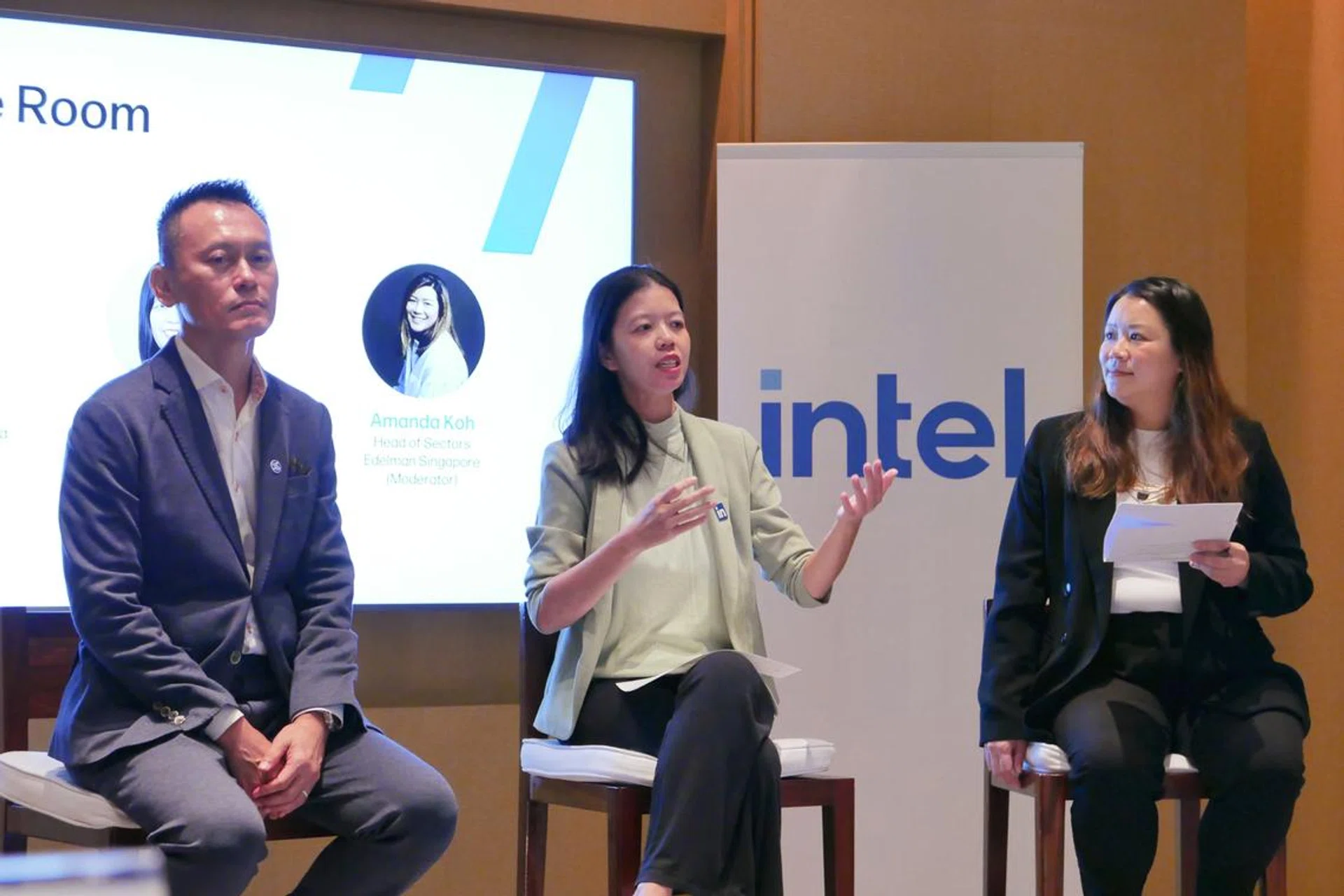
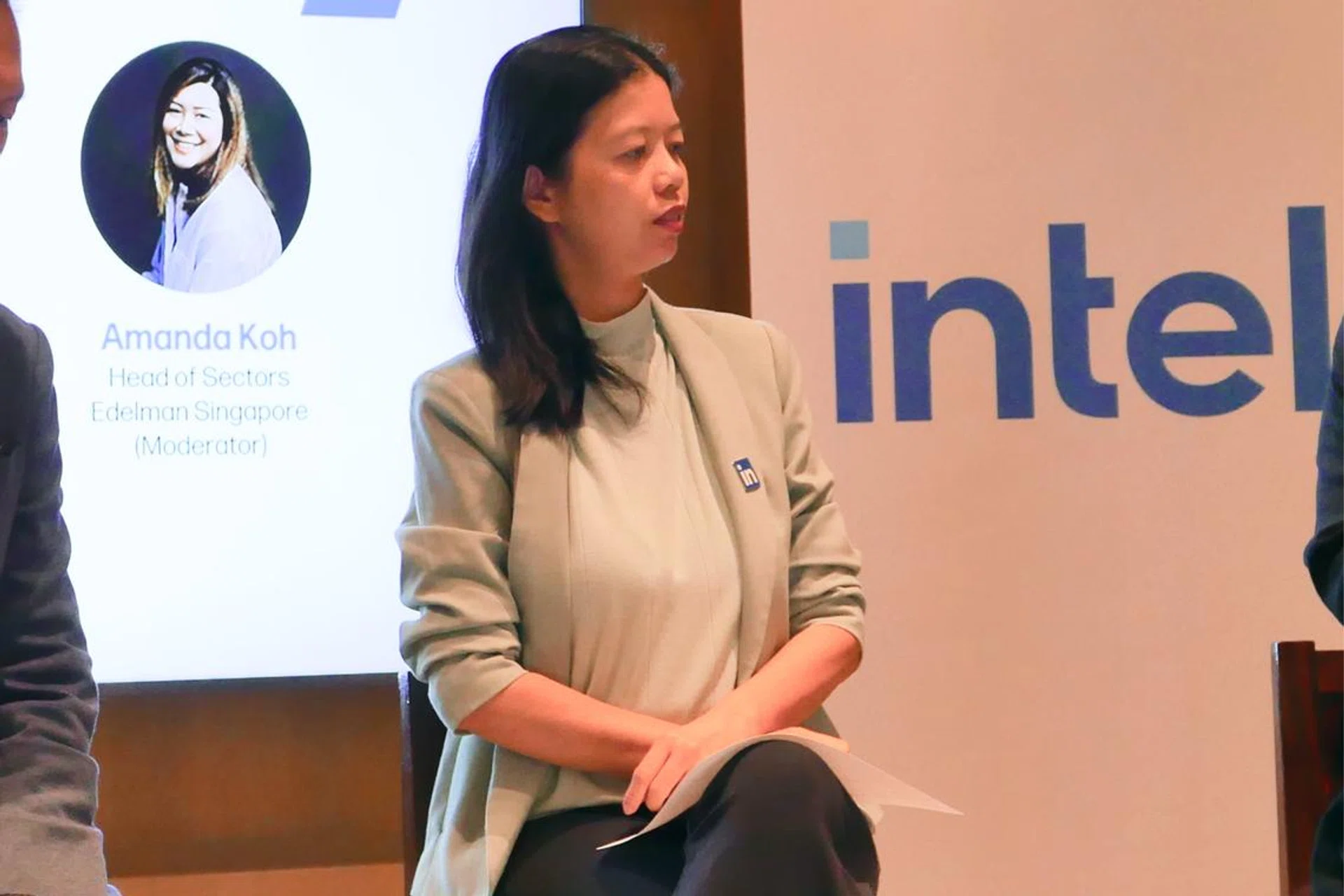
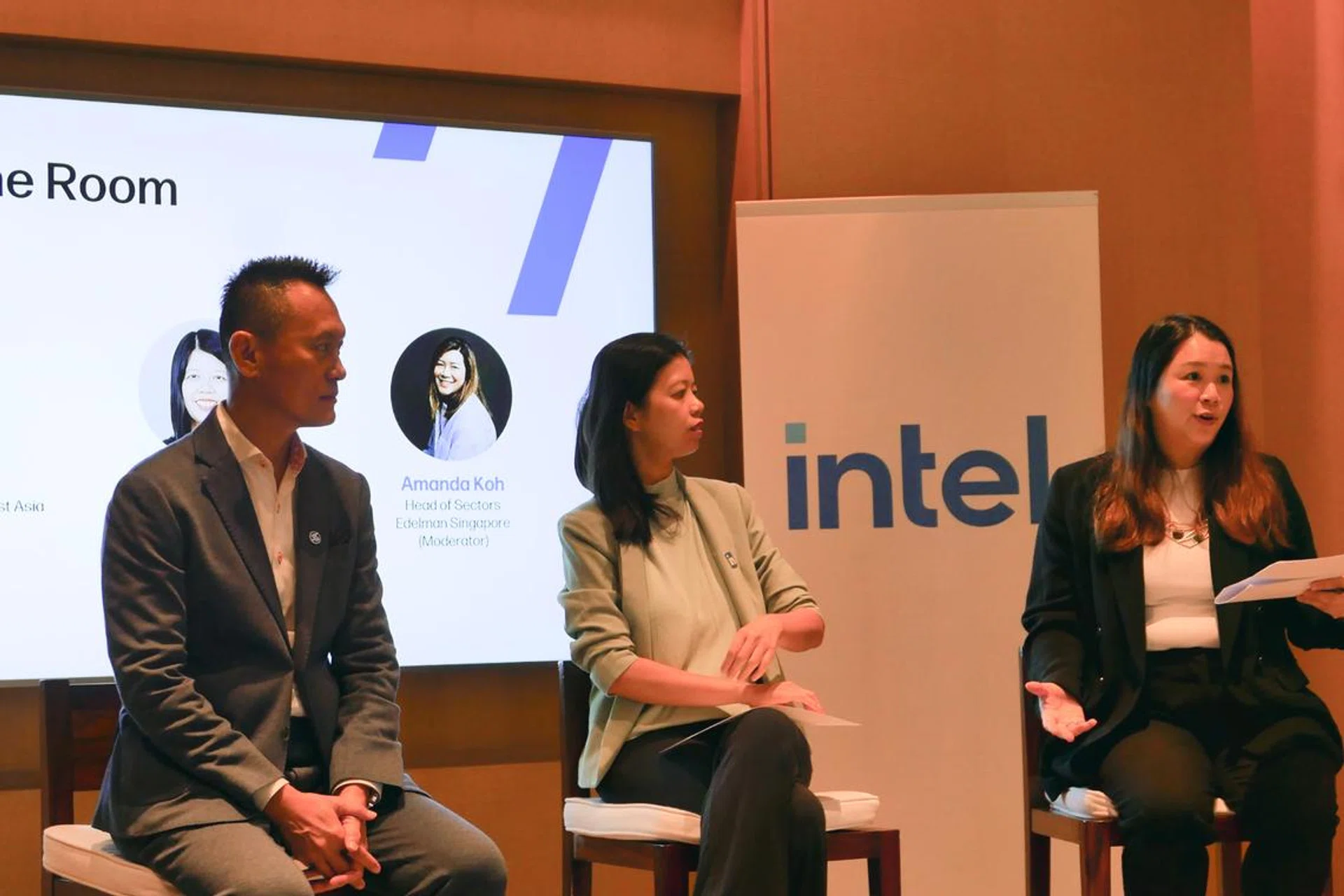
The panel discussing what current labor market data reveals about AI’s impact on jobs, skills and workforce dynamics across Southeast Asia

Chua Pei Ying, head economist at LinkedIn for Asia Pacific

Photo: HWZ

On the build side, the supply problem is sharper. “On the other side, we have AI engineering skilled people, the people who build the technology, people who work at places like HP,” Chua says. “The demand for those talents is even higher. It’s growing four times faster than the supply of talent. So you start to see this really big gap emerging in terms of the supply and demand dynamics.”

The implication for hiring is blunt. “If all you’re doing is trying to hire from outside externally, I have bad news for you. You are outnumbered four to one in terms of the demand versus supply. Every other company out there is trying to hire that same person that you are trying to hire.”

That, she argues, is why the conversation has to swing back inside the company.

“Think, what am I actually trying to build? What skills do I need? Do I need to hire externally? Do I have a person in-house that I can upskill into that role? Do I have the ability to insource or outsource? That’s where companies can go if they’re trying to build the tools.”

For the wider workforce, the comparison she keeps returning to is the one from a generation ago. “AI literacy is going to be what digital literacy is right now. 40 years ago, digital literacy did not exist. It took 20 to 30 years for the workforce to undergo the digital transformation. Right now, what we see is we’re going through this AI transformation, where people are again learning how to use AI tools, learning what it means for my day job and my day life.”

HP pushing AI to the edge

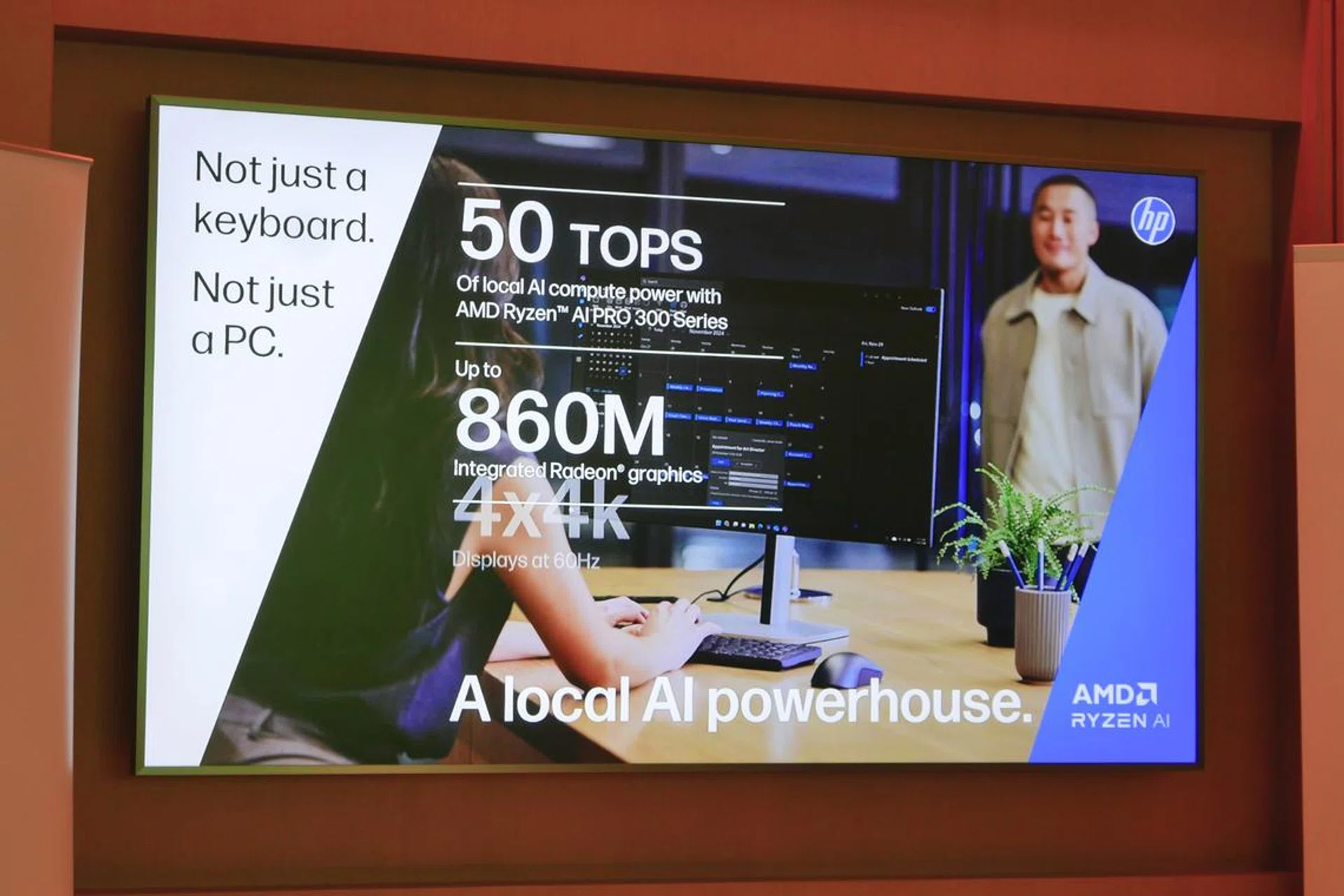
HP showcasing a PC built into a keyboard that can be used to push AI to the edge

Photo: HWZ
Chua’s strongest pushback is on the assumption that adding AI mechanically lifts productivity. “Many people think that, oh, okay, I’ll just deploy AI, and magically my productivity will go up. That’s not how the real world works. You actually need to rework your company processes, rework the workflows.”

The mistake she sees most often is treating tool provision as the answer. “You can give AI tools to everyone, but if you don’t empower them to use it, nobody is going to use it. It’s just going to sit there useless on its own.”

Training has to happen the way work actually happens. “You don’t just sit them in a room for three days and say, ‘ Oh, this is how you use this tool. People don’t absorb information as well as that. People absorb by learning by doing.” Pace is the other issue. “The tools are changing so fast that if you try to do this, you’re going to have to sit your employees down every month for a new training course. Not sustainable in the long term.”

The second missing piece is guidelines. “For someone to be confident to use the tools, they need to know what the company rules are around the use of AI, proprietary information, and client confidential information. Are there sandboxes in place? Are there guidelines about what I can and cannot use AI on?” That clarity is especially relevant given the BYO-AI behaviour Microsoft and LinkedIn flag: employees are already adopting AI even when their companies haven’t provided it, which creates both productivity opportunities and data governance risks.

Chua frames the next stage as “AI-human synergy.” AI can handle routine, repetitive tasks where the rules are clear. Humans still bring judgment, domain expertise, customer understanding, creativity and the ability to read the room.

She tells a story she heard from someone in healthcare. The hospital workflow had three doctors signing off a radiology report, A, then B, then C, “chasing the doctors around the hospital because doctors move everywhere.”

“AI came in, and AI was like, okay, the radiologists can now use AI to read the X-rays and do the diagnosis. So that’s not the bottleneck. That was actually never the bottleneck. The bottleneck was, how do we get the doctors reviewing and signing off quickly?”

The real value, she argues, sits elsewhere. “When you start to see AI can detect tumours before the human radiologists can see, and project, okay, 85 percent likelihood this is going to progress, we have to monitor a bit more closely, to me, that is the real value unlocked. Because that is something that you needed the AI to detect, and then you needed the human to review and say, yes, I agree with you. Okay, we’ll up the review frequency of this patient. That is the real game changer.”

McKinsey’s 2025 State of AI research reaches a similar conclusion. AI use is expanding, and agentic AI is gaining attention, but many organisations still struggle to move from pilots to scaled impact. The companies seeing real value are more likely to have defined processes, human validation, data foundations, operating models, talent plans and adoption practices in place. The Gallup 2026 report flags an MIT study finding that 95 percent of organisations have seen zero measurable profit impact from AI, and an NBER survey in which 89 percent of leaders report no labour productivity gain. Gallup’s own data points to manager-led adoption as one of the two strongest predictors of frequent AI use at work.

HP’s bet: bring more AI to the edge

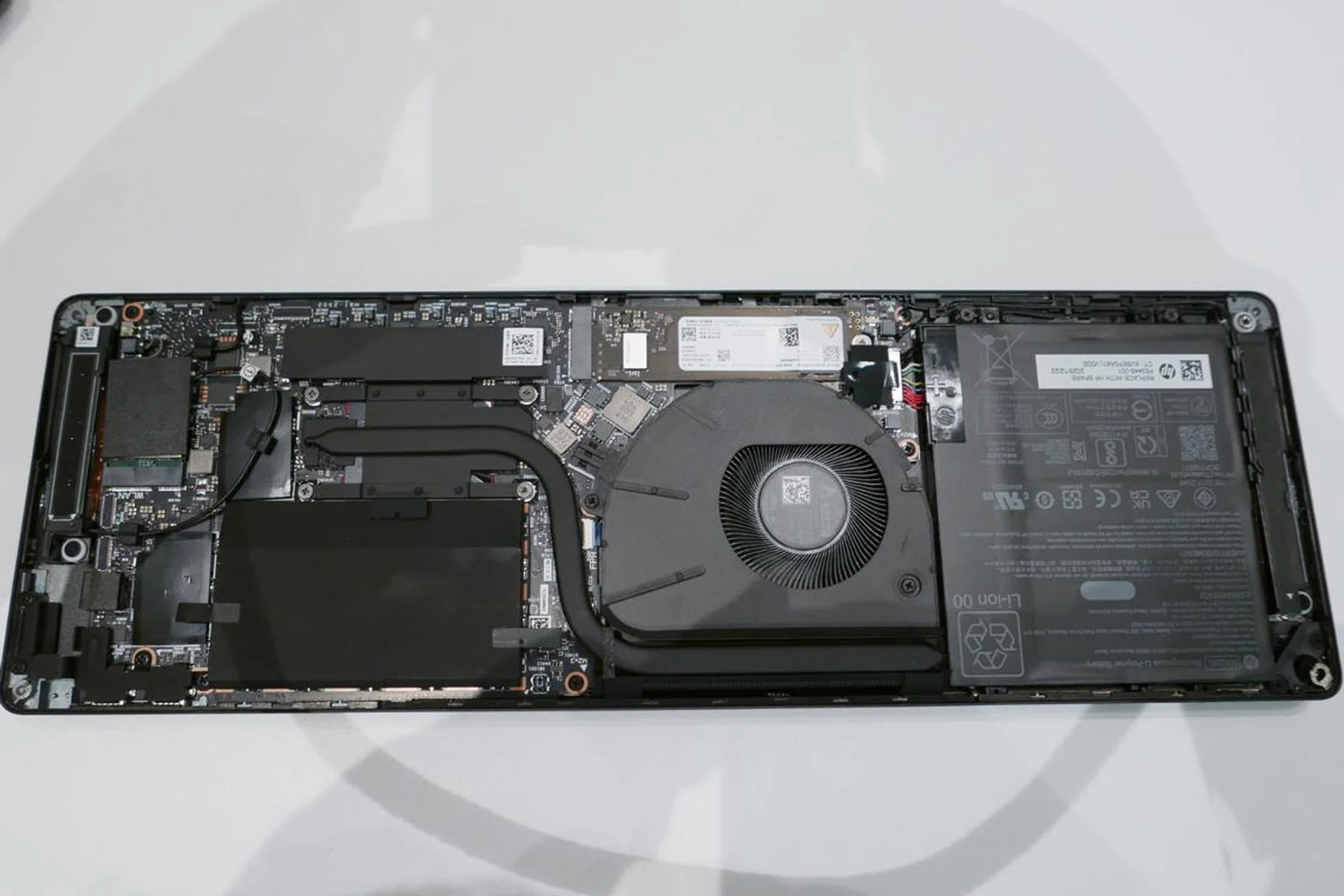
What the keyboard PC looks like internally

Pushing AI to the edge with PCs

Photo: HWZ

For HP, one practical answer is edge AI. Koh argues that AI can’t live only in the cloud or data centre. Cloud AI will remain important, especially for training large models, but AI on the device itself can bring lower costs, faster response times and better control over data.

“Today’s 30 billion parameter small language model that can fit onto a notebook is more intelligent, I would use that without reservation, than a 1 trillion parameter frontier LLM from two years ago. That means on your notebook today, there’s already tremendous firepower for all of us to do real work, whether we want to query, whether we want to create and run agents that help us do real work as well.”

He believes that data centre AI isn’t going away, but the combined equation of cloud plus device gets a lot more powerful. The Singapore maths makes the point on its own.

“Singapore, I think I heard a number yesterday, maybe we have about 60 data centres. If everyone in Singapore started to leverage AI a lot more, 60 data centres would definitely not be enough. You need exponentially more computing power in the data centres if you were just on the cloud. But you can leverage the device on the edge to do a lot more meaningful work with a lot more agents at, I would venture to say, almost zero cost.”

The cost argument lands because every CIO is now staring at it. “Token economics has suddenly become a big topic internally in organisations,” Koh says. “How much will tokens cost? How much are we using? Who is the top user of tokens in the organisation? If everyone in the company started to use all these tokens, how much is that going to cost?”

Run the model on the laptop, he argues, and the calculus changes. “If the model is on your laptop, you don’t have to pay for tokens, you get free infinite tokens, so you can run as many agents as you want.”

Cost is one part. Security and latency are the others. “None of your data needs to get sent to the cloud,” he says. “None of it needs to get sent over the internet. Everything sits on your laptop in a secure location that’s encrypted within your control or your organisation’s control.”

For latency-sensitive use cases, the edge is the only game. He picks live translation as the obvious one: “Good luck with sending that to the cloud. Make one big circle, come back, because by the time that happens, I will move on to the next paragraph.”

Manufacturing is the second.

“We now have a lot of customers who are using AI-augmented computer vision or Gen AI computer vision, not just your traditional computer vision robot checking for defects. But if you’re running a production line making hundreds, if not thousands, of parts a minute, what happens if you need to send the data to the cloud, process it, and come back? Your production line will slow down tremendously. You need to do it at the edge, not on the cloud.”

The technical reason it works, he notes, is that training and inferencing make different demands. “For training, you need tremendously large datasets. That’s why you need a huge data centre. For inferencing, which is the actual use of Gen AI models, you don’t need such large datasets. You can compress the model, retain the intelligence, not necessarily the data. That’s why we can put a small model on the laptop that is smarter than a large model from two years ago.”

HP’s press release positions HP IQ as part of that strategy. HP IQ is described as an intelligent ecosystem that coordinates experiences across selected HP AI PCs and workplace devices, combining local, on-device AI, HP NearSense and integration with the HP Workforce Experience Platform. The aim is to support intelligent workflows, simpler collaboration and centralised IT visibility across the workplace ecosystem.

The rise of personal AI agents

Agentic AI does more than answering prompts

Koh, talking on the rise of AI Agents

Photo: HWZ

Koh also points to a shift from prompt engineering to agentic AI. “One year ago, two years ago, the skill required for Gen AI was how to do prompts. If you ask basic questions, you get basic answers. Today, it is about agentic AI.”

His version of fluency is no longer a centralised team writing tools for everyone. “Each one of us, imagine we have to write and develop our own agents that are unique only to ourselves and no one else. If we can do that, then we will truly realise the potential of agentic AI.”

He explains further.

“I could write an agent to approve things in my email or to delete email from people I would like, for example. But people I don’t like is different from the people that Sam or Amanda likes. So it’s unique only to me. If we can do that with a team of agents, then it can significantly increase my level of productivity. I can get things done a lot faster.”

The takeaway, he says, is that writing and running agents can’t sit with IT anymore. “We can’t leave it to the IT department or developer team. We all need to figure out how to use those things to enhance our potential.” That may sound futuristic, but it fits the wider direction of the industry. McKinsey’s latest AI survey highlights the growing proliferation of agentic AI, while noting many companies are still working through the difficult shift from experiments to business impact.

It’s also where Koh lands on the perennial job-risk question, citing a line he likes from one of the AI industry’s leaders. “I’m not going to lose my job to AI. I’m going to lose my job to the next person who is using AI.”

Data foundations still matter

Edge computing can be powerful enough to deliver real AI solutions

The keyboard PC may be small, but its mighty.

Photo: HWZ

If there’s one warning from Koh to companies rushing into AI, it’s this, don’t skip the fundamentals.

“The first thing companies need to do is to look at their data. You need to figure out how to centralise or create a data link so that the AI agent, whatever it is, can look at all your data holistically. Whatever model you choose, or even if you choose multiple models, it doesn’t really matter.” Without that foundation, models lack context, hallucinate, and lose user trust.

And responsibility can’t sit in one corner of the org chart. “It’s not one department. It needs to be endemic across the whole organisation. The human needs to be in that process every step of the way.”

The ROI question remains difficult. “When we ask customers, how do you measure ROI when you implement an AI project? They say I don’t know,” Koh says. “Not that they don’t know, they can’t quantify. If I use Copilot, how much more productivity am I getting out of it? If you ask me, I probably won’t be able to quantify, but one thing is clear, even if we cannot quantify, we know the gains are there.” Even without precise numbers, he says, companies can see directional value. The next challenge is for IT and finance teams to develop more deterministic ways to measure that against token costs, manpower costs and other inputs.

Singapore’s national AI push provides part of the policy backdrop. The May 2026 update to Singapore’s National AI Strategy sets out refreshed priorities under the broader vision of “AI for the Public Good, for Singapore and the World.” IMDA has said Singapore aims to build an AI-fluent workforce that can use AI effectively across job functions and industries. Recent remarks from Deputy Prime Minister Gan Kim Yong to the financial sector echo the same idea: he urges companies to use AI not merely for cost-cutting, but to enhance job quality and retrain workers for higher-value roles.

On displacement, Koh leans on the same reflex. “The beauty of living and working in Singapore is that our government is able to tackle issues like these head-on. We have to acknowledge there will be job displacement. But we also have to acknowledge that we need to build the right skill set for the future, and that includes how to leverage AI tools. If we are able to reskill and upskill, even if our job goes away tomorrow, we’ll be able to do some other job.” He adds a line from the CEO of one of Singapore’s largest banks: “He said, you know, they can be replaced by an AI agent. So everyone’s job may be at risk, but if we are able to equip ourselves with the right tools and skill sets, then even if this job goes away, we’ll be able to do some other job.”

Workforce transformation, not technology transformation

AI transformation is more than just technology transformation

Chua says that AI transformation is actually a workforce transformation issue

Photo: HWZ

Chua’s answer on what separates the companies adopting AI well from the rest tracks closely with Koh’s.

“The ones that are doing well are the ones that understand AI transformation isn’t just an IT department giving AI to people, that’s it. AI transformation is actually a workforce transformation issue. You need to train the people. How do I use it? How do I get people to use it without having to force feed it down their throats?”

She is firm on the framing. “It is a workforce transformation. It is not just a technology transformation. When I’m trying to bring it into my company, I’m trying to change the way the processes run, I’m trying to change the SOPs, and I’m trying to change the workflows. I’m trying to change the mindsets of people who are using these technologies, from ‘oh, I have to use this tool’ to ‘if I use this tool, I will become so much better at my job.’ That kind of trust, that kind of transformation, takes time. It also takes effort. It also takes money, because these tools are not free. Tokens are not free.”

Expectations are rising faster than productivity gains

AI tools hold promise but need to be used properly to deliver real productivity benefits

Moderator Amanda Goh from Edelmann

Photo: HWZ

Near the end of the discussion, moderator Amanda Goh read back a poll of the audience: 71 percent say expectations are rising faster than productivity gains. Not a statistically representative sample, she notes, but it captures the mood in the room.

Chua isn’t surprised. “AI tools, they hold a lot of promise, and they are so easy to learn, and they’re getting easier and easier to learn. So the expectation is, oh, I use the tool, I should be able to become so much more productive, so much faster. But the reality is, the tool alone does not create productivity. It is the integration of the tool into existing workflows, into existing bottlenecks, that creates the productivity. And it is pairing the tool with human expertise that creates the value. Human expertise doesn’t appear overnight. It takes time to build. So this magical AI tool is not going to be able to deliver what it needs to deliver if the human expertise hasn’t reached what it needs to reach.”

Koh’s reply takes one line. “I agree, 100 percent.”

Goh closed the session before handing back to the product showcases. “Today’s conversation reminds us that the future of work is really a combination of tools, but more importantly, the human, and how we reimagine workflows in the organisation.”

That may be the real takeaway from HP Elevate 2026. The future of work isn’t one single device, model or software platform. It’s a combination of better tools, clearer rules, stronger data foundations, safer systems and a workforce trained to use AI with confidence. Or, put another way, AI doesn’t fix work by itself. People still have to redesign the work around it.


Read Full Article At Source

Share. Save. Don't Miss The Buzz: XFacebookRedditLINETelegramWhatsAppGmail