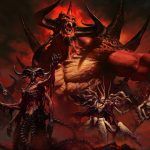
When Devil May Cry, an animated TV series set in the world of the Capcom video game of the same name, launched on Netflix in April 2025, it debuted fourth on the streamer’s global TV chart. The story of demon hunter-for-hire Dante (voiced by Johnny Yong Bosch) was fun, funny, and action-packed. With a story driven by Indian-American showrunner Adi Shankar’s passion for the project, Devil May Cry was quickly renewed for a second season that dropped on Netflix this month. The secret sauce that helped Shankar execute his Devil May Cry vision? An animation studio on the other side of the world called Studio Mir.
“They’re the best of the best,” Shankar tells IGN. When he started development of the project, Netflix gave him four choices of studios to work alongside. “I had a conversation with my executives, and they were like, ‘Look, this is gonna be a winning combo, you and [Studio Mir]. Because they will execute.’” And that is exactly what happened, with the individual directors who work at the South Korean studio able to bring to animated life “whatever I throw at them,” says Shankar, noting the scope in scene-type across Devil May Cry’s two seasons so far.
While Korean animation has yet to break through as a recognized cultural export in the same way as K-drama or K-pop, Studio Mir’s reputation as a consummate collaborator for international productions has been steadily and consistently proven over the past decade and a half. The South Korean studio was built in part from the massive success of Avatar: The Last Airbender, which was mostly animated in Korea. Industry veteran Yoo Jae-myung was an animation director on the Nickelodeon project at JM Animation, and decided to start his own studio alongside Han Kwang-il and Lee Seung-wook in 2010.
They decided to call the company Studio Mir after the Soviet space station, which gets its name from a Russian word that translates to English as “peace,” “world,” or “village.” “Studio Mir was made based on the lesson of space station ‘Mir,’ which is ‘advance through collaboration,’” states the company’s YouTube page.

South Korea’s History of Animating Iconic American Series
Studio Mir’s first project was Avatar spinoff The Legend of Korra, and Yoo tells IGN that the title was a “founding project and a landmark title that played a crucial role in introducing us as the brand to the North American animation industry.” This brand-centric introduction was notable because, in 2010, South Korean animators were often still seen solely as contractors perfect for “below the line” work rather than creatives in their own right.
America has a long history of outsourcing animation work to foreign studios with lower labor costs. While U.S. animation outsourcing has included Mexico, Czechoslovakia, Japan, Canada, India, and the Phillipines, South Korea has been a major outsourcing location for the U.S. animation industry over the last 50 years. In the 1990s, Animation World Magazine estimated that 30% of the world’s animation was being done in South Korea. Iconic American series like The Simpsons, Arthur, Ren and Stimpy, SpongeBob Squarepants, The Animaniacs, My Little Pony, Batman: The Animated Series, Family Guy, and Bob’s Burgers have been partially animated in Korea.
Avatar: The Last Airbender, which was originally broadcast from 2005 to 2008, represented the beginning of a shift in U.S. studios’ mindset towards and work process with Korean animators (a shift increasingly buoyed by the uptick in outsourcing across American industry, but that’s another article). Show creators Bryan Konietzko and Michael Dante DiMartino fought with Nickelodeon executives to get their Korean collaborators more creative leeway.
“In the animation industry, we have what’s called ‘an indication,’” Yoo explained in a 2013 interview with Arirang TV. “An indication contains information on each scene, giving instructions on every fine detail, including the movement of the characters as well as how and when they should move. This actually makes the animated characters’ movements appear robotic. So, when we were asked to work on the pilot film of Avatar: The Last Airbender, we asked the producers to scrap the indicator because it prevents us from making the movements appear natural.” They got approval, and the rest is animation history.
Building off of the trust Yoo developed with Nickelodeon while making Avatar: The Last Airbender, he launched Studio Mir. “[Legend of Korra] served as the foundation for Studio Mir’s distinctive production methodology, which integrates the entire pipeline from pre-production through animation production while drawing from the strengths of the American, Korean, and Japanese animation industries,” Yoo tells IGN. “Since then, we have continued to refine and evolve our workflows with every new project, but the core philosophy of our pipeline still traces back to our experience on The Legend of Korra.”
Read Full Article At Source