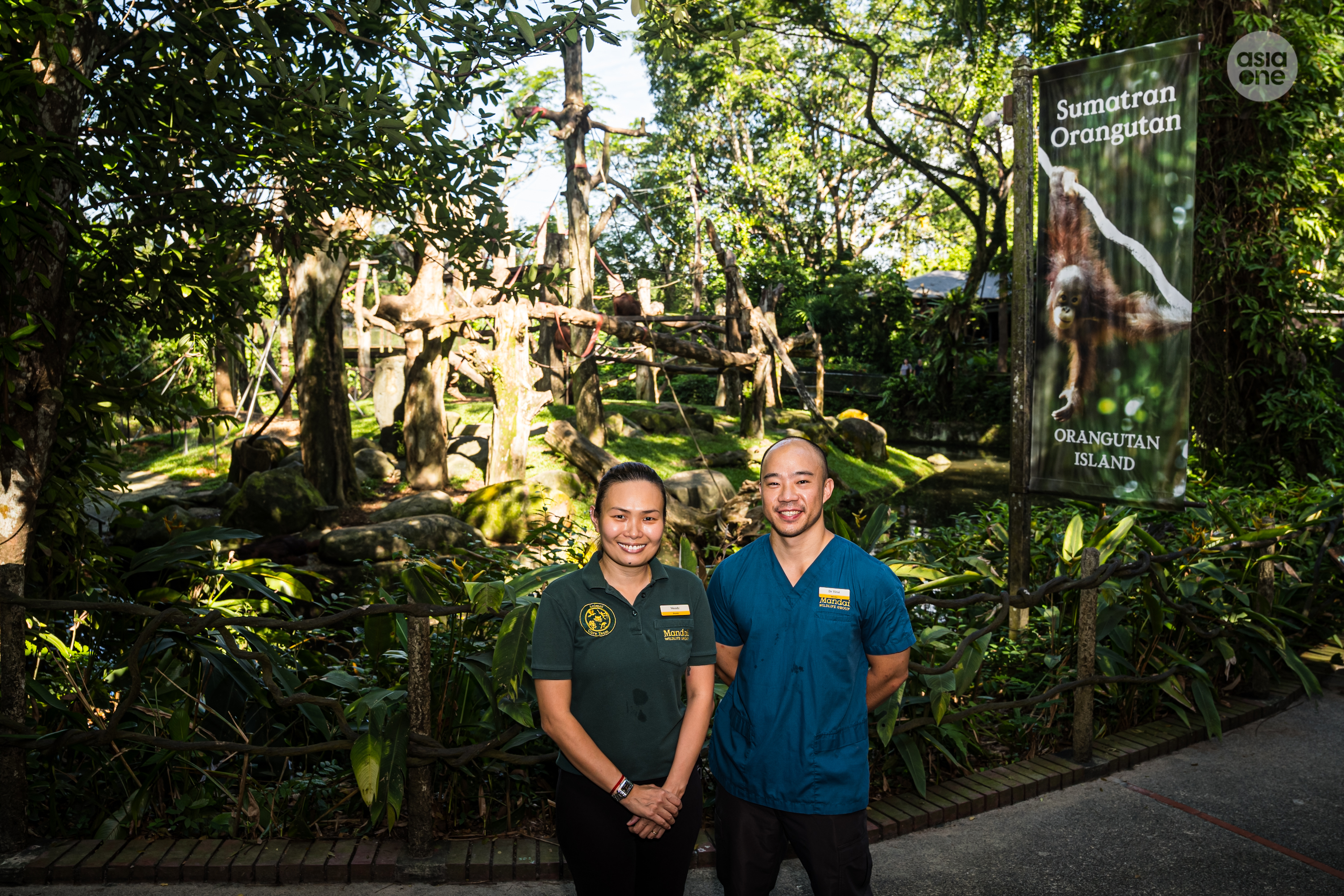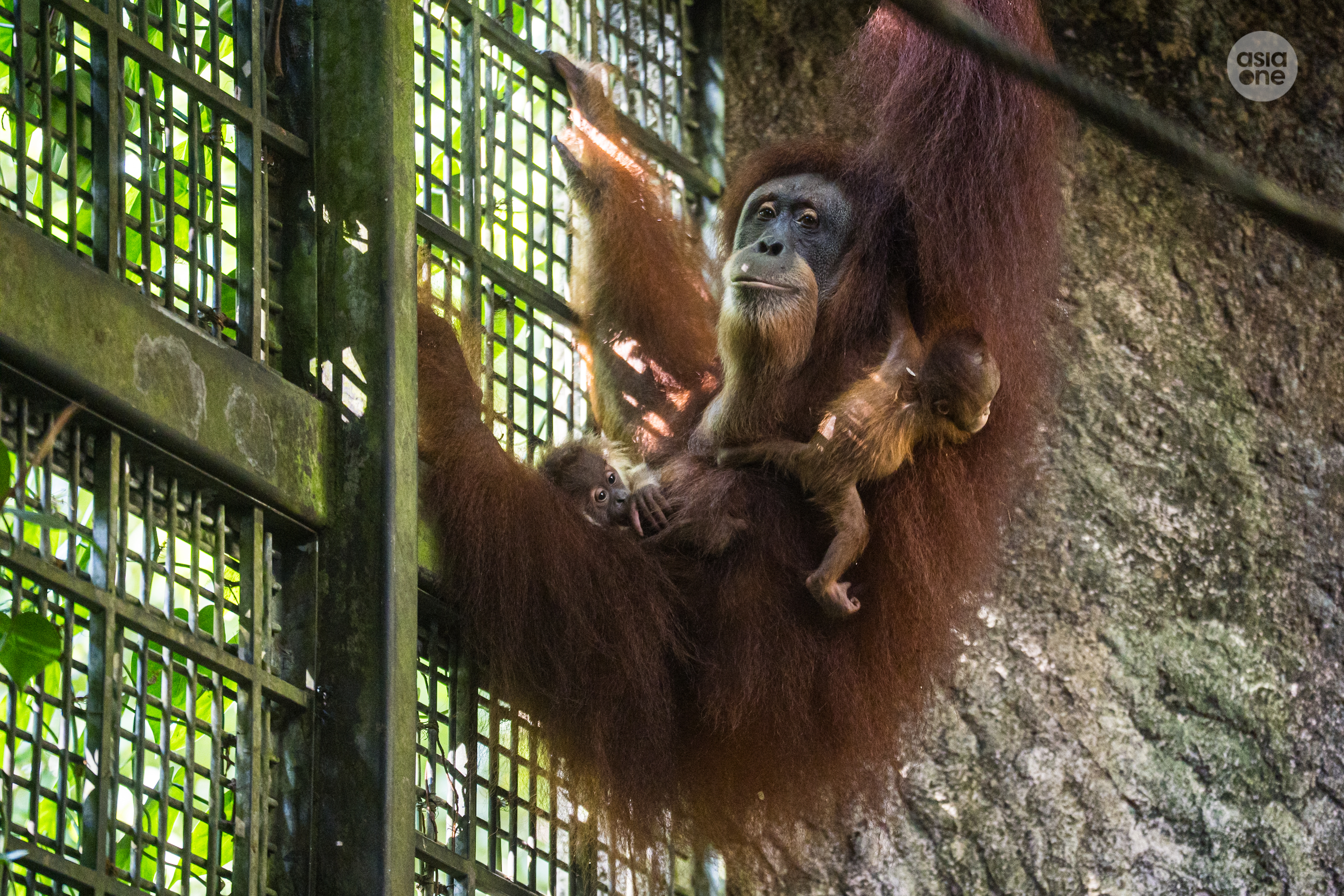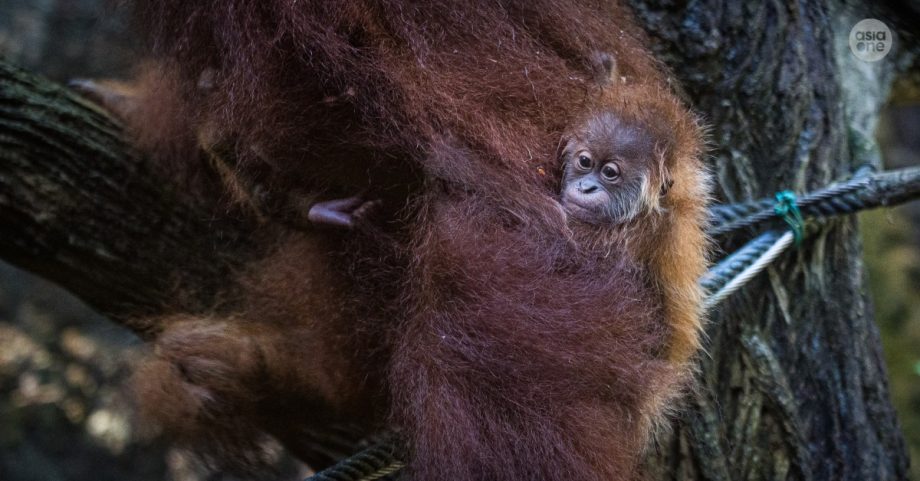
Ayaan, Singapore Zoo’s first orangutan born through artificial insemination, makes his public debut on Thursday (May 21) at the zoo’s orangutan exhibit.
The male Sumatran orangutan was delivered by Caesarean section on March 18, after his mother, Chomel, developed placenta praevia, a condition in which the placenta sits over the birth canal.
Mandai Wildlife Group believes the case is the first documented instance globally of an orangutan birth involving placenta praevia in which both mother and infant survived.
It is also the first successful artificial insemination (AI) birth of an orangutan at the Singapore Zoo, and the first Caesarean section the group has performed on the species.
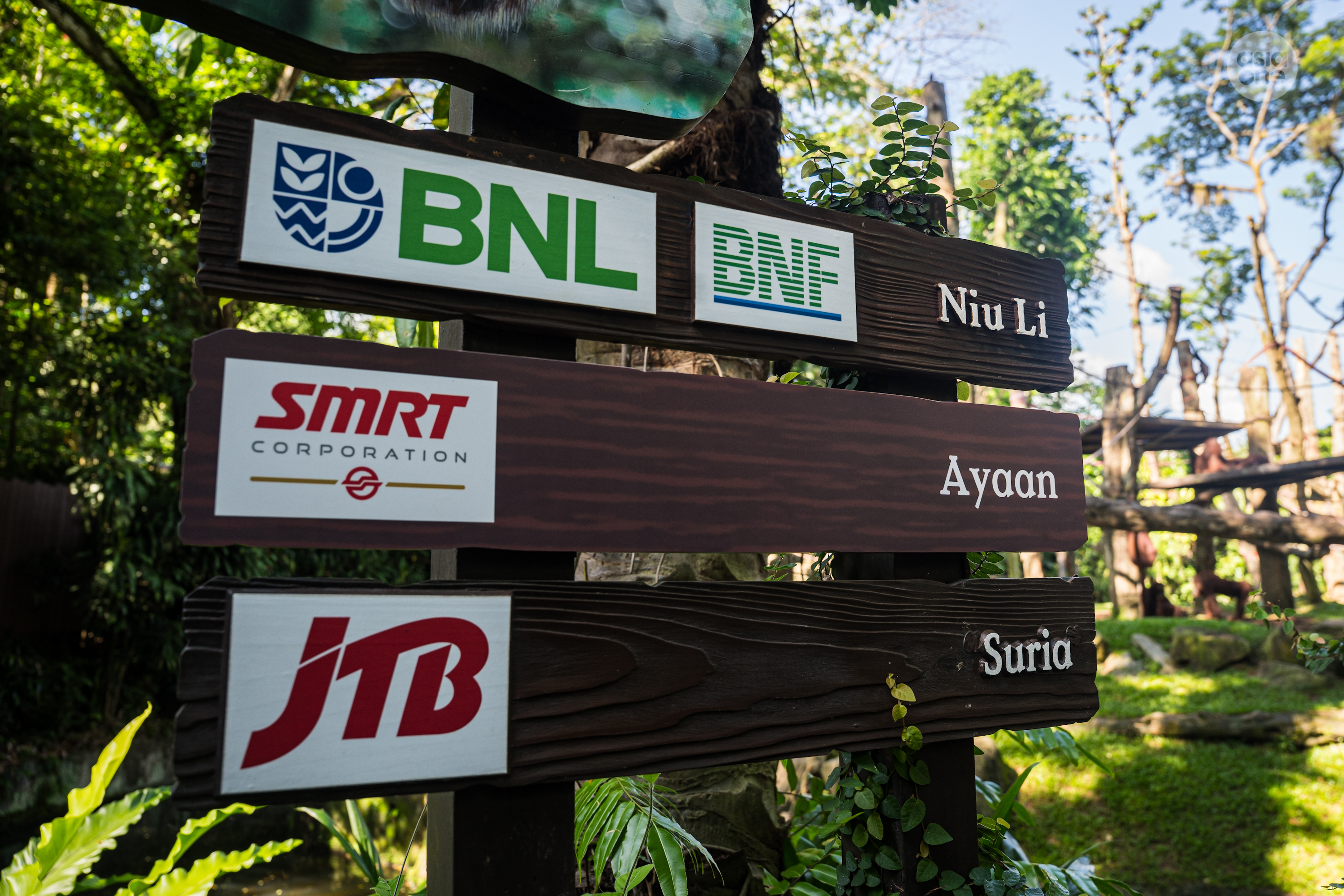
Ayaan, whose name means “blessing” in Arabic, was symbolically adopted by SMRT Corporation on May 20 at a ceremony held at the orangutan exhibit.
Years-long effort to save a genetic line
The road to his birth began in 2018.
His father Charlie, a 48-year-old Sumatran orangutan, carries a genetic profile that is unrepresented in the managed population of the species.
The pairing of Charlie and Chomel was recommended under the Southeast Asian Zoos and Aquariums Association (SEAZA) Species Management Programme, a regional cooperative breeding programme co-coordinated by Mandai Wildlife Group.
Part of the challenge was Charlie himself.
“He doesn’t exhibit much interest in Chomel. We don’t know why,” Wendy Chua, curator of animal data management and transactions and primates and SEAZA species co-coordinator for orangutan, told AsiaOne, adding that it could be related to his upbringing.
Despite multiple attempts at pairing since 2018, it did not result in a successful conception, and the team turned to assisted reproductive methods.
“Charlie do not have any living descendant. He doesn’t have any offspring under his name that carries on his genetic line,” said Chua.
Chomel was chosen not just for genetic compatibility, but also for her temperament and strong maternal instinct.
She had previously raised two of her own offspring, Bino and Putra, and later adopted Khansa and the younger Ah Meng, after they lost their biological mothers.
“From the beginning, the goal was to give Charlie’s genetic line the best chance of continuing. Without a successful breeding, his line would have been lost,” Chua said.
Years of trust-building made it possible.
The animal care team had conditioned Chomel over the years to voluntarily take part in ultrasounds, blood draws and health checks.
That enabled detailed hormone profiling from September 2021 to April 2023, allowing for a more targeted approach to reproductive management.