TECHNOLOGICAL GAPS
LTA told CNA that Singapore is well-positioned to facilitate AV deployment, given its comprehensive and well-maintained road network.
“Prior to operating on public roads, AVs are required to demonstrate the capability to safely navigate Singapore’s road network via a closed-circuit test,” said an LTA spokesperson.
“Subsequently, when operating on public roads, there will be a safety operator on board the AV as an additional safeguard to ensure safety for other road users.”
LTA added that the AVs may progress to driverless operations without safety operators, only after clearing the necessary readiness assessments.
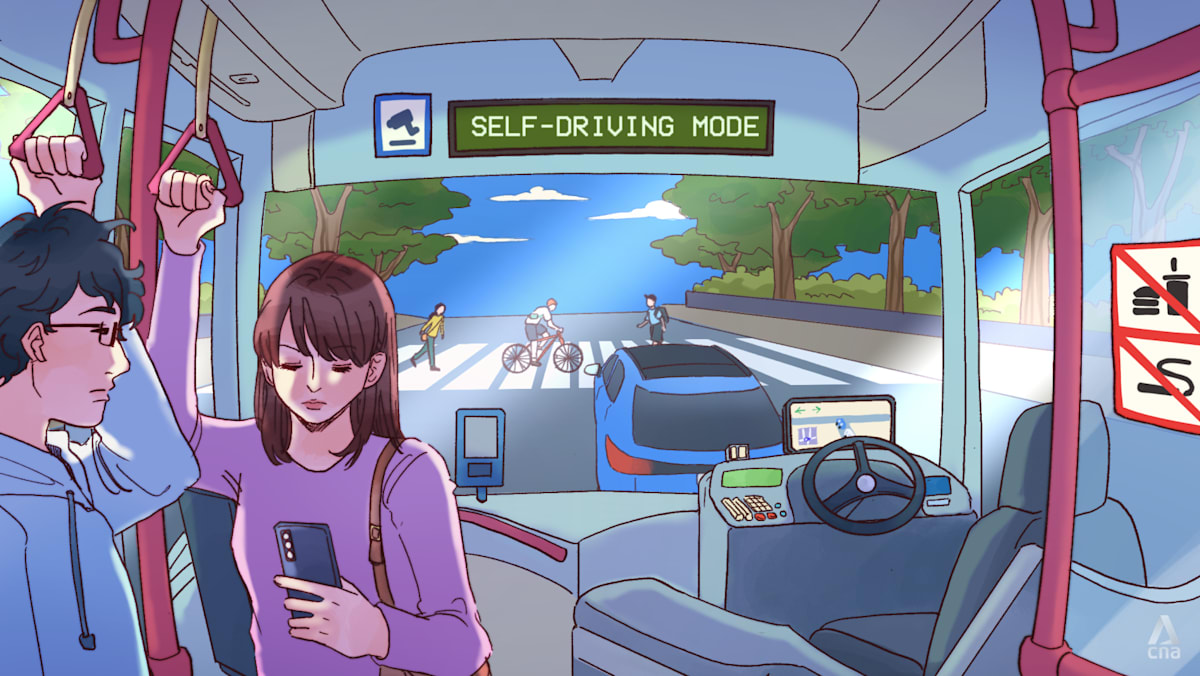
However, when it comes to driving a bus, many nuances cannot be easily replicated by technology, private bus operators said.
Mr Lionel Lee, director of private bus company Westpoint Transit, said AVs are not yet at the level where they can make decisions on the fly, such as rerouting when there is an accident.
Another scenario is when a passenger injures themself or needs medical assistance on board. “Without a human there, they will not be attended to,” he said.
He acknowledged that such situations could be managed through remote monitoring – for example, by having a human operator at a central location change the route, or by deploying employees to attend to passengers.