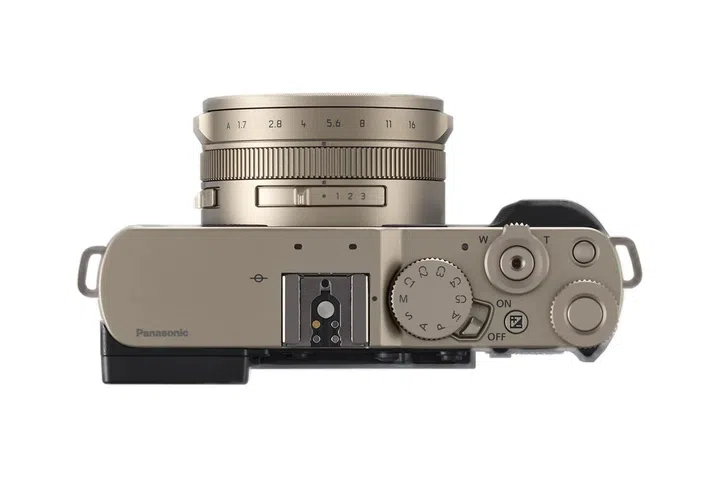
Panasonic has finally given its fans what they’ve been waiting for for eight years. The LUMIX L10 (DC-L10) is a new premium compact zoom camera launched in time to mark the 25th anniversary of the LUMIX brand. It is Panasonic’s first fixed-lens enthusiast compact since the LUMIX LX100 II in September 2018, and quietly, it is shaping up to be one of the year’s more interesting camera launches.
Panasonic frames the L10 around the design philosophy of Mushin (無心), which the company translates as “Shaping Emotions.” The idea, per the press release, is that a camera should feel instinctive in the hand so the user can focus entirely on the subject. This sits alongside Panasonic’s broader picture-making philosophy of “Capturing It All,” a colour-and-rendering ethos aimed at delivering realistic reproduction with natural, emotionally engaging images.
The pitch is straightforward.
Take the LEICA DC VARIO-SUMMILUX 24-75mm f/1.7-2.8 lens that made the LX100 line famous, drop it onto a brand-new Four Thirds sensor body with a modern phase-detect autofocus system, an articulated screen, and an OLED viewfinder, then wrap the whole thing in a magnesium alloy frame with a saffiano-leather-textured exterior. It is available in black or silver, with a limited Titanium Gold Special Edition.
The LUMIX L10: An evolution of the LX100 line

The Leica lens
Photo: Panasonic
The L10 isn’t formally branded as a replacement for the LX100 III, but it might as well be. Online comments have called out the similar lineage:
- with the same Leica zoom, with a few unspecified optical tweaks and a new AR coating
- the same multi-aspect Micro Four Thirds approach, where the sensor is deliberately larger than the lens image circle so users can switch between 4:3, 3:2 and 16:9 aspect ratios without losing any of the angle of view+6-
- the same control-led design language, with an aperture ring on the lens and clicky analogue dials on top
What has changed underneath, though, is significant. The sensor is now a 4/3-type back-illuminated (BSI) CMOS unit with a total of 26.5 megapixels and an effective 20.4 megapixels. It comes with a dynamic range boost and Panasonic’s latest Phase Hybrid AF system with 779 focus points.
The L10 carries a Phase Hybrid AF system with 779 focus points paired with Panasonic’s latest AI subject recognition, which now detects eyes, faces, bodies, animals, vehicles, and dynamic scenes, including Urban Sports as a dedicated scene mode. Urban Sports recognition is a notable step up for skate, parkour, BMX, and street-shooting photographers, since it has historically been a category that traditional AF systems have struggled with. The LX100 II’s contrast-detect AF, in comparison, was the single biggest weak spot reviewers flagged in 2018, and that gap has now been properly closed.