Samsung Electronics Singapore is rolling out its full 2026 home entertainment lineup, and the headline message is consistent across every tier from OLED to Micro RGB. The TV is no longer just a screen – It is meant to be a smart, conversational companion that helps users decide what to watch, what to eat, what to listen to, and, if Singapore’s living rooms cooperate, what to play, follow, and put on the wall.
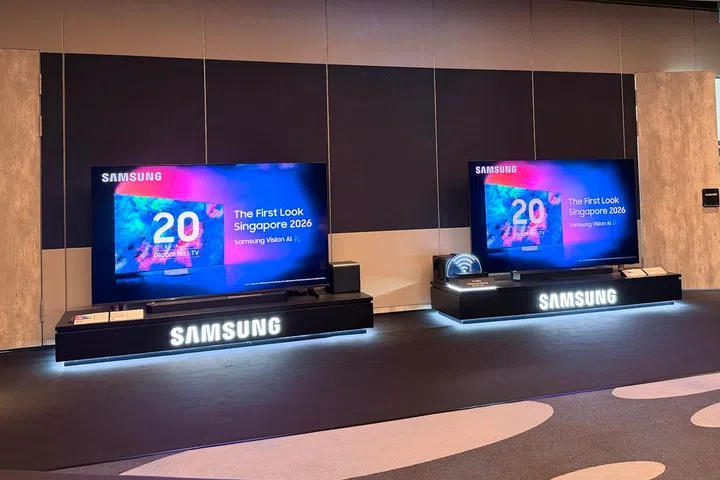
Following CES 2026, Samsung announced the local availability of its new TVs on 13 May 2026. The lineup is structured around Samsung’s expanded Vision AI Companion (VAC), which now reaches across more categories and screen sizes than before. The new models cover a wide range of Samsung’s TV lineup, including Micro RGB, miniLED, Neo QLED, and OLED families. There are also new models in The Frame and the Frame Pro families, while The Movingstyle, the 27-inch portable touchscreen launched in February 2026, still anchors the company’s “TV that moves with you” experiment.
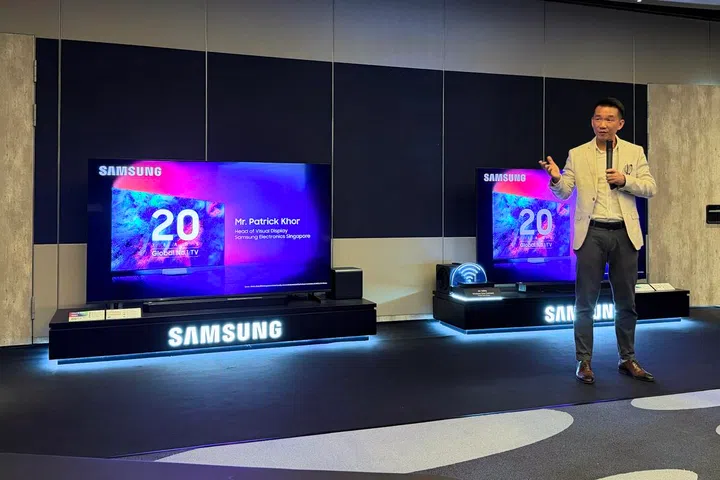
Patrick Khor, Head of Visual Display at Samsung Electronics Singapore
Photo: HWZ

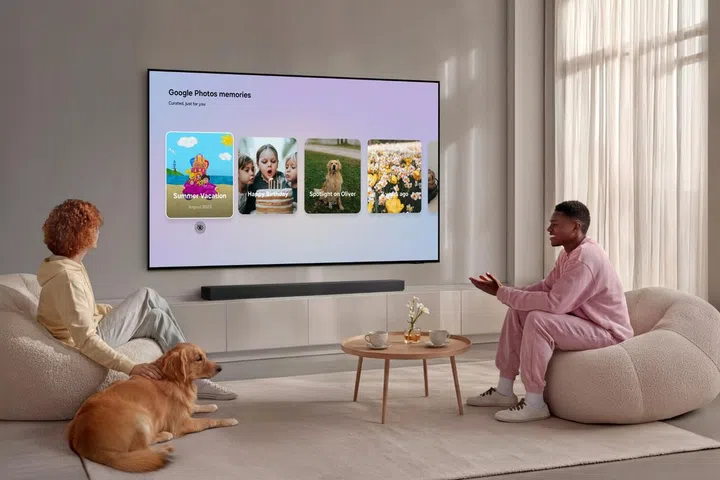
As home entertainment evolves, consumers are looking beyond exceptional picture quality and sound. They seek a TV experience that resonates with their lifestyle and seamlessly integrates into their daily routines.
Patrick Khor, Head of Visual Display at Samsung Electronics Singapore

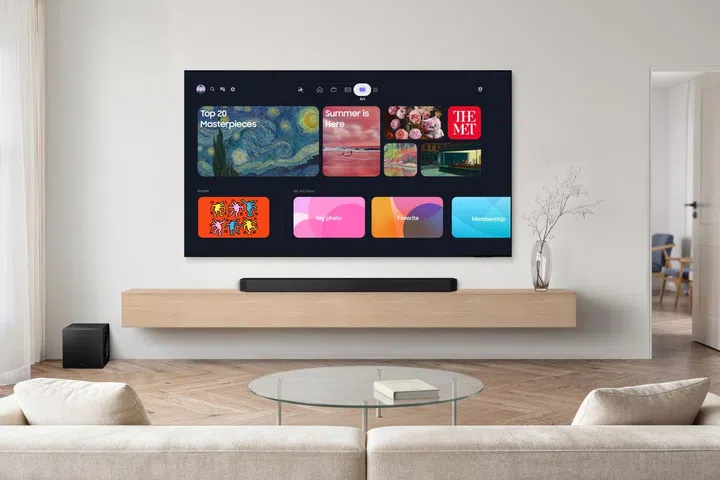
Patrick Khor, Head of Visual Display at Samsung Electronics Singapore, further cemented Samsung’s position that their expansion of Vision AI Companion across the AI TV line-up aims to deliver a more intuitive and personalised experience, tailored to diverse interests such as entertainment, sports, gaming, and art. “This redefines the Samsung TV as a smarter and more adaptive companion for our everyday life in Singapore”, he said.
That framing matters because it lands one month after LG’s 2026 lineup arrived in Singapore at Suntec City under its own “Beyond Boundaries” theme, with the LG OLED evo AI W6 Wallpaper TV as the headline act. The two Korean brands are now arguing on more or less the same battleground: AI processing, premium picture quality, lifestyle design, and modular audio, with the differences mostly in execution.
Vision AI Companion: Bixby, Perplexity and Copilot all in one place
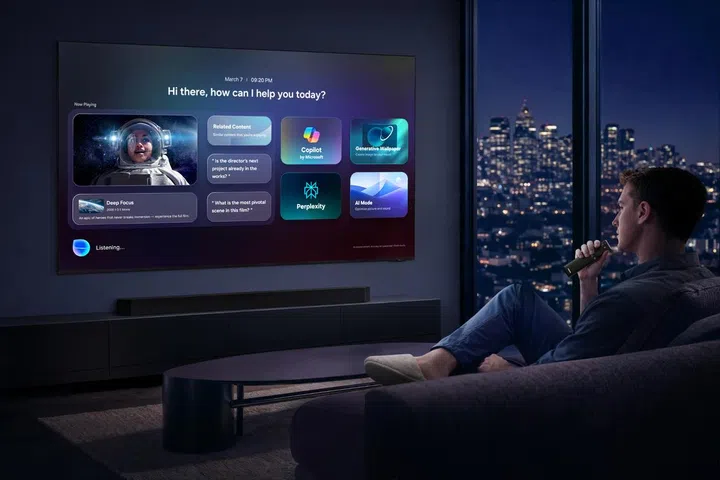
Unlike using Bixby, you need to search a bit for to use the other AI apps
Photo: Samsung
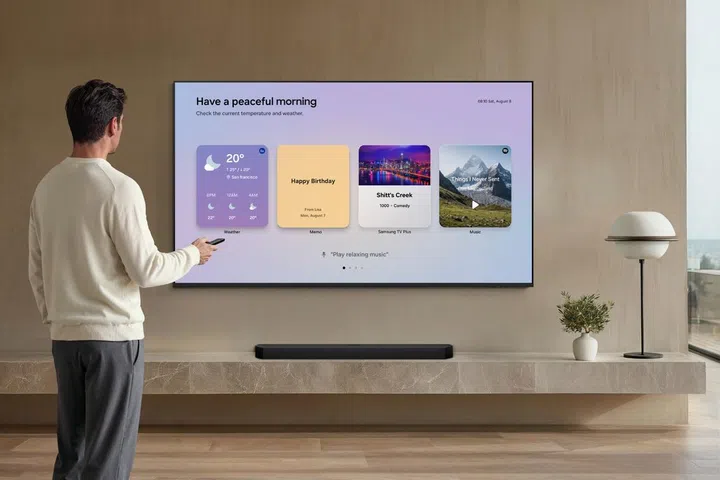
The most interesting structural change for 2026 is what Samsung is doing with on-TV AI. Vision AI Companion (VAC) brings Bixby, Perplexity, and Microsoft Copilot under one roof, all accessible from the TV itself.
Practically, this means a single TV interface can be asked to recommend a film, look up a footballer’s recent form, suggest a recipe for tonight’s dinner, or pull up a Spotify playlist, without the user juggling separate apps or services. The framing is friendly, but it also tells you where Samsung thinks the TV is heading. Less “appliance you switch on for a show”, more “always-on screen that occasionally happens to play TV”.
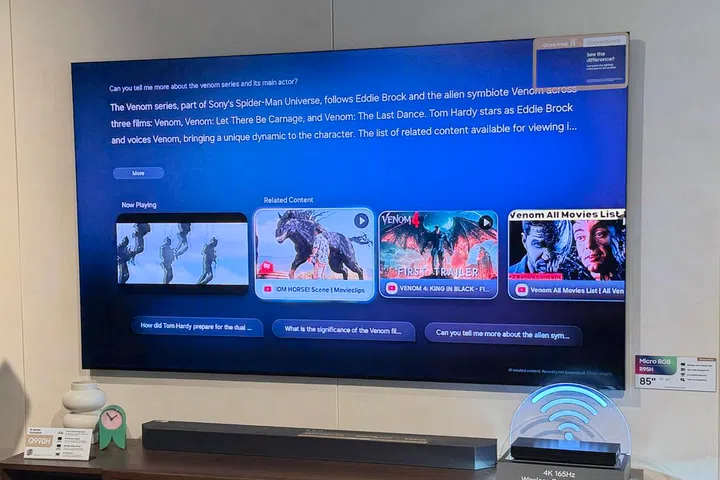
AI mode results
Photo: HWZ
However, the search results each AI app returns are different. Performing a search via Bixby yields the most results, including videos, offering the most personalised results. It acts as the primary voice interface, allowing you to ask questions about a film, a sports event, or even an artwork, and handles navigation within the TV’s Smart Hub. The other two AI solutions provide less varied, less personal results, to the point of being just simple text recommendations on a page.
There is also a layer of AI-enhanced content features running across the AI TV lineup:
- AI Upscaling Pro uses AI to analyse and enhance low-resolution content in real time, with Colour Booster Pro sorting scenes for more lifelike colour rendering.
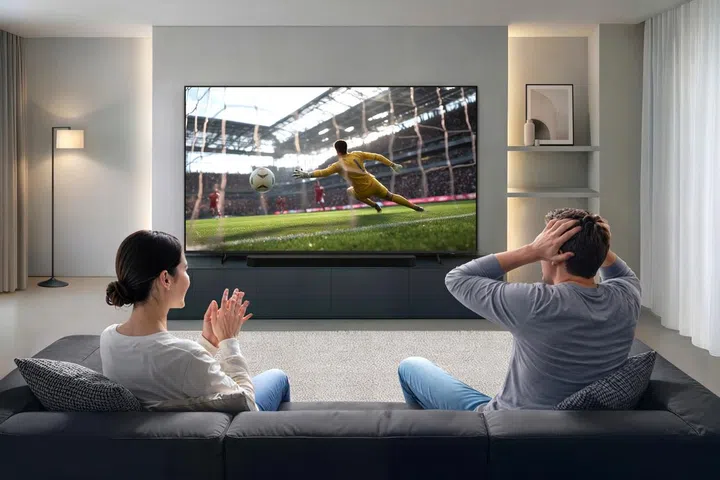
- AI Football Mode Pro is the headline sports feature, automatically analysing match scenes in real time to optimise picture and sound for smoother ball movement, vivid colour, and more immersive stadium audio.
- AI Sound Controller Pro analyses dialogue, background music, and sound effects in real time, letting users adjust commentary and crowd noise separately for a more immersive game-night mix.
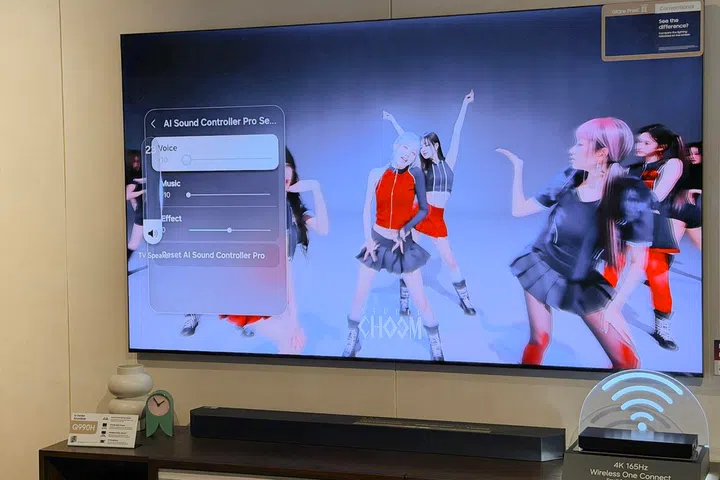
You can use the new AI to adjust things like backgound music and the vocals
Photo: HWZ
Compared with LG’s webOS Multi-AI approach, which combines Google Gemini and Microsoft Copilot with a Voice ID system that loads personalised home screens for each household member, Samsung’s pitch is broader on the AI brain side (three engines instead of two) but currently lighter on the per-user personalisation layer.
Tizen OS now ships with seven years of OS upgrades committed, which matches Samsung’s commitment from 2025 and is a slightly stronger software guarantee than LG’s webOS Re: New (up to five years on most models). Samsung Knox Security continues to handle on-device protection.